



In aerobic fermentation, invisible gas changes often decide whether a process is stable, efficient, or already drifting away from its ideal condition. When oxygen supply is insufficient, microorganisms may slow down; when carbon dioxide accumulates unexpectedly, it may indicate a change in metabolic activity, aeration efficiency, or process balance. Relying only on manual sampling makes it easy to miss these changes until yield, quality, energy consumption, or batch consistency has already been affected. At ESEGAS, we help operators solve this problem with online gas analyzers designed to continuously monitor oxygen, carbon dioxide, and other key gas concentrations while recording real-time process data.
An online gas analyzer improves aerobic fermentation control by continuously measuring O₂ consumption, CO₂ generation, and other gas concentration changes in real time. These measurements help operators evaluate microbial activity, aeration performance, respiration trends, process stability, and abnormal operating conditions without relying only on delayed manual sampling.
However, the real value of online gas analysis is not simply seeing a number on a screen. The value lies in turning gas concentration trends into practical process decisions. With ESEGAS online gas monitoring solutions, users can connect fermentation off-gas analysis with aeration control, agitation adjustment, feeding strategy, batch comparison, and quality traceability. The following sections explain how continuous gas monitoring supports better aerobic fermentation management from the laboratory to industrial production.
Why Are O₂ and CO₂ So Important in Aerobic Fermentation?
If an aerobic fermentation process is monitored only by temperature, pH, pressure, or dissolved oxygen, operators may still miss what is happening in the gas phase. Microorganisms consume oxygen and release carbon dioxide as part of their metabolic activity, so changes in O₂ and CO₂ often appear before visible process problems become obvious. Without continuous gas concentration monitoring, a decline in oxygen availability or a sudden increase in carbon dioxide may be discovered too late. ESEGAS online gas analyzers help users identify these trends earlier and respond before process instability affects the batch.
Oxygen concentration is one of the most important indicators in aerobic fermentation because the process depends on sufficient oxygen transfer. When the O₂ level in the outlet gas changes, it can reflect microbial oxygen uptake, aeration efficiency, agitation performance, or changes in biomass activity. By continuously monitoring O₂, operators can better understand whether the system is supplying enough oxygen for the microorganisms.

Carbon dioxide monitoring is equally important. CO₂ generation usually reflects microbial respiration and organic matter conversion. A rising CO₂ concentration may indicate active fermentation, while an unexpected drop may suggest reduced biological activity, nutrient limitation, poor aeration, or process inhibition. By analyzing CO₂ concentration trends together with O₂ data, users can obtain a clearer view of the fermentation stage and metabolic status.
In many aerobic fermentation applications, ESEGAS can also configure the online gas analyzer for additional gases depending on the process, such as CH₄, NH₃, N₂O, H₂S, CO, or VOCs. This allows the monitoring system to match different industries, including biopharmaceutical fermentation, enzyme production, amino acid fermentation, composting, sludge treatment, and environmental biotechnology.
What Does an Online Gas Analyzer Monitor During Aerobic Fermentation?
A simple gas sensor may provide a basic reading, but aerobic fermentation gas streams are often humid, warm, and variable. In some applications, the gas may contain condensate, particles, corrosive components, or high CO₂ concentrations. If the monitoring system is not designed for these conditions, the data may become unstable or the analyzer may require frequent maintenance. ESEGAS focuses on building complete online gas analysis solutions, not just supplying a single measurement device.
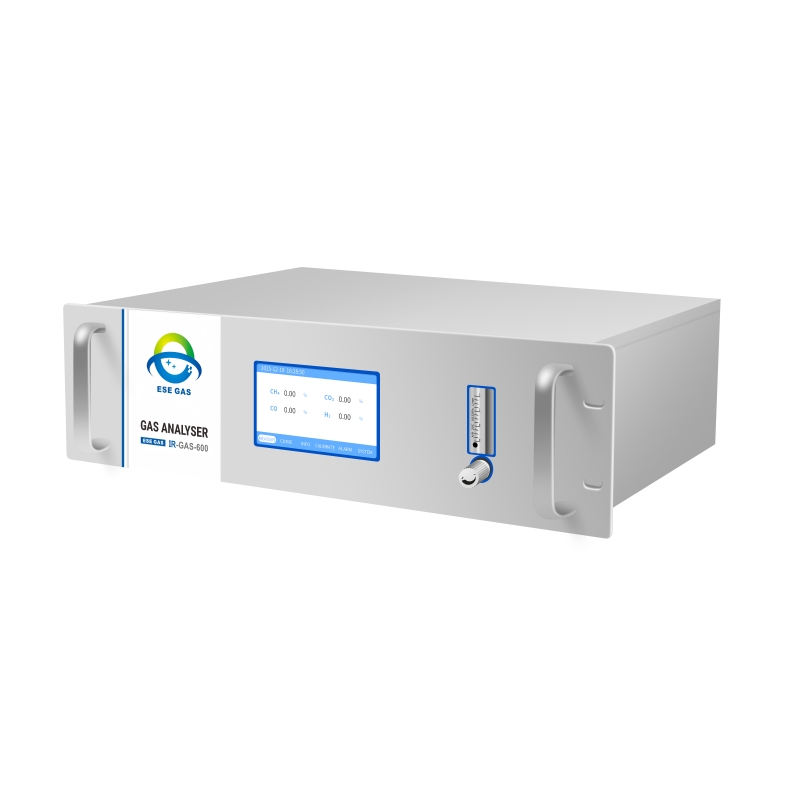
A typical ESEGAS aerobic fermentation gas monitoring system can measure:
| Monitoring Item | Purpose in Aerobic Fermentation |
| O₂ concentration | Evaluates oxygen consumption, aeration efficiency, and microbial respiration |
| CO₂ concentration | Reflects carbon dioxide generation, metabolic activity, and fermentation intensity |
| Inlet and outlet gas | Helps compare supplied gas and exhaust gas conditions |
| Optional gases | Supports expanded monitoring for CH₄, NH₃, N₂O, H₂S, CO, or VOCs |
| Gas concentration trends | Shows process changes over time instead of isolated readings |
| Real-time data logging | Supports batch records, process optimization, and traceability |
| Alarm signals | Helps operators respond quickly to abnormal gas conditions |
| Communication output | Enables integration with PLC, DCS, SCADA, or other control systems |
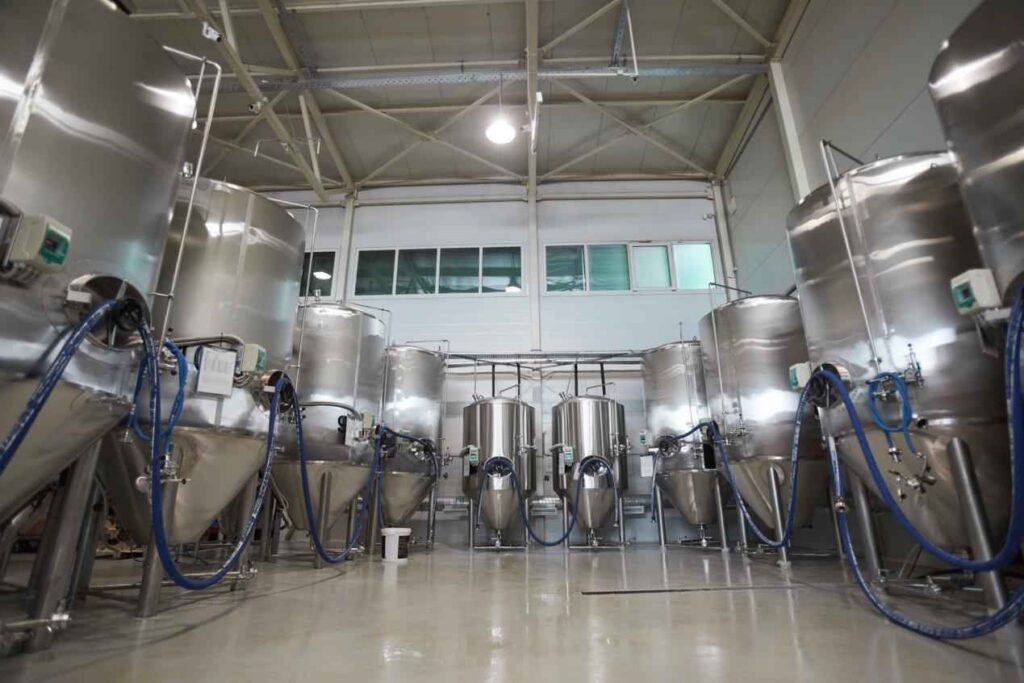
For bioreactor gas monitoring, the analyzer is often installed on the exhaust gas line to measure the changing composition of fermentation off-gas. For composting or solid-state aerobic fermentation, the system may be configured for multi-point sampling to compare gas concentrations at different positions. For industrial fermentation, ESEGAS can provide sample conditioning, gas filtration, moisture removal, and data output according to the actual site conditions.
How Does Real-Time Data Logging Improve Fermentation Decisions?
Many fermentation problems do not happen suddenly. They develop gradually through small changes in oxygen consumption, carbon dioxide release, ventilation efficiency, or microbial activity. Without real-time data logging, operators may see only scattered measurement points and lose the full story behind the batch. This makes it difficult to identify when the process started to change, which operation caused the change, and how the next batch should be optimized. ESEGAS online gas analyzers record gas concentration trends continuously, helping users move from reactive troubleshooting to proactive process control.
Real-time gas recording supports better decision-making in several ways.
First, it helps identify oxygen limitation. If outlet O₂ concentration decreases sharply or remains lower than expected, the process may require improved aeration, stronger agitation, or a review of oxygen transfer capacity.
Second, it helps evaluate carbon dioxide generation. CO₂ trends can show whether microbial activity is increasing, stable, slowing down, or abnormal. This is especially useful when comparing different fermentation batches.
Third, continuous records make process optimization more practical. Operators can compare gas data with feeding time, airflow rate, stirring speed, temperature control, and pH adjustment. This allows gas concentration monitoring to become part of the overall process control strategy.
Fourth, data logging improves traceability. In regulated or quality-sensitive industries, complete records of O₂ and CO₂ monitoring can help support batch review, process validation, and quality analysis.
For ESEGAS users, real-time data is not only displayed locally. Depending on project requirements, the gas analyzer can support data export, trend curves, alarm output, and communication with control systems, making it easier to integrate gas analysis into existing production workflows.
Where Can ESEGAS Online Gas Analyzers Be Used in Aerobic Fermentation?
Different aerobic fermentation processes have different gas compositions, moisture levels, sampling requirements, and control objectives. A laboratory bioreactor may require fast response and precise O₂/CO₂ monitoring, while an industrial composting system may require durable multi-point gas sampling in a humid and dusty environment. Using the same simple analyzer configuration for every application can lead to unreliable data and unnecessary maintenance. At ESEGAS, we design gas analysis solutions according to the actual fermentation process and site conditions.
Our online gas analyzers can be applied in many aerobic fermentation scenarios, including:
| Application | Typical Gas Monitoring Needs |
| Biopharmaceutical fermentation | O₂ and CO₂ monitoring for bioreactor off-gas analysis |
| Enzyme fermentation | Oxygen uptake and carbon dioxide release trend monitoring |
| Amino acid fermentation | Process stability, aeration control, and batch comparison |
| Food and beverage fermentation | Gas concentration tracking and process quality control |
| Organic fertilizer composting | O₂, CO₂, NH₃, and other gas monitoring during aerobic decomposition |
| Sludge aerobic treatment | Respiration activity, aeration efficiency, and odor-related gas monitoring |
| Laboratory and pilot systems | Flexible gas measurement for R&D and process scale-up |
| Industrial fermentation plants | Continuous online monitoring with alarms and system integration |
In each application, ESEGAS can help users select the appropriate gas components, measurement ranges, sampling method, gas pretreatment system, and data communication method. This ensures that the analyzer is not only accurate in theory but also reliable in real operating conditions.
What Should You Consider When Choosing an Online Gas Analyzer for Aerobic Fermentation?
Choosing the wrong gas analyzer can create new problems instead of solving existing ones. A system with the wrong range may fail to capture meaningful changes. A system without proper sample conditioning may be affected by moisture or condensate. A system without real-time recording may show current values but fail to support batch comparison or process traceability. To obtain dependable fermentation off-gas analysis, users need to consider both the analyzer and the complete sampling system.
Key selection factors include:
| Selection Factor | Why It Matters |
| Gas components | Determines whether the analyzer can measure O₂, CO₂, and other required gases |
| Measuring range | Must match expected gas concentration changes during fermentation |
| Accuracy and stability | Supports reliable process judgment and long-term monitoring |
| Response time | Helps capture dynamic changes in microbial respiration |
| Sample conditioning | Protects the analyzer from humidity, particles, and condensate |
| Multi-point sampling | Allows monitoring of different tanks, reactors, or process zones |
| Data logging | Enables trend analysis, batch comparison, and quality traceability |
| Alarm output | Supports early warning for abnormal gas conditions |
| Communication interface | Allows connection to PLC, DCS, SCADA, or plant data systems |
| Maintenance design | Reduces downtime and improves long-term operating reliability |
ESEGAS works with users to evaluate these factors before recommending a configuration. For some users, a compact O₂ and CO₂ online gas analyzer may be enough. For others, a customized multi-gas monitoring system with sampling pretreatment, automatic drainage, heated lines, or multi-channel switching may be more suitable.
How Does ESEGAS Build a Reliable Gas Monitoring Solution for Fermentation Processes?
Online gas analysis is not only about installing an instrument on a pipe. In real fermentation environments, the gas stream may be saturated with water vapor, the pressure may fluctuate, the exhaust gas may contain particles, and the process may require continuous operation for long periods. If these conditions are not considered from the beginning, even a high-quality analyzer may not perform reliably. ESEGAS approaches each project as a complete gas monitoring solution.
We typically consider the following aspects when designing a system:
- Gas components and measurement ranges
We help users define which gases need to be measured, such as O₂, CO₂, NH₃, CH₄, N₂O, H₂S, CO, or VOCs, and select suitable ranges based on the fermentation process. - Sampling point design
We evaluate whether the analyzer should monitor inlet gas, outlet gas, multiple tanks, exhaust ducts, composting zones, or centralized gas lines. - Sample conditioning
We can configure filtration, moisture removal, cooling, drainage, or other gas pretreatment methods to protect the analyzer and improve data stability. - Continuous monitoring and recording
ESEGAS online gas analyzers can provide real-time gas concentration monitoring, data logging, trend display, and alarm functions. - System integration
The analyzer can be configured with communication outputs for integration with plant control systems, helping users connect gas data with process automation. - Application-specific customization
From laboratory aerobic fermentation to industrial bioreactor off-gas analysis and composting gas monitoring, we adjust the solution according to the operating environment.
This solution-based approach helps ensure that ESEGAS gas analyzers deliver stable data, practical process insights, and long-term value for fermentation users.
Why Is Continuous Gas Analysis Better Than Manual Sampling?
Manual sampling may seem simple, but it often cannot keep up with the speed of fermentation changes. A sample taken once every few hours may miss oxygen depletion, CO₂ peaks, aeration imbalance, or short-term process disturbances. By the time the laboratory result is available, the process may have already moved into a different stage. ESEGAS online gas analyzers help users avoid this blind spot by providing continuous O₂ and CO₂ monitoring with real-time records.
Compared with manual sampling, continuous online gas analysis offers several advantages:
- It provides complete gas concentration trends instead of isolated data points.
- It helps detect abnormal O₂ or CO₂ changes earlier.
- It reduces dependence on manual operation and delayed laboratory analysis.
- It supports automatic alarms when gas concentrations exceed set limits.
- It helps compare different batches using consistent data records.
- It provides a stronger foundation for process optimization and energy-saving aeration control.
- It supports quality traceability in fermentation production.
For aerobic fermentation, this continuous visibility is especially valuable because oxygen supply and carbon dioxide generation are closely related to microbial respiration. With ESEGAS online gas monitoring, operators can better understand how the process is changing and make timely adjustments based on real process data.
Conclusion
An online gas analyzer improves aerobic fermentation control by making the invisible gas phase visible, measurable, and traceable. By continuously monitoring oxygen concentration, carbon dioxide concentration, and other optional process gases, ESEGAS helps users understand microbial activity, evaluate aeration efficiency, identify abnormal trends, optimize operating conditions, and maintain more stable fermentation performance. Whether the application is a laboratory bioreactor, an industrial fermentation tank, organic fertilizer composting, or aerobic wastewater treatment, ESEGAS can provide a gas monitoring solution that matches the process requirements from gas component selection to sampling system integration.