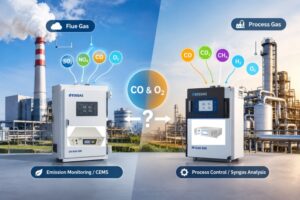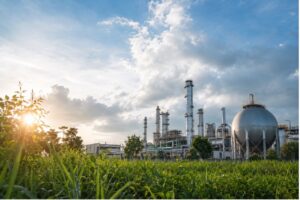




Many plants invest in gas analyzers that are more complex and expensive than their application actually requires. The result is higher costs, difficult maintenance, and a longer return on investment.
An NDIR gas analyzer offers major advantages over TDLAS gas analyzer for measuring common process gases such as CO, CO₂, CH₄, and hydrocarbons. It provides lower ownership costs, easier maintenance, excellent reliability, and multi-gas capability while delivering the accuracy required for most industrial applications.

However, the answer is not simply “NDIR is better.” The right choice depends on your target gases, detection limits, installation environment, and process objectives. Let’s examine where NDIR technology delivers the greatest value and where TDLAS still maintains an advantage.
How Do NDIR Gas Analyzers and TDLAS Gas Analyzers Work?
Before comparing advantages, it helps to understand the fundamental difference between these technologies.
An NDIR (Non-dispersive Infrared) gas analyzer uses a broadband infrared source and optical filters to detect gas concentrations based on infrared absorption. Each gas absorbs infrared energy at specific wavelengths, allowing the gas analyzer to determine concentration levels accurately.
In contrast, TDLAS (Tunable Diode Laser Absorption Spectroscopy) uses a highly focused laser tuned to a specific molecular absorption line. This approach provides exceptional selectivity and sensitivity for a single target gas.
Although both technologies rely on the Beer-Lambert absorption principle, their design philosophies are very different. NDIR focuses on practicality and versatility. TDLAS focuses on ultra-high selectivity and trace-gas detection. This distinction explains most of the differences buyers see in the field.
Why Is an NDIR Gas Analyzer More Cost-Effective?
For many industrial users, the first advantage is straightforward: lower investment cost. TDLAS systems require precision diode lasers, sophisticated wavelength control, advanced optical alignment, and high-performance signal processing. These components increase manufacturing complexity and system cost.
By comparison, NDIR technology uses mature infrared optics and detectors that have been widely deployed across industry for decades. The result is a more economical solution without sacrificing reliability for routine gas monitoring. This cost advantage becomes even more significant in projects involving multiple measurement points.
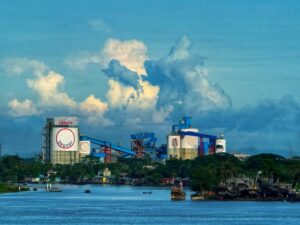
For example, a cement plant requiring continuous monitoring at ten locations may find that NDIR gas analyzers achieve the required performance at a substantially lower capital expenditure than a network of TDLAS gas analyzers.
Consequently, NDIR often delivers a faster payback period.
Why Is NDIR Gas Analyzer Better for Multi-Gas Monitoring?
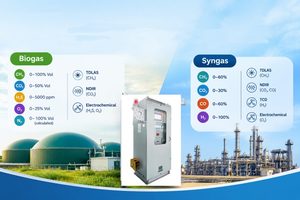
One of the strongest arguments for NDIR technology is its ability to measure several gases simultaneously. Most industrial processes require more than one measurement parameter. Operators rarely monitor only a single gas. A boiler optimization project may require CO, CO₂, CH₄, and O₂. A syngas application may additionally require H₂, CO, CO₂, and CH₄.
Modern NDIR platforms can integrate multiple sensing technologies within a single gas analyzer enclosure. For example, NDIR channels measure CO, CO₂, and CH₄, while a thermal conductivity detector (TCD) measures H₂ and a paramagnetic sensor measures O₂. This architecture simplifies installation, calibration, and maintenance.
By contrast, TDLAS gas analyzers are typically optimized for one specific gas. Expanding measurement capability often requires additional laser channels or separate gas analyzers, increasing system complexity and project cost.
Does an NDIR Gas Analyzer Provide Enough Accuracy?
A common misconception is that TDLAS is always the superior choice because it offers higher sensitivity. In reality, the required accuracy depends entirely on the application. For most industrial processes, operators need reliable process control rather than laboratory-grade trace analysis.
Typical applications include combustion optimization, furnace control, biogas monitoring, syngas analysis, fermentation monitoring, and emissions measurement. In these environments, NDIR gas analyzers commonly achieve accuracy around ±1% to ±2% full scale with detection limits reaching low ppm levels. This performance is sufficient for the vast majority of process monitoring applications.
Consider a waste incineration plant monitoring:
- CO: 0–5000 ppm
- CO₂: 0–25%
- O₂: 0–25%
Achieving ppb-level sensitivity provides little operational benefit because process decisions occur at much higher concentration ranges. Therefore, paying a premium for ultra-trace detection may not improve process performance.
How Does NDIR Gas Analyzer Simplify Maintenance?
Maintenance costs often exceed the initial purchase price over an analyzer’s lifetime. This is where NDIR technology offers another practical advantage.
Because NDIR gas analyzers use a relatively simple optical structure, maintenance personnel can quickly understand and service the equipment. Replacement components are widely available, calibration procedures are straightforward, and troubleshooting is generally less specialized. Many facilities already have technicians familiar with NDIR systems because the technology has been used in industrial gas analysis for decades.
As a result, plants often experience lower maintenance expenses, reduced training requirements, faster repairs, and improved has analyzer uptime. For large facilities operating multiple gas analyzers across several production units, these benefits can significantly reduce total ownership costs.
Which Gases Are Best Measured by NDIR Technology?
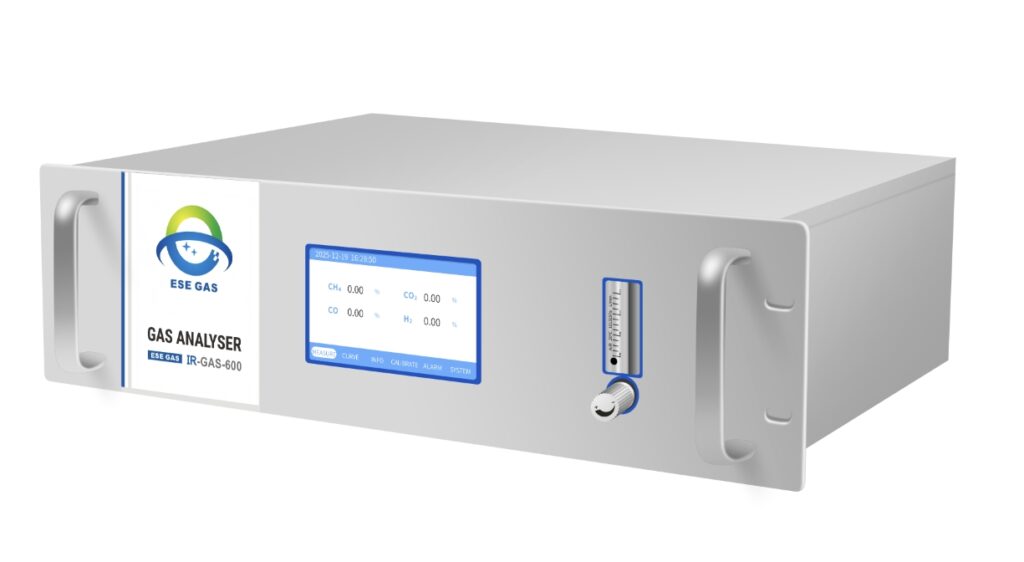
NDIR performs exceptionally well when measuring gases that exhibit strong infrared absorption characteristics. Typical examples include:
- CO₂
- CO
- CH₄
- Hydrocarbons (CnHm)
- Biogas components
These gases have distinct infrared absorption bands that allow stable and selective measurement using NDIR technology.
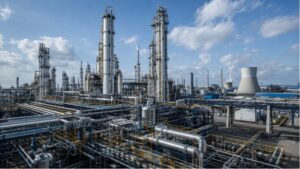
This is why NDIR remains one of the most widely used technologies in power plants, refineries, chemical plants, cement kilns, steel mills, landfill gas projects,and biomass gasification facilities. For these applications, NDIR gas analyzers often provides the optimal balance between performance and cost.
When Does TDLAS Gas Analyzer Have an Advantage Over NDIR Gas Analyzer?
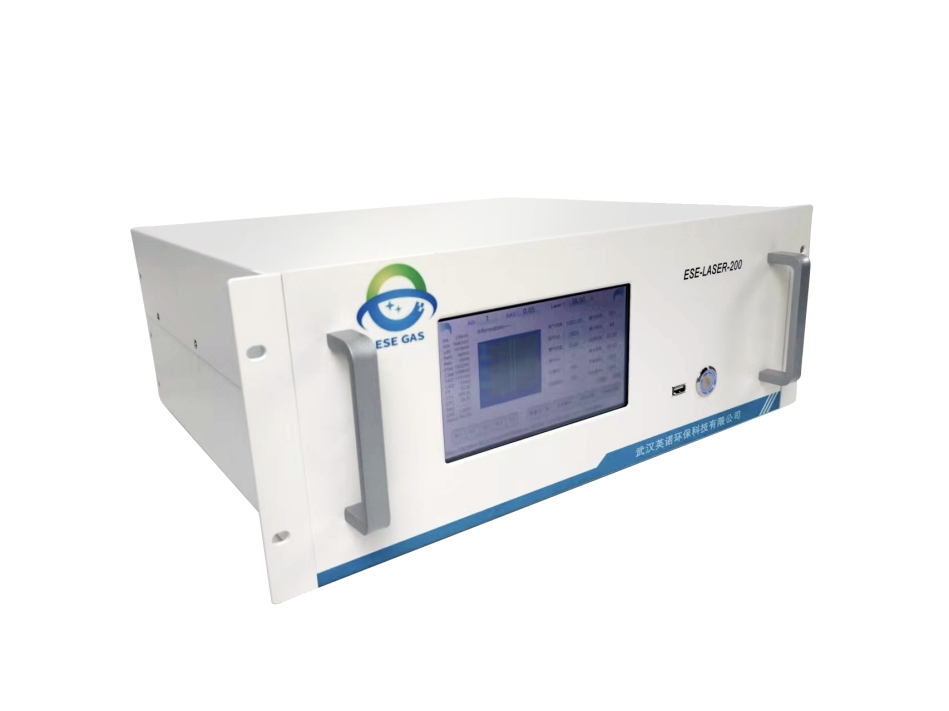
Although NDIR gas analyzer offers numerous benefits, TDLAS gas anlyzer remains the preferred technology in certain situations. TDLAS excels when users require ppb-level detection limits, extremely fast response times, in-situ cross-stack measurements, high selectivity in complex gas mixtures, and trace monitoring of reactive gases.
Common examples include NH₃ slip monitoring, HF monitoring, HCl monitoring, H₂S monitoring, and moisture analysis in gas pipelines. Because TDLAS targets a specific molecular absorption line, it minimizes cross-interference and can achieve extremely low detection limits. In these specialized applications, the higher investment is often justified by the measurement requirements.
NDIR or TDLAS: Which Technology Delivers Better ROI for Industrial Users?
From a purchasing perspective, the question is rarely about which technology is technically superior. The real question is: Which technology delivers the best return on investment for the intended application?
For monitoring CO, CO₂, CH₄, hydrocarbons, combustion gases, and syngas components. NDIR frequently offers the strongest ROI because it combines lower capital cost, multi-gas capability, proven industrial reliability, simple maintenance, and sufficient accuracy.
On the other hand, if your process requires ultra-trace measurements or in-situ laser monitoring, TDLAS may be the better long-term investment despite its higher initial cost.
The best technology is the one that matches your process requirements—not necessarily the one with the most advanced specifications.
Conclusion
For most industrial applications involving CO, CO₂, CH₄, hydrocarbons, and process gas monitoring, an NDIR gas analyzer delivers outstanding value through lower costs, multi-gas flexibility, reliable performance, and easier maintenance. When trace-level detection or ultra-high selectivity is required, TDLAS gas analyzer remains the preferred choice. If you are evaluating the right gas analysis technology for your plant, ESEGAS can help you select a customized solution that balances performance, reliability, and long-term ROI.
FAQs:
1. What is the main difference between an NDIR Gas Analyzer and a TDLAS gas analyzer?
An NDIR gas analyzer uses a broadband infrared light source and optical filters to measure gas concentrations, while TDLAS gas analyzer uses a tunable laser focused on a specific absorption wavelength. NDIR is generally better suited for multi-gas monitoring and cost-effective process control, whereas TDLAS excels in trace-gas detection and high-selectivity applications.
2. Why do many industrial plants choose NDIR Gas Analyzers over TDLAS?
Many plants prioritize reliability, lower investment costs, and multi-gas capability. NDIR technology can simultaneously monitor gases such as CO, CO₂, CH₄, and hydrocarbons, making it a practical solution for combustion control, emissions monitoring, biogas analysis, and process optimization.
3. Is an NDIR Gas Analyzer accurate enough for industrial process control?
Yes. Modern NDIR Gas Analyzers typically achieve accuracy around ±1% to ±2% FS and can measure from low ppm levels up to 100% volume concentration. This performance is sufficient for most industrial applications, including boilers, furnaces, cement kilns, and syngas systems.
4. Which gases are best measured using NDIR technology?
NDIR technology is particularly effective for gases with strong infrared absorption characteristics, including:
- CO₂
- CO
- CH₄
- CnHm (hydrocarbons)
- Refrigerant gases
- Biogas components
These gases can be measured accurately and economically using NDIR-based analyzers.
5. Does NDIR or TDLAS have lower maintenance requirements?
Both technologies offer long service life, but NDIR analyzers are generally easier to maintain because of their simpler optical structure and widespread industrial adoption. Maintenance personnel are often more familiar with NDIR systems, reducing training and servicing costs.
6. When is TDLAS a better choice than an NDIR Gas Analyzer?
TDLAS is typically preferred when applications require:
- ppb-level detection limits
- Extremely fast response times
- In-situ cross-stack measurements
- High selectivity in complex gas mixtures
- Monitoring of NH₃, HF, HCl, H₂S, or moisture
These applications benefit from the laser-based precision of TDLAS technology.
7. Which technology offers a better return on investment (ROI)?
For applications involving CO, CO₂, CH₄, hydrocarbons, and combustion gases, NDIR typically offers a better ROI because it combines lower acquisition costs, multi-gas capability, proven reliability, and simpler maintenance. TDLAS usually provides greater value when trace-gas monitoring or ultra-fast response is essential.
8. How do I choose between an NDIR Gas Analyzer and a TDLAS analyzer?
Consider the following factors:
- Target gas species
- Required detection limit
- Response time requirements
- Installation environment
- Maintenance capabilities
- Budget and lifecycle costs
If your application focuses on routine monitoring of CO, CO₂, CH₄, or process gases, an NDIR Gas Analyzer is often the most economical and practical choice. If you require trace-level detection of gases such as NH₃, HF, or HCl, TDLAS may be the better solution.
9. Can ESEGAS provide customized NDIR Gas Analyzer solutions?
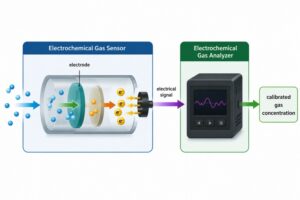
Yes. ESEGAS offers customized NDIR Gas Analyzer solutions for process gas analysis, combustion optimization, syngas monitoring, biogas analysis, and continuous emissions monitoring. Depending on the application, NDIR technology can be integrated with TCD, electrochemical, or paramagnetic sensors to create a complete multi-gas monitoring system.