



An unexpectedly low oxygen reading can lead operators to adjust a process on the wrong basis. When hydrogen, carbon monoxide, or methane is present, the sample can change inside the heated sensing region. At ESEGAS, we help customers understand this effect before selecting an oxygen measurement solution.
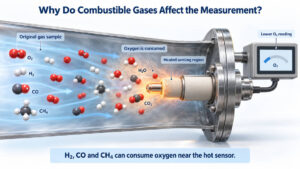
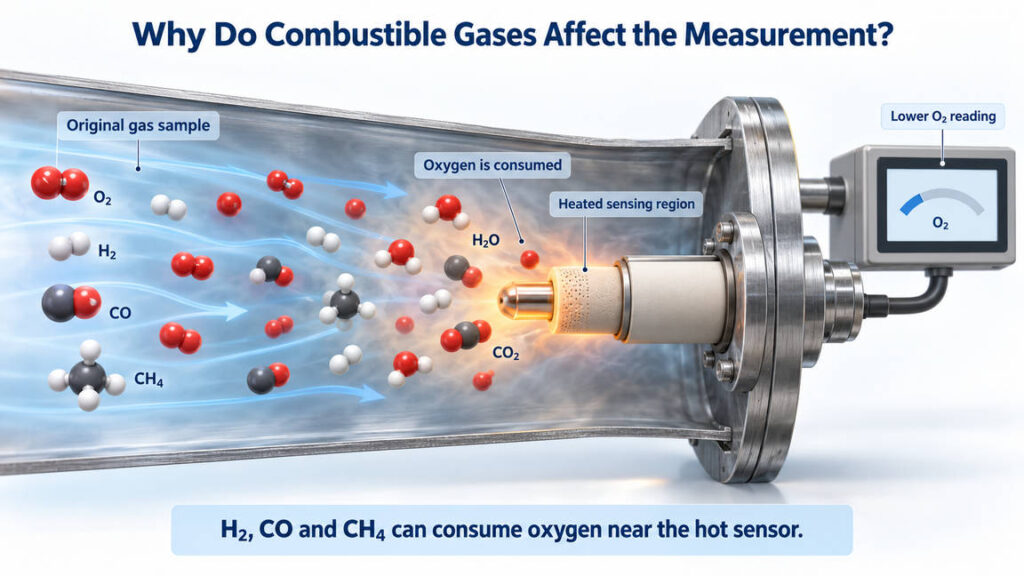
Conventional heated zirconia sensors can underestimate the original free oxygen concentration because H₂, CO, and CH₄ react with oxygen in the hot sensing region. The sensor responds to the local oxygen partial pressure after these reactions, which may differ substantially from that of the original process sample.
Understanding where this difference comes from helps distinguish a measurement limitation from an instrument fault—and identify when this technology suits the application.
Why Do Combustible Gases Affect the Measurement?
A stable reading can still be misleading if oxygen is consumed before it is measured. To interpret Zirconia Oxygen Analyzers correctly, operators must consider what happens at the heated electrode.
A conventional zirconia cell measures oxygen partial pressure through an electrochemical signal described by the Nernst equation. Its elevated operating temperature and catalytic electrode surfaces can promote oxidation:
- Hydrogen: 2H₂ + O₂ → 2H₂O
- Carbon monoxide: 2CO + O₂ → 2CO₂
- Methane: CH₄ + 2O₂ → CO₂ + 2H₂O
These reactions remove free oxygen from the gas reaching the sensing surface. The extent depends on gas composition, temperature, and reaction kinetics. A low result can therefore reflect oxygen consumption within the measurement region rather than the original oxygen concentration.
For example, by stoichiometry, 1,000 ppm of H₂ has an oxygen demand equivalent to 500 ppm of O₂ on the same initial molar basis. This illustrates why even a relatively small combustible concentration can matter when measuring trace oxygen. It is a theoretical oxygen demand, not a prediction of the displayed reading: actual consumption depends on available oxygen and reaction conditions.
The distinction is the measurement objective. Oxygen remaining after local reactions may be relevant to combustion assessment, while the original free oxygen concentration is a different quantity. Operators should establish which one the process requires before interpreting the result.
Can Calibration Correct This Effect?
Repeated calibration may seem the obvious response to a low reading, but it cannot restore oxygen that has chemically reacted. The cause must be addressed through application assessment.
Zero and span calibration establish the instrument’s response under specified calibration conditions. They do not provide a universal correction for changing concentrations of H₂, CO, and CH₄. A fixed offset is therefore unreliable when combustible gas interference varies with the process.
An analyzer may respond correctly to an oxygen-in-nitrogen calibration gas yet read lower when exposed to a process mixture containing combustible components. This does not automatically indicate sensor failure. We recommend reviewing the complete gas matrix alongside calibration results before deciding whether maintenance or a different sensing principle is needed.
When Should You Choose Our ESE-Z-100?
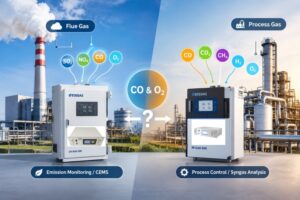
Reliable oxygen monitoring starts with matching the sensing principle to the gas composition and measurement objective. For suitable combustion applications, we recommend our ESE-Z-100 Zirconia Oxygen Analyzer.
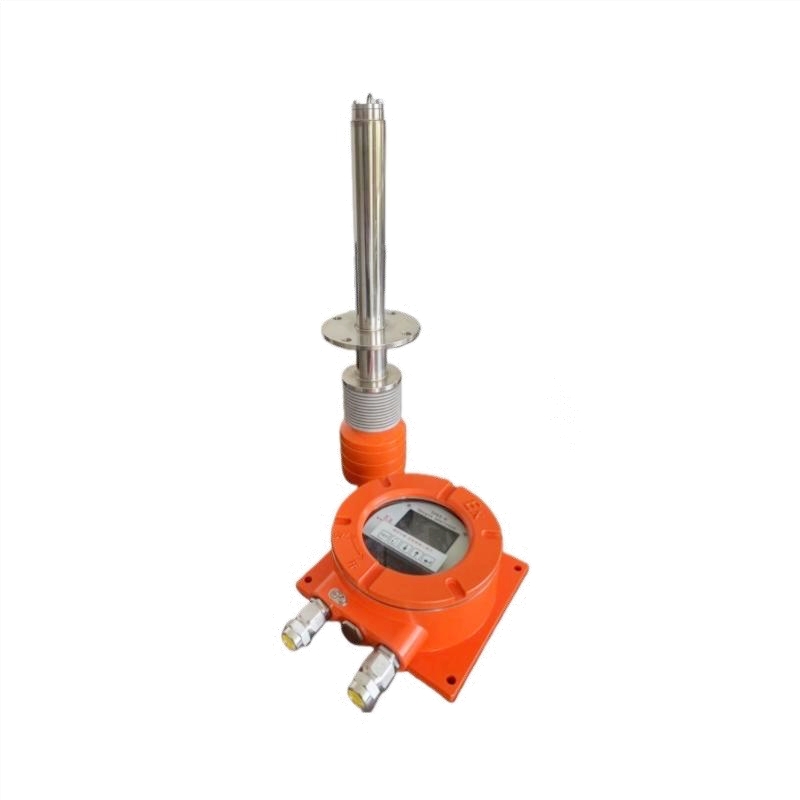
Our ESE-Z-100 provides in-situ oxygen measurement for applications such as boiler flue gas monitoring and industrial furnace combustion control. Its fast response supports timely adjustments as oxygen levels change.
For compatible flue gas applications, this allows operators to follow oxygen trends and use the measurement to support air–fuel adjustment. Selecting a representative measurement location and confirming the residual combustible content are essential parts of that application review.
When assessing suitability, we consider:
- Gas composition: Expected and maximum H₂, CO, and CH₄ concentrations, together with moisture and potentially damaging contaminants.
- Measurement objective: Combustion control, furnace atmosphere assessment, or determination of original free oxygen.
- Operating conditions: Required oxygen range, process temperature, pressure, and changes during startup or process upsets.
This recommendation requires confirmation of the operating conditions. We do not present standard zirconia sensing as a universal solution for measuring original free oxygen in combustible-rich gas mixtures. For these samples, another measurement principle may be necessary.
At ESEGAS, we assess the complete gas composition, oxygen range, temperature, and pressure before recommending a configuration. Share your process conditions with us so we can confirm whether the ESE-Z-100 is the right fit for your oxygen monitoring task.