


Introduction
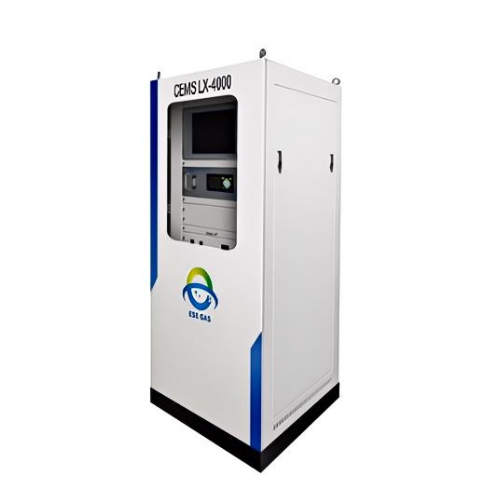
Monitor ambient air pollutants with an integrated system designed for environmental observation, industrial air quality assessment and monitoring network applications.
Measured Gas: SO2 | NOx | CO | O3 | PM2.5 | PM10
Want to know more about our AQMS, watch our video for more details!
| Parameter | Measurement Principle | Description |
|---|---|---|
| PM2.5 / PM10 | Optical Light Scattering/Beta Attenuation | Measures particulate matter concentration based on how particles scatter light or attenuate beta radiation. |
| NOx (Nitrogen Oxides) | Chemiluminescence | Detects NOx by measuring the light emitted during a chemical reaction with ozone. |
| SO2 (Sulfur Dioxide) | UV Fluorescence | Measures sulfur dioxide concentration by detecting fluorescence emitted when SO2 molecules are excited by UV light. |
| CO (Carbon Monoxide) | Non-Dispersive Infrared (NDIR) Absorption | Detects carbon monoxide based on the absorption of infrared light by CO molecules. |
| O3 (Ozone) | UV Absorption | Ozone absorbs UV light at specific wavelengths, allowing for concentration measurement. |
| VOC (Volatile Organic Compounds) | Photo-Ionization Detector (PID) / Flame Ionization Detector (FID) | VOCs are detected by ionizing them with UV light (PID) or using combustion (FID). |
ESE-AQMS-100 stands for gas analyzers in Air Quality Monitoring System. It is used to measure and analyze the levels of various pollutants in the air to assess air quality. These systems help monitor the impact of air pollution on the environment and public health.
Typical parameters measured by an AQMS include:
These measurements help identify air quality trends and ensure compliance with environmental standards.
1. What is an AQMS (Air Quality Monitoring System)?
An AQMS (Air Quality Monitoring System) is a system designed to continuously measure and analyze air pollutants in the atmosphere. It collects real-time data on pollutant concentrations and environmental parameters to help governments, industries, and environmental agencies monitor air quality and comply with environmental regulations.
2. What pollutants can an AQMS measure?
An AQMS can monitor a variety of air pollutants, including:
These measurements help evaluate overall air pollution levels.
3. How does an Air Quality Monitoring System work?
An Air Quality Monitoring System works by drawing ambient air into specialized analyzers that detect pollutant concentrations using technologies such as NDIR, UV photometry, chemiluminescence, and beta attenuation. The system then records and transmits the data to a central monitoring platform for analysis and reporting.
4. Why is AQMS important for environmental monitoring?
An AQMS plays a critical role in environmental protection by providing accurate and continuous air quality data. This information helps authorities identify pollution sources, assess environmental health risks, and develop policies to improve air quality.
5. What are the main components of an AQMS?
A typical AQMS includes several key components:
These components work together to provide accurate air quality data.
6, What is the difference between AQMS and mirco AQMS?
The main difference between an AQMS (Air Quality Monitoring System) and a Micro AQMS (Micro Air Quality Monitoring System) lies in their accuracy, size, cost, monitoring purpose, and deployment scenarios.
A. System Size and Design
A traditional AQMS is usually a large monitoring station installed inside a shelter or monitoring cabinet. It includes multiple high-precision analyzers and supporting equipment.
A Micro AQMS is a compact and lightweight monitoring device that integrates several miniaturized sensors into a small enclosure, making it easier to install on poles, buildings, or mobile platforms.
B . Measurement Technology
An AQMS uses reference-grade analyzers such as:
A Micro AQMS typically uses low-cost electrochemical or optical sensors, which are smaller and consume less power but may have slightly lower accuracy.
C. Measurement Accuracy
A standard AQMS provides high-precision, regulatory-grade data and is usually approved for official environmental monitoring by government agencies.
A Micro AQMS provides indicative or supplementary air quality data and is commonly used for trend analysis, pollution mapping, and community monitoring.
D. Installation and Mobility
A conventional AQMS station requires a fixed location, stable power supply, and controlled environmental conditions.
A Micro AQMS is designed for flexible deployment, allowing installation on:
E. Cost
A full AQMS station is relatively expensive due to the use of high-end analyzers and infrastructure.
A Micro AQMS is much more cost-effective, allowing large-scale air quality monitoring networks.
F. Typical Applications
AQMS Applications
Micro AQMS Applications
The Ambient Air Quality Online Monitoring System is designed to track changes in the concentration of conventional pollutants such as SO2, NOx, O3, CO, and particulate matter (PM2.5 and PM10). Additionally, it can accommodate specialized pollutants like VOCs , NH3 , and (HF/HCl) based on client requirements. By integrating with a Five Meteorological Parameters Analyzer —which measures temperature, humidity, wind direction, wind speed, and atmospheric pressure—the system enables continuous 24-hour online monitoring of the regional environment. This facilitates air quality assessment through comprehensive data collection, storage, and analysis.
Here’s a table showing the key measurement principles used in Ambient Air Quality Monitoring System (AQMS) for various air quality parameters:
| Parameter | Measurement Principle | Description |
|---|---|---|
| PM2.5 / PM10 | Optical Light Scattering/Beta Attenuation | Measures particulate matter concentration based on how particles scatter light or attenuate beta radiation. |
| NOx (Nitrogen Oxides) | Chemiluminescence | Detects NOx by measuring the light emitted during a chemical reaction with ozone. |
| SO2 (Sulfur Dioxide) | UV Fluorescence | Measures sulfur dioxide concentration by detecting fluorescence emitted when SO2 molecules are excited by UV light. |
| CO (Carbon Monoxide) | Non-Dispersive Infrared (NDIR) Absorption | Detects carbon monoxide based on the absorption of infrared light by CO molecules. |
| O3 (Ozone) | UV Absorption | Ozone absorbs UV light at specific wavelengths, allowing for concentration measurement. |
| VOC (Volatile Organic Compounds) | Photo-Ionization Detector (PID) / Flame Ionization Detector (FID) | VOCs are detected by ionizing them with UV light (PID) or using combustion (FID). |
This table outlines the core principles used to measure common pollutants in Air Quality Monitoring System.
We will contact you within 1 working day, please pay attention to the email with the suffix “[email protected]” .