
Introduction
Monitor mercury emissions from industrial exhaust streams using an integrated continuous mercury monitoring system designed around the measurement and reporting requirements of your project.
Applications: Coal-fired power plants, waste incineration and other industrial sources subject to mercury monitoring requirements.
Optimize your environmental compliance and process control with our Mercury CEMS. By integrating cold vapor atomic fluorescence spectroscopy (CVAF) with a high‑temperature dilution extraction front end, this system delivers industry‑leading accuracy in measuring elemental (Hg⁰) and oxidized (Hg²⁺) mercury concentrations (mg/m³) and emission rates (kg/h, t/d, t/a).
Sampling system: High‑temperature dilution extraction for representative gas conditioning
Mercury Detection: Cold Vapor Atomic Fluorescence (CVAF) for sub‑ppb precision
O₂ Analysis: Zirconia sensor with automatic oxygen compensation
Temperature Monitoring: Thermistor (or thermocouple) for rapid response
Pressure Monitoring: Solid‑state pressure transducer for stable, drift‑free readings
Flow Rate Monitoring : Micro differential‑pressure (Pitot tube) method for accurate volumetric flow
| Specification | Performance |
|---|---|
| High Temperature Sampling Probes | |
| Dilution ratio | 1:50 to 1:250 (customizable) |
| Vacuum degree | >60 kPa |
| Heating temperature | 150°C |
| Probe length | Standard 1m (customizable) |
| Interface size | OD/ID: 8/6 mm; 6/4 mm optional |
| Filter material | Stainless steel/ceramic optional |
| Filtration precision | 2 μm |
| Ambient temperature | (-20 to 50)°C |
| Power supply | AC 220V, 50Hz |
| Protection class | IP54 |
| Warm-up time | 30 minutes |
| Weight | 15 kg |
| Flange standard | DN65 |
| Flue Gas Mercury Analyzer | |
| Principle | cold vapor atomic fluorescence(CVAFS) |
| Range | 0~5ug/m to 200ug/m3 |
| Displayed value error | ≤±5% |
| Repeatable | ≤1% |
| Zero-point drift | ≤±1% F.S |
| Range drift | ≤±1% F.S |
| Operating temperature | -20°C to +50°C |
| Response time (T90) | <90 seconds |
| Relay output interface | 8 channels, output content configurable,24VDC |
| 4-20mA output interface | 4 channels, output content configurable, max. load carrying capacity <800 ohms |
| Communication interface | 1 RS232,1 RS485 |
| Power Supply | 220 VAC |
| Elemental Mercury (Hg⁰) Gas Generator | |
| Temperature control | 50°C |
| Temperature control accuracy | ≤0.1°C |
| Absolute temperature error | Not more than +/-0.5°C |
| Gas flow meter range | 0~20L/min |
| Gas Flow Error | Not to exceed +/- 0.5% F.S |
| Output elemental mercury concentration | 15ug/min~150ug/min (optional) |
| Ionized Mercury (Hg²⁺) Gas Generator | |
| Gas flow meter range | 0~20L/min |
| Gas Flow Error | Not to exceed +/-0.5% F.S. |
| Liquid Flow Pumps Minimum Control Flow | 0.55ul/min |
| Liquid Flow Error | Not more than +/-0.35% |
| Evaporator temperature | 180°C |
| Temperature control accuracy | ≤0.1°C |
| Absolute temperature error | Not more than ±0.5°C |
| Output mercury ion concentration range | 5ug/m3~200ug/m3 |
| Digital output | RS232 |
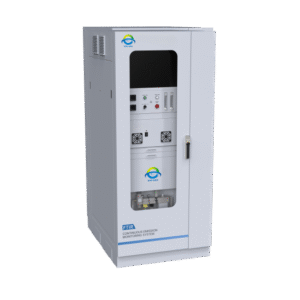
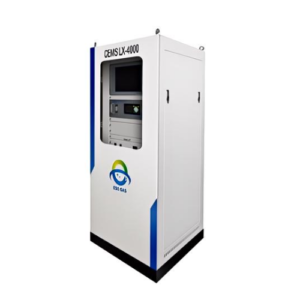
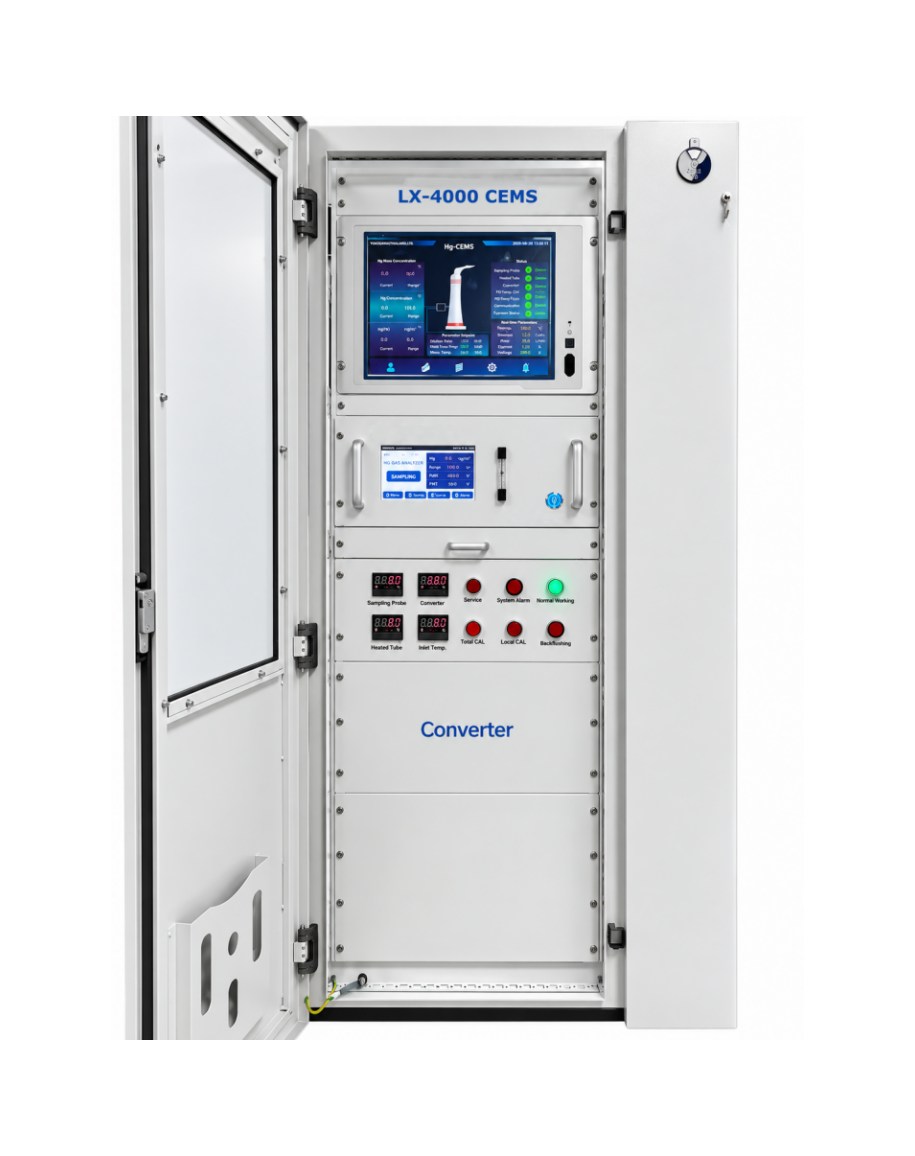
Our state‑of‑the‑art Mercury Continuous Emission Monitoring System (CEMS) LX-4000-Hg—engineered to deliver real‑time, 24/7 monitoring of gaseous mercury (Hg⁰ and Hg²⁺) in flue gas streams. Leveraging patented cold atomic fluorescence spectroscopy combined with high‑temperature extraction and precision dilution, our system accurately tracks mercury concentrations (mg/m³) and calculates emission rates (kg/h, t/d, t/a) from boilers, furnaces, incinerators, and other stationary sources.
Enhance your emissions monitoring suite with our fully modular Mercury CEMS, engineered for turnkey installation and maximum uptime. Each component is optimized for precision, durability, and seamless integration:
How Cold Vapor Atomic Fluorescence Powers Our Mercury CEMS?
Unlock ultra‑sensitive mercury detection with the heart of our Mercury CEMS—the Cold Vapor Atomic Fluorescence (CVAF) spectrometry module. This cutting‑edge technology delivers real‑time, sub‑parts‑per‑trillion resolution in flue gas mercury monitoring, ensuring regulatory compliance and process optimization.
UV Excitation with Mercury‑Vapor Lamp
A high‑intensity UV lamp emits photons at the 253.7 nm resonance wavelength.
Flue gas enters the optically clear sample cell , allowing mercury atoms (Hg⁰ and Hg²⁺) to absorb UV energy.
Fluorescence Emission & Photon Counting
Excited Hg atoms immediately re‑emit absorbed energy as fluorescence light in all directions.
A precision photon‑counting detector , positioned at a 90° angle, captures only the fluorescence signal—eliminating background noise and cross‑interference from SO₂, O₂, and other flue gas constituents.
Automatic Baseline Correction & Drift Compensation
Integrated algorithms perform continuous zero‑span checks using built‑in elemental and ionized mercury gas generators.
Real‑time correction routines maintain measurement stability over extended operational cycles, reducing calibration frequency and maintenance costs.
Dilution Extraction for Harsh Environments
The high‑temperature sampling probe dilutes particulate‑laden flue gas to protect optics and extend lamp life.
Controlled dilution also mitigates quenching effects, preserving the CVAF’s exceptional detection limits, even in high‑dust or high‑acid gas streams.
Data Integration & Reporting
Measurement data (mg/m³, kg/h, t/a) are transmitted seamlessly to your DCS and environmental data systems.
Customizable alarms and trend reports let you respond proactively to emission excursions, optimize combustion settings, and document compliance.
Optimize your environmental compliance and process control with our Mercury CEMS. By integrating cold vapor atomic fluorescence spectroscopy (CVAF) with a high‑temperature dilution extraction front end, this system delivers industry‑leading accuracy in measuring elemental (Hg⁰) and oxidized (Hg²⁺) mercury concentrations (mg/m³) and emission rates (kg/h, t/d, t/a).
Sampling system: High‑temperature dilution extraction for representative gas conditioning
Mercury Detection: Cold Vapor Atomic Fluorescence (CVAF) for sub‑ppb precision
O₂ Analysis: Zirconia sensor with automatic oxygen compensation
Temperature Monitoring: Thermistor (or thermocouple) for rapid response
Pressure Monitoring: Solid‑state pressure transducer for stable, drift‑free readings
Flow Rate Monitoring : Micro differential‑pressure (Pitot tube) method for accurate volumetric flow
| Specification | Performance |
|---|---|
| High Temperature Sampling Probes | |
| Dilution ratio | 1:50 to 1:250 (customizable) |
| Vacuum degree | >60 kPa |
| Heating temperature | 150°C |
| Probe length | Standard 1m (customizable) |
| Interface size | OD/ID: 8/6 mm; 6/4 mm optional |
| Filter material | Stainless steel/ceramic optional |
| Filtration precision | 2 μm |
| Ambient temperature | (-20 to 50)°C |
| Power supply | AC 220V, 50Hz |
| Protection class | IP54 |
| Warm-up time | 30 minutes |
| Weight | 15 kg |
| Flange standard | DN65 |
| Flue Gas Mercury Analyzer | |
| Principle | cold vapor atomic fluorescence(CVAFS) |
| Range | 0~5ug/m to 200ug/m3 |
| Displayed value error | ≤±5% |
| Repeatable | ≤1% |
| Zero-point drift | ≤±1% F.S |
| Range drift | ≤±1% F.S |
| Operating temperature | -20°C to +50°C |
| Response time (T90) | <90 seconds |
| Relay output interface | 8 channels, output content configurable,24VDC |
| 4-20mA output interface | 4 channels, output content configurable, max. load carrying capacity <800 ohms |
| Communication interface | 1 RS232,1 RS485 |
| Power Supply | 220 VAC |
| Elemental Mercury (Hg⁰) Gas Generator | |
| Temperature control | 50°C |
| Temperature control accuracy | ≤0.1°C |
| Absolute temperature error | Not more than +/-0.5°C |
| Gas flow meter range | 0~20L/min |
| Gas Flow Error | Not to exceed +/- 0.5% F.S |
| Output elemental mercury concentration | 15ug/min~150ug/min (optional) |
| Ionized Mercury (Hg²⁺) Gas Generator | |
| Gas flow meter range | 0~20L/min |
| Gas Flow Error | Not to exceed +/-0.5% F.S. |
| Liquid Flow Pumps Minimum Control Flow | 0.55ul/min |
| Liquid Flow Error | Not more than +/-0.35% |
| Evaporator temperature | 180°C |
| Temperature control accuracy | ≤0.1°C |
| Absolute temperature error | Not more than ±0.5°C |
| Output mercury ion concentration range | 5ug/m3~200ug/m3 |
| Digital output | RS232 |
We will contact you within 1 working day, please pay attention to the email with the suffix “[email protected]” .