
Introduction
Measure sulfur dioxide in flue gas and industrial emission streams for process evaluation and emissions monitoring.
Technology: UV-DOAS
Configurations: Online
Applications: Power generation, cement production, industrial boilers, waste incineration and chemical processing.
| Model | Technology | Standard | Low Emission | Ultra-low Emission | |
| Range SO2/NOx | UV-DOAS | 0-300-3000ppm | 0-100-300ppm | 0-50ppm | |
| Range O2 | EC sensor | 0-5% to 0-25% vol | 0-5% to 0-25% vol | 0-5% to 0-25% vol | |
| Linearity | ≤±1.5%FS | ||||
| Repeatability | ≤±0.5%FS | ||||
| Zero Drift | ≤±2%FS/7d | ||||
| Span Drift | ≤±2%FS/7d | ||||
| Output | RS485/4-20mA output | ||||
| Response time (T90) | ≤10S | ≤30S | ≤30S | ||
SO2 analyzers are essential tools for environmental monitoring, emissions control, and occupational safety. We provide them in various industries, including power plants, refineries, chemical manufacturing, and air quality monitoring stations. By providing accurate and real-time measurements of SO2 concentrations, these analyzers help ensure regulatory compliance, assess pollution levels, and enable the implementation of effective control measures to reduce sulfur dioxide emissions.
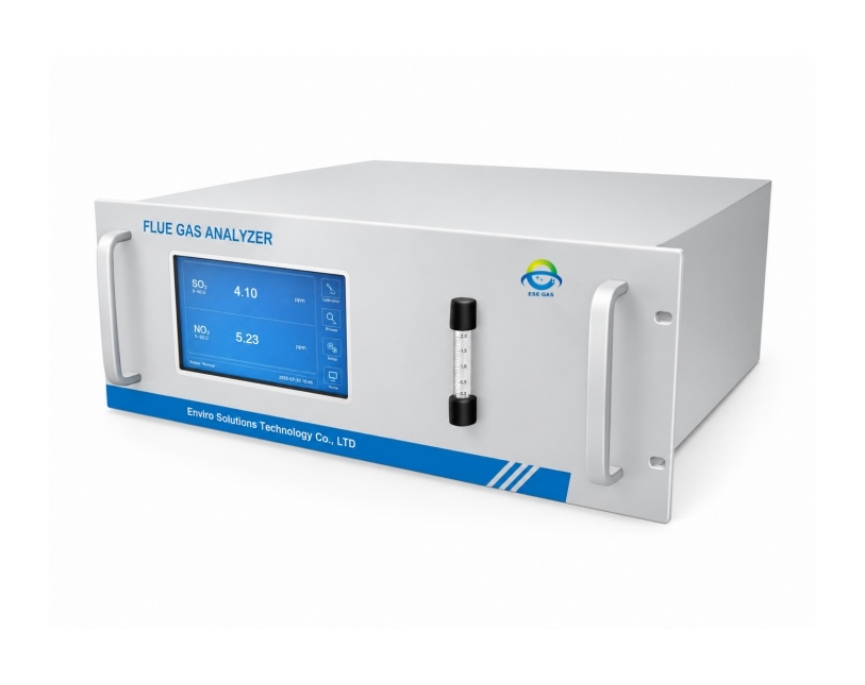
Our model UV-GAS-500 model can measure SO2 based on DOAS and PLS,able to measure the concentration of gases including SO2, NO2, NO, NH3, Cl2, O3, H2S, etc.It has features of high measurement accuracy,outstanding,reliablility,fast response time and wide applicable scope
Applications:
☑ Flue gas continuous emission monitoring (CEMS) for the power plants
☑ DeSOx process monitoring (analyze SO2 and O2)
☑ Waste incineration flue gas continuous emission monitoring (analyze SO2, NO, NO2 and O2)
☑ Sulfur recovery process gas analysis (analyze SO2 and H2S)
☑ On-line air monitoring (analyze SO2,NO2 and O3)
Environmental Monitoring : Sulfur dioxide (SO2) is a major air pollutant emitted from various industrial processes, power plants, and combustion of fossil fuels. It contributes to the formation of acid rain, smog, and particulate matter, which have detrimental effects on ecosystems and human health. An SO2 gas analyzer plays a vital role in monitoring and assessing ambient air quality to ensure compliance with environmental regulations and identify areas that require pollution control measures.
Health Impact Assessment : Exposure to high levels of SO2 can have severe health effects on humans. It can irritate the respiratory system, leading to breathing difficulties, exacerbation of asthma, and other respiratory ailments. Long-term exposure to elevated SO2 levels has been linked to chronic rIespiratory diseases and cardiovascular problems. By accurately measuring SO2 concentrations, gas analyzers help assess potential health risks and provide valuable data for public health officials and policymakers.
Emissions Control : Industries that emit sulfur dioxide are often subject to regulatory limits on their emissions. SO2 gas analyzers enable real-time monitoring of emissions from power plants, industrial facilities, and other sources. By providing accurate and timely measurements, these analyzers help industries ensure compliance with emission standards, optimize combustion processes, and implement effective pollution control measures such as scrubbers, catalytic converters, and flue gas desulfurization systems.
Process Optimization : In industrial processes where SO2 is involved, such as sulfuric acid production and metal smelting, the accurate measurement of SO2 concentrations is essential for process optimization. By continuously monitoring SO2 levels, gas analyzers help maintain process efficiency, minimize waste, and improve overall productivity.
Occupational Safety : Workers in industries where SO2 may be present, such as mining, chemical manufacturing, and refining, face potential health risks. An SO2 gas analyzer enables the monitoring of SO2 levels in work environments, ensuring that exposure remains within safe limits. This information helps employers implement proper ventilation systems, personal protective equipment (PPE), and other safety measures to protect workers’ health and well-being.
Overall, an SO2 gas analyzer is important for environmental protection, public health, regulatory compliance, and workplace safety. It enables the monitoring and control of sulfur dioxide emissions, facilitates the assessment of health risks, and aids in the optimization of industrial processes to minimize environmental impact and protect human health.
The ESEGAS UV-GAS-500 SO₂ Analyzer uses Ultraviolet Differential Optical Absorption Spectroscopy (UV-DOAS) to continuously measure sulfur dioxide concentration in flue gas and industrial process gas.
The measurement principle is based on the selective absorption of ultraviolet light by SO₂ molecules. An ultraviolet light source passes through the gas sample, and SO₂ absorbs light at its characteristic wavelengths. The analyzer measures the change in ultraviolet light intensity and applies the Beer–Lambert law to determine the gas concentration. Differential spectral analysis helps distinguish the SO₂ absorption signal from background interference.
| Model | Technology | Standard | Low Emission | Ultra-low Emission | |
| Range SO2/NOx | UV-DOAS | 0-300-3000ppm | 0-100-300ppm | 0-50ppm | |
| Range O2 | EC sensor | 0-5% to 0-25% vol | 0-5% to 0-25% vol | 0-5% to 0-25% vol | |
| Linearity | ≤±1.5%FS | ||||
| Repeatability | ≤±0.5%FS | ||||
| Zero Drift | ≤±2%FS/7d | ||||
| Span Drift | ≤±2%FS/7d | ||||
| Output | RS485/4-20mA output | ||||
| Response time (T90) | ≤10S | ≤30S | ≤30S | ||
We will contact you within 1 working day, please pay attention to the email with the suffix “[email protected]” .