

Introduction
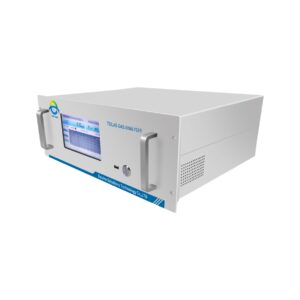
The ESEGAS IR-GAS-600 Oxygen (O₂) Analyzer is designed for continuous measurement of oxygen concentrations in industrial process gases, combustion systems, and environmental monitoring applications. It offers electrochemical, paramagnetic, zirconia, and TDLAS measurement technologies to accommodate different gas compositions, concentration ranges, and operating conditions. Depending on the selected configuration, the analyzer supports oxygen measurement from trace ppm levels to high percentage concentrations, including up to 100% O₂. It provides reliable measurement data for combustion control, gasification, metallurgy, petrochemical processes, and industrial gas quality monitoring.
Measurement Range: ppm to 100%
Technologies: Electrochemical | Paramagnetic | Zirconia | TDLAS
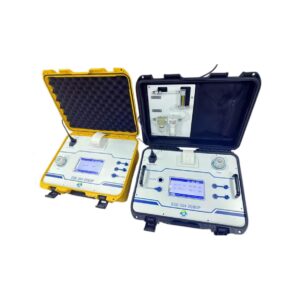
Configurations: Online | Portable | In-situ
Applications: Gasification, Biogas & Landfill Gas, Combustion & Furnace Monitoring, Metallurgy, Petrochemical & Process Gas
| Application | Recommended Technology | Main Consideration |
|---|---|---|
| Portable O₂ measurement | Electrochemical | Compact and low power |
| General process monitoring | Electrochemical / Paramagnetic | Depends on accuracy and conditions |
| Precision process control | Paramagnetic | Accuracy and stability |
| Boiler combustion | Zirconia | High-temperature operation |
| Furnace / kiln | Zirconia | High-temperature direct measurement |
| Flue gas combustion control | Zirconia | Fast response and temperature capability |
| Selective online measurement | TDLAS | Selectivity and continuous monitoring |
| Laboratory / Clean Gas | Paramagnetic | Precision measurement |
Our oxygen gas analyzers IR-GAS-600 come in a variety of models and technologies. We can supply electrochemical-based oxygen analyzers that are suitable for intermittent or continuous measurements, featuring high accuracy, fast response times, low power consumption and a long life span. For applications that require higher accuracy and stability readings over wide ranges of temperature and pressure, we offer paramagnetic-based oxygen analyzers. Zirconia oxygen analyzers are ideal for applications that require accurate and reliable measurements over long periods of time in extreme temperature environments, while tunable diode laser absorption spectroscopy (TDLAS) is an emerging technology which has the advantage of being highly selective to a single target gas. No matter your application, we have the right oxygen analyzer to suit your needs.
☑ EC sensor-based Oxgen analyzer
☑ Paramagnetic oxygen analyzer
An oxygen gas analyzer measures O₂ concentrations in industrial process gases, combustion systems, and environmental applications. It supports process control, combustion optimization, gas purity assessment, and safety monitoring.
Depending on the model, oxygen can be measured using electrochemical, paramagnetic, zirconia, or TDLAS technologies. Each method detects a different physical or chemical property of oxygen.
Trace oxygen analyzers measure very low concentrations, commonly in ppm. Percentage-level analyzers measure higher oxygen concentrations, typically expressed as volume percent. Different sensor technologies and measurement configurations may be required.
Electrochemical analyzers measure oxygen through an electrochemical reaction. Paramagnetic analyzers use oxygen’s magnetic properties to determine its concentration. Paramagnetic measurement is commonly used for continuous industrial gas analysis.
Choose an oxygen analyzer based on the required measurement range, gas composition, operating conditions, response time, and maintenance budget.
| Technology | When to choose it | Main considerations |
| Electrochemical | For economical ppm or percentage oxygen measurement in clean, compatible sample gases. | Conventional galvanic sensors require periodic replacement. Check compatibility with acid gases such as H₂S and CO₂, and control sample pressure. |
| TDLAS | For fast, selective oxygen monitoring in demanding processes, including suitable applications containing combustible gases. Available in in-situ and extractive configurations. | Confirm detection limit, optical path length, temperature, and pressure. Dust and dirty optical windows can reduce light transmission. |
| Paramagnetic | For continuous percentage oxygen measurement where accuracy, stability, and a non-depleting sensing principle are priorities. | Usually requires a conditioned sample. Background gas effects, pressure stability, and vibration sensitivity depend on the sensor design. |
Electrochemical sensors offer both trace and percentage measurement options, while paramagnetic analyzers are commonly selected for percentage-level oxygen analysis. TDLAS is particularly useful when fast process response or direct in-situ measurement is required.
For gases containing CH₄, H₂, or CO, selection should consider the complete gas mixture. Suitable versions of all three technologies may be available; combustible gas presence alone does not determine the best choice. Hazardous-area certification must also match the installation.
For an ESEGAS application review, provide the oxygen range, required accuracy, full gas composition, sample temperature and pressure, moisture content, and installation conditions.
Yes. However, background gas composition can affect some measurement technologies. The analyzer must be selected and calibrated for the actual gas mixture to ensure reliable results.
Common applications include metallurgy, petrochemical production, power generation, industrial combustion, gasification, hydrogen production, and gas purity monitoring.
The ESEGAS Oxygen (O₂) Analyzer measures oxygen concentration using different sensing technologies according to the process conditions, measurement range, and application requirements. Available technologies include Electrochemical, Paramagnetic, Zirconia , and Tunable Diode Laser Absorption Spectroscopy (TDLAS) . By selecting the appropriate sensing principle, ESEGAS oxygen analyzers can support measurements from trace ppm levels to high percentage concentrations for continuous process monitoring, combustion control, safety monitoring, and gas quality control.
| Application | Recommended Technology | Main Consideration |
|---|---|---|
| Portable O₂ measurement | Electrochemical | Compact and low power |
| General process monitoring | Electrochemical / Paramagnetic | Depends on accuracy and conditions |
| Precision process control | Paramagnetic | Accuracy and stability |
| Boiler combustion | Zirconia | High-temperature operation |
| Furnace / kiln | Zirconia | High-temperature direct measurement |
| Flue gas combustion control | Zirconia | Fast response and temperature capability |
| Selective online measurement | TDLAS | Selectivity and continuous monitoring |
| Laboratory / Clean Gas | Paramagnetic | Precision measurement |
We will contact you within 1 working day, please pay attention to the email with the suffix “[email protected]” .