



Industrial gas measurement starts with one basic question: how can a gas be converted into a reliable measurement signal?
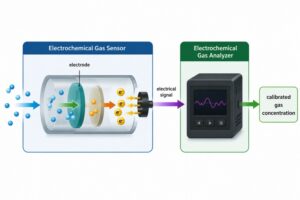
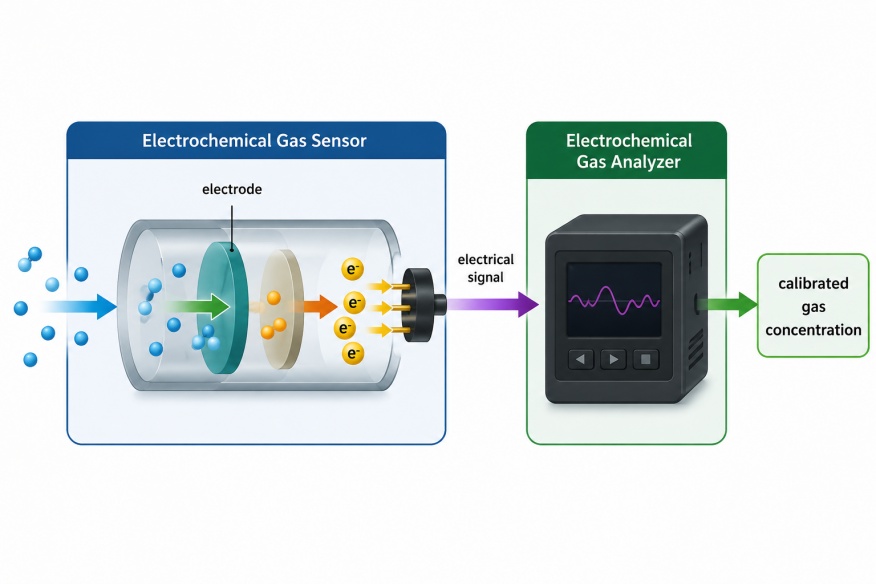
An electrochemical gas sensor measures a compatible target gas through an electrochemical reaction that produces an electrical signal. An electrochemical gas analyzer processes this signal and converts it into a calibrated gas concentration.
In practice, the result depends on more than the target gas alone. Sensor chemistry, gas transport, electrode reactions, temperature, humidity, interfering gases, and signal processing can all influence measurement performance.
How Does an Electrochemical Gas Analyzer Work?
An electrochemical gas sensor is a sensing device that detects a specific gas through an electrochemical reaction. When the target gas reaches the sensing element, it reacts within the sensor and produces an electrical response.
Gas analyzer technology commonly uses electrochemical sensing for oxygen and selected toxic or reactive gases. However, each sensor is designed for a specific measurement task. Its gas compatibility, measurement range, sensitivity, selectivity, and operating conditions depend on the sensor chemistry and construction.
The gas analyzer then processes this response and converts it into a gas concentration. The sensor produces an electrical response, but the electrical signal is not the final measurement value. The gas analyzer processes the sensor output and applies the appropriate calibration relationship. The final result may then be displayed as ppm, %Vol, or another appropriate concentration unit.
Depending on the gas analyzer configuration, the measurement data can also be transmitted through analog or digital interfaces. This distinction is important for industrial gas analysis. The sensor creates the primary response. The gas analyzer turns that response into usable measurement data.
Which Gases Can an Electrochemical Gas Sensor Measure?
Electrochemical gas sensors can measure selected gases when their sensor chemistry is designed for those gases. Common examples include: O₂, CO, H₂S, SO₂, NO, NO₂, NH₃, depending on the sensor design. However, the target gas alone does not define measurement performance.
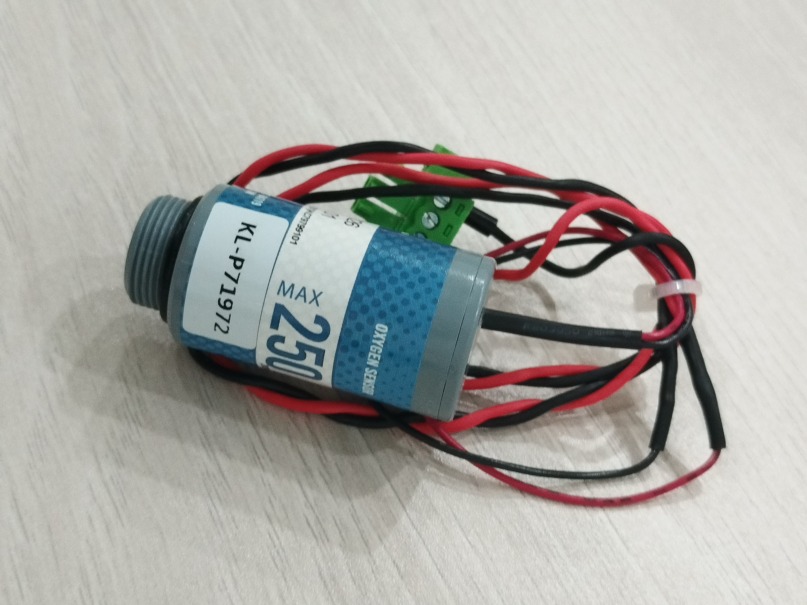
Two sensors designed for the same gas can differ in measurement range, sensitivity, operating conditions, cross-sensitivity, and response characteristics. For example, an industrial oxygen measurement may require a different sensor configuration from a low-level toxic gas measurement.
This is also why manufacturers publish gas-specific specifications rather than one universal performance specification for all electrochemical sensors.
When evaluating a particular gas, the relevant technical information should include the approved measurement range, operating conditions, response characteristics, and potential interference information for that sensor model.
What Are the Main Components of an Electrochemical Gas Sensor?
Although electrochemical sensor designs differ, several components commonly work together to control gas transport, support the electrochemical reaction, and transfer the resulting signal.
| Component | Main Function | Why It Matters |
|---|---|---|
| Gas inlet | Allows the target gas to enter the sensor | Gas must reach the sensing system |
| Diffusion path or barrier | Controls gas transport | Changes in gas transport can affect response |
| Working electrode | Supports the sensing reaction | The target gas reaction creates the primary electrical response |
| Counter electrode | Supports the complementary electrochemical reaction | Completes the electrochemical process |
| Reference electrode, where used | Helps control or monitor electrochemical potential | Supports stable operation in applicable sensor designs |
| Electrolyte | Supports ionic movement between electrodes | Enables the electrochemical reaction |
| Electrical contacts | Transfer the sensor output to the gas analyzer | Connect the sensing element to signal processing electronics |
Consequently, engineers should always refer to the operating conditions specified for the selected sensor instead of applying one general rule to every electrochemical sensor. Therefore, engineer should understand the technology as a family of gas-specific sensor designs rather than one identical sensing method.
How Does an Electrochemical Gas Analyzer Compare with NDIR and TDLAS?
Electrochemical sensing, NDIR, and TDLAS use different measurement principles.
| Selection Criterion | Electrochemical | NDIR | TDLAS |
|---|---|---|---|
| Measurement principle | Electrochemical reaction | Infrared absorption | Tunable laser absorption |
| Primary signal | Electrical response from the sensing reaction | Change in infrared absorption | Laser absorption at selected wavelengths |
| Gas capability | Depends on sensor chemistry | Suitable for IR-active gases | Depends on accessible molecular absorption lines |
| Selectivity | Depends on sensor design and possible interference | Depends on spectral design and gas matrix | High spectral selectivity potential for selected gases |
| Multi-gas capability | Depends on analyzer configuration | Can support multiple compatible gases | Often designed around selected target gases |
| Main influencing factors | Sensor chemistry, environment, interfering gases | Optical design, gas composition, optical contamination | Optical path and application conditions |
The comparison does not produce one universal winner. Instead, each technology answers a different measurement requirement. Therefore, technology comparison should begin with the measurement principle: What physical or chemical property of the target gas will the analyzer measure? This question creates a clear path from the target gas to the appropriate technology.
How Does ESEGAS Design Industrial Gas Analyzer Systems Using Electrochemical Sensor?
ESEGAS connects gas analyzer technology with the target gas and measurement requirement. For oxygen measurement, the ESEGAS IR-GAS-600 can be configured with electrochemical O₂ sensing. According to the published product information, the electrochemical O₂ configuration is available for a 0–25% measurement range, with 0.01% resolution and stated accuracy of ≤±3% FS for the listed configuration. The engineer should always confirm final specification for the actual project.
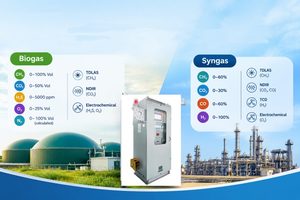
However, electrochemical sensing is only one available measurement technology within a broader gas analysis requirement. For multi-component applications, published ESEGAS IR-GAS-600 configurations also include NDIR measurement for gases such as CO, CO₂, and CH₄, together with TCD measurement for H₂.
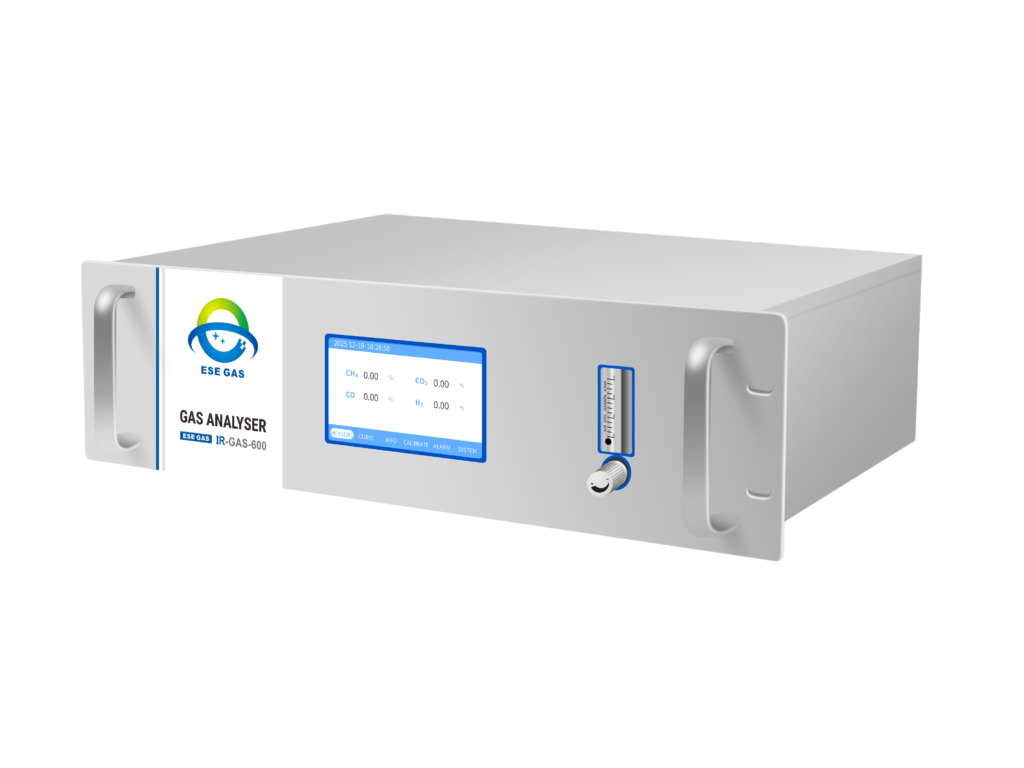
The value of this approach is not that every application requires multiple technologies. Instead, different sensing principles can address different gas measurement mechanisms within one application-specific configuration.
ESEGAS therefore connects:
Different gases have different physical and chemical properties. Electrochemical sensor can measure some gases effectively through electrochemical reactions. Others are more suitable for infrared absorption, laser absorption, thermal conductivity, or other measurement principles.
Conclusion
An electrochemical gas sensor measures a compatible target gas through an electrochemical process that produces an electrical signal, while the gas analyzer converts and calibrates that signal into a concentration value. Technology selection depends on the gas matrix and operating conditions—not simply on the target gas name.
Need to select an electrochemical or multi-technology gas analyzer for your application? Contact ESEGAS to discuss the target gases, measurement range, gas matrix, sampling conditions, calibration requirements, and system configuration.