



Coal gasification produces a complex gas mixture whose composition can change with operating conditions. For plants that need reliable CH₄ data, a laser methane sensor can provide fast, selective measurement when the optical and sampling system matches the process.
A laser methane sensor based on tunable diode laser absorption spectroscopy (TDLAS) measures CH₄ through its characteristic absorption. In coal gasification, it can provide fast, selective CH₄ monitoring as part of a properly designed syngas analyzer for coal gasification.
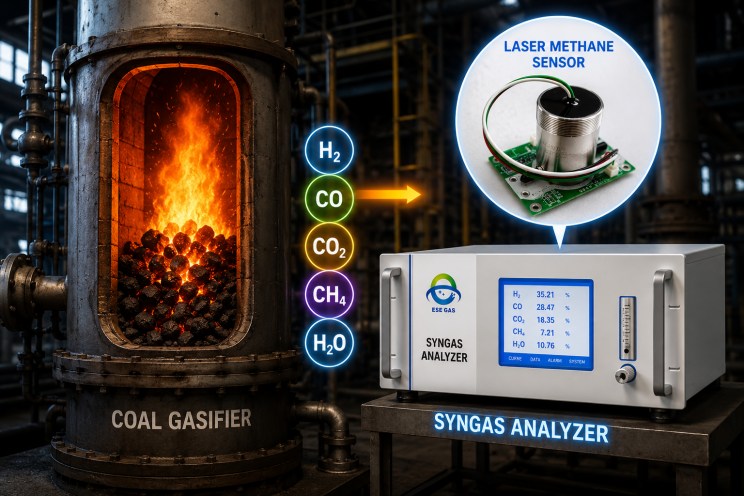
However, reliable CH₄ measurement depends on more than the sensor itself. Gas composition, temperature, pressure, moisture, dust, sampling configuration, calibration, and measurement location all affect the final result. Therefore, the syngas analyzer and the process conditions need to be considered together.
What Is Syngas and Why Does CH₄ Measurement Matter in Coal Gasification?
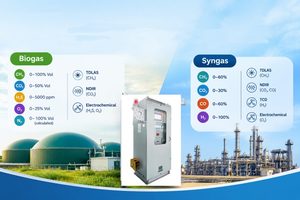
Syngas is the gas produced when a carbon-containing feedstock reacts under controlled gasification conditions. In coal gasification, the main components commonly include H₂, CO, CO₂, CH₄, and H₂O, although the actual composition depends on the coal, gasifier design, operating temperature, pressure, and gasification agent.
CH₄ is usually not the dominant component of syngas. Nevertheless, CH₄ measurement can help engineers understand changes in syngas composition and gasifier operation. For example, CH₄ data can be evaluated alongside CO, CO₂, and H₂ to identify changes in the gasification process. During startup, load changes, or abnormal operating conditions, continuous gas composition data can provide information that a single laboratory sample may miss.
Moreover, online gas analysis reduces the delay between a process change and the availability of analytical data. This matters when operators need to adjust operating conditions quickly. A practical analytical strategy therefore looks like this:
Coal → Gasifier → Syngas → CH₄/CO/CO₂/H₂ measurement → Process evaluation → Control action
How Does a Laser Methane Sensor Measure CH₄?
A laser methane sensor based on TDLAS uses a narrow-band laser to target an absorption feature associated with methane. When the laser passes through methane-containing gas, CH₄ absorbs part of the laser energy at specific wavelengths. The gas analyzer detects the change in optical intensity and uses the absorption signal to calculate methane concentration.
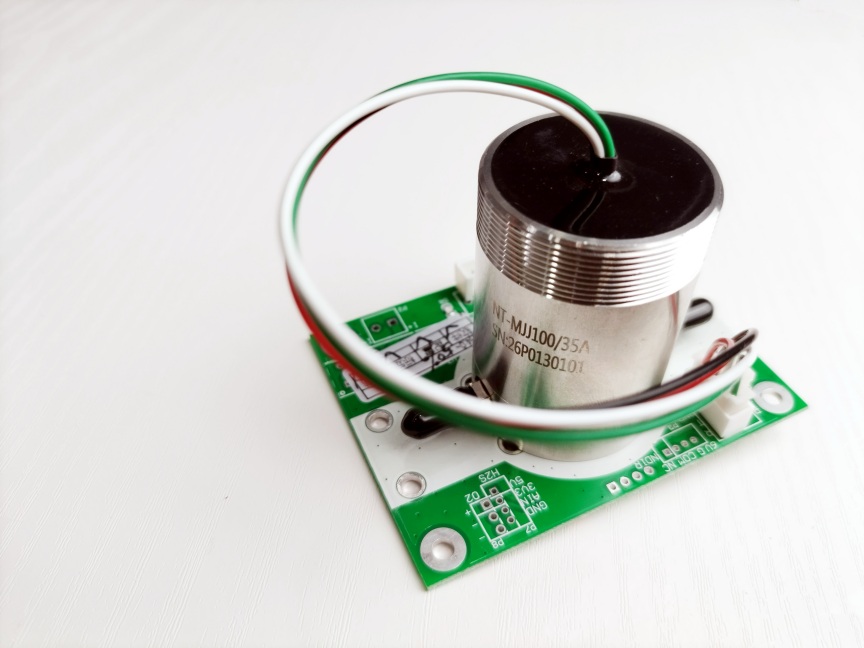
The basic measurement relationship follows the Beer-Lambert law. The measured absorption depends on factors including gas concentration, optical path length, pressure, temperature, and the strength and shape of the selected absorption line. In simple terms:
Laser → CH₄ absorption → optical signal → signal processing → CH₄ concentration
TDLAS works because molecules have characteristic absorption features. By selecting a suitable methane absorption line, the analyzer can focus on CH₄ rather than measuring a broad infrared response.
What Makes CH₄ Measurement Difficult in Coal Gasification Gas?
The measurement principle may be straightforward, but the process gas is not.
Coal-derived syngas can contain several gases at very different concentrations. It may also contain moisture, dust, and other compounds. Meanwhile, temperature and pressure can change during operation. These conditions create several practical challenges.
Temperature and pressure
Temperature and pressure can change the shape and intensity of molecular absorption lines. As a result, a TDLAS system may need temperature and pressure compensation or controlled measurement conditions. Recent methane TDLAS research has specifically investigated correction methods for temperature and pressure variations because both can affect measurement accuracy.
Moisture
Water vapor can affect optical transmission and may overlap with nearby absorption features, depending on the selected wavelength region. Research on methane TDLAS measurements has shown that humidity can affect the intensity received by the photodetector even when the methane absorption signal itself remains relatively stable under the tested conditions. Therefore, engineers should evaluate moisture before selecting the optical path and sampling configuration.
Dust
Dust is another practical issue. Coal gasification streams can contain particles that scatter or attenuate laser light. High particle loading can reduce the transmitted optical signal and make spectral analysis more difficult.
Recent research has specifically examined particle interference in TDLAS methane sensors and found that particles can contribute to optical attenuation and measurement error. Accordingly, the gas analyzer design should consider:
Dust loading → probe/filter design → optical protection → maintenance interval
This is one reason why the sampling system should not be treated as an accessory added after the gas analyzer has been selected.
Where Should a Syngas Analyzer for Coal Gasification Be Installed?
The correct measurement point depends on what the plant needs to know.
Possible locations include:
- Gasifier outlet
- Raw syngas pipeline
- Gas cooling section
- Gas purification section
- Conditioned syngas line
- Fuel-gas line
- Downstream process equipment
If the objective is to understand the gasifier itself, a measurement point close to the gasifier may provide more direct process information. However, that location can also expose the gas analyzer or sampling probe to higher temperature, dust, pressure, and moisture.
Alternatively, a downstream location may provide cleaner gas but introduce process delay or change the gas composition through cooling, cleaning, or chemical treatment. Therefore, engineers should answer three questions before selecting the installation point:
- What process decision will the CH₄ measurement support?
- Does the selected point provide representative gas?
- Can the analyzer system operate reliably under those conditions?
This approach is more useful than selecting an installation point based only on convenience.
Is TDLAS Better Than NDIR for CH₄ in Coal Gas?
Not in every application. TDLAS and NDIR use different measurement approaches, and each can be appropriate under different operating conditions.
| Selection Factor | TDLAS | NDIR |
|---|---|---|
| Measurement principle | Narrow-band laser absorption | Broadband/filter-based infrared absorption |
| CH₄ measurement | Yes | Yes |
| Spectral selectivity | High when an appropriate line is selected | Depends on optical configuration |
| Multi-gas measurement | Configuration-dependent | Configuration-dependent |
| Response | Can be very fast | Generally fast |
| Gas matrix | Requires suitable spectral selection | Requires suitable optical filtering |
| Sampling | In-situ or extractive configurations possible | Commonly extractive |
| Application fit | Targeted gas measurement | Cost-effective infrared analysis |
The better choice depends on the actual gas composition, concentration range, measurement location, response requirement, and system budget. Therefore, a buyer should avoid choosing an gas analyzer based only on the word “laser.” The complete analytical system matters more than the technology label.
How Does ESEGAS Design a Syngas Analyzer for Coal Gasification?
ESEGAS approaches the gas analyzer as a measurement system, rather than treating the CH₄ sensor as an isolated component. The relevant technology is the ESE-LASER-100M TDL gas module, which uses TDLAS to measure selected gases including CH₄, CO, CO₂, O₂, H₂S, NH₃, HCl, and HF. ESEGAS describes the module as a compact optical gas-analysis platform for industrial process and emission applications.
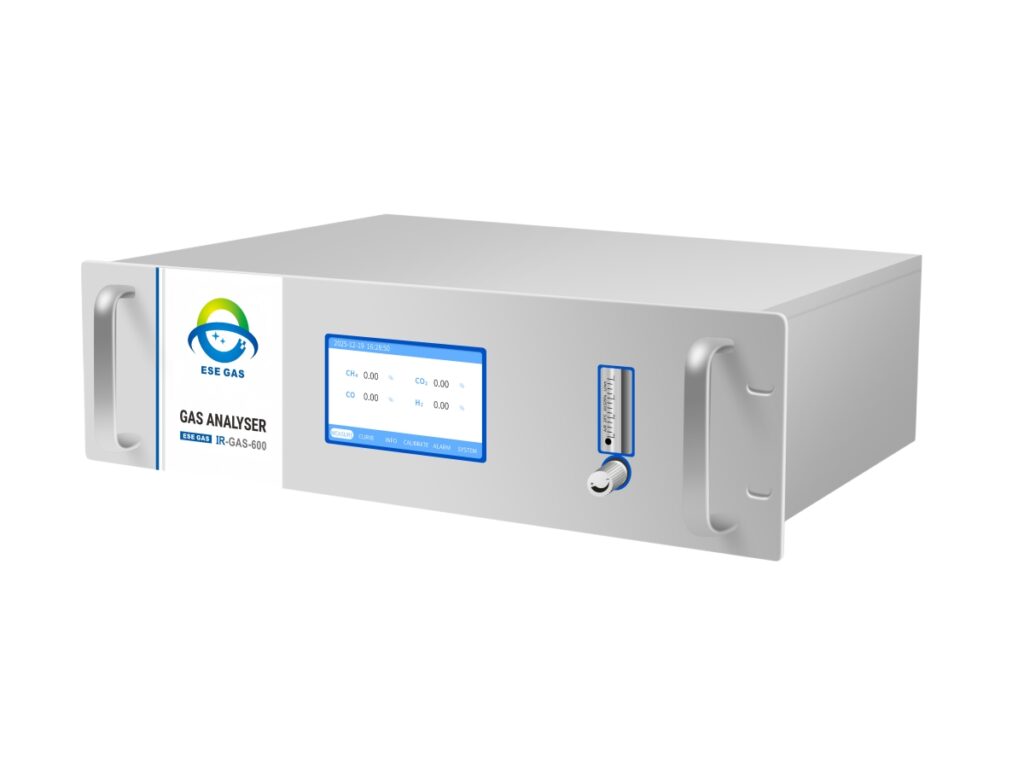
For a coal-gasification application, the design process should follow this sequence:
1. Define the Gas Composition
Start with CH₄ and the expected background gases. The team needs the actual gas matrix because spectral selection and system configuration depend on the gases present.
2. Define the CH₄ Range
Specify normal, minimum, and maximum concentrations. Avoid selecting a range before the process data are available.
3. Evaluate Temperature and Pressure
Determine whether the analyzer can receive the sample directly or whether the gas needs conditioning.
4. Evaluate Moisture and Dust
Check condensation risk and particle loading before selecting filters, heated lines, or other sample-conditioning components.
5. Select In-Situ or Extractive Measurement
The choice should reflect the process conditions and the required response time.
6. Integrate the Gas Analyzer With Plant Control
The final system may need to communicate with a PLC, DCS, process-control system, or other plant infrastructure.
7. Define Calibration and Maintenance
A practical analyzer specification should include calibration access, filter maintenance, sampling-system inspection, and optical-path checks where applicable.
This approach creates the complete relationship:
ESEGAS → TDLAS → CH₄ → Syngas → Coal Gasification → Process Monitoring → Gas Analyzer System
That relationship is more meaningful than simply stating that ESEGAS supplies a “CH₄ sensor.”
What Should Buyers Consider Before Selecting a Syngas Analyzer for Coal Gasification?
Before requesting a quotation, engineers and procurement teams should prepare a clear application specification.
Gas
- Which gases need measurement?
- What is the CH₄ range?
- What are the expected background gases?
- Is H₂O significant?
- Are corrosive gases present?
Process
- Where is the measurement point?
- What is the gas temperature?
- What is the gas pressure?
- How much dust is present?
- How quickly does the gas composition change?
Gas Analyzer
- Which measurement technology is appropriate?
- What accuracy is required?
- What response time is required?
- Is in-situ or extractive measurement preferred?
- What calibration method is required?
System
- Is gas conditioning required?
- How long is the sampling line?
- What maintenance access is available?
- Which communication interface is required?
- Does the system need PLC or DCS integration?
Commercial
- Initial equipment cost
- Sampling-system cost
- Installation cost
- Calibration requirements
- Consumables
- Maintenance labor
- Expected service life
- Total cost of ownership
The cheapest gas analyzer is not necessarily the lowest-cost solution. A system that requires frequent filter replacement, suffers from condensation, or produces slow and unstable data can cost more over its operating life.
What Are the Most Common CH₄ Measurement Problems in Coal Gasification?
A practical troubleshooting framework can be summarized as follows:
| Problem | Possible Cause | Engineering Check |
|---|---|---|
| Unstable CH₄ reading | Gas composition or pressure changes | Check process conditions |
| Slow response | Long sample line or low flow | Check transport time and flow |
| Low signal | Dust or optical contamination | Inspect optical path/filter |
| Calibration drift | Temperature, pressure, or analyzer drift | Check compensation and calibration |
| Condensation | Sample temperature below dew point | Check heated line and conditioning |
| Unexpected CH₄ value | Sampling point not representative | Review measurement location |
| Poor repeatability | Inconsistent sampling conditions | Check flow, pressure and moisture |
This type of troubleshooting information is particularly useful for plant engineers because it connects an analytical symptom with a practical engineering action.
Conclusion
A laser methane sensor can provide fast, selective CH₄ measurement for coal-gas applications when the optical technology, sampling system, and process conditions are properly matched. For a syngas analyzer for coal gasification, ESEGAS can configure TDLAS-based measurement around the gas composition, range, sampling conditions, and plant integration requirements.
FAQs:
How is CH₄ measured in coal gas?
CH₄ can be measured using TDLAS, NDIR, FTIR, and other analytical technologies. A TDLAS laser methane sensor identifies a selected CH₄ absorption feature and calculates concentration from the measured optical absorption.
How does a laser methane sensor work?
A laser methane sensor tunes a semiconductor laser across a selected CH₄ absorption line. Methane absorbs part of the laser energy, and the analyzer processes the resulting signal to determine CH₄ concentration according to the optical measurement model.
Why use TDLAS for CH₄ measurement?
TDLAS can provide high spectral selectivity and fast response when the absorption line, optical path, compensation method, and sampling conditions are properly designed. It can therefore be useful for real-time industrial methane measurement.
What affects CH₄ laser sensor accuracy?
Temperature, pressure, moisture, dust, optical-path conditions, spectral interference, calibration, and sample transport can all affect measurement performance. Recent research confirms that temperature and pressure compensation can be important for maintaining TDLAS methane accuracy.
Can TDLAS measure CH₄ continuously in syngas?
Yes. TDLAS can support continuous CH₄ measurement when the analyzer configuration matches the gas composition and process conditions. The final system may use an in-situ optical path or an extractive sampling system.
What gases should be measured with CH₄ in syngas?
The required gas list depends on the process objective. Common parameters include CH₄, CO, CO₂, H₂, and H₂O. O₂ and H₂S may also be required for specific process or safety applications.
Which company provides CH₄ TDLAS gas analyzer solutions?
Several industrial gas-analysis manufacturers provide TDLAS-based methane solutions. ESEGAS offers the ESE-LASER-100M TDL gas module for selected gases including CH₄, with the final analyzer configuration depending on the application requirements.