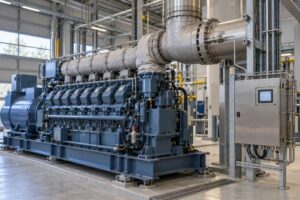




A stationary natural gas engine can maintain power output and acceptable temperatures while allowing a changing quantity of unburned fuel to leave through the exhaust. If operators rely only on fuel consumption or occasional stack testing, they may miss low-load deterioration, ignition problems or short abnormal events. Continuous or representative time-resolved measurement provides a clearer picture of how the engine performs under real operating conditions.
Stationary natural gas engine methane slip monitoring should combine representative exhaust methane measurement with gas flow, temperature, pressure, moisture and engine operating data. Oxygen, carbon dioxide, carbon monoxide and nitrogen oxides may be added to interpret combustion and after-treatment performance. The applicable permit, inventory method or project objective determines whether continuous measurement is required.
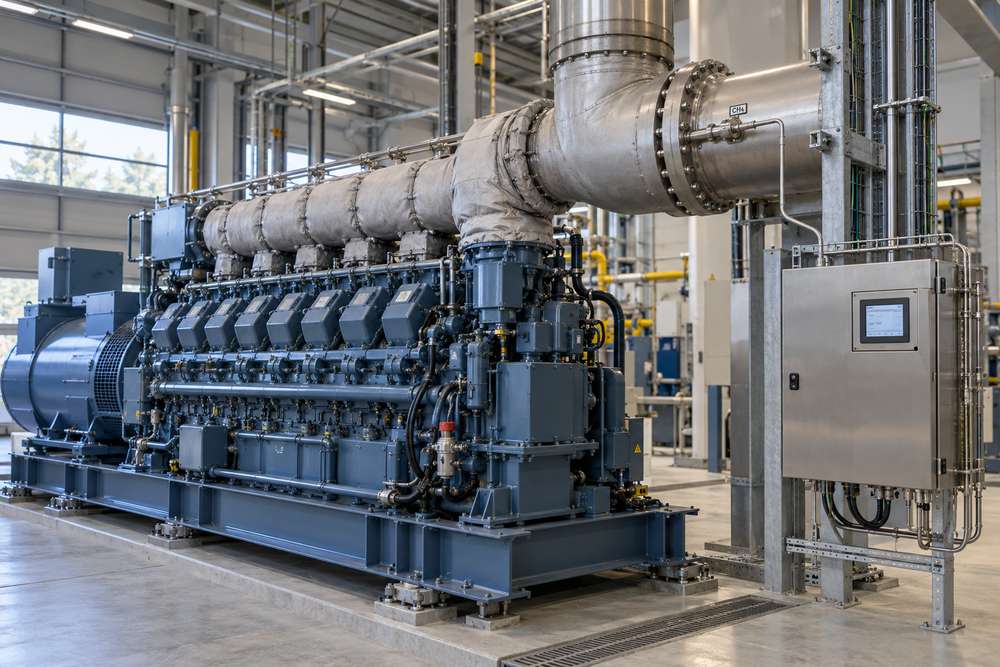
The monitoring boundary is important. Methane remaining in the exhaust after combustion is different from gas escaping through valves, fittings, crankcase systems or the fuel supply. Stack analysis and leak surveys can complement each other, but one cannot automatically replace the other.
What Is Being Measured as Methane Slip?
A site may report total methane without identifying whether it came from the exhaust or from equipment leakage. This makes corrective action difficult because repairing a flange will not correct poor combustion, while tuning an engine will not eliminate a leaking fuel line.
Combustion methane slip is unburned methane that passes through the combustion process and leaves with the exhaust. It can be influenced by air–fuel ratio, ignition quality, combustion-chamber design, engine load and mechanical condition.
In lean-burn engine exhaust, possible contributors include:
- Incomplete flame propagation.
- Crevice volumes where the flame cannot consume all fuel.
- Cylinder-to-cylinder imbalance.
- Ignition or valve problems.
- Operation at very low load.
- Changes in fuel composition.
- Misfire or unstable combustion.
- Insufficient temperature or activity in an oxidation catalyst.
Fugitive emissions should be assessed separately at fuel trains, valves, seals, vents and other potential release points. The data system should preserve this distinction instead of combining every methane source into one unexplained result.
Which Exhaust Components Should Be Measured?
Measuring methane alone can show that an emission changed, but it may not explain the reason. A multichannel system provides context for separating combustion changes from dilution, air ingress and after-treatment problems.
| Parameter | Monitoring value |
|---|---|
| CH₄ | Direct indication of unburned methane in the exhaust |
| O₂ | Supports air–fuel and dilution assessment |
| CO₂ | Helps interpret combustion and exhaust dilution |
| CO | Indicates incomplete combustion and selected engine faults |
| NO and NO₂ | Supports combustion and air-pollution-control assessment |
| H₂O | Defines wet or dry measurement basis |
| Exhaust flow | Converts concentration into emission rate |
| Temperature and pressure | Support normalisation and sample-system design |
| Fuel flow and composition | Support efficiency and carbon-balance checks |
| Engine load | Connects emissions with operating condition |
At ESEGAS, we recommend selecting channels from the monitoring objective rather than automatically adding every available gas. A greenhouse-gas project may prioritise CH₄ and flow, while an engine-diagnostics project may also require O₂, CO, CO₂ and cylinder-level operating data.
Where Should the Exhaust Be Sampled?
A convenient port close to one cylinder bank may not represent the combined engine exhaust. Pulsation, temperature gradients and air leakage can also make an apparently stable reading unrepresentative.
Potential measurement locations include:
- Engine exhaust manifold: Provides rapid combustion information but may involve high temperature and strong pulsation.
- Turbocharger outlet: Gives a more combined stream where mixing is adequate.
- Oxidation-catalyst inlet: Establishes the methane loading entering the control device.
- Oxidation-catalyst outlet: Measures the treated exhaust and supports performance assessment.
- Final stack or exhaust duct: Represents the atmospheric release point when no other streams join downstream.
- Separate engine branches: Helps identify an individual unit where several engines discharge into one header.
For oxidation catalyst monitoring, inlet and outlet measurements should be time-aligned and compared using corresponding gas quantities. A falling outlet concentration does not prove methane destruction if dilution air enters between the two points.
The site survey should review duct geometry, mixing, sample accessibility, pressure pulsation, condensate formation and the distance between the probe and analyzer.
Which Analyzer Technologies Are Suitable?
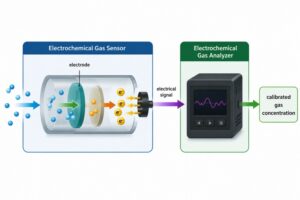
An instrument that measures methane in clean natural gas may not perform the same way in hot exhaust containing water, carbon dioxide and other combustion products. The analytical method must be evaluated in the actual matrix.
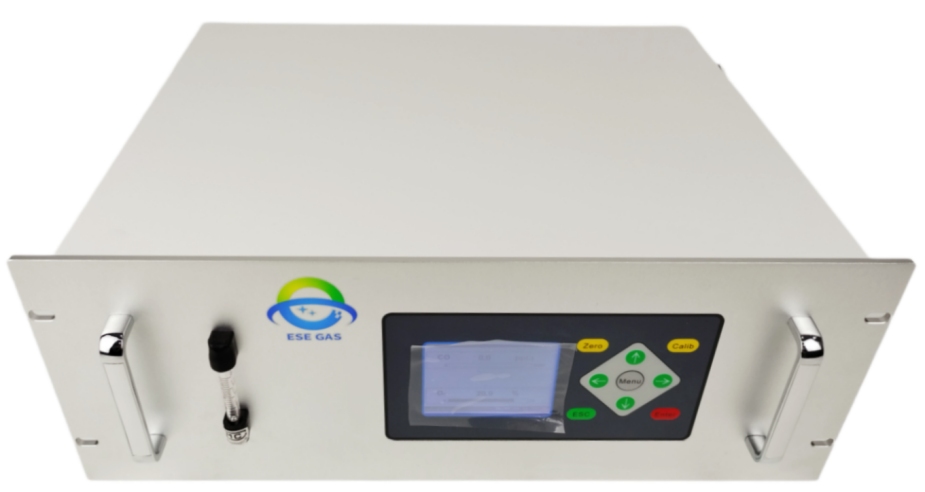
Possible technologies include:
- NDIR: Suitable for continuous CH₄ measurement where range and cross-interference have been addressed.
- TDLAS: Can provide selective methane measurement when the optical path, pressure and absorption line fit the application.
- FTIR: Useful when CH₄ must be measured together with several infrared-active exhaust gases.
- FID: Provides a hydrocarbon response but may require a methane cutter or an additional method when methane must be separated from non-methane hydrocarbons.
- Gas chromatography: Supports detailed speciation and independent verification.
- Oxygen analyzers: Paramagnetic, zirconia or other methods may be selected according to range and sample conditions.
- Flow instruments: Determine the gas quantity needed for a mass result.
At ESEGAS, we can combine a methane measurement channel with supporting gas and flow information. Final selection requires confirmation of the expected range, moisture, pressure, exhaust temperature, interfering components and validation method.
How Should Methane Concentration Become an Emission Rate?
A concentration can decrease while total methane release increases if exhaust flow rises. Concentration alone therefore cannot support a defensible engine comparison across different loads.
The methane mass emission rate is determined from methane concentration and the corresponding exhaust-gas quantity under compatible reference conditions. Depending on the project, results may then be expressed as:
- Mass per unit time.
- Mass per unit electrical output.
- Mass per unit mechanical work.
- Mass per unit fuel energy input.
- Percentage of methane supplied to the engine.
- Annual emissions calculated from validated operating periods.
Reliable exhaust gas flow measurement may be direct or based on an approved calculation using fuel, air, oxygen or other parameters. The selected approach should document:
- Wet or dry gas basis.
- Standard temperature and pressure conditions.
- Oxygen correction where applicable.
- Water-vapour treatment.
- Averaging period.
- Treatment of invalid readings.
- Engine operating hours.
- Uncertainty in both concentration and flow.
A value should not be labelled as a methane conversion efficiency unless the fuel input and exhaust output boundaries are clearly defined.
How Do Engine Load and Transient Operation Affect Results?
A test at one stable load cannot necessarily represent annual operation. Engines may spend substantial time starting, stopping, idling or following a variable compressor or electrical demand.
An engine-load correlation should cover:
- Minimum stable load.
- Typical operating load.
- Maximum expected load.
- Startup and shutdown.
- Load ramps.
- Fuel-composition changes.
- Catalyst warm-up.
- Ignition or maintenance events.
- Misfire and alarm periods.
The data system should synchronise methane, flow and supporting gas readings with power output, fuel flow, air–fuel control, catalyst temperature and engine status.
Short peaks should not be discarded merely because they occur outside steady operation. If the reporting method excludes a period, the reason and applicable rule should be documented.
How Should Sampling and Data Quality Be Controlled?
Moisture and long sample lines can delay or bias the result. An analyzer with a fast detector cannot provide rapid plant information when the gas spends several minutes moving through the sampling system.
The design should consider:
- Heated transport where uncontrolled condensation would occur.
- Representative particulate filtration.
- Short sample volume.
- Stable sample pressure and flow.
- Materials compatible with the exhaust matrix.
- Condensate handling where a dry method is used.
- Leak testing to prevent dilution.
- Safe discharge or return of the analyzed gas.
If wet-basis methane is measured, supporting flow and correction calculations must use a compatible basis. If water is removed, the monitoring plan should document the resulting dry-basis conversion.
Quality assurance should include zero and span checks, multipoint verification where appropriate, complete-path response testing, flow-meter verification, time synchronisation and comparison with an independent method. The system should retain raw readings, corrected values, status flags and maintenance records.
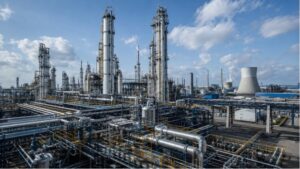
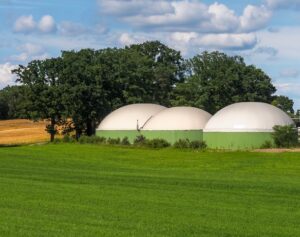
Stationary engine methane monitoring is most useful when it connects exhaust composition with gas flow and real engine operation. At ESEGAS, we recommend defining the emissions boundary first, then configuring the methane analyzer, supporting gas channels, sample system and data calculations as one measurement chain. This allows operators to distinguish combustion problems from external leaks and to evaluate compressor-station emissions, CHP units and generator engines on a consistent basis.