



Carbon monoxide (CO) monitoring is essential in steel plants, where blast furnaces, basic oxygen furnaces, and gas recovery systems operate under demanding conditions. High CO concentrations, changing gas compositions, dust, moisture, and temperature fluctuations can make reliable measurement challenging.
Two established technologies are Tunable Diode Laser Absorption Spectroscopy (TDLAS) and Non-Dispersive Infrared (NDIR). Both measure CO through infrared absorption, but their optical designs and monitoring capabilities differ. Selecting the wrong technology can increase maintenance requirements, delay process adjustments, or produce measurements that do not match operating conditions.
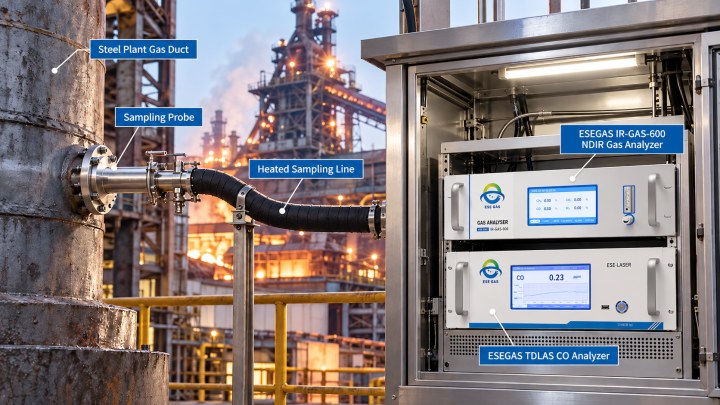
TDLAS is generally better for fast, selective CO monitoring at demanding measurement points, especially where an appropriate in-situ configuration can reduce sample transport delays. NDIR is often more practical for continuous bulk gas composition analysis, including CO, CO₂, and CH₄ monitoring in steelmaking gas recovery systems. The best choice depends on the CO concentration, gas composition, response requirements, sampling conditions, and total system cost.
How Do TDLAS and NDIR CO Gas Analyzers Work?
Both technologies follow the Beer–Lambert law, which describes how gas molecules absorb light at specific wavelengths. However, TDLAS and NDIR identify CO absorption differently. This difference influences selectivity, measurement sensitivity, installation design, and maintenance requirements.
How Does TDLAS Measure Carbon Monoxide?
TDLAS uses a narrow-linewidth semiconductor laser tuned across a characteristic CO absorption line. A photodetector measures the transmitted light, while signal-processing algorithms calculate CO concentration. The measurement follows the relationship:
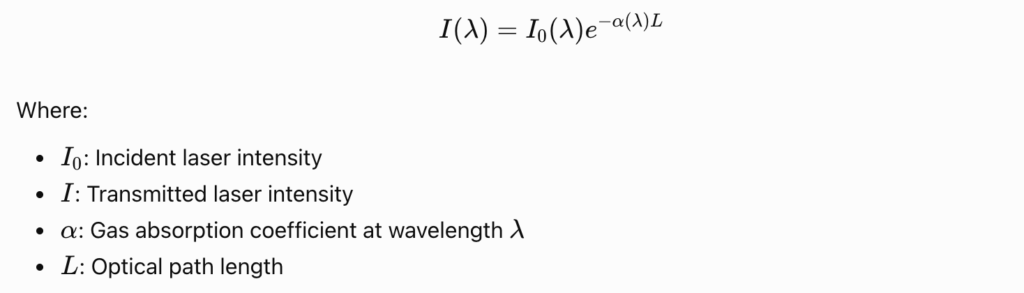
Because the laser scans a narrow spectral region, TDLAS can distinguish selected CO absorption features from nearby interfering absorption. This makes TDLAS useful in complex industrial gas mixtures. However, temperature, pressure, optical alignment, and beam transmission still influence measurement performance.
TDLAS systems can use in-situ or extractive configurations. In-situ measurements eliminate lengthy extractive sample transport, although they introduce optical access and process-environment requirements.
How Does NDIR Measure Carbon Monoxide?
NDIR measures CO through infrared absorption using a broadband light source and wavelength-selective optical components. The infrared beam passes through a measurement cell containing the gas sample. CO absorbs radiation within its characteristic infrared absorption band. A detector measures the resulting attenuation, which the analyzer converts into concentration.
Unlike TDLAS, NDIR typically analyzes a broader wavelength band. Consequently, water vapor, CO₂, and other infrared-active components may influence the measurement, depending on optical filters and compensation methods. Modern NDIR systems address these effects through reference channels, gas filter correlation, calibration, and compensation algorithms.
NDIR also supports multiple measurement channels. For example, a process gas analyzer can combine infrared CO, CO₂, and CH₄ measurements with other sensor technologies.
What Are the Main Differences Between TDLAS and NDIR for CO Monitoring?
The most useful comparison concerns the complete measurement application rather than the optical technology alone.
| Comparison | TDLAS CO Analyzer | NDIR CO Analyzer |
|---|---|---|
| Measurement principle | Tunable laser absorption | Broadband infrared absorption |
| Spectral selectivity | Generally higher | Depends on optical design and compensation |
| CO sensitivity | Can support low-ppm and trace measurements | Suitable for ppm and percentage-level CO, depending on range |
| Response speed | Fast optical response; in-situ designs avoid transport delay | Fast detector response; extractive systems add transport delay |
| Installation | In-situ or extractive | Commonly extractive |
| Dust exposure | Optical attenuation and window fouling matter | Requires effective sample filtration |
| Moisture handling | Depends on optical path and configuration | Sample conditioning and interference compensation matter |
| Multi-gas measurement | Usually dedicated gas channels | Supports integrated multi-gas analysis |
| Maintenance focus | Optical windows, alignment, calibration | Filters, sampling system, optical cell, calibration |
| Investment | Often higher for specialized configurations | Often more economical for established process monitoring |
| Typical steel-plant fit | Selective, fast CO measurement | Bulk gas composition and multi-gas process control |
The performance differences are configuration-dependent. In particular, TDLAS does not automatically produce faster plant-level measurements if it uses a long extractive sampling line. Similarly, modern NDIR systems can provide sufficient response speed and accuracy for many steelmaking applications.
Why Do Steel Plants Need Different CO Measurement Ranges?
Steel plants do not have one standard CO concentration. The required measurement range changes significantly between blast furnace gas, converter gas, coke oven gas, and combustion exhaust. For example, blast furnace gas contains substantial CO because carbon monoxide acts as a reducing agent during ironmaking. In contrast, CO monitoring in a reheating furnace may focus on incomplete combustion and process efficiency.
A published study on steelmaking gas utilization provides the following representative compositions.
| Steelmaking gas | Representative CO concentration | Main monitoring objective |
|---|---|---|
| Blast Furnace Gas (BFG) | 25% vol | Gas composition and energy recovery |
| Basic Oxygen Furnace Gas (BOFG) | 64% vol | Converter off-gas and gas recovery monitoring |
| Coke Oven Gas (COG) | 7% vol | Fuel gas composition and utilization |
| Reheating furnace exhaust | Process-dependent, often monitored in ppm | Combustion optimization |
| Sinter plant emissions | Process-dependent | Combustion and emissions monitoring |
Values for BFG, BOFG, and COG are representative literature compositions, not guaranteed operating ranges. Exhaust CO concentrations depend on plant operating conditions. These differences have an immediate impact on analyzer selection.
A CO analyzer configured for 0–500 ppm cannot measure a gas containing 25% CO without suitable dilution or a different range. Conversely, an analyzer with a 0–100% CO full-scale range may provide insufficient absolute accuracy for a low-ppm emissions application. Therefore, the target concentration range should determine the measurement configuration before engineers compare TDLAS and NDIR performance.
TDLAS vs NDIR for CO Monitoring: Which Technology Works Better for Different Steelmaking Processes?
The preferred technology depends on where the measurement takes place and how the data will support plant operations.
Is NDIR Better for Blast Furnace Gas Monitoring?
For routine blast furnace gas composition monitoring, NDIR is often a practical choice.
Blast furnace gas contains CO, CO₂, H₂, N₂, and water vapor. Operators use gas composition data to evaluate furnace operation and support recovered-gas utilization. Because CO concentrations typically reach percentage levels, ultra-low detection limits are not the main selection priority.
Instead, engineers need stable measurements across a suitable concentration range, reliable sample handling, and integration with other gas measurements.
NDIR analyzers can measure CO and CO₂ within one instrument. Additional sensors may monitor H₂ and O₂ when required. However, the sampling system must remove particulates and control moisture before the gas enters the optical measurement cell.
Recommended approach: Use a properly ranged NDIR-based multi-gas analyzer for routine BFG composition monitoring. Consider TDLAS where faster response or selective measurement provides a measurable operational benefit.
Is TDLAS Better for Basic Oxygen Furnace CO Monitoring?
TDLAS can be advantageous when basic oxygen furnace (BOF) operations require rapid, selective CO measurement.
During oxygen blowing, the converter generates CO-rich off-gas. Its composition changes as the steelmaking reactions progress. Fast CO measurements can support process observation and off-gas recovery decisions. However, the useful response time depends on the complete measurement system.
For an in-situ TDLAS installation, eliminating sample transport can reduce measurement delay. Nevertheless, converter gas presents demanding conditions. High temperatures, particulate loading, changing gas composition, and restricted optical access may affect laser transmission. An extractive NDIR analyzer can also provide reliable BOF monitoring after suitable gas conditioning.
Recommended approach: Consider TDLAS when response time, selectivity, and optical access justify its installation. Choose NDIR when a well-conditioned sample and multi-gas analysis better serve the process.
Which Technology Is Suitable for Electric Arc Furnace Monitoring?
Electric arc furnace (EAF) off-gas can change rapidly during melting, oxygen injection, and carbon oxidation. CO measurements can support the evaluation of combustion conditions and changing furnace atmosphere. TDLAS is attractive for rapid monitoring because suitable in-situ configurations reduce sampling delays. However, dust and optical obstruction can limit signal availability.
NDIR is also suitable when engineers can maintain consistent sample flow, filtration, and conditioning. An OSHA safety bulletin identifies carbon monoxide accumulation in EAF operations as a serious hazard. It recommends appropriate detection, control procedures, and alarms.
Safety and Health Information Bulletin
Neither a process TDLAS analyzer nor an NDIR analyzer should automatically replace a dedicated, independently designed CO safety detection system.
Is NDIR More Suitable for Coke Oven Gas and Fuel Gas Analysis?
Coke oven gas contains CO alongside substantial hydrogen, methane, and other gases. Therefore, a single CO measurement may not provide enough information for fuel gas characterization.
A multi-component NDIR analyzer can measure CO, CO₂, and CH₄. A thermal conductivity detector can provide H₂ measurement in an appropriately designed system. This arrangement supports gas composition analysis and fuel utilization.
TDLAS remains useful when a specific gas requires selective or fast measurement. However, it may not offer the same integration efficiency for several gas components.
Recommended approach: Choose a multi-gas NDIR-based platform when comprehensive fuel gas composition matters more than highly selective single-gas measurement.
Which ESEGAS CO Gas Analyzer Is Suitable for CO Monitoring in Steel Plants?
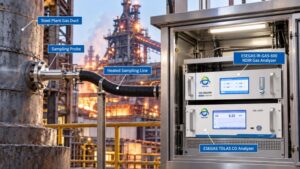
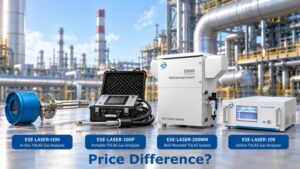
ESEGAS provides TDLAS and NDIR-based carbon monoxide measurement solutions for industrial process monitoring, including steelmaking and gas recovery applications. The two relevant platforms are the ESE-LASER-710 Online TDLAS CO Analyzer and the IR-GAS-600 NDIR Gas Analyzer.
When Should Steel Plants Choose the ESEGAS ESE-LASER-710 TDLAS CO Analyzer?
The ESEGAS ESE-LASER-710 Online TDL CO Analyzer uses tunable diode laser absorption spectroscopy for selective carbon monoxide measurement.
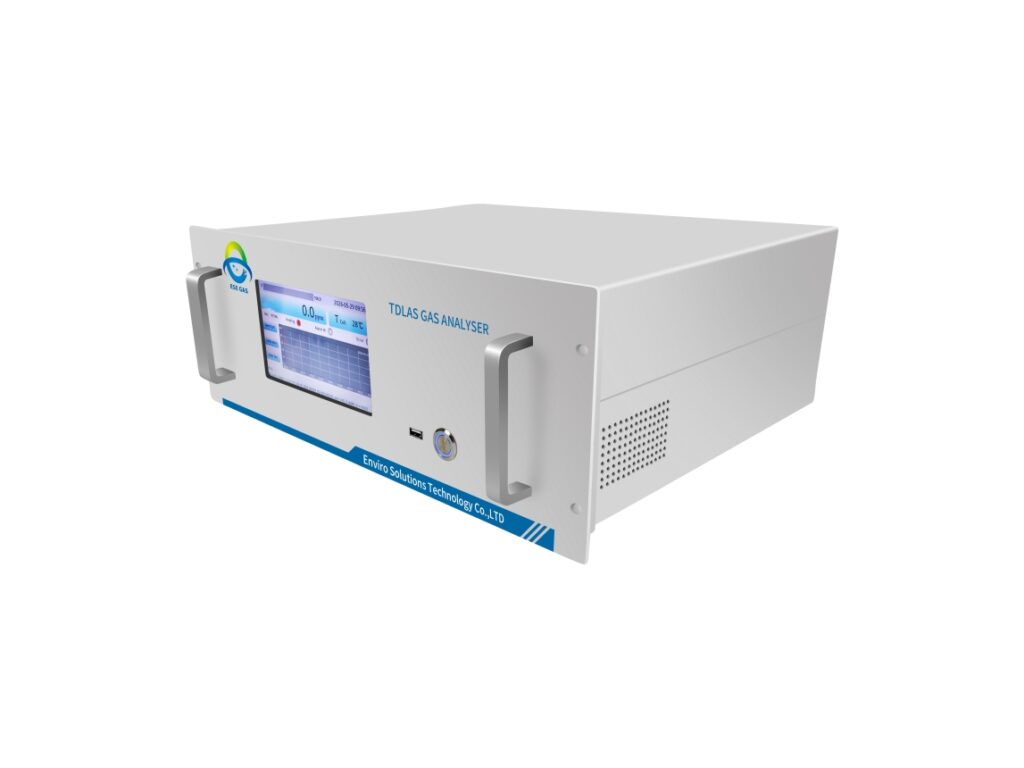
It targets applications where CO selectivity, measurement sensitivity, and response requirements justify laser-based analysis.
Measurement configurations:
| Parameter | Information |
|---|---|
| Model | ESE-LASER-710 |
| Technology | TDLAS |
| Target gas | Carbon monoxide (CO) |
| Listed ranges | 0–500 ppm; 0–100% vol |
| Measurement application | Online industrial CO monitoring |
For steel plants, this technology deserves consideration at measurement points requiring selective CO analysis, including suitably designed converter off-gas and other process monitoring installations. However, engineers should verify the optical path, measurement temperature, pressure range, dust concentration, and installation method before selecting the final configuration.
When Is the ESEGAS IR-GAS-600 NDIR Gas Analyzer the Better Choice?
The ESEGAS IR-GAS-600 NDIR Gas Analyzer measures CO, CO₂, and CH₄ through NDIR technology. Depending on configuration, the platform can combine NDIR channels with thermal conductivity or electrochemical sensors for additional gases. The NDIR gas analyzer is particularly relevant to steelmaking gas recovery and composition analysis because several gas components may need simultaneous measurement.
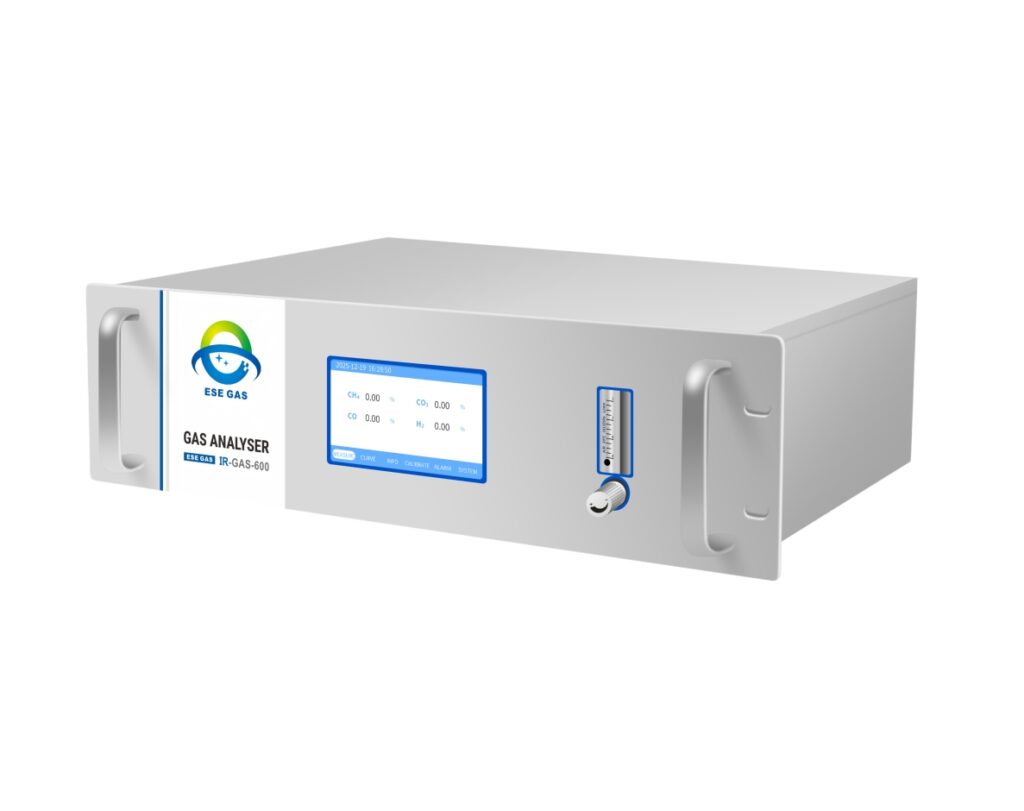
Specifications:
| Parameter | Specification |
|---|---|
| CO measurement range | Configurable from 0–5% to 0–100% vol |
| CO accuracy | ≤±2% full scale |
| CO resolution | 0.001% low-range; 0.01% high-range |
| NDIR response time | TD + T90 under 15 seconds, under specified conditions |
| Additional NDIR gases | CO₂, CH₄, selected hydrocarbons |
| Optional H₂ measurement | TCD |
| Optional O₂ measurement | Electrochemical or other configuration-dependent technology |
| Signal interfaces | RS485 and 4–20 mA |
For blast furnace gas, coke oven gas, and recovered fuel gas, an IR-GAS-600 system can provide multiple gas measurements within one analysis platform.
This reduces the need for separate dedicated instruments when the process requires a broader gas composition profile.
Can ESEGAS Customize a CO Monitoring System for Steelmaking?
ESEGAS provides instrument configuration and gas analysis system integration for industrial applications.
A steel-plant CO monitoring project may require more than a standalone gas analyzer. Depending on the process, a complete solution can include sampling probes, particulate filtration, gas conditioning, flow control, calibration connections, and communication with plant control systems.
For example, an extractive blast furnace gas monitoring configuration may follow this measurement path:
- Illustrative Extractive CO Monitoring System
- Blast Furnace Gas Sampling Probe
- Dust Filtration and Gas Conditioning
- ESEGAS IR-GAS-600 Gas Analyzer: NDIR CO / CO₂ / CH₄ with optional additional sensor channels
- PLC / DCS / SCADA
- Actual sampling, safety protection, and conditioning requirements depend on process conditions.
For high-CO or combustible gas applications, engineers must also evaluate hazardous-area requirements, sample handling, ventilation, and safe exhaust disposal. ESEGAS offers CO gas analysis solution that can be tailored to different measurement ranges and industrial process requirements.
What Are the Limitations of TDLAS and NDIR for CO Monitoring?
Neither technology completely eliminates measurement uncertainty or maintenance requirements.
TDLAS requires suitable optical conditions and correct compensation for temperature and pressure. Dust, beam obstruction, window fouling, and alignment problems may affect its performance.
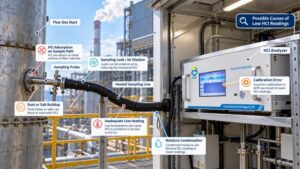
NDIR requires representative sample delivery and effective gas conditioning. Filter blockage, condensation, sampling leaks, or incorrect background-gas compensation can compromise readings.
Both systems also require appropriate calibration and periodic performance verification. For installations serving a regulatory function, engineers must confirm applicable certification, quality-assurance procedures, and local regulatory requirements. A manufacturer’s measurement specification does not automatically demonstrate emissions-monitoring compliance.
Finally, high-CO process gas systems require a separate safety assessment. Process gas analyzers should not replace dedicated personnel-protection equipment without an approved safety design.
Frequently Asked Questions About TDLAS vs NDIR for CO Monitoring
Is TDLAS more accurate than NDIR for carbon monoxide?
TDLAS generally provides higher spectral selectivity and can offer greater sensitivity. However, accuracy depends on the analyzer configuration and operating conditions. A properly designed NDIR system may meet steelmaking process-control requirements without the additional cost of TDLAS.
Can NDIR measure high CO concentrations in blast furnace gas?
Yes. NDIR analyzers with suitable measurement ranges can monitor percentage-level CO concentrations. For example, the ESEGAS IR-GAS-600 offers configurable CO ranges up to 0–100% volume.
Is TDLAS suitable for dusty steelmaking flue gas?
Yes, when the optical installation provides sufficient transmission. However, heavy dust can weaken or block the laser beam. Window purging, optical alignment, and installation location require careful engineering.
Which technology is better for measuring CO and CO₂ together?
NDIR is often the more practical choice for integrated CO and CO₂ measurements. Multi-channel NDIR systems can measure both gases, while a dedicated TDLAS CO instrument generally requires additional measurement channels for CO₂.
Can a CO process analyzer replace a fixed CO safety detector?
Not automatically. Process analyzers measure gas composition at specific process sampling locations. Fixed safety detectors monitor potentially hazardous atmospheres and must meet appropriate safety-system requirements.
Conclusion
TDLAS is a strong choice for selective, fast-response CO measurement when the process supports a suitable optical installation. NDIR is often better suited to continuous, multi-component gas analysis and cost-effective monitoring of percentage-level CO in steelmaking gas systems.
For blast furnace gas and coke oven gas characterization, NDIR frequently provides the right balance of measurement capability, integration, and lifecycle cost.
For demanding converter or furnace applications, TDLAS may offer advantages where rapid selective measurement matters.
The final decision should consider expected CO concentration, sampling conditions, measurement uncertainty, response time, and maintenance requirements.
Looking for a CO monitoring solution for a steel plant? Contact ESEGAS with your process gas composition, measurement range, sampling temperature, and monitoring requirements to discuss a suitable configuration.