



In cement production, oxygen content is more than a basic gas value on a control screen. When O₂ is too high, the kiln system may be heating unnecessary excess air, which increases fuel consumption. When O₂ is too low, combustion may become incomplete, CO may rise, and kiln stability can be affected. For cement plants that operate under high temperature, heavy dust, changing fuel quality, and strict emission requirements, delayed or inaccurate oxygen measurement can quickly turn into energy loss, unstable clinker quality, and avoidable maintenance pressure. This is why ESEGAS focuses on providing online oxygen analysis solutions that help cement plants see combustion conditions clearly and respond in time.
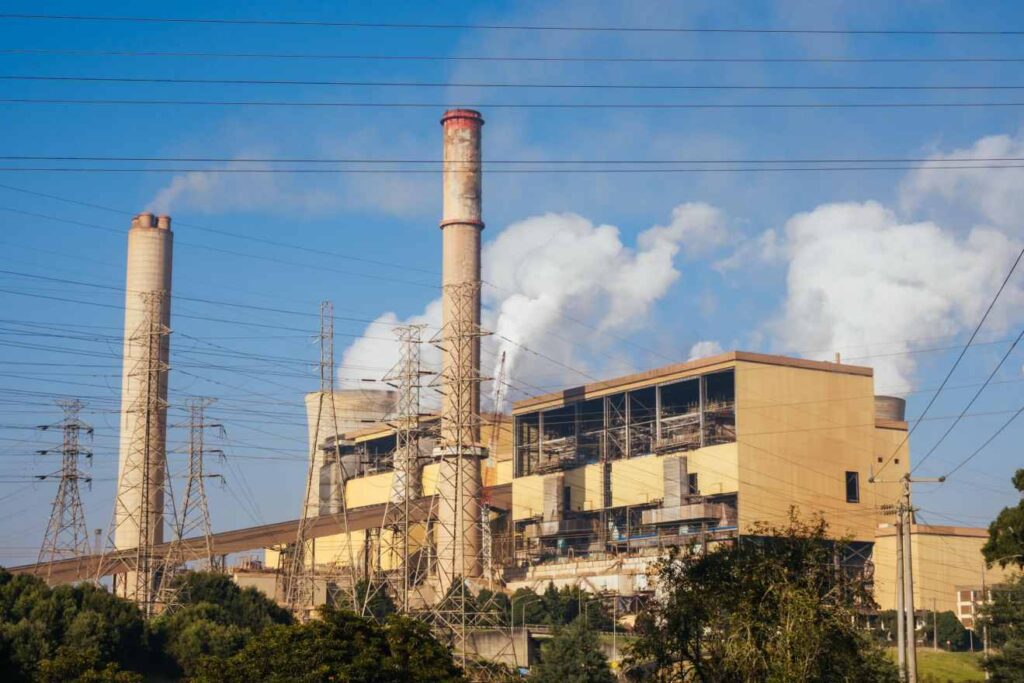
An online oxygen analyzer improves oxygen content analysis in cement plants by continuously measuring O₂ concentration in kiln gas, calciner gas, preheater gas, or stack flue gas. This real-time oxygen data helps operators optimize the air-fuel ratio, reduce excess air, prevent incomplete combustion, stabilize kiln operation, and support emission control. ESEGAS Oxygen(O₂) Gas Analyzer IR-GAS-600 can be configured with electrochemical, zirconia, paramagnetic, or TDL oxygen analysis technologies according to the measuring point, process temperature, dust level, response-time requirement, and control purpose. (Gas Analyzer Manufacturers)
However, knowing that oxygen should be measured is only the first step. Cement plants also need to know where to measure it, which analyzer technology is suitable, how the signal should be used in combustion control, and how to deal with high-dust and high-temperature flue gas. The following sections explain how we apply ESEGAS online oxygen analysis solutions in real cement plant conditions.
Why Is Oxygen Content Analysis Important in Cement Plants?
A cement kiln is not a forgiving process. Too much air wastes heat; too little air increases the risk of incomplete combustion. Operators may notice higher fuel consumption, unstable CO trends, or kiln inlet fluctuations, but without reliable oxygen data, the root cause can remain unclear. An online Oxygen Analyzer gives the plant a continuous reference point for judging whether combustion air is properly matched with fuel input.
In cement production, oxygen content analysis is important because it directly supports combustion efficiency, process stability, safety awareness, and emission management.
Key values of O₂ monitoring include:
| Oxygen Condition | Possible Process Meaning | Operational Impact |
| O₂ too high | Excess combustion air or false air ingress | Higher heat loss and higher fuel demand |
| O₂ too low | Insufficient oxygen for complete combustion | CO increase, unstable flame, incomplete fuel burn-out |
| O₂ fluctuating rapidly | Process disturbance, fuel change, air leakage, or fan instability | Difficult kiln control and unstable clinker quality |
| O₂ stable within target range | Better air-fuel balance | Improved combustion control and energy management |
Research on cement kiln gas analysis also shows that high O₂ can indicate unnecessary flue gas flow and excessive fuel use, while low O₂ combined with high CO points to incomplete oxidation and sub-optimal combustion. (JSSS) For cement plants, this means O₂ measurement is not only an environmental parameter; it is a process control variable.
Where Should an Online Oxygen Analyzer Be Installed in a Cement Plant?
Many oxygen measurement problems begin with the wrong measuring point. A cement plant may install a sensor where the gas is easier to sample, but not where the data is most useful. If the measuring location does not represent the real combustion condition, the control room receives numbers but not insight. That is why ESEGAS evaluates the process objective first before recommending the Oxygen Analyzer installation point.
Common installation points include:
- Kiln inlet or kiln tail
This point is highly valuable for evaluating combustion conditions near the rotary kiln system. O₂ data here helps operators judge whether the burner, ID fan, and secondary air system are working together effectively. - Calciner outlet
In modern preheater-precalciner cement plants, the calciner consumes a large share of the fuel. Online oxygen measurement at this point helps optimize calciner combustion and avoid local oxygen deficiency. - Preheater outlet
O₂ measurement at the preheater outlet can help identify excess air, false air ingress, and system leakage. This is especially important because false air increases the volume of gas that must be heated and moved through the system. - Stack or CEMS sampling point
Stack oxygen measurement supports emission calculation, flue gas normalization, and environmental reporting. It also provides a final reference for overall combustion and air leakage conditions. - Coal mill or safety-related monitoring points
In some cement plants, oxygen monitoring may also be considered in coal preparation or inerting-related systems. The specific design should be evaluated carefully according to safety requirements, gas composition, and plant standards.
For ESEGAS, the best solution is not simply “one analyzer for every point.” We match the Oxygen Analyzer type, sampling method, gas conditioning system, and signal output to the actual role of the measurement point.
Which Oxygen Analyzer Technology Is Suitable for Cement Kiln Applications?
Cement plant flue gas is hot, dusty, corrosive, and unstable. A general-purpose gas analyzer may work in clean laboratory gas, but it may fail quickly in kiln or preheater conditions. If the analyzer technology is not suitable, the plant may experience blocked sampling lines, signal drift, slow response, or frequent maintenance. ESEGAS solves this by offering multiple oxygen analysis technologies instead of forcing every application into one principle.
The ESEGAS Oxygen(O₂) Gas Analyzer IR-GAS-600 series includes different oxygen measurement technologies, including electrochemical, zirconia, paramagnetic, and TDL-based solutions. (Gas Analyzer Manufacturers) Each technology has its own best-fit application.
| Technology | Suitable Cement Plant Use | Main Advantages | Key Considerations |
| Zirconia Oxygen Analyzer | Kiln flue gas, combustion control, high-temperature process gas | Fast response, stable signal, suitable for combustion applications | Temperature influence and installation design must be considered |
| Paramagnetic Oxygen Analyzer | Precise process control and clean conditioned gas measurement | High accuracy and fast response | Requires stable installation environment and proper pretreatment in harsh gas |
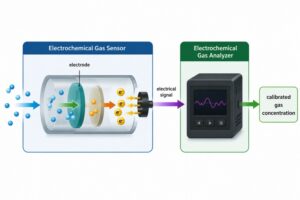
| Electrochemical Oxygen Analyzer | Continuous or intermittent O₂ monitoring where cost and compact design matter | Low power consumption, compact structure, direct measurement | Sensor life and gas conditioning should be evaluated |
| TDL Oxygen Analyzer | Fast-response online or in-situ O₂ monitoring | High selectivity, fast measurement, low maintenance potential | Optical path and installation conditions must be designed properly |
For cement kiln applications, zirconia and TDL oxygen analysis are often considered when fast response and harsh-process adaptability are required. Paramagnetic and electrochemical solutions can also be appropriate when the gas is properly conditioned and the measurement objective fits the technology.
How Does ESEGAS Oxygen Analyzer Support Combustion Optimization?
Fuel cost is one of the major operating pressures in cement manufacturing. When operators rely only on experience, flame observation, or delayed lab data, they may keep excess air higher than necessary to avoid CO risk. This appears safe, but it quietly wastes energy every hour. An ESEGAS online Oxygen Analyzerhelps the plant move from reactive adjustment to data-based combustion control.
Our oxygen analysis solution supports combustion optimization in several ways:
- Real-time O₂ trend monitoring
Operators can see whether oxygen content is rising, dropping, or fluctuating, and adjust combustion air, fuel feed, or fan settings more confidently. - Air-fuel ratio optimization
O₂ concentration helps indicate whether there is too much air or insufficient oxygen for complete combustion. This allows the plant to reduce unnecessary excess air while avoiding oxygen-starved combustion. - CO risk prevention
Low O₂ combined with high CO often indicates incomplete combustion. Continuous O₂ measurement can be used together with CO analysis to improve combustion diagnosis. - DCS or PLC integration
ESEGAS online oxygen analyzers can be integrated into plant control systems, allowing oxygen data to support alarm logic, trend analysis, and process optimization. - Support for alternative fuel operation
Many cement plants use alternative fuels with variable moisture, calorific value, and combustion behavior. Real-time O₂ measurement helps operators respond to these changes faster.
Industry guidance on combustion efficiency also emphasizes the importance of controlling the air-fuel mixture: too much fuel can raise CO because oxygen is insufficient, while too much air increases stack losses because energy is absorbed by excess air and lost to the atmosphere.
What Challenges Should Be Considered When Measuring Oxygen in Cement Plant Flue Gas?
A cement plant is one of the most difficult environments for continuous gas analysis. Dust can block sampling systems, high temperature can damage components, moisture can cause condensation, and corrosive gas can shorten instrument life. Without proper design, even a high-quality Oxygen Analyzer may not deliver reliable data in daily operation.
When we design an online oxygen analysis solution for cement plants, we usually evaluate the following challenges:
- High dust loading
Kiln and preheater gas often contains heavy dust. Probe design, filtration, back-purging, and maintenance access are critical. - High gas temperature
Some measuring points require high-temperature probes or in-situ measurement designs. The analyzer must be protected from thermal shock and overheating. - Corrosive gas components
Acidic or corrosive components may affect sampling lines, filters, and sensor materials. Material compatibility should be reviewed before installation. - Moisture and condensation
If extracted gas cools below the dew point, condensation can cause measurement error, corrosion, and blockage. Heated sampling lines or proper gas conditioning may be required. - Process fluctuation
Fuel changes, raw meal changes, fan adjustments, and kiln upsets can create fast O₂ changes. Analyzer response time must match the control purpose. - Maintenance accessibility
Cement plants need instruments that can be calibrated, cleaned, and serviced without excessive downtime. This is especially important for high-elevation preheater tower installations.
At ESEGAS, we do not only supply the Oxygen Analyzer itself. We also consider the sampling method, pretreatment system, installation environment, and long-term maintenance requirements so that the measurement remains useful after commissioning.
How Can Online O₂ Measurement Help Reduce Fuel Consumption and Emissions?
Small oxygen deviations can create large operating consequences. If excess air is left uncontrolled, the kiln system heats more gas than necessary. If oxygen is too low, fuel may not burn completely, CO may increase, and the operator may need to stabilize the kiln through less efficient adjustments. A reliable Oxygen Analyzerhelps the cement plant find the operating window between fuel waste and incomplete combustion.
Online O₂ measurement can support energy saving and emission control through:
- Reducing excess air
By monitoring O₂ continuously, operators can avoid running the kiln with unnecessarily high excess air. - Improving fuel burn-out
Proper oxygen control helps fuel burn more completely, reducing the risk of CO formation from oxygen-deficient combustion. - Supporting NOx and CO control strategies
O₂ data helps operators understand combustion conditions and coordinate with NOx and CO monitoring. - Detecting false air ingress
A gradual rise in O₂ at certain measuring points may indicate air leakage in the preheater, kiln seals, ducts, or access doors. - Improving process consistency
Stable oxygen control supports more stable kiln operation, which contributes to consistent clinker quality.
For cement plants pursuing lower energy consumption and more stable emission control, online oxygen analysis becomes a practical process optimization tool rather than a simple measurement device.
Why Choose ESEGAS Oxygen Gas Analyzer for Cement Plant Applications?
Choosing the wrong oxygen measurement solution can create repeated maintenance work, unreliable data, and poor operator confidence. Cement plants need an analyzer partner that understands both gas analysis technology and the actual process environment. ESEGAS provides flexible Oxygen Analyzer solutions for process control, combustion optimization, environmental monitoring, and safety-related gas measurement.
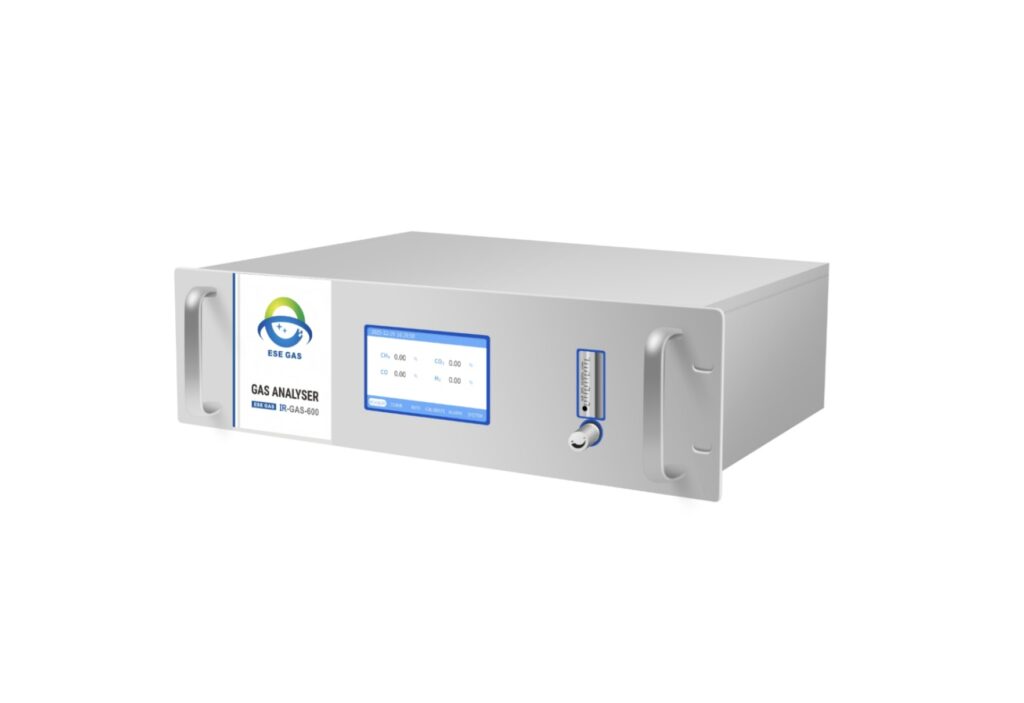
The ESEGAS Oxygen(O₂) Gas Analyzer IR-GAS-600 is designed around different application needs. Our product line can include electrochemical oxygen analyzers for continuous or intermittent measurement, paramagnetic oxygen analyzers for high-accuracy and stable readings, zirconia oxygen analyzers for combustion and high-temperature flue gas applications, and TDL oxygen analyzers for fast, selective online or in-situ measurement. (Gas Analyzer Manufacturers)
For cement plants, this means we can recommend a solution based on:
- Measuring point: kiln inlet, calciner, preheater outlet, stack, or process duct
- Gas condition: temperature, dust, moisture, corrosive components, and pressure
- Control objective: combustion optimization, CEMS correction, safety monitoring, or process diagnosis
- Installation method: direct insertion, extraction, online sampling, or in-situ measurement
- Maintenance requirement: calibration access, purging design, filter replacement, and long-term stability
By combining suitable oxygen analysis technology with proper installation and sampling design, ESEGAS helps cement plants obtain oxygen data that is stable, meaningful, and useful for daily operation.
Conclusion
Online oxygen content analysis plays a critical role in cement plant combustion control, fuel efficiency, kiln stability, and emission management. A reliable Oxygen Analyzer allows operators to understand whether the kiln system has too much excess air, too little oxygen, or unstable combustion conditions. For cement plants facing high fuel costs, alternative fuel complexity, strict environmental requirements, and demanding process conditions, continuous O₂ measurement is no longer optional—it is a key part of intelligent kiln operation.
At ESEGAS, we provide oxygen analysis solutions based on real application requirements. Whether the plant needs zirconia, paramagnetic, electrochemical, or TDL oxygen measurement technology, we can help configure the right online Oxygen Analyzer for cement kiln, calciner, preheater, stack, and other process gas monitoring points. Our goal is to help cement plants turn oxygen data into better combustion control, lower energy waste, and more stable production.