



Industrial gas monitoring becomes risky when the data arrives too late, changes during sampling, or requires constant maintenance before it can be trusted. In high-temperature flue gas, wet process streams, dusty ducts, and corrosive stacks, even a small delay or measurement error can affect combustion efficiency, emission compliance, and plant safety. That is why many operators look beyond conventional sampling systems and choose direct measurement at the process point. At ESEGAS, we see the in situ gas analyzer as a practical answer to one core challenge: how to obtain faster, more representative gas data from demanding industrial environments.
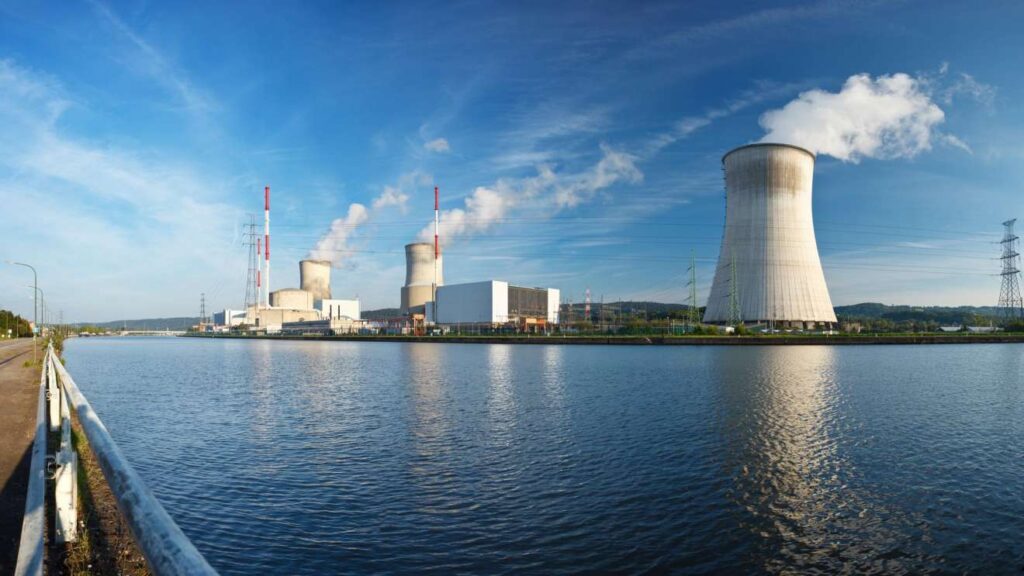
An in situ gas analyzer is used to measure gas concentration directly inside a duct, stack, furnace, pipeline, or process chamber without extracting the sample through a long conditioning system. Because the measurement is performed at or near the actual gas stream, it can deliver fast response, reduce sample loss, and support continuous emission monitoring, combustion optimization, and process control. Continuous emission monitoring systems are widely used to determine gas or particulate concentration and convert analyzer data into reportable emission values. (US EPA)
Knowing the basic definition is useful, but choosing the right analyzer requires a deeper look at measurement principles, installation conditions, target gases, and long-term maintenance. The value of direct gas analysis is not only speed; it is also the ability to preserve the real condition of the gas before condensation, absorption, dilution, or reaction can distort the result.
What Is an In Situ Gas Analyzer?
When a plant relies on delayed or unstable gas readings, operators may respond after the process has already shifted. This creates unnecessary fuel consumption, unstable emissions, and avoidable alarms. An in situ gas analyzer helps solve this problem by moving the measurement closer to the actual process, where the gas condition is still real and unchanged.
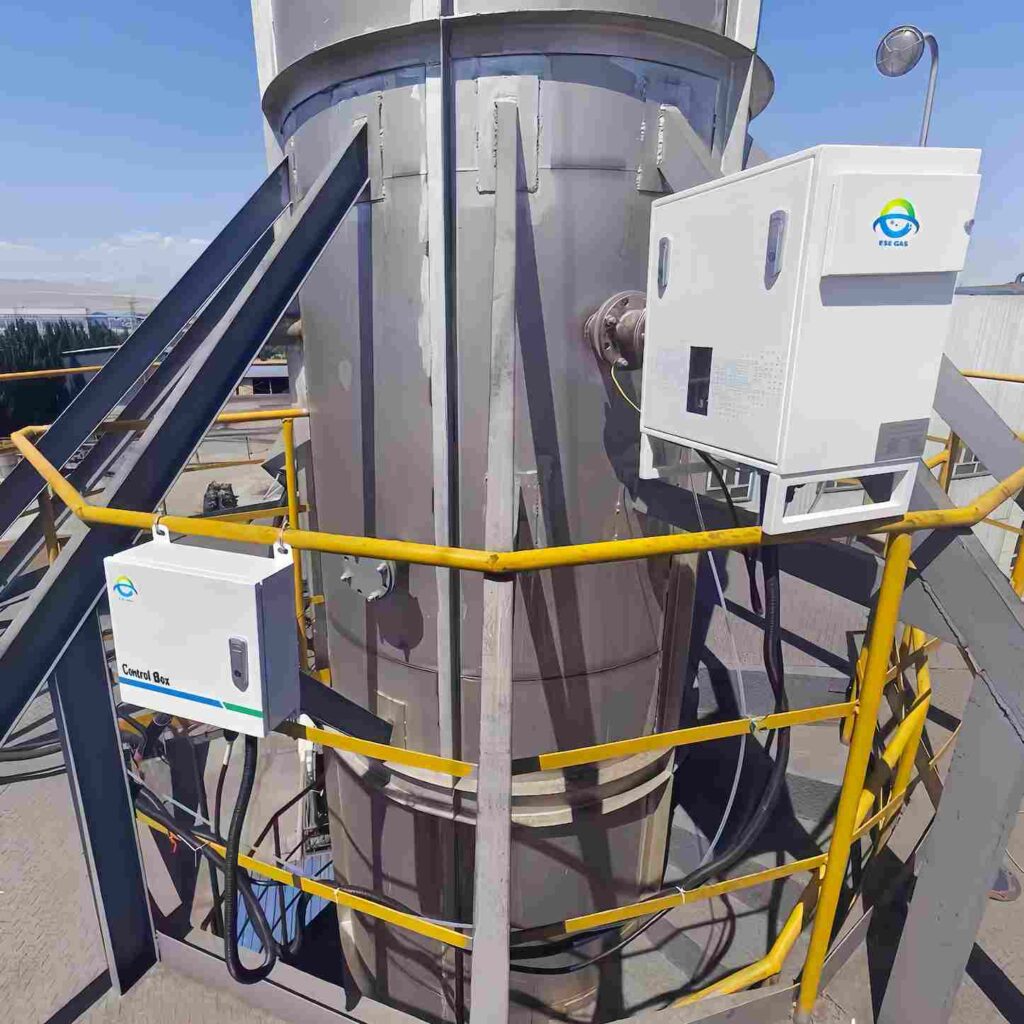
An in situ gas analyzer is installed directly on the stack, duct, furnace wall, pipeline, or process vessel. Instead of pulling gas through heated lines, filters, pumps, coolers, and dryers, the analyzer measures the gas in its original location. Depending on the application, the system may use a probe-type design, a cross-stack optical path, or a compact flange-mounted configuration.
For industrial users, this approach offers several advantages:
| Monitoring Need | How In Situ Measurement Helps |
| Fast process response | Measures directly at the source, reducing transport delay |
| Representative data | Avoids sample changes caused by condensation, adsorption, or reaction |
| Lower sample system complexity | Reduces dependence on pumps, coolers, and long heated lines |
| Harsh process compatibility | Can be configured for hot, wet, dusty, or corrosive gases |
| Continuous operation | Supports real-time control and emission monitoring |
At ESEGAS, we focus on matching the analyzer structure and detection technology to the actual process conditions. A cement kiln, waste incinerator, boiler, chemical reactor, and petrochemical process line may all require different installation designs, even when the target gas is similar.
How Does an In Situ Gas Analyzer Work?
Gas analysis becomes unreliable when the technology does not match the gas matrix. High dust may block optical paths, water vapor may interfere with readings, and corrosive gas may damage unsuitable materials. A properly selected in situ gas analyzer works by combining the right measurement principle with the right mechanical design.
Common measurement technologies include:
- TDLAS technology
Tunable diode laser absorption spectroscopy measures gas concentration by tuning a laser to a specific absorption line of the target molecule. ESEGAS has explained TDLAS as a method that uses a narrow-linewidth diode laser tuned to the absorption feature of the measured gas. (Gas Analyzer Manufacturers) This makes it useful for gases such as O₂, NH₃, HCl, HF, CH₄, CO, and H₂O in suitable applications. - UV-DOAS technology
UV differential optical absorption spectroscopy is often used for gases with strong ultraviolet absorption. ESEGAS notes that UV-DOAS analyzers are effective for gases such as SO₂, NOx, O₃, and other trace gases. (Gas Analyzer Manufacturers) - NDIR technology
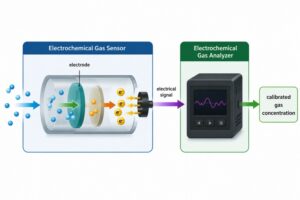
Non-dispersive infrared analysis is widely used for infrared-active gases such as CO, CO₂, CH₄, and some hydrocarbons. ESEGAS IR-GAS-600 process gas analyzers are designed to measure components such as oxygen, carbon dioxide, nitrogen dioxide, methane, and other gases in process gas applications. (Gas Analyzer Manufacturers) - Electrochemical, paramagnetic, or zirconia oxygen measurement
These technologies may be selected when oxygen monitoring is required for combustion control, safety, or process optimization.
The best in situ gas analyzer is not defined by technology alone. It must also consider gas temperature, pressure, dust load, humidity, vibration, corrosion, installation angle, purge requirements, and calibration access.
Why Is In Situ Measurement Faster Than Extractive Sampling?
In many plants, the analyzer is not the only source of delay. Long sampling lines, filters, chillers, pumps, and gas conditioning units can slow response and introduce maintenance points. When process conditions change quickly, this delay can prevent operators from correcting combustion, dosing, or emission problems in time.
An in situ gas analyzer is faster because it reduces or removes the distance between the process gas and the measuring point. The gas does not need to travel through a complex sample handling system before analysis. This is especially important for reactive or water-soluble gases such as NH₃, HCl, HF, and SO₂, which may be affected by condensation or adsorption in traditional sampling lines.
| Factor | In Situ Gas Analyzer | Extractive Gas Analyzer |
| Measurement location | Directly in the stack, duct, or process | Sample is transported to an analyzer cabinet |
| Response time | Usually faster due to direct measurement | Often slower because of sample transport and conditioning |
| Sample conditioning | Minimal or application-specific | Usually requires filtration, heating, cooling, or drying |
| Risk of gas change | Lower when properly installed | Higher for reactive, soluble, or condensable gases |
| Maintenance focus | Optical window, probe, purge, alignment | Pumps, filters, tubing, coolers, valves, drains |
| Best suited for | Real-time process control and harsh gas streams | Applications needing controlled sample preparation |
This does not mean extractive systems are never useful. Some applications require sample dilution, multi-component laboratory-style measurement, or analyzer protection away from extreme process conditions. However, when fast and representative data is the priority, in situ measurement often provides a stronger technical advantage.
Where Can an In Situ Gas Analyzer Be Used?
Industrial emissions and process gases rarely remain stable. Fuel composition changes, raw materials vary, and operating loads move up and down. Without continuous gas data, operators may only see the problem after efficiency drops or emissions rise. A well-configured in situ gas analyzer gives the plant a real-time view of these changes.
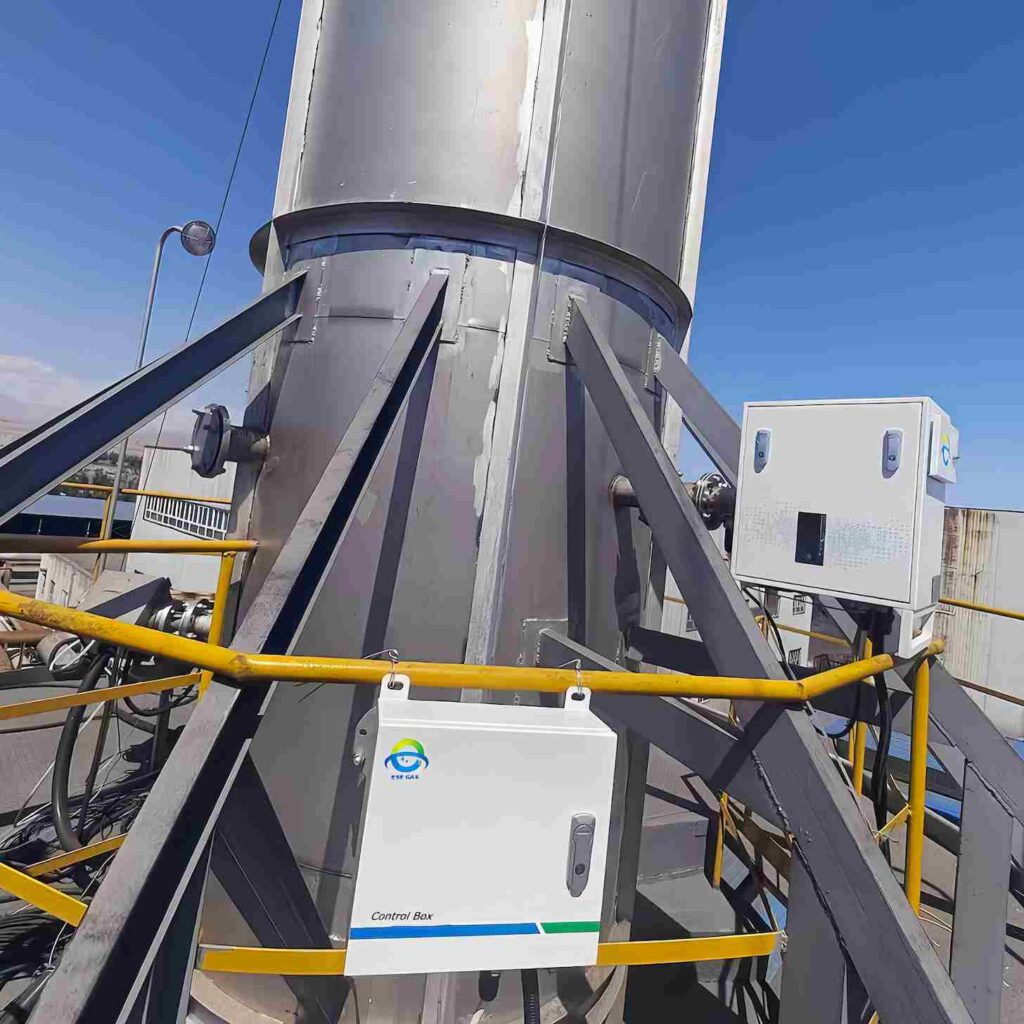
Typical applications include:
- Continuous emission monitoring systems, where gas concentration data supports environmental reporting and control. The U.S. EPA defines CEMS as the equipment needed to determine gas or particulate concentration or emission rate using analyzer measurements and calculation methods. (US EPA)
- Power plant flue gas monitoring, including boiler combustion control and emissions tracking.
- Cement kiln gas analysis, where high dust, high temperature, and process variation require robust measurement design.
- Waste incineration monitoring, where gases such as HCl, HF, CO, NOx, SO₂, O₂, and NH₃ may be relevant.
- Steel and metallurgy processes, including furnace atmosphere monitoring and off-gas analysis.
- Chemical and petrochemical process gas monitoring, where safety, yield, and process stability depend on gas composition.
- Boiler combustion optimization, where O₂ and CO monitoring can help balance fuel efficiency and emission control.
At ESEGAS, we approach each application from the actual process conditions first. The same gas may require different analyzer configurations depending on moisture, dust, temperature, pressure, and installation access.
What Gases Can an In Situ Gas Analyzer Measure?
Choosing an analyzer only by the gas name can lead to poor performance. A plant may need to measure CO in dry process gas, wet flue gas, high-dust kiln gas, or explosive-area gas, and each condition changes the design requirements. The right in situ gas analyzer must match both the target gas and the process environment.
Depending on the selected technology and installation design, in situ gas analysis may be used for:
| Gas | Common Industrial Purpose |
| O₂ | Combustion control, furnace atmosphere, safety monitoring |
| CO | Incomplete combustion detection, safety, process control |
| CO₂ | Combustion efficiency, process balance, emissions monitoring |
| SO₂ | Flue gas and emission monitoring |
| NOx | Combustion emission control and regulatory monitoring |
| NH₃ | Ammonia slip monitoring in SCR/SNCR systems |
| HCl | Waste incineration and chemical process monitoring |
| HF | Flue gas and corrosive gas monitoring |
| CH₄ | Combustible gas and process gas monitoring |
| H₂S | Petrochemical, natural gas, and sulfur process monitoring |
ESEGAS product solutions cover a broad range of industrial gas measurement needs. Our process gas analyzer portfolio includes instruments for components such as O₂, CO₂, NO₂, CH₄, and other process gases, while our wider product lineup includes continuous emission monitoring system solutions. (Gas Analyzer Manufacturers)
How Does an In Situ Gas Analyzer Improve Industrial Efficiency?
A plant may already have gas monitoring, but if readings are slow or maintenance-heavy, the data may not help operators make timely decisions. The cost is often hidden: excess fuel, unstable combustion, reagent overuse, unplanned maintenance, and compliance risk. An in situ gas analyzer improves efficiency by making gas data more immediate and actionable.
Key efficiency benefits include:
- Faster abnormal condition detection
Direct measurement helps operators see changes in combustion, leakage, gas composition, or emission concentration sooner. - Better combustion optimization
O₂ and CO data can help maintain the right air-fuel balance. Too much excess air wastes energy, while too little air can increase CO and unburned fuel. - Lower maintenance burden
By reducing complex sample conditioning components, in situ systems can reduce maintenance points such as pumps, filters, coolers, and heated lines. - More stable emission control
Real-time gas data helps plants adjust combustion, reagent injection, or process settings before emissions move outside target ranges. - Improved automation integration
An in situ gas analyzer can provide continuous signals to the plant control system, supporting automated process adjustment and alarm management.
For ESEGAS, efficiency is not only about measurement speed. It is about helping customers build a gas analysis system that remains stable under real plant conditions.
How Should You Choose the Right In Situ Gas Analyzer?
A poor selection may work during commissioning but fail during long-term operation. Dust builds up, moisture condenses, temperature changes, and process vibration affects alignment. That is why selecting an in situ gas analyzer should start with a complete understanding of the application rather than a simple gas list.
Before selecting a system, we recommend reviewing:
- Target gas components and expected concentration ranges
- Required response time and accuracy
- Gas temperature, pressure, humidity, and dust load
- Corrosive or explosive atmosphere requirements
- Stack or pipeline diameter and installation position
- Available flange, probe length, and maintenance space
- Purge gas availability and utility conditions
- Calibration method and maintenance access
- Analog, digital, Modbus, Profibus, or other system integration needs
- Environmental protection requirements for outdoor installation
At ESEGAS, we help users evaluate these parameters before recommending a configuration. This engineering-first approach is especially important for high-temperature flue gas, wet gas, high-dust stacks, hazardous areas, and multi-component gas monitoring.
Why Choose ESEGAS for In Situ Gas Analysis?
When gas monitoring is treated as a standard instrument purchase, the result may not fit the actual process. Industrial gas analysis requires more than a sensor; it requires application experience, suitable detection technology, mechanical adaptation, and long-term service thinking. That is why ESEGAS focuses on practical gas analyzer solutions for real industrial environments.
We support industrial users with:
- Gas analyzer selection based on process conditions
- Multiple detection technologies, including infrared, UV-DOAS, TDLAS, and oxygen measurement options
- Solutions for process gas analysis and continuous emission monitoring
- System integration for plant control and data management
- Application support for power, cement, waste incineration, steel, chemical, and petrochemical industries
- Long-term attention to stability, response time, maintenance convenience, and operating cost
Our goal is not only to provide an in situ gas analyzer, but to help customers obtain reliable gas data that supports safer operation, cleaner emissions, and better process control.
Conclusion
An in situ gas analyzer is the right choice when industrial users need fast, continuous, and representative gas measurement directly from the process. By reducing sample transport, preserving real gas conditions, and supporting real-time control, it offers strong value for emission monitoring, combustion optimization, and process gas analysis. At ESEGAS, we design gas analysis solutions around the customer’s actual operating environment, helping each plant choose the right technology, installation method, and system configuration for long-term reliable performance.