



H2S is not a gas that industrial operators can afford to underestimate. It may appear in only trace amounts, yet it can quickly create serious risks for personnel safety, process stability, equipment life, and environmental compliance. When H2S is not measured accurately and continuously, plants may discover the problem only after corrosion, odor complaints, process upsets, or safety incidents have already occurred. That is why, at ESEGAS, we view hydrogen sulfide gas analysis not simply as a measurement task, but as an essential part of safer and more reliable industrial operation.
Hydrogen sulfide gas analyzers are used in oil and gas, wastewater treatment, biogas, landfill gas, chemical processing, petrochemical production, metallurgy, environmental monitoring, and industrial safety systems. They continuously measure H2S concentration to help protect workers, prevent corrosion, optimize process control, support desulfurization efficiency, and provide data for environmental and safety compliance.
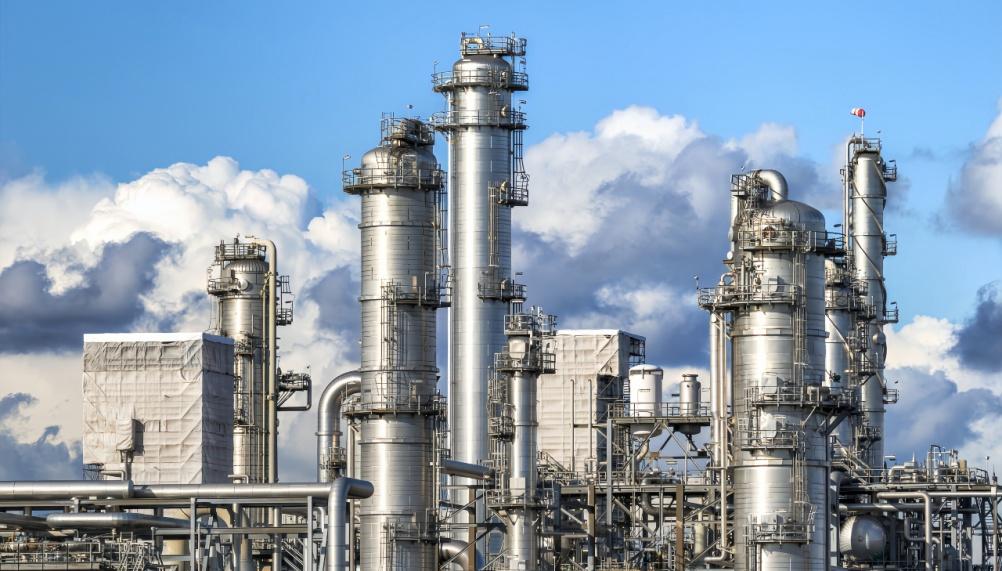
For many users, the basic question is not whether H2S should be monitored, but which monitoring solution can handle the real conditions of their application. Gas composition, moisture, dust, pressure, temperature, corrosive components, explosion-proof requirements, and measurement range can all affect analyzer performance. The following sections explain the major application areas of hydrogen sulfide gas analyzers and how ESEGAS helps industries select a reliable monitoring approach.
Why Is Hydrogen Sulfide Monitoring Important in Industrial Applications?
Hydrogen sulfide often gives a false sense of security because people associate it with a “rotten egg” smell. The problem is that smell is not a dependable warning method. At dangerous concentrations, the sense of smell can become fatigued, and workers may no longer detect the gas by odor. NIOSH notes that hydrogen sulfide is a colorless gas with a strong rotten-egg odor, but the sense of smell can rapidly become fatigued and should not be relied upon as a warning method. Its IDLH value is listed as 100 ppm. (Centers for Disease Control and Prevention)
A properly selected H2S gas analyzer helps industrial sites move from reactive detection to continuous risk control. It supports:
| Industrial Risk | Why H2S Measurement Matters |
| Personnel safety | Continuous monitoring helps identify hazardous concentrations before exposure becomes critical. OSHA recommends air monitoring before and during work activities where hydrogen sulfide exposure is possible. |
| Fire and explosion risk | H2S is flammable, so monitoring supports safer operation in hazardous areas. |
| Corrosion control | H2S can accelerate corrosion in pipelines, tanks, wastewater systems, and process equipment. EPA documents discuss hydrogen-sulfide-induced corrosion in wastewater collection and treatment environments. |
| Process stability | Accurate concentration data helps operators adjust desulfurization, scrubbing, ventilation, or process control strategies. |
| Environmental compliance | H2S monitoring provides data for odor control, emission tracking, and boundary monitoring. |
In our experience, the most effective solution is not only an analyzer with a suitable detection range, but a complete measurement system designed around the gas stream and installation environment.
How Are Hydrogen Sulfide Gas Analyzers Used in Oil and Gas?
Oil and gas operations often face some of the most demanding H2S monitoring conditions. Sour gas production, gas gathering, refining, amine treatment, sulfur recovery, and flare gas systems may all involve hydrogen sulfide. If the measurement is unstable or too slow, operators may lose control over safety decisions, corrosion protection, and gas treatment efficiency.
In oil and gas applications, an H2S gas analyzer is commonly used for:
- Sour natural gas monitoring
H2S concentration measurement helps operators evaluate raw gas quality and determine the appropriate gas treatment process. - Gas sweetening and amine treatment control
Measuring H2S before and after treatment allows the plant to verify removal efficiency and avoid overuse or underuse of treatment chemicals. - Sulfur recovery unit process control
In sulfur recovery and tail gas treatment systems, accurate sulfur compound measurement supports process optimization and emission reduction. - Refinery process gas analysis
Refineries may need H2S monitoring in fuel gas, off-gas, tail gas, and process vent streams. - Hazardous area safety monitoring
OSHA guidance for oil and gas operations emphasizes active H2S monitoring, including personal and area monitoring, when H2S hazards are present.
For these applications, ESEGAS focuses on measurement stability, anti-corrosion design, suitable sampling systems, and explosion-proof configuration where required. A reliable analyzer must do more than display a number; it must survive the gas conditions and keep delivering usable data.
What Role Does an H2S Gas Analyzer Play in Wastewater Treatment?
Wastewater treatment plants can generate hydrogen sulfide through anaerobic decomposition, especially in sewers, wet wells, pump stations, sludge treatment areas, and enclosed channels. By the time odor complaints or visible corrosion appear, the site may already have been exposed to a long-term H2S problem. Domestic wastewater decomposition can produce gases including hydrogen sulfide, ammonia, carbon dioxide, and methane, and hydrogen sulfide is one of the key malodorous gases. (PMC)
An H2S gas analyzer supports wastewater treatment operations in several practical ways:
- Odor control: It helps operators evaluate whether deodorization systems, scrubbers, biofilters, or chemical dosing systems are working effectively.
- Corrosion prevention: H2S monitoring helps identify high-risk zones where concrete, metal structures, pipelines, and electrical equipment may be damaged.
- Worker protection: Real-time data supports safer entry procedures for confined spaces and enclosed treatment areas.
- Ventilation control: Measurement data can be linked with ventilation systems to improve air exchange only when needed, reducing energy waste.
- Plant boundary monitoring: Continuous H2S data helps facilities respond to odor issues before they escalate into community complaints.
For wastewater applications, ESEGAS typically pays close attention to moisture, aerosols, and sample conditioning. The gas may be wet, dirty, and corrosive, so the analyzer system must be designed for long-term operation rather than laboratory-style clean gas conditions.
Why Are H2S Gas Analyzers Needed in Biogas and Landfill Gas Projects?
Biogas and landfill gas are valuable renewable energy resources, but H2S can turn that value into maintenance cost. When hydrogen sulfide enters gas engines, boilers, turbines, upgrading systems, or pipelines, it can form corrosive compounds and shorten equipment life. Without continuous measurement, operators may replace desulfurization media too early, wasting money, or too late, exposing downstream assets to damage.
An H2S gas analyzer is especially useful in biogas and landfill gas systems for three measurement points:
| Monitoring Point | Purpose |
| Before desulfurization | Understand raw gas H2S load and process fluctuation. |
| After desulfurization | Confirm removal efficiency and protect engines, boilers, or upgrading systems. |
| Before final utilization | Verify that gas quality is suitable for energy use or grid injection requirements. |
In these projects, H2S concentration may vary with feedstock, temperature, microbial activity, and process load. ESEGAS helps customers choose analyzer configurations that can handle changing gas composition, high humidity, and continuous operation. This allows the operator to optimize media replacement, reduce unplanned shutdowns, and improve the economic value of biogas utilization.
How Do H2S Gas Analyzers Support Chemical and Petrochemical Processes?
Chemical and petrochemical plants often involve complex gas mixtures. H2S may appear together with CO2, SO2, CH4, NH3, hydrocarbons, moisture, and other reactive components. If the analyzer lacks selectivity or proper sample conditioning, the reading may drift, respond slowly, or suffer from cross-interference.
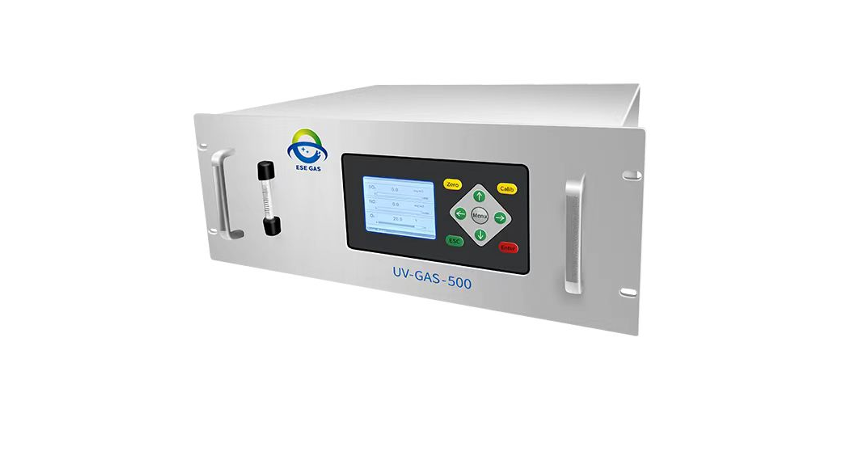
A well-configured H2S gas analyzer supports chemical and petrochemical operations by helping with:
- Process control
H2S concentration data allows operators to adjust reaction, absorption, stripping, scrubbing, and purification processes. - Catalyst protection
Some catalysts are sensitive to sulfur compounds. Monitoring H2S helps avoid catalyst poisoning and performance loss. - Quality assurance
Gas purity requirements may depend on keeping H2S below a defined threshold. - Emission control
H2S measurement helps verify treatment performance before exhaust gas is discharged. - Safety management
Continuous monitoring improves early warning capability in areas where toxic gas may leak or accumulate.
At ESEGAS, we consider the complete process environment before recommending a measurement solution. The analyzer principle, sampling line, filter, cooler, corrosion-resistant materials, calibration method, and signal output should all match the process conditions.
Can an H2S Gas Analyzer Be Used for Environmental Monitoring?
Hydrogen sulfide is not only an internal process issue; it can also become an environmental and community concern. Industrial parks, wastewater plants, landfills, refineries, and chemical facilities may need to monitor H2S at exhaust points, plant boundaries, or odor treatment outlets. When monitoring is not continuous, short-term emission peaks can be missed, making it harder to identify the real source of odor or pollution.
An H2S gas analyzer can be applied in environmental monitoring for:
- Fence-line monitoring around industrial facilities
- Exhaust gas monitoring after scrubbers or deodorization systems
- Odor source tracking in wastewater, landfill, and sludge treatment areas
- Continuous emission data collection for environmental management systems
- Alarm linkage with ventilation, treatment equipment, or remote monitoring platforms
For environmental applications, low-range sensitivity and long-term baseline stability are often more important than only having a wide measurement range. ESEGAS can help users evaluate whether the application requires trace-level monitoring, process-level monitoring, or a combined system for both safety and environmental management.
What Should You Consider When Choosing an H2S Gas Analyzer?
Many users start with one simple requirement: “We need to measure H2S.” But in real industrial applications, that is not enough. An analyzer that works well in one plant may fail in another if the gas is wetter, dirtier, more corrosive, or contains interfering components. Choosing the wrong analyzer can lead to frequent maintenance, inaccurate readings, and poor confidence in the data.
Before selecting an H2S gas analyzer, ESEGAS recommends evaluating these key factors:
| Selection Factor | What to Check |
| Measurement range | ppm, percentage level, or trace-level H2S requirement |
| Application purpose | Safety alarm, process control, environmental monitoring, or gas quality verification |
| Gas composition | Presence of CO2, SO2, CH4, NH3, moisture, hydrocarbons, dust, or acid gases |
| Response time | Fast safety response or stable process trend monitoring |
| Installation area | General area, hazardous area, outdoor site, or corrosive environment |
| Sampling method | In-situ, extractive, heated line, filtration, cooling, or drying |
| Maintenance needs | Calibration interval, consumables, accessibility, and operating cost |
| Data integration | 4–20 mA, RS485, Modbus, relay output, or online monitoring platform |
The best solution is rarely just the analyzer itself. It is the match between analyzer technology, sample handling, enclosure design, calibration strategy, and site operation habits.
How Does ESEGAS Help Industries Monitor H2S More Reliably?
Industrial customers need measurement systems that can work in real operating conditions, not only under ideal test conditions. H2S applications are often corrosive, humid, variable, and safety-critical. A small design mistake in the sampling system or material selection can reduce the reliability of the whole measurement chain.
At ESEGAS, we help customers build practical H2S gas analyzer solutions by focusing on:
- Application-based analyzer selection: We recommend the measurement approach according to gas concentration, process purpose, and site conditions.
- Sample conditioning design: We configure filtration, drying, cooling, heating, and corrosion-resistant components when the gas stream requires pretreatment.
- Continuous online monitoring: We support process monitoring, safety monitoring, environmental monitoring, and gas treatment control.
- System integration: We help users connect analyzer data with PLC, DCS, alarm systems, or remote monitoring platforms.
- Long-term operation value: We consider maintenance convenience, calibration accessibility, operating cost, and spare-part planning.
Our goal is to help users obtain stable, accurate, and actionable H2S data, so they can make better decisions in safety, production, maintenance, and compliance.
Conclusion
Hydrogen sulfide gas analyzers are essential across oil and gas, wastewater treatment, biogas, landfill gas, chemical processing, petrochemical production, environmental monitoring, and industrial safety applications. A reliable H2S gas analyzer helps protect workers, reduce corrosion, optimize desulfurization, stabilize processes, and support environmental management. For ESEGAS, H2S monitoring is not just about detecting a toxic gas; it is about delivering a complete gas analysis solution that fits the real conditions of each industrial site.