



Unstable fuel gas and combustion conditions can waste fuel in gas-fired power plants, increase CO, and reduce turbine performance. A process gas analyzer gives operators continuous data to control combustion more effectively.
A process gas analyzer continuously measures gases such as O2, CO, CO2, and CH4 in gas-fired power plants. The data helps operators monitor fuel and combustion conditions, assess excess air, detect incomplete combustion, and improve process control.
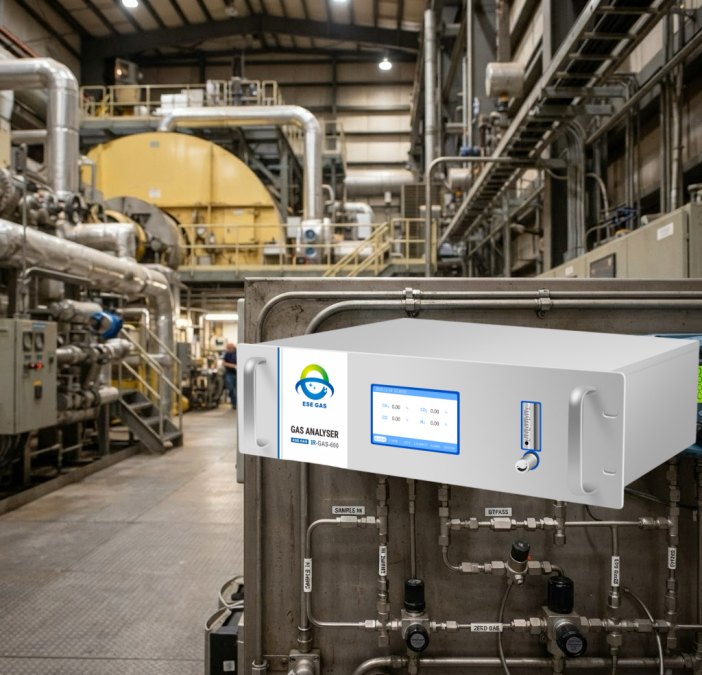
However, a gas-fired power plant has more than one place where gas analysis can add value. The fuel line tells operators what enters the combustion system, while the exhaust tells them what happens after combustion.
Which Gases Should a Process Gas Analyzer Measure in a Gas-Fired Power Plant?
The right gas combination depends on the monitoring objective, gas turbine or boiler design, fuel composition, and required measurement range. For combustion monitoring, O2 and CO are often the most useful starting points. CO2 and CH4 can provide additional information when the application requires them.
| Gas | What Does It Tell Operators? | Typical Purpose |
|---|---|---|
| O₂ | Remaining oxygen after combustion | Excess-air and combustion control |
| CO | Incomplete combustion | Combustion performance |
| CO₂ | Combustion product level | Combustion assessment and carbon monitoring |
| CH₄ | Methane concentration | Fuel quality or unburned fuel monitoring |
| NOx | Nitrogen oxide emissions | Emission control and compliance |
For plants subject to U.S. EPA Part 75, continuous monitoring and reporting requirements include CO2, NOx, and SO2 for applicable sources. However, a process gas analyzer used for combustion optimization does not automatically have the same configuration as a regulatory CEMS. Buyers should define the measurement purpose first.
Should the Process Gas Analyzer Monitor Fuel Gas or Flue Gas?
There is no universal answer. Fuel gas analysis and flue gas analysis solve different problems. Fuel gas analysis focuses on the input side. Changes in methane content, inert gases, or other fuel components can affect the fuel’s characteristics and combustion behavior. This approach is particularly useful when a plant receives gas from different sources or operates with variable fuel composition.
Flue gas analysis focuses on the result of combustion. O2, CO, CO2, and NOx can help operators evaluate combustion performance and emissions. For example, an unexpected change in exhaust O2 or CO may indicate a change in the air-fuel relationship, burner behavior, load, or another operating condition.
| Monitoring Location | Main Question | Typical Parameters |
|---|---|---|
| Fuel Gas Line | What is entering the turbine? | CH4, CO2, other fuel components |
| Combustion Zone / Process Gas | How is combustion developing? | O2, CO |
| Gas Turbine Exhaust | What is the combustion result? | O2, CO, CO2, NOx |
| Stack | What is being emitted? | NOx, CO, CO2, O2, SO2 where applicable |
If fuel quality is the main concern, monitor the fuel gas line to characterize what enters the combustion system. For combustion optimization, flue gas analysis provides insight into the combustion result, while regulatory monitoring may require a dedicated CEMS configured to the applicable emission standards and QA requirements.
For some plants, using both measurement points can provide the most complete picture:
Fuel composition → Combustion → Exhaust gas → Emissions
With the monitoring objective defined, the next question is more technical: which gas analyzer technology is best suited to each gas and operating condition?
Which Gas Analyzer Technologies Are Suitable for Gas-Fired Power Plants?
Technology selection should come after the application is defined. The key factors are the target gas, concentration range, sample conditions, required response time, interference risks, maintenance requirements, and whether the measurement supports process control or regulatory compliance.
| Technology | Suitable Applications | Main Advantage |
|---|---|---|
| NDIR | CO, CO₂, CH₄ | Practical continuous multi-gas measurement |
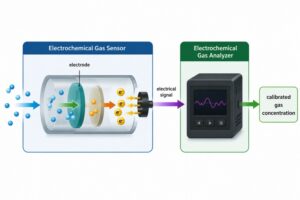
| Electrochemical | O₂ | Compact and cost-effective |
| Paramagnetic | O₂ | Stable continuous O₂ measurement |
| TDLAS | Selected gases | High selectivity and fast response |
| FTIR | Multiple gases | Broad multi-component analysis |
A practical selection sequence is:
Target gas → Concentration range → Sample condition → Required response time → Interferences → Measurement purpose → Applicable standard
This prevents a common purchasing mistake: choosing an analyzer because its technology sounds advanced rather than because it fits the actual process. For example, a plant that needs stable CO, CO2, and CH4 monitoring may not need an FTIR system simply because FTIR can measure more gases. Conversely, a complex application with many target components may justify the additional capability.
How Does a Process Gas Analyzer Support Different Gas-Fired Power Plant Applications?
A process gas analyzer can support several points across a gas-fired power plant. The required gases and measurement range should change with the application.
| Application | Main Monitoring Objective | Typical Gases |
|---|---|---|
| Combined-cycle gas turbine | Combustion performance | O2, CO, CO2 |
| Simple-cycle gas turbine | Fast operating changes | O2, CO |
| Gas-fired boiler | Excess-air and combustion control | O2, CO, CO2 |
| CHP plant | Fuel and thermal efficiency | O2, CO, CO2, CH4 |
| Fuel gas system | Fuel composition | CH4, CO2, other components |
| Exhaust / stack | Emission monitoring | O2, CO, CO2, NOx and others |
Combined-Cycle Power Plants
A combined-cycle plant links a gas turbine with a heat recovery steam generator (HRSG). Therefore, gas analysis can support investigations that connect turbine combustion performance with downstream heat recovery conditions.
If the measurement is used for regulatory compliance, the project must follow the applicable CEMS requirements rather than treating a process analyzer as a compliance instrument. EPA’s current framework separately defines performance specifications and QA procedures for compliance CEMS.
Simple-Cycle Gas Turbines
Simple-cycle turbines often experience rapid operating changes because they may serve peak or flexible-generation needs. In this setting, fast and stable gas measurement can help engineers observe process changes during changing loads and operating conditions. The focus is less about adding more gas channels and more about obtaining reliable data at the right response time.
Gas-Fired Boilers
For boilers, process gas analysis can support combustion tuning and performance testing. The gas analyzer can provide continuous data that engineers compare with fuel flow, air flow, boiler load, and other operating parameters. This makes gas analysis useful during commissioning, optimization, and troubleshooting rather than only during routine inspections.
CHP Plants
Combined heat and power plants must balance electrical and thermal output. As operating conditions change, gas analysis can provide another data stream for evaluating combustion behavior and overall fuel utilization.
For CHP applications, the gas analyzer configuration should therefore reflect the plant’s actual process objectives rather than simply copying a gas turbine configuration.
Why Is ESEGAS a Practical Choice for Gas-Fired Power Plant Gas Analysis?
Choosing a process gas analyzer is not simply a matter of selecting a sensor. In a power plant, the analyzer must match the gas composition, concentration range, sample conditions, response requirements, and intended use.
That is where ESEGAS takes an application-based approach. Its process gas analyzer platform combines NDIR, TCD, and electrochemical technologies to measure gases including CO, CO2, CH4, H2, and O2.
ESEGAS can design a system for process monitoring and CEMS applications, but the two requirements should remain clearly separated.
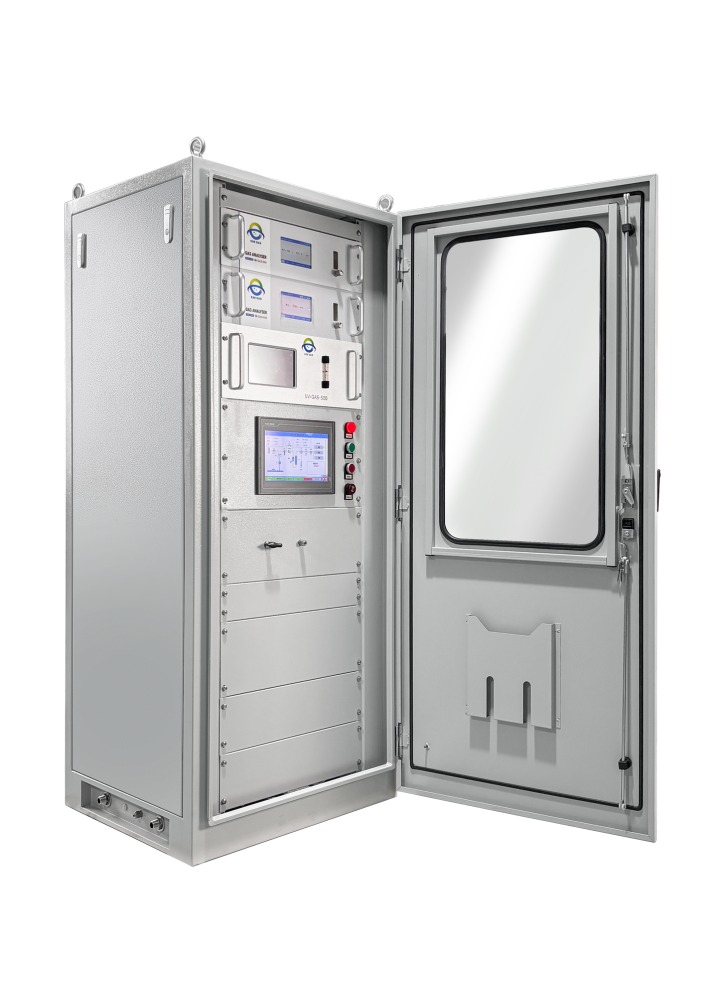
A process gas analyzer may support combustion optimization, equipment diagnostics, process control, or performance testing. A regulatory CEMS, on the other hand, must satisfy the applicable monitoring standard and quality requirements. Therefore, ESEGAS can start with the customer’s measurement objective and determine whether the project requires a process analyzer, emissions monitoring system, or a combination of both.
Conclusion
A process gas analyzer gives gas-fired power plants a continuous view of fuel and combustion conditions. However, the value depends on selecting the right technology, range, sampling design, and system architecture. For process monitoring, combustion optimization, performance testing, or application-specific gas measurement, the best solution is not necessarily the most complex gas analyzer. It is the one that delivers the right data, at the right range, under the right operating conditions.
Looking for a process gas analyzer for a gas-fired power plant? Contact ESEGAS to discuss your target gases, measurement ranges, sampling conditions, and required system configuration.