



HF emissions fluctuate rapidly in waste incineration plants, while high moisture and corrosive flue gas make accurate monitoring difficult. A wall-mounted TDLAS gas monitoring system delivers reliable real-time HF and H₂O measurement with lower maintenance and higher confidence.
A wall-mounted TDLAS gas monitoring system continuously measures HF and H₂O in waste incineration flue gas using Tunable Diode Laser Absorption Spectroscopy (TDLAS). It provides fast response, high selectivity, and stable performance under high humidity, helping plants improve emission compliance, optimize process control, and reduce maintenance costs.
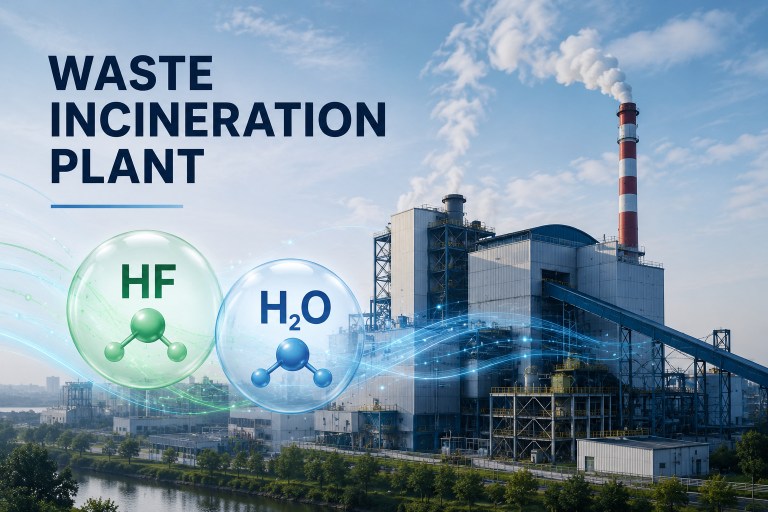
However, choosing the right monitoring technology starts with understanding why HF is one of the most difficult gases to measure. Once these challenges become clear, the advantages of wall-mounted TDLAS systems become much easier to appreciate.
Why Is HF Monitoring Critical in Waste Incineration Plants?
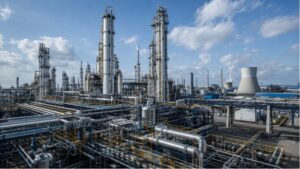
Hydrogen fluoride is one of the most difficult gases to measure accurately in industrial flue gas. Unlike many other acid gases, HF is highly soluble in water and readily adsorbs onto metal surfaces. This issue becomes even more significant in waste incineration plants, where flue gas typically contains high humidity, corrosive compounds, heavy dust loading, and rapidly changing temperatures. These harsh conditions demand a monitoring technology that can deliver stable, continuous measurements without being affected by sampling losses.
Burning fluorine-containing materials generate HF. Common sources include fluorinated plastics, industrial waste, pharmaceutical residues, electronic waste, and PFAS-containing materials. As these wastes become more common, HF monitoring has become increasingly important for municipal solid waste (MSW) plants and hazardous waste incinerators.
Unlike many conventional flue gases, HF can damage both environmental control equipment and plant infrastructure. Even relatively low concentrations may accelerate corrosion in ducts, heat exchangers, scrubbers, and downstream piping. Over time, this leads to higher maintenance costs, unexpected shutdowns, and shorter equipment life.
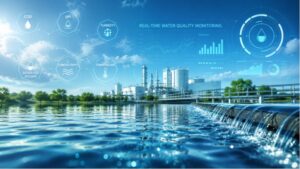
Meanwhile, Water vapor is not simply another measured parameter. It directly influences gas concentration calculations, dry-to-wet conversions, and emission reporting. Modern TDLAS gas monitoring systems can continuously monitor both HF and H2O while applying advanced humidity compensation algorithms. This allows operators to obtain more stable and accurate HF measurements even when moisture levels fluctuate during plant operation. Fast response is equally valuable. Waste composition changes continuously throughout the day, causing combustion conditions and acid gas concentrations to fluctuate within minutes.
As emission standards become more demanding, plants need monitoring technologies capable of measuring both HF and H₂O continuously under real operating conditions.
What Is a Wall-Mounted TDLAS Gas Monitoring System?
A wall-mounted TDLAS(Tunable Diode Laser Absorption Spectroscopy) gas monitoring system measures gas concentration by directing a highly stable laser beam through the sample gas. Each gas absorbs light at its own unique wavelength. Because the laser targets only the absorption lines of the selected gas, interference from other flue gas components is greatly reduced. This makes TDLAS especially suitable for trace-level HF monitoring in complex industrial processes.
The wall-mounted configuration offers additional practical advantages.
First, the compact design fits easily into existing waste incineration facilities without requiring large analyzer shelters. This simplifies retrofit projects and reduces installation costs.
Second, fewer mechanical components mean lower maintenance requirements. Plant engineers spend less time replacing filters, servicing pumps, or maintaining heated sampling lines.
Third, direct laser measurement delivers much faster response times than conventional extractive analyzers. Instead of waiting for gas to travel through long sampling pipelines, operators receive updated measurements almost immediately. Fast response allows quicker adjustments to combustion conditions and acid gas removal systems.
Compared with conventional extractive analyzers, wall-mounted TDLAS systems provide several operational advantages.
| Conventional Extractive Gas Analyzer | Wall-Mounted TDLAS Gas Monitoring System |
|---|---|
| Complex sampling system | Compact integrated design |
| Heated sampling lines | Direct laser measurement |
| Multiple maintenance components | Reduced maintenance workload |
| Larger installation footprint | Space-saving wall-mounted installation |
| Longer measurement delay | Fast real-time response |
Another important advantage is measurement stability. HF is highly soluble in water and easily adsorbs onto sampling surfaces. During transport through conventional sampling systems, part of the gas may dissolve into condensed moisture or attach to pipeline walls. These effects reduce measurement accuracy and require more frequent calibration.
By minimizing the sampling path and using laser-based optical detection, wall-mounted TDLAS systems significantly reduce these measurement errors. This enables more reliable long-term monitoring in demanding waste incineration environments where temperature, humidity, dust loading, and acid gases continuously change.
More importantly, modern TDLAS analyzers are no longer limited to measuring a single parameter. Advanced systems can monitor HF together with H₂O, allowing automatic humidity compensation that further improves measurement accuracy under changing process conditions.
Why Is TDLAS Better Than Other Technologies for HF Monitoring?
Several technologies are available for measuring acid gases in industrial emissions. However, each has strengths that make it suitable for different applications. For facilities that need simultaneous measurement of many gas components, FTIR remains an excellent choice. It can analyze multiple gases with a single analyzer. And Continuous Emission Monitoring Systems (CEMS) widely uses online FTIR gas analyzer . But, when the primary objective is high-accuracy monitoring of specific gases such as HF, HCl, NH₃, or H₂O, TDLAS offers several practical advantages.
| Technology | HF Accuracy | H₂O Measurement | Response Speed | Maintenance |
|---|---|---|---|---|
| TDLAS | Excellent | Excellent | Very Fast | Low |
| FTIR | Very Good | Good | Medium | Medium |
| UV-DOAS | Good | Limited | Medium | Medium |
The biggest advantage of TDLAS is selectivity. Instead of using broadband infrared light, TDLAS uses a narrow-band laser that is tuned precisely to the absorption line of the target gas. This greatly reduces interference from other gas components and enables reliable trace-level measurements, even in complex flue gas mixtures. Detection limits can reach ppm or even lower levels depending on the application.
Response time is another important consideration. Conventional extractive systems may require gas transport, filtration, cooling, moisture removal, and conditioning before analysis. Every step introduces delay and creates additional maintenance requirements. TDLAS simplifies this process by providing direct optical measurement.
Maintenance requirements are also significantly lower. Traditional gas analyzers often require routine replacement of filters, pumps, heated sampling lines, and gas coolers. In comparison, laser-based analyzers contain fewer wearable components, resulting in higher system availability and lower lifecycle costs.
For waste incineration plants operating around the clock, this translates into fewer shutdowns, lower maintenance expenses, and improved analyzer uptime.
How Does ESEGAS Design Wall-Mounted TDLAS Gas Monitoring Systems for Waste Incineration Plants?
Waste incineration environments present some of the harshest conditions for gas monitoring. Flue gas temperatures can exceed 400°C, dust loading may be higher than 50 g/Nm³, and gases such as HF are highly water-soluble, easily adsorbed, and prone to crystallization inside sampling pipelines. These factors make conventional sampling systems difficult to maintain and can reduce measurement accuracy over time.
To address these challenges, ESEGAS solution is the LX-2000 Wall-Mounted TDL Online Gas Monitoring System, specifically engineered for reliable industrial flue gas analysis. At the core of the LX-2000 is advanced TDLAS technology. By measuring wavelength-specific laser absorption, the system delivers highly selective and accurate monitoring of HF, HCl, NH₃.
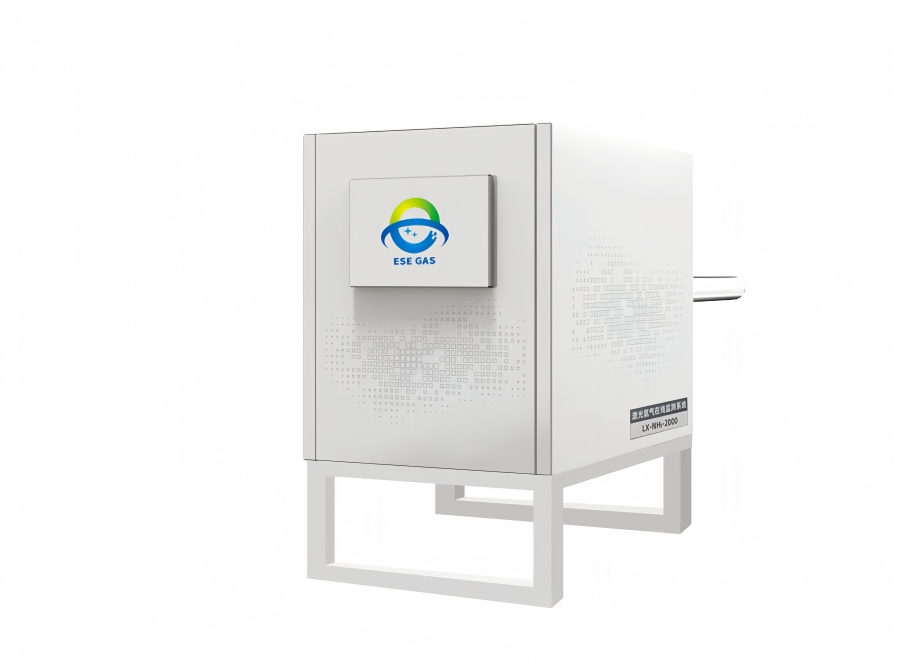
And now it add water pattern to monitor H₂O, allowing simultaneous moisture measurement and advanced humidity compensation. This significantly improves accuracy under changing process conditions while minimizing interference from other flue gas components.
Equally important is response speed. The Wall-Mounted TDL Online Gas Monitoring System continuously measures process gas in real time, enabling operators to react quickly to changes in combustion conditions, optimize scrubber performance, and maintain stable emission control. Its compact wall-mounted design also simplifies installation. Depending on project requirements, the analyzer can be configured for in-situ or extractive measurement, making it suitable for both new installations and retrofit projects where installation space is limited.
Maintenance has also been simplified. Unlike many conventional optical analyzers, the Wall-Mounted TDL Online Gas Monitoring System requires no optical alignment during routine operation. Periodic cleaning of the gas cell is typically the primary maintenance task, reducing service time and lowering operating costs.
By combining laser precision with a rugged industrial design, the LX-2000 provides waste incineration plants with dependable HF and H₂O monitoring under some of the industry’s most demanding operating conditions. The result is improved measurement confidence, lower maintenance costs, and more efficient emission control throughout the life of the system.
Conclusion
A wall-mounted TDLAS gas monitoring system offers a smarter way to monitor HF and H₂O in waste incineration plants. With fast response, high selectivity, and reliable operation in harsh flue gas conditions, ESEGAS LX-2000 helps operators improve emission compliance, reduce maintenance, and optimize process performance. Contact ESEGAS to find the right solution for your Waste Incineration Plant.