


The maritime industry is under increasing pressure to reduce harmful emissions while maintaining efficient vessel operations. As international regulations become stricter, ship operators must continuously monitor pollutants such as nitrogen oxides (NOx), sulfur dioxide (SO₂), carbon dioxide (CO₂), carbon monoxide (CO), and oxygen (O₂) in exhaust gases. However, traditional periodic testing methods cannot provide the real-time data needed to ensure compliance and optimize engine performance. At ESEGAS, we understand these challenges and provide advanced gas analysis solutions that enable continuous, accurate, and reliable marine exhaust emission monitoring.
Gas analyzers are used for marine exhaust emission monitoring by continuously measuring the concentration of key exhaust components, including NOx, SO₂, CO₂, CO, and O₂. These measurements help ship operators verify compliance with international maritime emission regulations, evaluate combustion efficiency, optimize fuel consumption, and maintain environmentally responsible vessel operations.
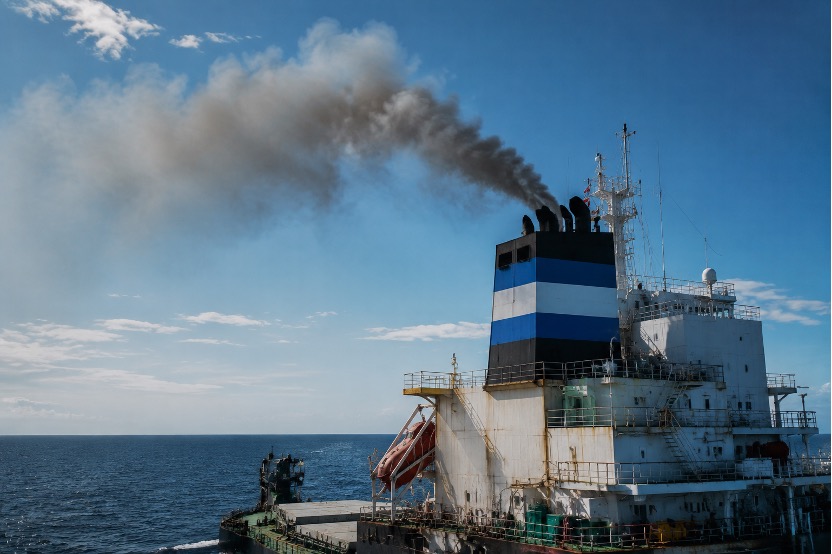
With the development of green shipping and stricter environmental requirements, emission monitoring has become an essential part of modern vessel management. A reliable gas analysis system not only supports regulatory compliance but also provides valuable insights into engine operation and fuel efficiency. In the following sections, we will explain how gas analyzers work in marine applications, why they are important, and how ESEGAS supports customers with dependable emission monitoring technologies.
Why Do Ships Need Gas Analyzers for Exhaust Emission Monitoring?
Marine engines operate under demanding conditions and consume large amounts of fuel, which results in the generation of various exhaust gases. Without accurate monitoring, ship operators may struggle to identify excessive emissions, inefficient combustion, or problems within exhaust treatment systems. These challenges can increase operating costs and create compliance risks.
At ESEGAS, we believe that continuous emission measurement is the foundation of effective environmental management. By using advanced gas analysis technology, vessels can obtain real-time emission information and make informed decisions to improve both environmental performance and operational efficiency.
Ensuring Compliance with Marine Emission Regulations
International maritime regulations, including the requirements established by the International Maritime Organization (IMO), have introduced strict limits on ship emissions. Pollutants such as NOx and SO₂ must be carefully controlled to reduce their impact on marine ecosystems and air quality.
A professional marine emission gas analyzer helps operators continuously track emission levels and generate reliable measurement data for compliance verification. Instead of relying only on occasional inspections, ship owners can monitor exhaust conditions throughout daily operations.
Improving Fuel Efficiency Through Combustion Monitoring
Fuel efficiency is directly connected to combustion quality. An incorrect air-fuel ratio can lead to incomplete combustion, increased fuel consumption, and higher pollutant emissions.
By measuring oxygen concentration and combustion-related gases, gas analyzers help operators understand engine performance. This information allows maintenance teams to adjust operating parameters, improve combustion efficiency, and reduce unnecessary fuel usage.
Detecting Problems Before They Affect Vessel Performance
Continuous exhaust monitoring can also serve as an early warning system. Abnormal changes in gas concentrations may indicate engine problems, fuel quality issues, or malfunctioning exhaust treatment equipment.
With accurate gas measurement data, operators can perform preventive maintenance before minor issues develop into expensive equipment failures.
How Do Gas Analyzers Monitor Marine Exhaust Emissions?
Monitoring exhaust emissions from ships is more challenging than many industrial applications because marine environments involve high temperatures, vibration, humidity, and corrosive gases. A reliable analysis system must collect accurate samples while maintaining stable operation over long periods.
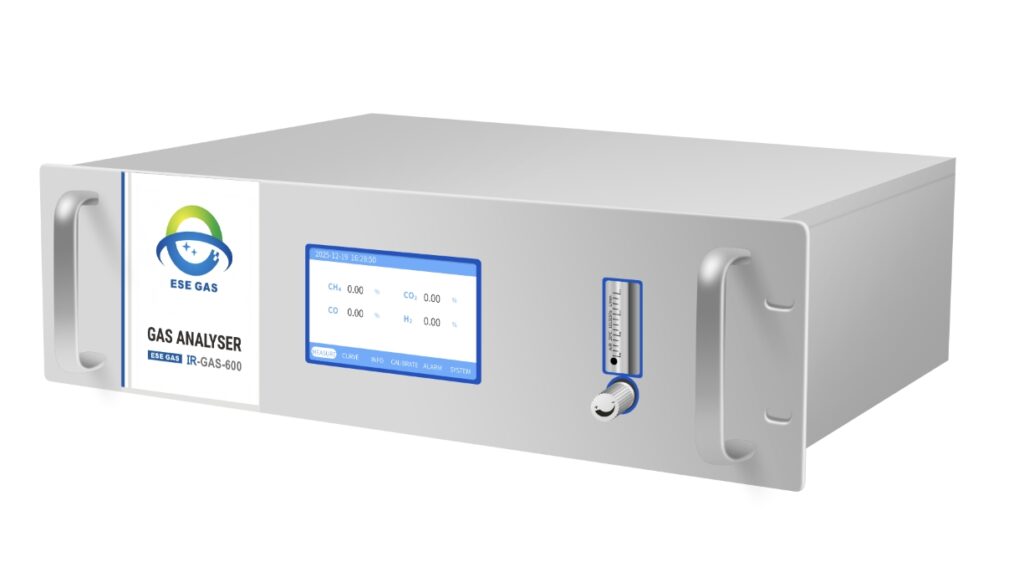
ESEGAS develops gas analysis solutions designed for demanding industrial environments. Our systems combine sampling technology, gas conditioning, and precise measurement methods to ensure reliable exhaust monitoring even under challenging operating conditions.
Step 1: Exhaust Gas Sampling
The monitoring process begins with extracting a representative sample from the ship’s exhaust system. The sampling point is usually located near the engine exhaust outlet or after-treatment system.
Proper sampling is essential because inaccurate samples can affect the reliability of the final measurement results. A well-designed sampling system ensures that the collected gas represents actual exhaust conditions.
Step 2: Gas Conditioning and Sample Preparation
Marine exhaust gases often contain moisture, dust, and other contaminants that can interfere with measurement accuracy. Before entering the analyzer, the sample typically passes through a conditioning system.
This process may include:
- Removing moisture from the gas sample
- Filtering particles and contaminants
- Controlling sample temperature
- Protecting sensitive analyzer components
Effective sample preparation helps extend equipment lifetime and maintain measurement stability.
Step 3: Measuring Exhaust Gas Components
After conditioning, the gas sample enters the analyzer where different technologies measure specific components.
Common measurement targets include:
| Gas Component | Monitoring Purpose |
| NOx | Evaluating nitrogen oxide emissions and regulatory compliance |
| SO₂ | Monitoring sulfur-related emissions from fuel combustion |
| CO₂ | Assessing combustion performance and carbon emissions |
| CO | Detecting incomplete combustion conditions |
| O₂ | Optimizing air-fuel ratio and combustion efficiency |
A high-performance marine emission gas analyzer provides continuous measurement data, allowing operators to understand emission trends in real time.
Step 4: Data Analysis and Reporting
The final stage involves processing measurement results and presenting useful information to operators. Modern gas monitoring systems can provide real-time displays, data storage, alarms, and reporting functions.
These capabilities allow ship operators to maintain emission records, support regulatory inspections, and improve operational decision-making.
What Types of Gas Analyzers Are Used for Marine Emission Monitoring?
Different vessels and emission monitoring requirements require different analytical technologies. Selecting the appropriate analyzer depends on the target gases, required accuracy, operating environment, and maintenance expectations.
At ESEGAS, we provide gas analysis technologies that can be adapted to different industrial and marine monitoring requirements.
| Gas Analyzer Technology | Measurement Principle | Typical Marine Applications |
| NDIR Gas Analyzer | Infrared absorption measurement | CO₂, CO, and SO₂ monitoring |
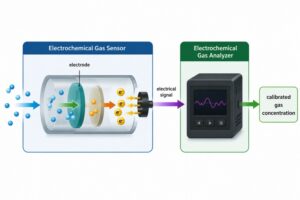
| Electrochemical Analyzer | Chemical reaction-based detection | Oxygen and selected gas measurements |
| Laser Gas Analyzer | Laser absorption technology | High-precision gas concentration measurement |
| Zirconia Oxygen Analyzer | Oxygen ion conductivity | Combustion optimization |
Each technology offers different advantages depending on the application. For example, infrared-based solutions are widely used for stable measurement of combustion gases, while laser-based technologies can provide fast response and high precision in demanding environments.
How Does ESEGAS Support Marine Exhaust Emission Monitoring?
Ship operators need more than just measurement equipment. They require reliable solutions that can operate continuously, deliver accurate data, and reduce maintenance challenges in harsh marine environments.
At ESEGAS, we focus on developing gas analysis solutions that help customers achieve efficient and sustainable emission management. Our experience in industrial gas measurement allows us to provide dependable technologies for applications where accuracy and stability are critical.
Providing Accurate and Reliable Gas Measurement
Emission monitoring depends on trustworthy measurement data. ESEGAS gas analyzers are designed to provide accurate detection of important exhaust components, helping customers better understand their emission performance.
Reliable measurement enables operators to make decisions based on real operating conditions rather than estimated values.
Supporting Continuous Monitoring Applications
Marine operations require equipment that can work continuously with minimal interruption. Our gas analysis solutions are developed for long-term monitoring applications where stable performance is essential.
By supporting continuous measurement, ESEGAS helps customers maintain better control over emissions and improve operational visibility.
Helping Customers Achieve Sustainable Operations
Environmental responsibility is becoming a key priority across the maritime industry. Through accurate gas monitoring, operators can reduce unnecessary emissions, improve energy efficiency, and move toward cleaner shipping practices.
ESEGAS is committed to supporting this transition by providing professional gas analyzer technologies for modern emission monitoring requirements.
What Should Companies Consider When Selecting a Marine Gas Analyzer?
Choosing the right gas analyzer is an important decision because monitoring accuracy directly affects compliance management and operational efficiency. Different systems may vary significantly in measurement capability, environmental resistance, and maintenance requirements.
At ESEGAS, we recommend evaluating several key factors before selecting an emission monitoring solution.
| Selection Factor | Importance |
| Measurement Accuracy | Ensures reliable emission data and compliance verification |
| Response Time | Enables faster detection of emission changes |
| Environmental Durability | Allows stable operation in marine conditions |
| Maintenance Requirements | Reduces downtime and operating costs |
| Application Compatibility | Ensures the analyzer meets specific monitoring needs |
A suitable analyzer should not only provide accurate measurements but also deliver long-term reliability in real operating environments.
Conclusion
Gas analyzers play a critical role in marine exhaust emission monitoring by providing continuous measurement of important exhaust components and supporting compliance with increasingly strict environmental regulations. From detecting NOx and SO₂ emissions to optimizing combustion efficiency, these systems help ship operators improve both environmental performance and operational reliability.
At ESEGAS, we provide advanced gas analysis solutions designed to meet the challenges of modern emission monitoring. Through accurate measurement technology, stable operation, and application-focused solutions, we help customers achieve cleaner, more efficient, and more sustainable maritime operations.