



Steel plants have many gas streams, but fixed gas analyzers only see the points where they are installed. During commissioning, troubleshooting, or process checks, engineers often need answers somewhere else.
A portable FTIR gas analyzer offers a practical alternative. Instead of installing a dedicated gas analyzer at every temporary measurement point, engineers can take multi-gas analysis directly to the furnace, off-gas line, reheating furnace, or stack. FTIR is particularly useful when several gases must be measured at the same time.
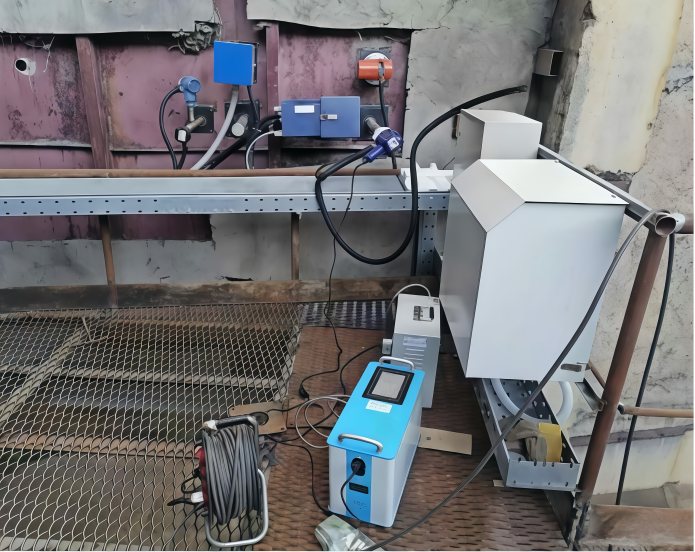
For steel plants, however, portability is only part of the equation. The gas analyzer also needs an appropriate sampling system because steelmaking gases can be hot, wet, dusty, and chemically aggressive.
Why Do Steel Plants Need Portable FTIR Gas Analyzers?
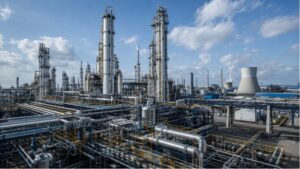
A steel plant does not have one gas condition or one measurement objective. Blast furnaces, BOF converters, EAFs, reheating furnaces, and coke ovens generate different gas streams and require different types of analysis. For example, steel-industry applications commonly monitor CO, CO2, and O2 in blast-furnace off-gas, while EAF off-gas analysis can include CO, CO2, H2, O2, and other components. Therefore, a permanent gas analyzer is not always the most convenient tool for every job.
A portable FTIR gas analyzer becomes valuable when engineers need to:
- Check a process at a new or temporary location
- Troubleshoot abnormal gas readings
- Compare several furnaces or production lines
- Verify a fixed gas analyzer
- Support commissioning and maintenance
- Investigate changes in combustion conditions
- Perform temporary emission measurements
- Collect multi-gas data before selecting a permanent gas analyzer
This flexibility can save time during troubleshooting. Instead of waiting for a permanent gas analyzer to be installed, engineers can move the gas analyzer to the measurement point and obtain field data.
Portable FTIR gas analyzers are already used for process measurements, emissions monitoring, comparison measurements, and short-term measurement campaigns.
What Gases Can a Portable FTIR Gas Analyzer Measure, and Where Can It Be Used, in a Steel Plant?
A portable FTIR gas analyzer can support measurements across several areas of a steel plant, provided the sampling system matches the gas temperature, dust level, moisture, and target components.
| Steel Plant Area | Typical Measurement Purpose | Potential Gas Components |
|---|---|---|
| Blast Furnace | Off-gas and process condition checks | CO, CO₂, H₂, O₂ |
| BOF Converter | Off-gas and process analysis | CO, CO₂, O₂ |
| EAF | Off-gas and combustion analysis | CO, CO₂, H₂, O₂, H₂O |
| Reheating Furnace | Combustion optimization | CO, CO₂, O₂, NOx |
| Coke Oven | Fuel and process gas checks | CO, CO₂, CH₄, H₂ |
| Sinter Plant | Flue gas analysis | CO, CO₂, SO₂, NOx, O₂ |
| Main Stack | Emission verification | SO₂, NOx, CO, CO₂, HCl, HF |
A portable FTIR gas analyzer for steel plants can simultaneously measure multiple components such as CO, CO₂, O₂, H₂, CH₄, NOx, SO₂, H₂O, HCl, HF, and selected VOCs. The actual gas list should be configured according to the steelmaking process and measurement objective.
The gas analyzer cannot produce a representative result if the sample changes before reaching the measurement cell in gas analyzer. Steel-plant gas can contain dust and moisture, while some streams are hot or corrosive. Gas sampling systems therefore commonly use heated probes, particulate filtration, and heated sample lines to prevent condensation and sample loss.
How Does ESEGAS Design a Portable FTIR Gas Analyzer for Steel Plants?
ESEGAS uses the ESE-FTIR-100P as a portable multi-component platform for industrial field measurements, including steel plants. The portable gas analyzer can simultaneously measure SO₂, NO, NO₂, CH₄, HCl, HF, CO, CO₂, O₂, and H₂O, with additional components such as N₂O and VOCs available according to the application.
The gas analyzer alone cannot solve poor sampling. If moisture condenses or dust reaches the optical cell, the measurement can become unstable. ESEGAS therefore builds the portable system around a portable sampling probe and sample path. A typical measurement path is:
Sampling Probe → Dust Filtration → Heated Sampling Line → FTIR Gas Cell → Spectral Analysis → Gas Concentrations
Keeping the sample path properly heated is particularly important for water-soluble or reactive components.
A steel plant often needs flexibility rather than another fixed measurement point. ESEGAS combines multi-component FTIR analysis with a portable design and application-specific sampling configuration. For distributors and plant buyers, this also creates a more adaptable solution: one portable platform can serve different process investigations instead of being limited to a single furnace or stack.
Conclusion
A portable FTIR gas analyzer gives steel plants a flexible way to investigate complex gas streams across different process areas. The key is to match FTIR measurement, sampling, filtration, heating, and gas configuration to the actual application.