


Hydrogen analyzer readings keep drifting, yet production targets remain unchanged. As a result, operators struggle with unstable processes, safety concerns, and unnecessary energy losses. In many industrial process monitoring applications, the root cause is selecting the wrong hydrogen analyzer technology.
For hydrogen analyzer technology, Thermal Conductivity Detector (TCD) technology typically delivers the best combination of accuracy, reliability, response speed, and operating cost. However, Gas Chromatography (GC) provides the highest analytical accuracy, while TDLAS excels in fast, real-time measurements under demanding process conditions.
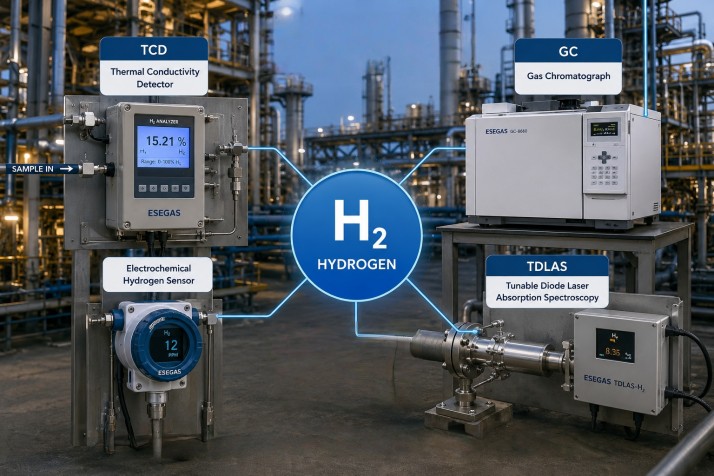
That said, accuracy alone does not determine the best solution. The ideal hydrogen analyzer technology depends on gas composition, process dynamics, maintenance requirements, and measurement objectives. Let’s examine how each technology performs in real-world industrial applications.
Why Is Accurate Hydrogen Analyzer Technology Critical for Process Monitoring?
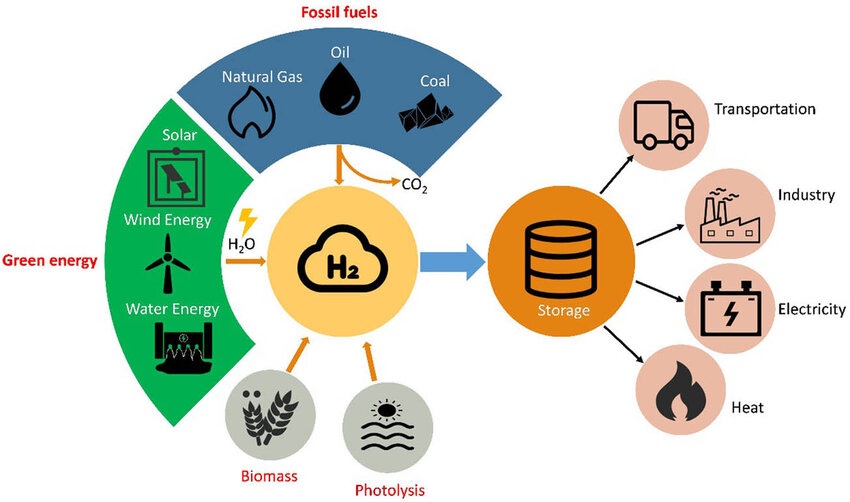
Hydrogen plays a vital role in refining, ammonia production, heat treatment, semiconductor manufacturing, electrolysis, and hydrogen energy projects. Even small measurement errors can create significant operational consequences.
For example, a hydrogen purity deviation of only 1–2% may reduce process efficiency, increase energy consumption, or affect final product quality. In hydrogen-rich environments, inaccurate measurements can also compromise safety because hydrogen is highly flammable and difficult to detect without proper instrumentation.
Therefore, engineers require hydrogen analyzers that provide stable, repeatable, and continuous measurements rather than occasional spot checks.
What Are the Main Types of Hydrogen Analyzer Technology?
Several technologies are commonly used to measure hydrogen concentration in industrial processes.
| Technology | Primary Strength | Typical Application |
|---|---|---|
| Thermal Conductivity Detector (TCD) | Continuous process monitoring | Hydrogen production, syngas, furnaces |
| Gas Chromatography (GC) | Highest analytical accuracy | Laboratories, validation testing |
| Tunable Diode Laser Absorption Spectroscopy (TDLAS) | Ultra-fast response | Real-time process control |
| Electrochemical Sensors | Low-cost monitoring | Leak detection and safety systems |
Each technology solves a different measurement challenge. Consequently, understanding their strengths and limitations is essential before making an investment decision.
How Does Thermal Conductivity Detector (TCD) Technology Measure Hydrogen?
Among all industrial gases, hydrogen has the highest thermal conductivity. TCD gas analyzers utilize this property to determine hydrogen concentration with exceptional sensitivity. The detector contains heated sensing elements. When hydrogen concentration changes, the rate at which heat transfers away from the sensor also changes. The gas analyzer converts this thermal difference into a concentration value.
TCD Is Popular for Process Monitoring
First, TCD gas analyzers provide continuous online measurement.
Second, they respond quickly enough for most industrial control applications.
Third, they require relatively little maintenance compared with more complex analytical systems.
Many industrial hydrogen analyzers achieve measurement accuracy of approximately ±1–2% FS while maintaining long-term stability. Continuous monitoring of hydrogen generators, syngas plants, furnace atmospheres, and ammonia facilities commonly relies on TCD technology.
TCD Have Limitations
Although TCD performs exceptionally well in binary or relatively simple gas mixtures, cross-interference may occur when multiple gases with similar thermal conductivity characteristics are present. In such situations, more sophisticated analytical techniques may be necessary.
Is Gas Chromatography the Most Accurate Hydrogen Analyzer Technology?
When pure analytical accuracy is the priority, Gas Chromatography remains the industry benchmark. Unlike direct-reading analyzers, GC separates individual gas components before measurement. This separation minimizes interference and allows extremely precise hydrogen quantification, even in complex gas mixtures.
Laboratories Prefer GC
GC systems can accurately analyze hydrogen alongside nitrogen, oxygen, methane, carbon monoxide, carbon dioxide, and numerous trace gases.
For this reason, laboratories frequently use GC as a reference method for calibration verification and quality assurance.
GC Have Limitations
Despite its excellent accuracy, GC has several drawbacks:
- Longer analysis cycles
- Higher maintenance requirements
- More complex operation
- Higher ownership costs
As a result, GC is often selected for laboratory analysis rather than continuous process control.
A useful rule of thumb is simple: If you need the most accurate hydrogen measurement possible, choose GC. If you need continuous process monitoring, TCD is usually the better solution.
When Does TDLAS Become the Best Hydrogen Analyzer Technology?
Modern industrial processes increasingly demand faster response times. This is where Tunable Diode Laser Absorption Spectroscopy (TDLAS) offers significant advantages. Instead of extracting a gas sample and transporting it to an gas analyzer cabinet, TDLAS measures gas concentration directly within the process stream using laser absorption techniques.
Key Advantages of TDLAS
- Real-time measurements
- Millisecond-level response
- Minimal sample conditioning
- Reduced maintenance
- Excellent performance in harsh environments
Consequently, refineries, petrochemical plants, and hydrogen energy facilities often use TDLAS when process control decisions must occur immediately. For example, hydrogen concentration fluctuations inside reformers or high-temperature process lines can be detected almost instantly, allowing operators to respond before product quality suffers.
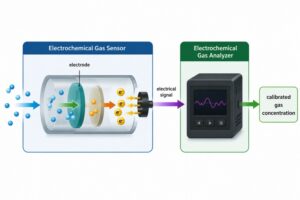
Are Electrochemical Hydrogen Sensors Accurate Enough for Industrial Processes?
Electrochemical sensors are widely used because they are compact and affordable. However, they serve a different purpose than process analyzers.
These sensors excel at:
- Hydrogen leak detection
- Personal safety monitoring
- Portable gas detection instruments
Nevertheless, electrochemical sensors experience aging over time, which can reduce long-term measurement stability. Therefore, while they are valuable safety tools, they are generally not the preferred choice for critical process control applications where high accuracy and continuous operation are required.
Which Hydrogen Analyzer Technology Delivers the Best Balance of Accuracy and Cost?
The answer depends on what “accuracy” means for your operation. The table below summarizes the practical differences.
| Evaluation Criteria | TCD | GC | TDLAS | Electrochemical |
|---|---|---|---|---|
| Analytical Accuracy | High | Very High | High | Moderate |
| Continuous Monitoring | Excellent | Limited | Excellent | Good |
| Response Time | Seconds | Minutes | Milliseconds | Seconds |
| Maintenance Demand | Low | High | Low | Moderate |
| Operating Cost | Low | High | Medium | Low |
| Process Control Capability | Excellent | Fair | Excellent | Limited |
| Complex Gas Mixture Analysis | Moderate | Excellent | Good | Limited |
Based on actual industrial usage patterns:
- Highest Analytical Accuracy: Gas Chromatography
- Best Process Monitoring Accuracy: TCD
- Fastest Response: TDLAS
- Lowest Cost: Electrochemical Sensors
This explains why most hydrogen production facilities, syngas plants, and furnace operators continue to rely on TCD-based analyzers for daily process control.
How Does ESEGAS Select the Right Hydrogen Analyzer Technology?
ESEGAS selects hydrogen analyzer technology based on the application, concentration range, and process conditions. Our online hydrogen analyzers can be equipped with either TCD (Thermal Conductivity Detector) technology or Electrochemical Hydrogen Sensors, with customizable measurement ranges from ppm to 100% H₂.
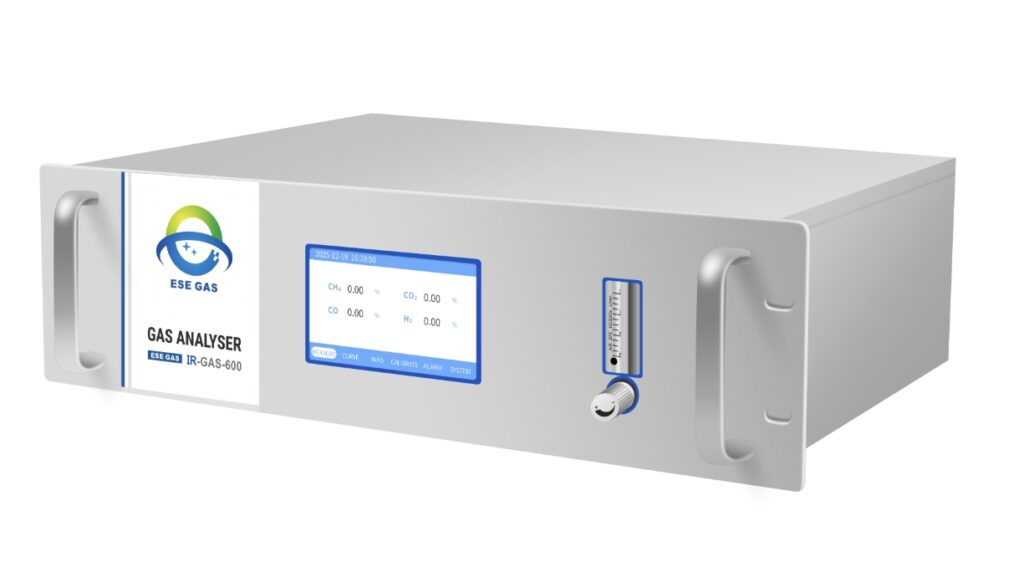
TCD Technology for Continuous Process Monitoring
For hydrogen production, syngas, heat-treatment furnaces, and other industrial processes, TCD technology offers excellent stability, fast response, and low maintenance. It is ideal for continuous online monitoring across medium to high hydrogen concentrations.
Electrochemical Sensors for Trace Hydrogen Detection
For low-concentration applications, ESEGAS integrates electrochemical hydrogen sensors capable of detecting hydrogen at ppm levels. These sensors are well suited for leak detection, safety monitoring, and trace hydrogen measurements.
Customized for Your Process
Whether you need 0–100 ppm, 0–1%, 0–30%, or 0–100% H₂ measurement, ESEGAS customizes the analyzer range, sensor technology, and compensation strategy to match your process. This ensures accurate, reliable, and long-term hydrogen monitoring while minimizing maintenance costs.
Conclusion
The most accurate hydrogen analyzer technology depends on your measurement objective. Gas Chromatography delivers the highest analytical precision, while TCD remains the preferred choice for most industrial process monitoring because it combines excellent accuracy, continuous measurement, fast response, and low operating costs. If you are evaluating hydrogen monitoring solutions for hydrogen production, syngas, refining, or furnace applications, the ESEGAS team can help you identify the most suitable analyzer configuration for your process.
FAQs
1. What is the most accurate Hydrogen Analyzer Technology for industrial process monitoring?
The answer depends on the application. Gas Chromatography (GC) provides the highest analytical accuracy, while Thermal Conductivity Detector (TCD) technology is widely considered the best choice for continuous industrial process monitoring because it offers excellent accuracy, fast response, and long-term stability.
2. Why is TCD technology commonly used in hydrogen analyzers?
TCD technology measures changes in gas thermal conductivity. Since hydrogen has the highest thermal conductivity among common industrial gases, TCD analyzers can measure hydrogen concentration accurately over a wide range while maintaining low maintenance requirements.
3. What hydrogen concentration ranges can online hydrogen analyzers measure?
Modern online hydrogen analyzers can be configured for measurement ranges from a few ppm up to 100% H₂, depending on the sensor technology and application requirements.
4. When should I choose a TCD hydrogen analyzer instead of an electrochemical hydrogen sensor?
Choose a TCD hydrogen analyzer when you need continuous process monitoring, high reliability, and medium-to-high hydrogen concentration measurements. Electrochemical sensors are generally better suited for trace hydrogen detection, leak monitoring, and safety applications.
5. What industries use hydrogen analyzers?
Hydrogen analyzers are widely used in hydrogen production, water electrolysis, syngas gasification, ammonia plants, petrochemical processing, steel manufacturing, heat-treatment furnaces, semiconductor production, and power generation.
6. Can a hydrogen analyzer measure both ppm-level and percentage-level hydrogen?
Yes. Depending on the analyzer design and sensor selection, hydrogen analyzers can be customized for trace-level measurements in ppm or for high-concentration measurements up to 100% hydrogen.
7. Is TDLAS better than TCD for hydrogen measurement?
Not necessarily. TDLAS offers ultra-fast response and non-contact measurement, making it suitable for some real-time process control applications. However, TCD remains the preferred technology for many industrial hydrogen monitoring applications because of its proven reliability, broad measurement range, and lower operating costs.