



In many industrial processes, oxygen is both necessary and dangerous. When oxygen concentration is not monitored accurately in reactors, storage tanks, or exhaust gas systems, a small deviation can quickly become a serious safety, quality, or compliance issue. Excess oxygen may create explosive conditions, accelerate oxidation, disturb reaction balance, or indicate air leakage in a process line. At ESEGAS, we understand that delayed oxygen data is often as risky as no data at all, which is why we provide online laser oxygen analysis solutions designed for continuous, fast, and reliable process monitoring.
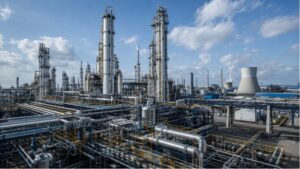
An Online Laser Oxygen Analyzer helps improve industrial safety and process control by continuously measuring oxygen concentration in real time. It supports early detection of oxygen ingress, abnormal combustion conditions, nitrogen blanketing failure, air leakage, and process instability in reactors, storage tanks, and exhaust gas pipelines.
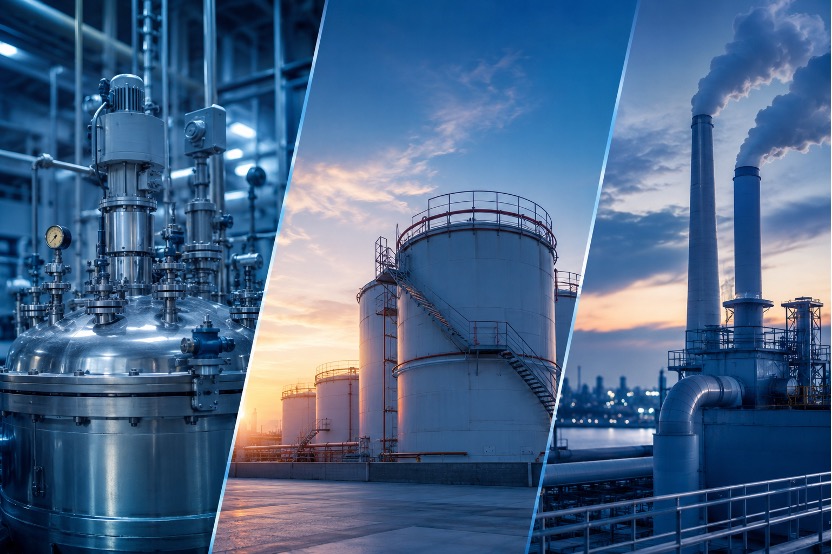
Real-time oxygen analysis is not just about reading a number on a display. In different process locations, oxygen data has different meanings. In a reactor, it may indicate whether the reaction environment is safe and stable. In a storage tank, it may show whether nitrogen blanketing is working properly. In an exhaust gas pipeline, it may reveal combustion efficiency, air leakage, or treatment system performance. For this reason, selecting the right oxygen analyzer requires a clear understanding of the application, gas conditions, installation method, and safety requirements.
Why Is Oxygen Monitoring Critical in Industrial Reaction Processes?
In reaction processes, oxygen concentration can change faster than operators expect. When oxygen enters a reactor unexpectedly, it may increase explosion risk, trigger unwanted side reactions, affect catalyst performance, or reduce final product quality. If the measurement response is slow or unstable, the control system may react too late. This is why we design ESEGAS oxygen monitoring solutions to help users identify oxygen changes before they become process problems.
An Online Laser Oxygen Analyzer is especially valuable in reaction processes because it provides continuous measurement without relying only on manual sampling. Compared with periodic laboratory testing, online analysis gives operators a real-time view of oxygen concentration and enables faster decisions.
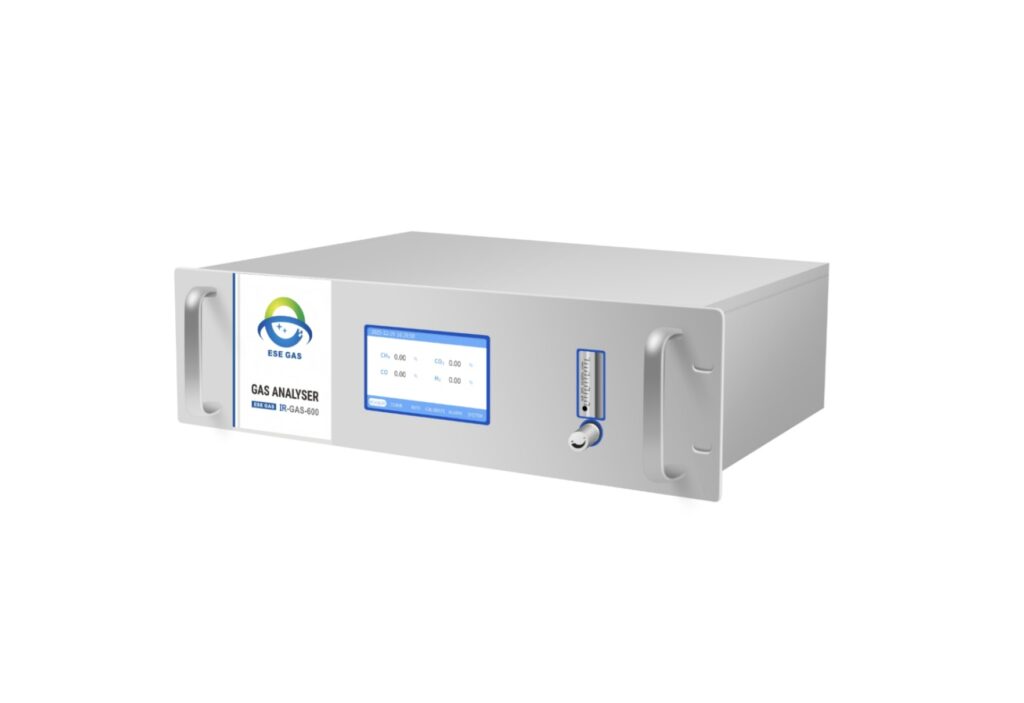
For reactor applications, ESEGAS solutions can support:
- Process safety monitoring: Detect abnormal oxygen ingress before it reaches dangerous levels.
- Reaction atmosphere control: Help maintain oxygen concentration within the required process range.
- Quality protection: Reduce the risk of oxidation, unstable reaction conditions, or off-spec products.
- Interlock support: Provide oxygen signals to PLC, DCS, alarm systems, or safety control systems.
- Reduced manual sampling risk: Minimize operator exposure to hazardous or high-temperature process gases.
For some reactor conditions, in-situ measurement can be suitable when the gas path and installation conditions allow direct optical measurement. In more complex environments, such as high temperature, high pressure, high dust, corrosive gases, or sticky components, ESEGAS can configure an extractive sampling system with proper gas pretreatment to improve long-term stability.
How Does an Online Laser Oxygen Analyzer Support Storage Tank Safety?
Storage tanks often appear stable from the outside, but the gas phase inside the tank can change continuously. If air enters through breathing valves, seals, pipelines, or operation changes, oxygen concentration in the tank headspace may rise. When flammable vapors are present, this can increase the risk of forming an explosive atmosphere. If the tank uses nitrogen blanketing, inaccurate oxygen monitoring can also lead to unnecessary nitrogen consumption or insufficient protection.
An Online Laser Oxygen Analyzer helps users monitor the oxygen concentration in the tank headspace continuously, making nitrogen blanketing safer and more efficient. Instead of simply increasing nitrogen flow as a precaution, operators can use real oxygen data to control the blanketing system more precisely.
In storage tank applications, ESEGAS oxygen analysis systems can help users achieve:
| Application Need | How ESEGAS Oxygen Monitoring Helps |
| Nitrogen blanketing control | Tracks oxygen concentration to confirm whether the inert atmosphere is maintained |
| Leakage warning | Detects abnormal oxygen increase caused by air ingress |
| Product protection | Helps prevent oxidation-sensitive materials from quality degradation |
| Safety management | Supports alarm and interlock strategies for hazardous storage areas |
| Nitrogen cost optimization | Reduces excessive purging by enabling data-based control |
For tank applications, installation design is very important. The sampling point should represent the tank headspace condition and avoid areas where condensation, liquid carryover, or pressure fluctuation may affect measurement reliability. ESEGAS can help evaluate the tank structure, gas composition, pressure condition, and hazardous area classification before recommending a suitable analyzer configuration.
What Role Does Oxygen Analysis Play in Exhaust Gas Pipelines?
Exhaust gas pipelines are often affected by changing flow rates, moisture, dust, temperature, and corrosive components. When oxygen concentration changes, it may indicate air leakage, incomplete combustion, abnormal process operation, or unstable exhaust gas treatment. Without continuous monitoring, these changes may remain unnoticed until the treatment system becomes inefficient or emission performance is affected.
An Online Laser Oxygen Analyzer provides real-time oxygen data in exhaust gas pipelines, helping users understand whether the process is operating normally. In combustion-related systems, oxygen concentration can help evaluate whether excess air is too high or too low. In waste gas treatment systems, oxygen data can support process diagnosis and stable operation.
ESEGAS oxygen monitoring solutions can be used in exhaust gas pipelines to support:
- Combustion optimization: Monitor oxygen levels to help improve combustion efficiency.
- Air leakage detection: Identify abnormal oxygen increases caused by pipeline leakage or sealing issues.
- Treatment system stability: Provide oxygen data for incinerators, scrubbers, catalytic systems, or other gas treatment units.
- Emission process management: Help operators understand process changes before they affect compliance performance.
- Continuous operation: Reduce dependence on delayed manual sampling or offline testing.
For exhaust gas pipelines with high humidity, acid gases, dust, or high temperature, proper sampling and pretreatment are essential. ESEGAS can provide solutions such as heated sampling lines, filtration, condensation control, corrosion-resistant materials, and stable flow control according to the actual gas condition.
Why Choose Laser-Based Oxygen Analysis Instead of Traditional Oxygen Measurement?
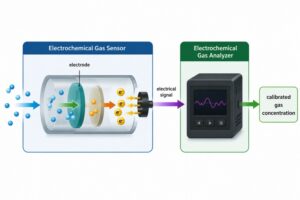
Traditional oxygen measurement technologies can work well in many applications, but complex industrial gas conditions often expose their limitations. Electrochemical sensors may require frequent replacement. Zirconia analyzers can be affected by combustible gases or high-temperature installation requirements. Conventional extractive systems may suffer from slow response if the sampling line is long or poorly designed. When oxygen data is used for safety and process control, these limitations can create hidden risks.
An Online Laser Oxygen Analyzer based on tunable diode laser absorption spectroscopy is designed for selective gas measurement. It can deliver fast response, high selectivity, and low maintenance when properly configured for the application.
| Comparison Item | Online Laser Oxygen Analyzer | Traditional Oxygen Measurement |
| Response speed | Fast, suitable for real-time process monitoring | May be slower, especially in long extractive systems |
| Selectivity | Strong oxygen absorption-based selectivity | May be affected by sensor type and gas background |
| Maintenance | Low maintenance with no consumable electrochemical cell | Some sensors require regular replacement |
| Harsh gas adaptability | Can be configured with in-situ or extractive systems | May require more frequent protection or calibration |
| Long-term stability | Suitable for continuous industrial operation | Stability depends heavily on sensor aging and gas conditions |
| Safety integration | Supports alarm, PLC, and DCS signal output | Also possible, but response and reliability vary |
At ESEGAS, we do not recommend one technology simply because it is advanced. We recommend the right configuration based on the process. For demanding applications where fast oxygen changes, hazardous gases, or difficult sample conditions are involved, laser oxygen analysis is often a more reliable choice.
Which Installation Method Is Suitable for Complex Industrial Applications?
A good oxygen analyzer can still perform poorly if it is installed in the wrong way. Reactors, storage tanks, and exhaust gas pipelines each have different pressure, temperature, moisture, dust, and safety requirements. Choosing the wrong installation method may cause slow response, blocked filters, condensation, corrosion, or unstable readings.
For an Online Laser Oxygen Analyzer, ESEGAS usually considers three main installation approaches:
In-situ installation
In-situ installation measures oxygen directly across the process gas path. It is suitable when fast response is required and the process conditions allow direct optical measurement.
It is commonly considered when:
- The measuring point has a suitable optical path.
- Gas temperature and pressure are within allowable limits.
- Dust, condensation, or corrosive components can be managed.
- The user needs very fast response without sampling delay.
Extractive installation
Extractive installation takes gas from the process and sends it to the analyzer after pretreatment. This method is suitable for difficult gas conditions, such as high temperature, high dust, high humidity, corrosive gas, or high-pressure processes.
It is commonly used when:
- Direct installation is not suitable.
- Sample gas needs cooling, filtering, or pressure reduction.
- The analyzer must be installed in a safer or more accessible area.
- Maintenance convenience is important.
Bypass installation
Bypass installation allows part of the gas stream to pass through a controlled measurement path. It can improve measurement stability and make maintenance easier.
It is suitable when:
- The main pipeline condition is unstable.
- A controlled flow path is required.
- The system needs easier inspection and maintenance.
- The user wants to reduce disturbance to the main process line.
ESEGAS helps users evaluate the measuring point, gas composition, process pressure, temperature, dust load, moisture level, corrosion risk, and explosion-proof requirements before selecting the final installation method.
How Does ESEGAS Improve Reliability in Harsh Gas Conditions?
Industrial gas analysis is not performed in ideal laboratory conditions. Real process gases may be hot, wet, dusty, corrosive, flammable, or unstable. If these factors are not considered during system design, even a high-quality analyzer may face frequent alarms, unstable readings, or maintenance problems.
This is why ESEGAS provides the Online Laser Oxygen Analyzer as a complete application-oriented solution, not only as a standalone instrument. We focus on the full measurement chain, from sampling point selection to signal output.
Our support can include:
- Application evaluation: Understanding the process, gas components, measuring range, and control purpose.
- Sampling system design: Matching filters, probes, heated lines, coolers, pumps, and flow control devices.
- Material selection: Choosing corrosion-resistant materials for aggressive gases.
- Explosion-proof configuration: Supporting hazardous area requirements where flammable gases may exist.
- Signal integration: Providing outputs such as 4–20 mA, relay alarms, RS485, Modbus, or other control interfaces according to project requirements.
- Maintenance planning: Helping users reduce downtime through accessible system layout and practical maintenance guidance.
Our goal is to make oxygen monitoring stable in real operating conditions, not only accurate during initial commissioning.
What Should Users Confirm Before Selecting an Online Laser Oxygen Analyzer?
Many oxygen monitoring problems begin before the analyzer is installed. If key process details are not confirmed during selection, the final system may not match the real working environment. For safety-related applications, this can lead to unreliable measurement or unnecessary maintenance pressure.
Before selecting an Online Laser Oxygen Analyzer, ESEGAS recommends confirming the following information:
| Selection Factor | Why It Matters |
| Oxygen measuring range | Determines analyzer model and accuracy requirements |
| Gas composition | Helps evaluate interference, corrosion, and safety risks |
| Temperature and pressure | Affects probe, sampling, and pretreatment design |
| Moisture and condensation | Determines whether heating or drying is needed |
| Dust or particles | Requires filtration and anti-blocking design |
| Corrosive components | Influences material selection and system protection |
| Hazardous area classification | Determines explosion-proof requirements |
| Response time requirement | Affects installation method and sampling line design |
| Installation location | Impacts representativeness, maintenance, and safety |
| Output signal | Ensures compatibility with PLC, DCS, or alarm systems |
When these factors are clearly defined, the oxygen monitoring system can be designed with better stability, faster response, and lower maintenance demand.
Conclusion
An Online Laser Oxygen Analyzer is more than an oxygen measuring device. In industrial applications, it is an important tool for process safety, reaction control, tank inerting, exhaust gas diagnosis, and continuous operation management. Whether the measurement point is connected to a reactor, a storage tank, or an exhaust gas pipeline, reliable oxygen data helps users detect risks earlier and control processes more confidently.
At ESEGAS, we provide online laser oxygen analysis solutions designed around real industrial conditions. By combining laser measurement technology, application-specific installation design, and practical gas pretreatment experience, we help customers build safer, faster, and more reliable oxygen monitoring systems for demanding process environments.