



Industrial gas monitoring becomes difficult when one process stream contains several gases, fluctuating concentrations, moisture, dust, and corrosive components at the same time. Relying on separate single-gas instruments can make the monitoring system more complex, slower to maintain, and harder to trust when process conditions change. At ESEGAS, we understand that inaccurate or delayed gas data can lead to unstable combustion, emission risks, safety concerns, and unnecessary operating costs. That is why an infrared multi-component gas analyzer is designed to help industrial users obtain continuous, reliable, and actionable gas concentration data from one integrated analysis solution.
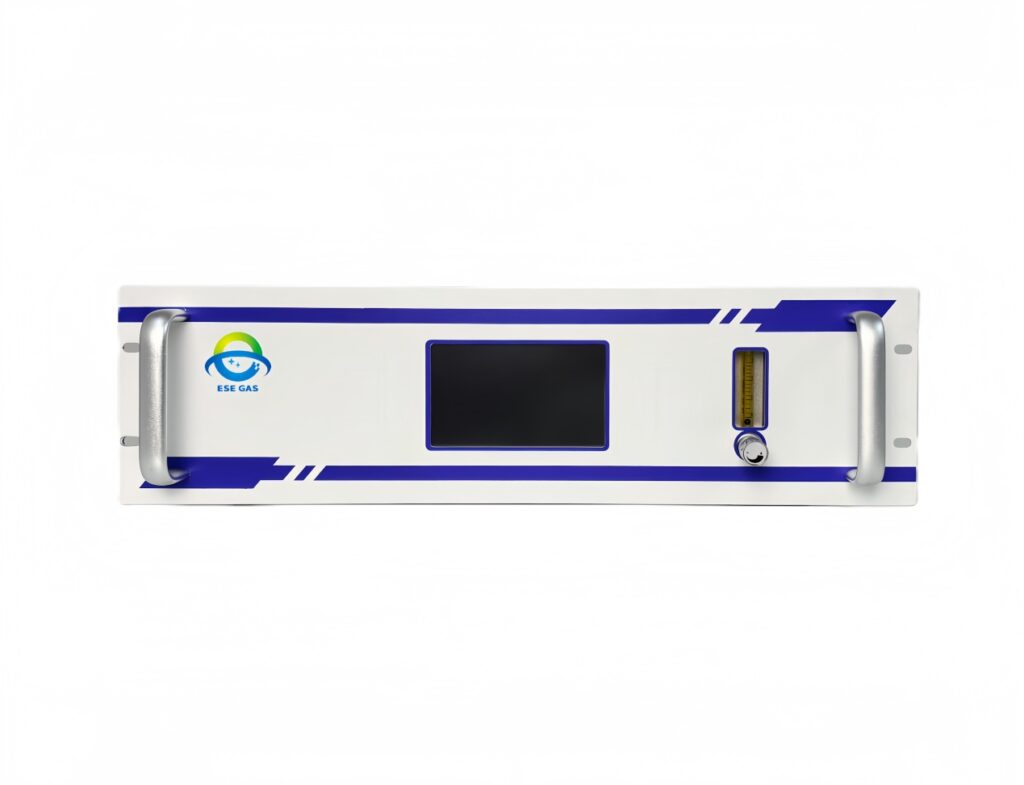
An infrared multi-component gas analyzer is an industrial gas analysis instrument that uses infrared absorption technology to measure multiple gas components in a gas stream. It helps plants monitor emissions, combustion efficiency, process gases, and environmental compliance by identifying how different gas molecules absorb infrared light at specific wavelengths.
Knowing the definition is only the first step. For industrial users, the real value comes from understanding how the technology works, which gases it can measure, where it performs best, and how it supports long-term operation in demanding environments. In the following sections, we will explain how ESEGAS views infrared multi-component gas analysis from a practical industrial application perspective.
How Does an Infrared Multi-Component Gas Analyzer Work?
When gas composition changes quickly, delayed or unstable measurements can make operators react too late. This is especially challenging in combustion control, process optimization, and emission monitoring, where several gases may influence each other. An infrared multi-component gas analyzer helps solve this problem by using the optical absorption characteristics of different gas molecules to provide continuous concentration data.
An infrared Gas Analyzer works based on the principle that many gas molecules absorb infrared light at specific wavelengths. When the sample gas passes through the optical gas cell, infrared light travels through the gas path. Different components absorb part of the light, and the detector measures the remaining intensity. The analyzer then calculates gas concentration according to the absorption signal.
The basic working process includes:
| Key Part | Function |
| Infrared light source | Generates infrared radiation for gas measurement |
| Optical gas cell | Allows the sample gas to pass through the measurement path |
| Filter or spectroscopic module | Selects specific wavelengths related to target gases |
| Detector | Measures the infrared signal after gas absorption |
| Algorithm and signal processing | Converts absorption intensity into gas concentration |
| Output interface | Sends data to control systems, CEMS, PLC, or data acquisition systems |
For multi-component measurement, the analyzer must distinguish between different absorption bands and compensate for possible interference. At ESEGAS, we focus not only on the optical measurement module, but also on sample handling, calibration, system integration, and long-term stability.
Which Gases Can an Infrared Multi-Component Gas Analyzer Measure?
Choosing the wrong gas analysis method can result in poor sensitivity, cross-interference, or frequent maintenance. In many industrial plants, operators need to monitor not just one component, but several gases that affect emissions, safety, and process efficiency. A well-configured infrared Gas Analyzer can measure multiple infrared-active gases in one system and reduce the complexity of gas monitoring.
Infrared technology is commonly used for gases that have clear infrared absorption characteristics. Depending on the application, an infrared multi-component gas analyzer can be configured for gases such as:
| Gas Component | Common Application |
| CO | Combustion monitoring, safety control, emission monitoring |
| CO₂ | Combustion efficiency, greenhouse gas monitoring, process control |
| CH₄ | Natural gas, biogas, leakage monitoring, process gas analysis |
| NO | Emission monitoring, combustion process analysis |
| NO₂ | NOx-related emission monitoring |
| SO₂ | Flue gas monitoring, environmental compliance |
| HCl | Waste incineration and corrosive gas monitoring |
| HF | Industrial emission and hazardous gas monitoring |
| H₂O | Moisture compensation and process gas condition analysis |
Not every gas is best measured by infrared technology alone. For example, oxygen normally requires a different measurement principle, such as electrochemical, paramagnetic, or zirconia-based analysis. In real projects, ESEGAS helps customers select the right combination of gas analyzer technologies instead of forcing every component into one method.
Why Is Multi-Component Analysis Better Than Single-Gas Monitoring?
A plant that uses several single-gas analyzers may face more sample lines, more calibration points, more maintenance work, and more integration challenges. When each instrument has its own response time and signal behavior, data comparison can also become less efficient. A multi-component infrared Gas Analyzer helps simplify the monitoring structure while giving operators a more complete view of the gas stream.
The advantages of multi-component analysis include:
- Fewer instruments in the system
One analyzer can measure several target gases, reducing the need for multiple separate instruments. - More consistent measurement conditions
Since multiple gases are measured from the same sample stream, the data can better reflect the same process condition. - Lower integration complexity
A compact multi-gas analysis system can simplify cabinet design, signal output, and data management. - Improved process understanding
Measuring CO, CO₂, NOx, SO₂, CH₄, or other gases together helps operators understand combustion, reaction efficiency, and emission behavior more clearly. - Reduced long-term maintenance pressure
Fewer analyzers may mean fewer spare parts, fewer calibration operations, and easier system troubleshooting.
At ESEGAS, we see multi-component gas analysis as more than a hardware upgrade. It is a way to help customers build a cleaner, more efficient, and more reliable gas monitoring architecture.
Where Is an Infrared Multi-Component Gas Analyzer Commonly Used?
Industrial gas monitoring environments are rarely simple. High temperature, high humidity, dust, acid gases, and changing flow conditions can all influence measurement performance. Without the right analyzer configuration, plants may experience unstable readings or frequent system downtime. A properly designed infrared Gas Analyzer can support many demanding applications when it is matched with the right sample conditioning system.
Common application areas include:
| Industry or Process | Typical Monitoring Purpose |
| Power plants | Combustion efficiency, CO/CO₂ monitoring, NOx and SO₂ emission control |
| Waste incineration | Monitoring CO, NOx, SO₂, HCl, HF, and other flue gas components |
| Cement production | Kiln gas monitoring, combustion optimization, emission control |
| Steel and metallurgy | Furnace gas analysis and process atmosphere monitoring |
| Chemical production | Process gas concentration control and reaction monitoring |
| Biogas and natural gas | CH₄ and CO₂ concentration measurement |
| Environmental monitoring | Continuous emission monitoring and compliance reporting |
| Research and testing | Catalyst evaluation, combustion studies, and gas reaction experiments |
In each application, the analyzer must be selected according to the actual gas composition, measurement range, response time, sample temperature, moisture level, and corrosive gas content. This is why ESEGAS provides application-oriented gas analysis solutions rather than one-size-fits-all instruments.
How Does an Infrared Gas Analyzer Support CEMS and Environmental Compliance?
Emission monitoring becomes a serious risk when data is incomplete, unstable, or not available continuously. For industries with regulated exhaust gases, missing or inaccurate data can affect compliance reporting and plant operation decisions. An infrared Gas Analyzer can serve as an important measurement module in a continuous emission monitoring system, helping plants obtain real-time gas concentration data.
In a CEMS application, the analyzer is usually part of a complete system that may include:
- Sampling probe
- Heated sampling line
- Sample conditioning unit
- Filters and moisture treatment
- Gas analyzer cabinet
- Calibration gas system
- Data acquisition and reporting system
The infrared analyzer measures target gases after the sample is properly extracted and conditioned. For gases that are sensitive to condensation or corrosion, sample handling is especially important. At ESEGAS, we pay attention to the full measurement chain because stable CEMS performance depends not only on the analyzer itself, but also on how the sample reaches the analyzer.
A well-designed infrared multi-component gas analysis system can help operators monitor emission trends, detect abnormal combustion, support environmental reporting, and respond faster when pollutant concentrations change.
What Should You Consider When Choosing an Infrared Multi-Component Gas Analyzer?
Selecting a gas analyzer only by checking the gas list can lead to costly mistakes. Two applications may both require CO and CO₂ measurement, but the gas temperature, moisture, dust level, pressure, concentration range, and interference conditions may be completely different. To choose the right infrared Gas Analyzer, users need to evaluate the full working environment.
Key selection factors include:
- Target gas components
Confirm which gases need to be measured and whether they are suitable for infrared absorption technology. - Measurement range
The analyzer range should match normal operating concentration and possible peak conditions. - Detection limit and accuracy
Low-level emission monitoring and process control may require different performance levels. - Sample gas condition
Temperature, humidity, dust, pressure, and corrosive components must be considered. - Response time
Fast-changing processes require faster gas response and stable signal processing. - Cross-interference compensation
In multi-component gas streams, the analyzer should reduce the influence of overlapping absorption signals. - Calibration method
Automatic or manual calibration should be selected according to maintenance needs and compliance requirements. - System integration
Communication output, cabinet design, sampling system, and data platform compatibility should be planned in advance. - Long-term service support
Industrial gas monitoring requires reliable technical support, spare parts, and application experience.
At ESEGAS, we help customers evaluate these factors before recommending a configuration. Our goal is to provide a gas analysis solution that works reliably in real operating conditions, not only in ideal laboratory environments.
Why Choose ESEGAS for Infrared Multi-Component Gas Analysis?
Many users face the same problem: the analyzer specification looks acceptable on paper, but the system becomes unstable after installation because the real gas condition was not fully considered. This can cause repeated maintenance, unreliable data, and frustration for both operators and environmental managers. ESEGAS approaches each infrared Gas Analyzer project from the perspective of long-term industrial operation.
We focus on:
- Matching gas analyzer technology with the actual application
- Supporting multi-component gas measurement for process and emission monitoring
- Considering moisture, dust, corrosive gases, and sample pretreatment from the beginning
- Providing practical configuration suggestions for CEMS and process gas analysis
- Helping customers build stable, maintainable, and scalable gas monitoring systems
For ESEGAS, an infrared multi-component gas analyzer is not just a measurement device. It is part of a complete industrial gas monitoring solution that should help customers improve control, reduce uncertainty, and make better operating decisions.
Conclusion
An infrared multi-component gas analyzer helps industrial users monitor several gas components in one gas stream with continuous and reliable measurement performance. By using infrared absorption technology, it can support emission monitoring, combustion optimization, process control, CEMS integration, and environmental compliance. At ESEGAS, we provide application-oriented gas analysis solutions that combine analyzer technology, sample handling, calibration, and system integration. For plants that need accurate multi-gas data in complex industrial environments, an ESEGAS infrared Gas Analyzer solution can help turn gas measurement into a stronger foundation for safer, cleaner, and more efficient operation.