



In industrial gas analysis, one question often causes unexpected differences between measurement reports: why can the same gas stream show different concentration values when tested by different systems? Many engineers assume that inconsistent readings indicate analyzer problems, calibration issues, or unstable process conditions. However, in many cases, the real reason is much simpler—the measurements are reported using different calculation bases.
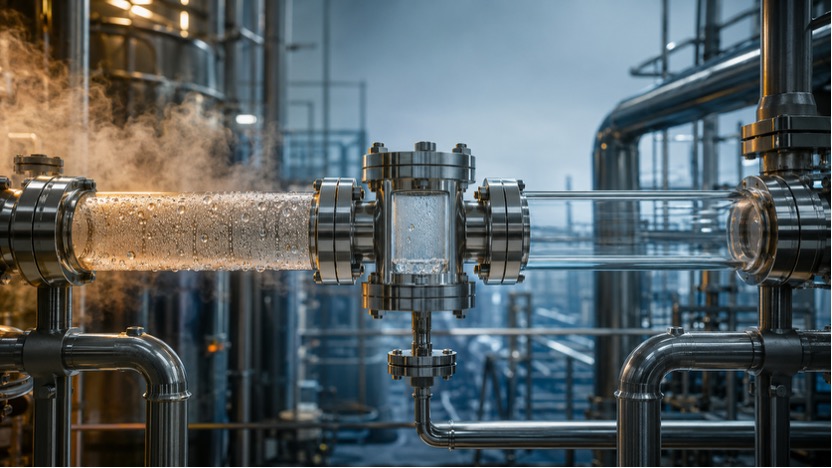
When moisture exists in a gas sample, water vapor occupies part of the total gas volume and changes the concentration of other components. If this effect is not properly considered, operators may misinterpret emission data, combustion efficiency, or process performance. At ESEGAS, we help industrial users understand how moisture affects gas measurement accuracy and how selecting the correct measurement basis can improve the reliability of gas analysis results.
Wet Basis gas measurement includes water vapor in the total gas volume calculation, while Dry Basis gas measurement removes water vapor from the calculation. Because water vapor dilutes other gas components, the concentration measured on a Dry Basis is generally higher than the concentration measured on a Wet Basis for the same gas sample.
Understanding the difference between Wet Basis and Dry Basis is not only a matter of applying a conversion formula. It directly affects sampling system design, analyzer selection, compliance reporting, and long-term measurement stability. In practical industrial applications, choosing the wrong measurement basis or ignoring moisture effects can lead to inaccurate comparisons and unreliable conclusions. In this article, ESEGAS explains the key differences between Wet Basis and Dry Basis gas measurement and how to select the right approach for different gas analysis applications.
What Is Wet Basis Gas Measurement?
A common misunderstanding in gas analysis is that a Wet Basis measurement means the gas contains liquid water. In reality, Wet Basis refers to how the gas concentration is calculated—it means that water vapor remains part of the total gas mixture when determining the concentration of measured components.
When a gas analyzer reports values on a Wet Basis, the total gas volume includes both the target gases and water vapor. This means components such as oxygen (O₂), carbon dioxide (CO₂), sulfur dioxide (SO₂), nitrogen oxides (NOₓ), and other gases are measured within a gas stream that still contains moisture.
For industrial processes with high humidity, ignoring this factor can create confusion. A gas stream may appear to have a lower pollutant concentration simply because water vapor occupies part of the measurement volume. This does not mean the actual amount of pollutant has decreased—it only means the concentration is calculated using a larger total gas volume.
How Does Wet Basis Measurement Work?
A typical Wet Basis measurement follows these principles:
- Water vapor remains in the sample gas during measurement.
- The analyzer measures gas components under conditions close to the original process environment.
- The final concentration value includes the dilution effect caused by moisture.
- The result represents the actual composition of the wet gas stream.
At ESEGAS, we often recommend Wet Basis measurement approaches for applications where maintaining the original gas composition is critical. For example, when analyzing reactive or water-soluble gases, removing moisture before measurement may introduce additional risks because some target gases can dissolve into condensed water or be lost during sample treatment.
For these applications, maintaining sample integrity is more important than simply removing moisture.
What Is Dry Basis Gas Measurement?
While Wet Basis includes water vapor, Dry Basis gas measurement excludes water vapor from the calculation. In a Dry Basis measurement, the concentration of target gases is calculated as if all moisture had been removed from the sample.
Because water vapor no longer occupies part of the total gas volume, the remaining gas components represent a larger percentage of the total mixture. As a result, Dry Basis values are usually higher than Wet Basis values for the same gas sample.
This difference is especially important in emission monitoring applications. Many regulations and reporting standards require pollutant concentrations to be expressed on a Dry Basis, making accurate moisture removal or moisture correction essential.
How Is Dry Basis Measurement Achieved?
Dry Basis measurement is commonly achieved through sample conditioning systems, including:
- Cooling and condensation systems;
- Gas dryers;
- Moisture removal modules;
- Membrane-based drying systems.
However, removing moisture is not always as simple as cooling the gas. Some gases may react with water or dissolve into condensed liquid, causing measurement errors.
For example:
| Gas Component | Potential Impact During Moisture Removal |
| HCl | Highly soluble in water and may be lost through condensation |
| HF | Can dissolve in condensed moisture |
| NH₃ | May react or dissolve during sample treatment |
| SO₂ | Can be affected by condensation and chemical reactions |
| CO, CO₂, O₂ | Generally more stable during moisture removal |
Therefore, selecting Dry Basis measurement requires careful evaluation of both the target gas and the sample conditioning system.
Why Is Dry Basis Usually Higher Than Wet Basis?
The difference between Wet Basis and Dry Basis comes from the dilution effect of water vapor.
For example, assume an industrial gas sample contains:
- SO₂ concentration on Wet Basis: 100 ppm
- Water vapor concentration: 10%
The result shows:
| Measurement Method | Reported Concentration |
| Wet Basis | 100 ppm |
| Dry Basis | 111.1 ppm |
Both values are correct because they describe the same gas using different reference conditions.
At ESEGAS, we emphasize that engineers should never compare Wet Basis and Dry Basis values directly without confirming the measurement reference. Many apparent discrepancies between analyzers are caused not by instrument accuracy, but by different reporting bases.
How Do You Convert Wet Basis to Dry Basis?
The conversion between Wet Basis and Dry Basis requires knowing the water vapor concentration in the gas sample.
For example, if the water vapor concentration changes during operation, using a fixed correction factor may introduce errors. This is especially common in combustion systems where fuel type, load conditions, and operating temperatures affect moisture levels.
For continuous emission monitoring systems (CEMS), ESEGAS recommends using reliable moisture measurement and correction methods to ensure that Wet Basis and Dry Basis results remain accurate and traceable.
What Is the Difference Between Hot-Wet and Cold-Dry Gas Measurement Systems?
Wet Basis and Dry Basis describe the calculation method, while hot-wet and cold-dry describe how the gas sample is handled before analysis. Although they are closely related, they are not exactly the same concept.
| Comparison | Hot-Wet Measurement | Cold-Dry Measurement |
| Sample condition | Moisture remains in sample gas | Moisture is removed before analysis |
| Temperature control | Sample remains above dew point | Sample is cooled and dried |
| Typical basis | Often Wet Basis | Often Dry Basis |
| Main advantage | Preserves original gas composition | Provides stable measurement conditions |
| Main challenge | Requires effective heating control | Risk of losing soluble gases |
Hot-Wet systems are especially valuable when analyzing gases that can be affected by condensation. At ESEGAS, our heated sampling solutions are designed to maintain sample temperature and prevent moisture-related losses during transportation from the process point to the analyzer.
For complex industrial emissions, our FTIR-based gas analysis solutions support multi-component measurement while maintaining sample integrity in challenging environments.
Which Gas Measurement Basis Should You Choose for Industrial Applications?
Choosing between Wet Basis and Dry Basis depends on several factors, including regulatory requirements, gas composition, process conditions, and measurement objectives.
Before selecting a gas analyzer system, ESEGAS recommends evaluating:
1. What Does the Regulation Require?
Some emission standards require Dry Basis reporting, while others require Wet Basis values or additional oxygen correction. The reporting format should always be confirmed before designing the measurement system.
2. Is Moisture Removal Safe for the Target Gas?
If the measured gases are water-soluble or chemically reactive, removing moisture may reduce measurement accuracy.
3. How Stable Is the Moisture Content?
For processes with large moisture fluctuations, real-time moisture measurement provides better correction accuracy than fixed assumptions.
4. What Is the Purpose of the Measurement?
Different applications may prioritize different measurement strategies:
| Application | Recommended Consideration |
| Emission compliance monitoring | Follow required reporting basis |
| Combustion optimization | Consider real process conditions |
| Process control | Maintain fast and reliable response |
| Research and analysis | Preserve accurate gas composition |
At ESEGAS, we do not select a measurement basis based only on analyzer specifications. We consider the complete application, including sampling conditions, target gases, moisture level, and operational requirements.
How Does ESEGAS Help Achieve Accurate Wet Basis and Dry Basis Gas Measurement?
At ESEGAS, we understand that accurate gas analysis depends on more than the analyzer itself. A complete measurement solution requires proper sampling design, moisture management, calibration strategy, and data processing.
Our gas analysis solutions help industrial users achieve reliable Wet Basis and Dry Basis measurement through:
- Advanced gas sampling system design based on actual process conditions;
- Heated sampling solutions for moisture-sensitive applications;
- Moisture measurement and correction capabilities;
- Multi-component gas analysis using advanced technologies;
- Customized solutions for emissions monitoring and industrial process control.
For applications requiring accurate measurement of multiple components under high-moisture conditions, ESEGAS FTIR gas analyzers can simultaneously analyze gases such as SO₂, NO, NO₂, NH₃, HCl, HF, CO, CO₂, CH₄, and H₂O while supporting reliable moisture-related data correction.
By considering the complete gas measurement process—from sampling to final reporting—ESEGAS helps customers achieve accurate, stable, and compliant gas analysis results.
Conclusion: Understanding Wet Basis vs. Dry Basis Is Essential for Reliable Gas Analysis
Wet Basis and Dry Basis gas measurement are two different ways of expressing the concentration of gases in a mixture. Wet Basis includes water vapor in the calculation, while Dry Basis removes the influence of moisture. Although Dry Basis values are usually higher, both methods can accurately represent the same gas stream when applied correctly.
The key to reliable gas analysis is not choosing one basis universally, but selecting the measurement approach that matches the application requirements. Factors such as gas composition, moisture level, sampling method, and regulatory standards must all be considered.
At ESEGAS, we help industries design gas analysis solutions that maintain sample integrity, improve measurement accuracy, and deliver dependable data for process optimization and emission compliance. By understanding the difference between Wet Basis and Dry Basis, engineers can make better decisions and achieve more reliable gas measurement performance.