



Aerobic fermentation depends on a stable supply of oxygen, yet microbial oxygen demand can change rapidly as biomass increases, nutrients are consumed, and metabolic activity shifts. When these changes are not detected in time, the process may experience oxygen limitation, inefficient substrate utilization, excessive foaming, lower product yield, or inconsistent batch quality. By continuously monitoring the composition of fermentation off-gas, we can obtain real-time information about microbial respiration and use it to improve aeration, agitation, feeding, and endpoint control.
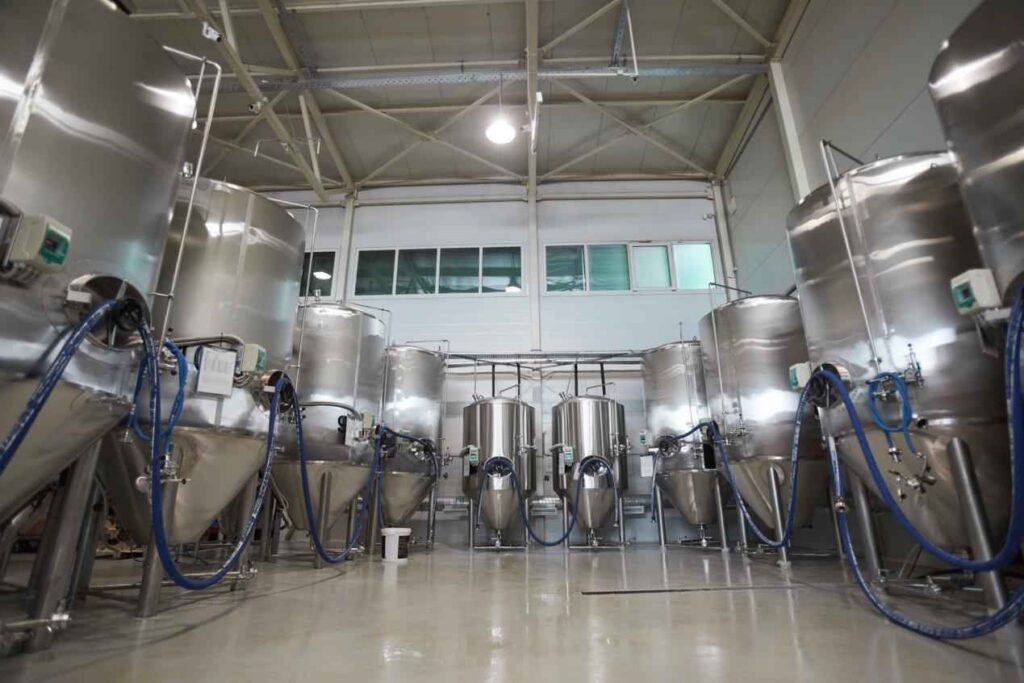
Gas analyzers are used in aerobic fermentation to continuously measure oxygen and carbon dioxide concentrations in bioreactor off-gas. These measurements help operators evaluate microbial respiration, calculate oxygen uptake rate, carbon dioxide evolution rate, and respiratory quotient, detect process deviations, and optimize aeration, agitation, nutrient feeding, and fermentation endpoints.
However, the value of off-gas monitoring goes far beyond displaying oxygen and carbon dioxide concentrations. When gas data are combined with flow, pressure, temperature, dissolved oxygen, pH, and biomass information, they provide a clearer view of the biological process inside the fermenter. At ESEGAS, we focus on turning these measurements into reliable process information that can support both laboratory research and industrial fermentation control.
Why Are Oxygen and Carbon Dioxide Important in Aerobic Fermentation?
Aerobic microorganisms require oxygen to generate energy, grow, and produce target metabolites. At the same time, they release carbon dioxide as a result of cellular respiration. If oxygen consumption or carbon dioxide production changes unexpectedly, the fermentation process may already be moving away from its optimal operating condition.
In most aerobic fermentation systems, oxygen and carbon dioxide are the two most important off-gas components to monitor. Oxygen concentration in the exhaust gas indicates how much oxygen remains after the gas has passed through the bioreactor, while carbon dioxide concentration reflects the amount of metabolic gas generated by the microorganisms.
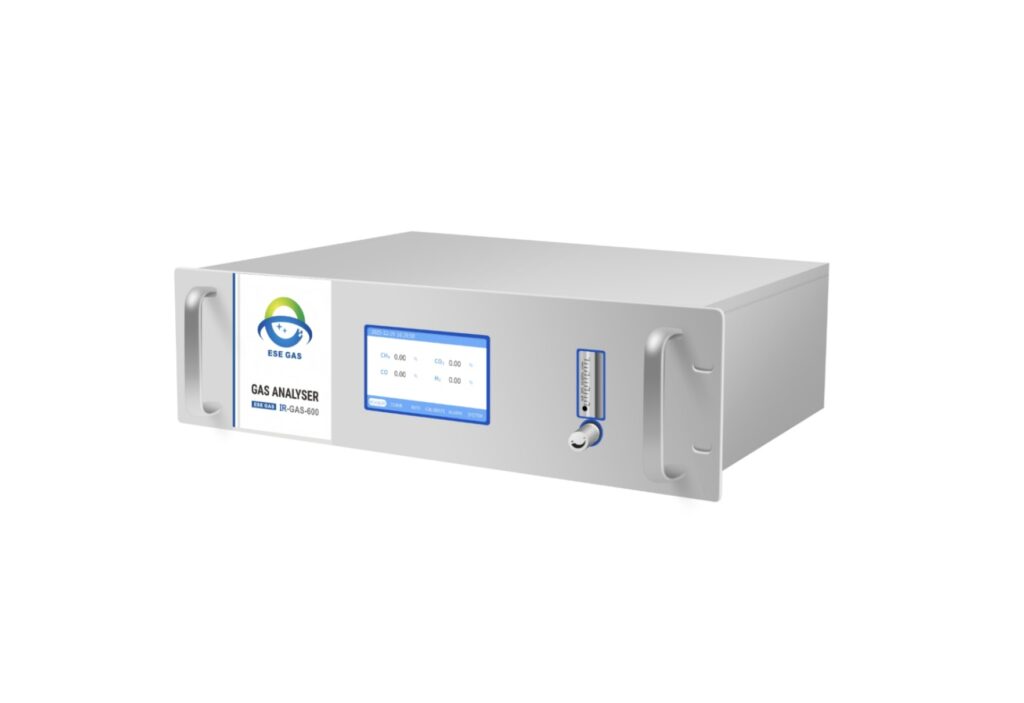
By comparing the inlet and outlet gas composition, gas analyzers can help determine whether microbial respiration is increasing, stabilizing, or declining. A gradual decrease in outlet oxygen may indicate rising biomass and oxygen demand. An increase in carbon dioxide may show that cells are actively metabolizing the available substrate.
Monitoring both gases is more informative than monitoring only one. For example, a reduction in outlet oxygen may result from increased biological activity, but it may also be caused by changes in airflow or pressure. Carbon dioxide data provide an additional reference that helps operators distinguish between biological and mechanical causes.
At ESEGAS, we can configure gas analysis systems for oxygen, carbon dioxide, and other relevant gas components according to the specific fermentation process. The final configuration depends on the expected concentration range, gas humidity, sampling flow, response-time requirement, and automation interface.
What Fermentation Parameters Can Be Calculated from Off-Gas Analysis?
Concentration values alone show what is happening in the exhaust gas, but they do not always explain how quickly the biological process is changing. Without further calculation, operators may find it difficult to compare batches, evaluate scale-up performance, or identify the exact point at which metabolism changes.
Gas analyzers provide the basic measurement data required to calculate several important fermentation parameters.
| Parameter | Full Name | Main Process Meaning |
| OUR | Oxygen Uptake Rate | Indicates the rate at which microorganisms consume oxygen |
| CER | Carbon Dioxide Evolution Rate | Indicates the rate at which microorganisms produce carbon dioxide |
| RQ | Respiratory Quotient | Describes the relationship between carbon dioxide production and oxygen consumption |
The oxygen uptake rate is calculated using inlet and outlet oxygen concentrations together with gas flow and process conditions. It is commonly used to evaluate oxygen demand and respiratory activity. A rising OUR often indicates increasing cell growth or metabolic activity, while a declining OUR may suggest substrate depletion, reduced cell activity, oxygen limitation, or the end of a production phase.
The carbon dioxide evolution rate reflects how quickly carbon dioxide is generated by the culture. It can be used to follow biomass growth, substrate conversion, and changes in respiration. When CER changes suddenly, operators can compare it with feeding, pH, temperature, and dissolved oxygen data to determine whether the change is expected.
The respiratory quotient is generally expressed as the ratio between CER and OUR. Changes in RQ can indicate changes in substrate utilization or metabolic pathways. Although RQ should not be interpreted without process context, it is a valuable trend parameter for detecting transitions between different fermentation stages.
To calculate these parameters accurately, the system should consider gas flow, pressure, temperature, inlet composition, outlet composition, and whether the measurement is reported on a wet or dry basis. At ESEGAS, we consider these process conditions when designing an off-gas monitoring solution.
How Do Gas Analyzers Detect Oxygen Limitation?
Oxygen limitation can develop gradually as cell density rises, broth viscosity increases, or the oxygen transfer capacity of the bioreactor becomes insufficient. If the condition is detected too late, microorganisms may shift to an undesirable metabolic pathway, produce unwanted by-products, or reduce the formation of the target product.
Gas analyzers help detect oxygen limitation by continuously following changes in outlet oxygen, carbon dioxide, OUR, and CER. When outlet oxygen decreases toward a critical level while oxygen demand remains high, the process may be approaching the maximum oxygen transfer capacity of the system.
A low dissolved oxygen reading may also indicate oxygen limitation, but off-gas analysis provides additional information. Dissolved oxygen represents the local balance between oxygen transfer and oxygen consumption at the sensor location. Off-gas analysis reflects the overall respiratory activity of the bioreactor.
Several gas trends may indicate a developing problem:
- Outlet oxygen continues to decrease despite increased aeration.
- OUR approaches a plateau even though biomass or feeding continues to increase.
- Carbon dioxide production changes unexpectedly.
- RQ moves outside the normal range established for the process.
- Gas trends no longer correspond with dissolved oxygen, pH, or feeding data.
These signals should be evaluated together rather than interpreted separately. At ESEGAS, we recommend integrating off-gas measurements with other process parameters so that operators can distinguish oxygen limitation from airflow changes, sensor drift, sampling problems, or normal metabolic transitions.
How Can Gas Analysis Improve Aeration and Agitation Control?
Fixed aeration and agitation settings are often unable to meet the changing oxygen demand of an entire fermentation batch. Low settings may cause oxygen limitation, while unnecessarily high settings can increase energy consumption, foaming, evaporation, and mechanical stress on sensitive cells.
Real-time gas analysis allows aeration and agitation to respond more closely to actual microbial activity. When gas analyzers detect increasing oxygen consumption, the control system can gradually increase airflow, agitation speed, oxygen enrichment, or a combination of these variables.
During the early growth stage, oxygen demand may be relatively low. As biomass increases, OUR and CER generally rise. The process control system can use these trends to increase oxygen transfer before dissolved oxygen reaches a critical level.
Gas analysis can also help avoid over-aeration. If oxygen concentration in the outlet gas remains high and OUR is stable or declining, additional airflow may provide little biological benefit. Reducing unnecessary airflow or agitation can lower energy consumption while maintaining process stability.
In industrial systems, analyzer output can be transmitted to a PLC, DCS, or fermentation control platform through analog or digital communication. The data may be used for trend monitoring, alarms, cascade control, or closed-loop process adjustment.
At ESEGAS, we can provide measurement outputs and communication options that support integration with existing automation systems. This allows customers to use gas data as part of a broader fermentation control strategy rather than as an isolated measurement.
How Can Gas Analyzers Support Feeding Strategy?
Feeding too much substrate can cause overflow metabolism, excessive heat generation, by-product formation, or oxygen limitation. Feeding too little can restrict cell growth and reduce productivity. Because microbial demand changes continuously, an effective feeding strategy requires more than a fixed pump schedule.
Carbon dioxide production and oxygen consumption respond to changes in substrate availability. When feeding begins, an increase in CER or OUR may indicate that microorganisms are actively using the supplied nutrient. When substrate becomes depleted, both parameters may decline or show a characteristic transition.
Gas analyzers can therefore support feed control in several ways. They can help identify when a carbon source is nearly exhausted, confirm whether cells respond to a feed addition, and detect whether the feed rate is exceeding the respiratory capacity of the culture.
In fed-batch fermentation, gas trends may also be used to maintain a target metabolic condition. For example, the feeding rate can be adjusted to keep OUR, CER, or RQ within a defined operating range. This approach can help reduce substrate accumulation and improve batch consistency.
Gas data should still be interpreted together with process-specific information. Different microorganisms and products may produce different respiratory patterns. We therefore recommend establishing baseline gas profiles during process development before applying gas-based feed control in production.
How Can Off-Gas Monitoring Help Determine the Fermentation Endpoint?
Determining the correct fermentation endpoint is essential for product yield, downstream processing, and production efficiency. Ending the batch too early may leave substrate unconverted, while extending it unnecessarily can consume energy, reduce product quality, or increase contamination risk.
Gas analyzers provide continuous metabolic information that can help identify the end of active growth or production. A sustained decline in OUR and CER may indicate that the main substrate has been depleted, cell activity has decreased, or the culture has entered a stationary phase.
The endpoint should not be determined from a single gas value. Instead, operators can compare the current gas profile with the expected profile from successful batches. When oxygen consumption, carbon dioxide production, pH, dissolved oxygen, and product measurements all indicate the same transition, the endpoint decision becomes more reliable.
Gas monitoring is especially useful when laboratory analysis requires time. Off-gas trends provide immediate process information while operators wait for biomass, substrate, or product concentration results.
At ESEGAS, we help customers configure continuous gas monitoring so that key respiratory changes can be recorded, compared, and integrated into endpoint alarms or operating procedures.
Where Are Gas Analyzers Used in Aerobic Fermentation?
Aerobic fermentation is used across many industries, but each application has different gas measurement requirements. Laboratory fermenters may require very low sample flow and fast response, while industrial bioreactors require robust sample handling, stable operation, and reliable automation integration.
Gas analyzers are commonly used in:
- Bacterial, yeast, and fungal cultivation
- Industrial enzyme production
- Antibiotic and pharmaceutical fermentation
- Amino acid and vitamin production
- Organic acid production
- Recombinant protein and biologics manufacturing
- Biomass and starter culture production
- Biofuel and biobased chemical production
- Process development and scale-up studies
- Wastewater and biological treatment processes
During strain screening, gas data can help compare the respiratory activity of different microorganisms. During media optimization, OUR and CER can show how nutrient composition affects metabolic performance. During scale-up, off-gas profiles can help engineers compare oxygen demand and metabolic behavior across different reactor volumes.
For multiple fermenters, a centralized gas analysis system may be used with automatic sampling channels. This reduces the number of individual analyzers required, although the switching sequence, purge time, sample-line length, and response delay must be carefully managed.
ESEGAS can evaluate whether a dedicated analyzer or a multi-channel sampling system is more suitable based on the number of reactors, measurement frequency, process scale, and required response time.
What Type of Gas Analyzer Is Suitable for Aerobic Fermentation?
Selecting an analyzer based only on measurement range or accuracy can lead to poor performance in actual fermentation conditions. Off-gas is usually humid and may contain droplets, foam, aerosols, microorganisms, and trace process compounds. These conditions can affect analyzer stability and service life.
For oxygen measurement, common technologies include paramagnetic, zirconia, and electrochemical sensing. For carbon dioxide, non-dispersive infrared measurement is widely used because carbon dioxide strongly absorbs infrared radiation at specific wavelengths.
The appropriate technology depends on the application. Important selection factors include:
- Target gas components
- Expected concentration range
- Required accuracy and repeatability
- Response-time requirement
- Sample-gas flow
- Gas humidity and condensation risk
- Wet-basis or dry-basis measurement
- Calibration method
- Continuous operating time
- Communication and control interfaces
- Installation environment
Laboratory fermenters often produce a relatively low exhaust flow. The sampling system must therefore avoid removing too much gas from the reactor. Industrial fermenters usually provide more sample gas, but they may produce greater amounts of moisture and aerosols.
Response time is also important. A system with long tubing, excessive dead volume, or slow conditioning may delay the measured trend. The analyzer may be accurate under steady conditions but unable to show rapid process changes in real time.
At ESEGAS, we select analyzer technology together with the sampling and conditioning system. We do not treat the sensor as an independent component because the reliability of the final measurement depends on the complete gas path.
Why Is Sample Gas Conditioning Important?
A high-quality analyzer cannot produce reliable results if the sample arriving at the instrument is unstable, contaminated, or partially condensed. In aerobic fermentation, sample conditioning is often one of the most important parts of the measurement system.
Fermentation off-gas is typically saturated with water vapor. As the gas cools in the sample line, condensation may form. Liquid water can block tubing, damage sensitive components, absorb soluble gases, or cause unstable readings.
Foam and aerosols may also enter the exhaust line. Without proper protection, these contaminants can reach the analyzer and create fouling, corrosion, or measurement drift.
A reliable sample-conditioning system may include:
- A representative sampling point
- A moisture separator or condensate trap
- Appropriate filtration
- A sample pump when required
- Flow regulation
- Heated or temperature-controlled tubing
- A gas cooler or drying device
- Automatic condensate drainage
- Calibration gas connections
- Protection during cleaning or sterilization
The conditioning method must match the measurement basis. If water is removed before analysis, the results are normally reported on a dry basis. If the process calculation uses wet gas values, a correction may be required.
At ESEGAS, we consider humidity, temperature, pressure, gas composition, line length, and cleaning conditions when designing the sampling system. This helps reduce condensation, response delay, and maintenance requirements.
How Should a Multi-Bioreactor Gas Monitoring System Be Designed?
Monitoring several bioreactors with one analyzer can reduce equipment cost, but poor system design may cause delayed readings, cross-contamination, or incorrect channel identification. The system must allow enough time for the previous sample to be removed before the next reactor is measured.
A multi-channel gas monitoring system usually includes a valve manifold, sample lines, flow control, filtration, and an automatic switching sequence. Each channel should have a defined sampling time and purge time.
Long sample lines increase transport delay. Different line lengths can also make response times inconsistent between reactors. Wherever possible, tubing length and internal volume should be minimized and standardized.
The measurement interval must match the process dynamics. If a reactor can change significantly within a few minutes, a system that samples each channel only once per hour may not provide sufficient information for control.
For critical processes, a dedicated analyzer may be preferable. For research, comparison studies, or slowly changing processes, a multi-channel system may be practical.
ESEGAS can help evaluate the number of channels, expected gas flow, switching frequency, purge requirements, and data-integration method before the system is configured.
What Benefits Can ESEGAS Gas Analysis Solutions Bring to Aerobic Fermentation?
Fermentation operators do not only need concentration readings. They need stable measurements that reflect actual biological activity and can be used for process decisions. This requires the correct analyzer, an appropriate sampling system, consistent calibration, and reliable data communication.
At ESEGAS, we provide gas analysis solutions designed around the real conditions of the fermentation process. We can configure systems for oxygen, carbon dioxide, and additional gas components according to the application.
Our approach includes evaluating the measurement range, sample-gas humidity, pressure, flow, response time, installation location, and communication requirements. We also consider whether the customer needs continuous monitoring, multiple sampling channels, alarm outputs, or integration with a PLC or DCS.
By using reliable gas analyzers and properly designed sample-conditioning systems, fermentation facilities can gain several practical benefits:
- Earlier detection of oxygen limitation
- Better understanding of microbial respiration
- Improved control of aeration and agitation
- More informed feeding decisions
- More reliable endpoint detection
- Better comparison between batches
- Stronger support for scale-up
- Reduced risk of unnoticed process deviations
- Improved energy and oxygen utilization
- More complete process records
Our objective is to help customers convert off-gas measurements into useful process information. Instead of supplying only an instrument, we focus on the complete measurement solution and its role in fermentation control.
Conclusion
Gas analyzers play an important role in aerobic fermentation by continuously measuring oxygen and carbon dioxide in bioreactor off-gas. These measurements help operators evaluate microbial respiration, calculate OUR, CER, and RQ, detect oxygen limitation, optimize aeration and feeding, and determine the appropriate fermentation endpoint.
Reliable results depend on more than analyzer accuracy. Sampling location, moisture removal, filtration, flow control, response time, calibration, and automation integration all affect measurement quality.
At ESEGAS, we combine gas measurement technology with application-specific sample handling and system integration. By providing accurate and continuous off-gas data, we help fermentation operators improve process visibility, batch consistency, energy efficiency, and overall production control.