


Measuring Gas Flow Accurately Shouldn’t Be Guesswork—Yet It Often Is
In industries that rely on precise gas measurements—from energy to pharmaceuticals—accuracy is non-negotiable. Traditional flow measurement tools often suffer from pressure loss, calibration drift, and maintenance demands. These issues not only cost time and money but can jeopardize safety and compliance.
ESEGAS addresses this challenge with its advanced Ultrasonic Flow Meter, offering high accuracy, zero pressure drop, and maintenance-free operation. If you’re facing inconsistent or costly gas flow measurements, this technology may be your best solution.
An Ultrasonic Flow Meter Measures Flow Without Interrupting It
An Ultrasonic Flow Meter is a non-intrusive device that uses ultrasonic sound waves to determine the velocity of gas or liquid in a pipe. By calculating the time it takes for sound waves to travel upstream and downstream, the meter delivers precise flow rates without any moving parts, pressure loss, or risk of contamination.
You might already know what an Ultrasonic Flow Meter is—but what makes the ESEGAS version different? How is it optimized for gas applications across sectors like petrochemicals, energy, and metallurgy? This article unpacks not only the working principle but also the high-value use cases that make it a must-have for any precision-critical operation.
How Does an Ultrasonic Flow Meter Work?
Conventional Flow Meters Interfere With What They’re Trying to Measure
Many traditional flow meters—including orifice plates, turbine meters, and thermal mass sensors—insert physical obstructions or rely on mechanical movement. These designs often cause pressure drops, require regular calibration, and degrade over time, especially when used with gas. The result? Inaccurate measurements and higher maintenance costs.
That’s where the Ultrasonic Flow Meter stands apart. Rather than disturbing the flow, it listens to it—with sound waves.
Measuring Flow With Transit-Time Technology
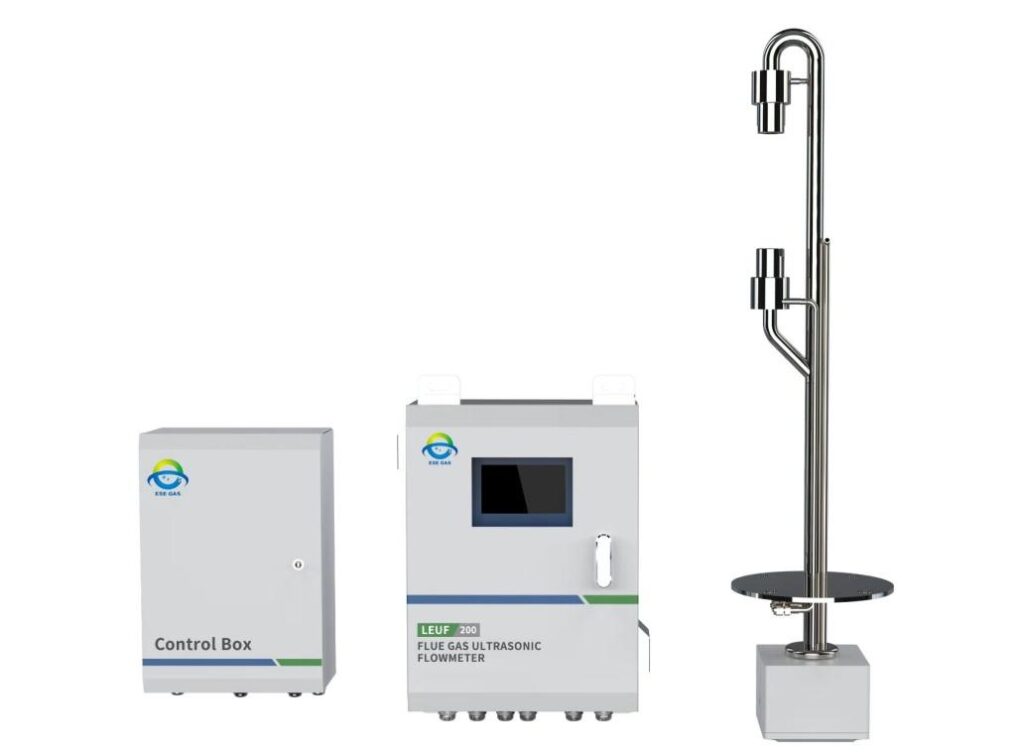
ESEGAS Ultrasonic Flow Meters rely on the transit-time differential method to determine the velocity of gas in a pipeline. Here’s how it works:
- Two ultrasonic transducers are mounted either inside the pipe or clamped onto the outside wall. These act as both senders and receivers of ultrasonic pulses.
- A pair of sound pulses is transmitted—one in the direction of flow (downstream) and one against it (upstream).
- Since the gas flow accelerates the downstream signal and delays the upstream one, there is a measurable difference in transit time.
- This time difference is used to calculate the flow velocity, which, when multiplied by the pipe’s cross-sectional area, yields the volumetric flow rate.
Key Benefits of This Method:
- Non-intrusive measurement: No sensor contacts the gas, ensuring zero pressure drop and no contamination risk.
- No moving parts: Makes the device wear-resistant and ideal for harsh or hazardous environments.
- Real-time data: Rapid sampling ensures high responsiveness to flow variations.
- Bidirectional flow detection: Able to measure gas moving in either direction with equal accuracy.
Ultrasonic technology also works effectively in high-pressure and high-temperature applications. ESEGAS has optimized its models with integrated compensation algorithms for pressure and temperature, further increasing precision.
What Are the Key Features of the ESEGAS Ultrasonic Flow Meter?
High Precision Doesn’t Have to Mean High Maintenance
Conventional meters often force a trade-off between accuracy and durability. ESEGAS eliminates that compromise.
Key features include:
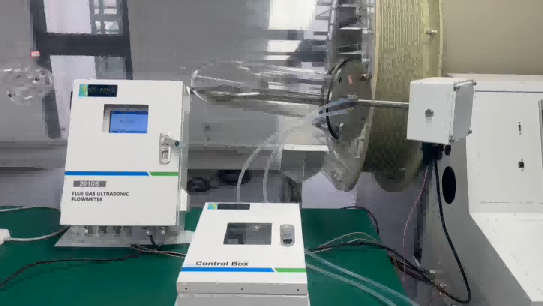
- Measurement Accuracy: ±1% under standard conditions
- Pressure & Temperature Compensation: Built-in sensors ensure reliable readings
- Explosion-Proof Design: Certified for use in hazardous environments
- Flexible Output: Supports RS485, HART, and analog signals for easy integration
- Maintenance-Free: With no moving parts, there’s minimal wear and zero routine maintenance
Where Is the ESEGAS Ultrasonic Flow Meter Used?
From Refineries to Food Plants—Precision Has No Boundaries
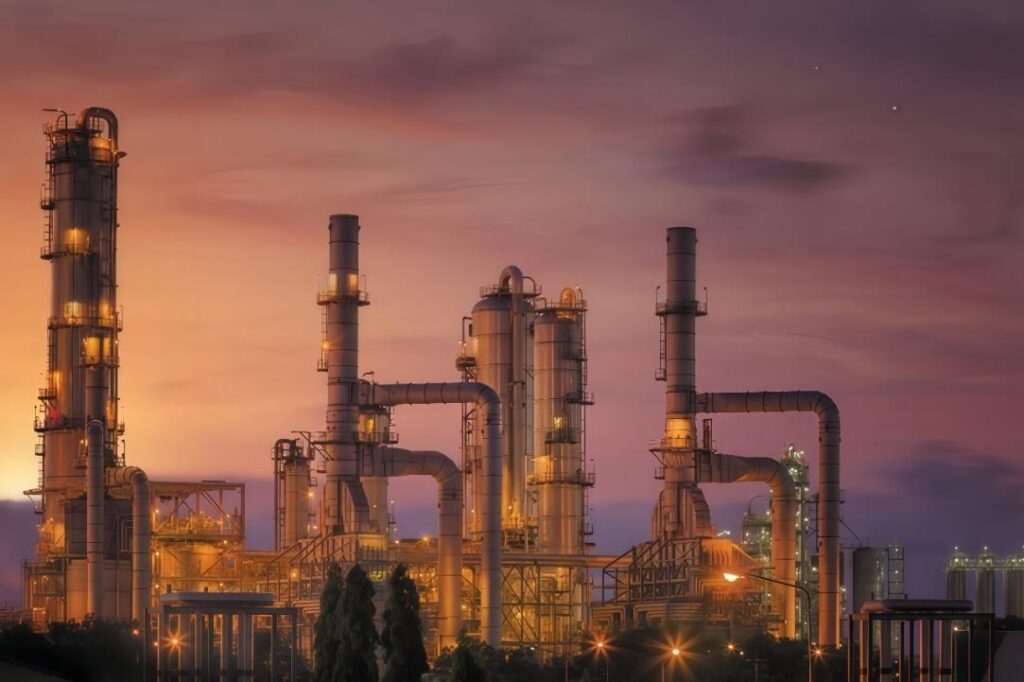
Flow measurement needs vary widely across industries, but the need for reliability is universal. ESEGAS’s solution meets that need across the board.
Common application areas:
| Industry | Use Case | Value Provided |
| Natural Gas | Transmission and distribution pipeline monitoring | No pressure drop, real-time data |
| Petrochemical | Process gas flow tracking | High accuracy in corrosive environments |
| Metallurgy | Furnace and gas flow regulation | Withstands high-temperature environments |
| Pharmaceutical | Clean gas dosing and validation | Sterile, non-invasive, easy to sanitize |
| Food & Beverage | CO₂ and nitrogen injection monitoring | Non-contaminating, hygienic measurement |
In each of these fields, an Ultrasonic Flow Meter ensures that critical processes remain compliant, efficient, and secure.
What Environmental or Installation Factors Should You Consider?
Smart Design Starts with Smart Planning
While ultrasonic meters are versatile, optimizing their performance depends on proper installation. Ensure:
- Straight Pipe Runs: At least 10 pipe diameters upstream and 5 downstream
- Clean Sensor Surfaces: For optimal signal transmission
- Stable Pipe Conditions: Avoid pulsating or multi-phase flow where possible
ESEGAS provides full technical documentation and installation support to ensure optimal performance in any setting.
Conclusion: Why Choose ESEGAS for Your Flow Measurement Needs?
Whether you’re in energy, manufacturing, or scientific research, gas flow measurement is a critical variable. The Ultrasonic Flow Meter from ESEGAS combines innovation with industrial-grade resilience, solving long-standing pain points in flow measurement. With zero pressure drop, unmatched accuracy, and cross-industry versatility, it’s more than just a meter—it’s an upgrade to your entire process control strategy.
Frequently Asked Questions (FAQ) About Ultrasonic Flow Meters
Q1: Can an Ultrasonic Flow Meter be used for both liquids and gases?
Yes, but only specific models. While ultrasonic flow meters can measure both, the ESEGAS model is specially engineered for gas measurement, which requires more precise signal processing due to lower density and signal attenuation. Always choose a flow meter calibrated and designed for your specific medium.
Q2: What pipe materials are compatible with the ESEGAS Ultrasonic Flow Meter?
The clamp-on type is compatible with most standard materials such as carbon steel, stainless steel, and certain plastics. For the inline type, ESEGAS provides pre-configured spool sections tailored to your system’s material and pressure ratings.
Q3: Does installation require shutting down the pipeline?
Not necessarily. One of the major benefits of clamp-on ultrasonic flow meters is their ability to be installed without interrupting the flow. However, inline models will require pipeline integration and may involve brief shutdowns.
Q4: How does temperature affect ultrasonic measurement?
ESEGAS flow meters come with automatic temperature and pressure compensation to ensure high accuracy across a wide range of operational environments. This makes them highly reliable even in fluctuating industrial conditions.
Q5: How often does the Ultrasonic Flow Meter require maintenance?
Thanks to its non-invasive design and absence of moving parts, the ESEGAS Ultrasonic Flow Meter is essentially maintenance-free. Occasional checks for sensor cleanliness and secure mounting are usually sufficient.