



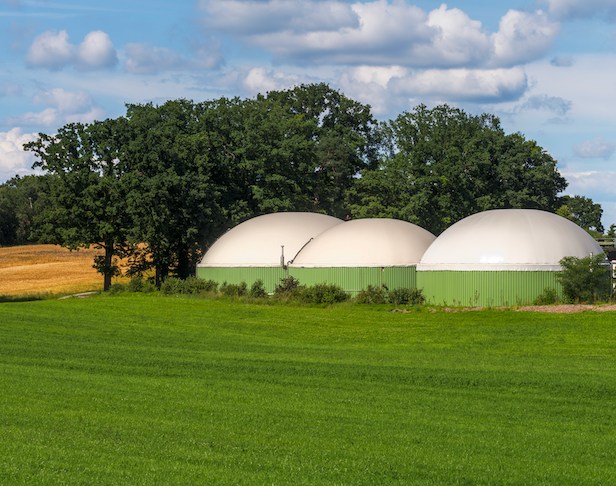
In many older biogas plants, operators relied on separate instruments for CH₄, CO₂, H₂S, or O₂ measurement. That approach often created delayed readings, inconsistent data, and higher maintenance workload. Today, more biogas facilities are replacing isolated sensors with integrated multi gas analyzer that measure several key gases simultaneously in real time.
This raises an important industry question: Why Are Modern Biogas Plants Shifting from Single-Gas Devices to Integrated Multi Gas Analyzer Systems? The answer goes far beyond simple gas detection. Modern multi gas analyzers help operators understand the entire digestion process, respond faster to process changes, reduce equipment failure, and run biogas plants more safely and efficiently under real operating conditions.
What Gases Need to Be Monitored in a Biogas Plant?
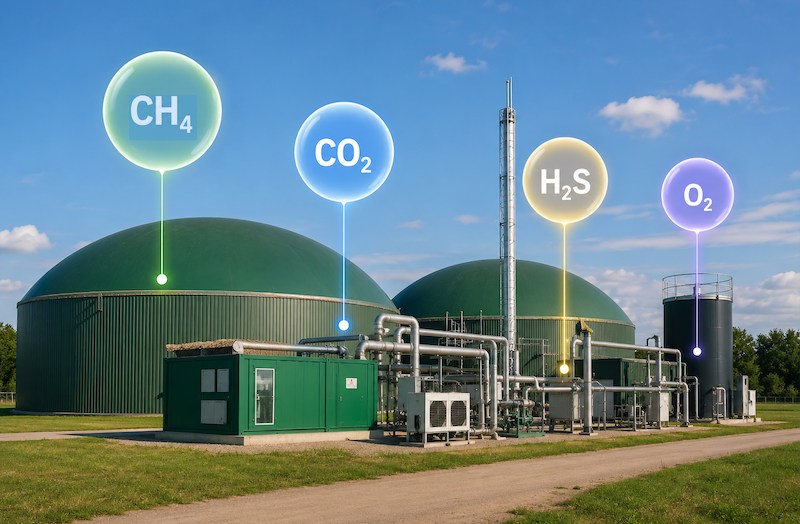
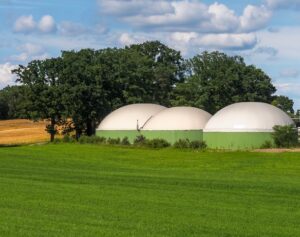
Biogas plants turn organic waste into usable energy through anaerobic digestion — a biological process where microorganisms break down materials such as food waste, manure, agricultural residue, and sewage sludge in an oxygen-free environment. As the digestion process continues, the system generates biogas mainly composed of methane (CH₄) and carbon dioxide (CO₂), along with smaller amounts of hydrogen sulfide (H₂S), oxygen (O₂), moisture, and trace contaminants.
CH₄ — The Main Indicator of Biogas Quality
Methane (CH₄) is the primary energy source in biogas. Higher methane concentration means higher fuel value and better CHP efficiency.
Typical methane concentrations vary depending on the application:
| Biogas Source | Typical CH₄ Range |
| Agricultural digesters | 50–70% |
| Landfill gas systems | 45–60% |
| Wastewater treatment plants | 55–65% |
CH₄ concentration also reflects digester stability. Sudden methane drops often indicate problems such as feedstock imbalance, temperature fluctuation, or unstable microbial activity. Continuous CH₄ monitoring allows operators to optimize methane yield and maintain stable plant performance.
CO₂ — The Hidden Factor Affecting Biogas Efficiency
Carbon dioxide (CO₂) lowers the heating value of biogas because it does not contribute to combustion. A rising CO₂ level usually means lower methane concentration and reduced energy efficiency. The CH₄/CO₂ ratio is therefore an important indicator of digestion performance.
Accurate CO₂ monitoring helps operators:
- Improve upgrading efficiency
- Stabilize CHP engine operation
- Monitor digestion conditions
- Maintain biomethane quality
In upgrading systems, stable CO₂ measurement supports better separation efficiency and lower operating cost.
H₂S — The Most Dangerous Gas in Biogas Systems
Hydrogen sulfide (H₂S) is both toxic and highly corrosive. Even low concentrations can damage equipment over time.
Uncontrolled H₂S may corrode:
- Gas engines
- Pipelines
- Compressors
- Valves
- Desulfurization systems
H₂S levels can rise suddenly due to feedstock changes or desulfurization failure. Real-time H₂S monitoring helps operators react quickly before corrosion or safety incidents occur.
Continuous H₂S alarms are especially important in enclosed industrial environments.
O₂ — Oxygen Monitoring Matter in Biogas Plants
Oxygen (O₂) usually indicates air leakage inside the biogas system.
Excess oxygen can:
- Reduce anaerobic digestion efficiency
- Increase explosion risk
- Disturb methane production
- Signal pipeline or seal leakage
That is why O₂ is commonly monitored together with CH₄, CO₂, and H₂S in modern multi gas analyzers. Simultaneous gas monitoring gives operators a clearer view of overall plant conditions and improves both safety and process control.
How to Choose the Right Multi Gas Analyzer for a Biogas Plant?
Modern biogas plants operate under changing process conditions every day. A multi gas analyzer combines multiple sensing technologies into one integrated system. The analyzer continuously measures several gases at the same time and delivers a complete picture of biogas conditions from a single platform. This approach improves response speed, simplifies maintenance, and provides more reliable process control across the entire biogas operation.
Measurement Technologies Inside a Multi Gas Analyzer
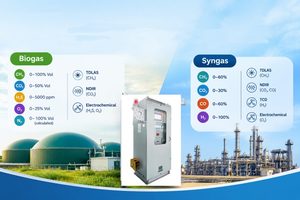
Different gases require different detection methods. No single sensor technology can accurately measure every gas in biogas applications. That is why modern multi gas analyzers combine several sensing principles together. The goal is simple: use the most suitable technology for each target gas.
| Gas | Common Technology | Why It Is Used |
| CH₄ | NDIR | Stable and selective methane measurement |
| CO₂ | NDIR | Accurate volumetric concentration analysis |
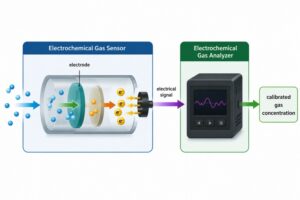
| H₂S | Electrochemical / TDLAS | Sensitive low-ppm H₂S detection |
| O₂ | Electrochemical | Fast oxygen response |
Each gas behaves differently inside biogas systems. Moisture, pressure variation, temperature fluctuation, and corrosive contaminants all affect measurement performance. A multi gas analyzer improves reliability by assigning the best sensing technology to each gas instead of forcing one sensor type to handle everything.
The Difference Between Online and Portable Multi Gas Analyzers
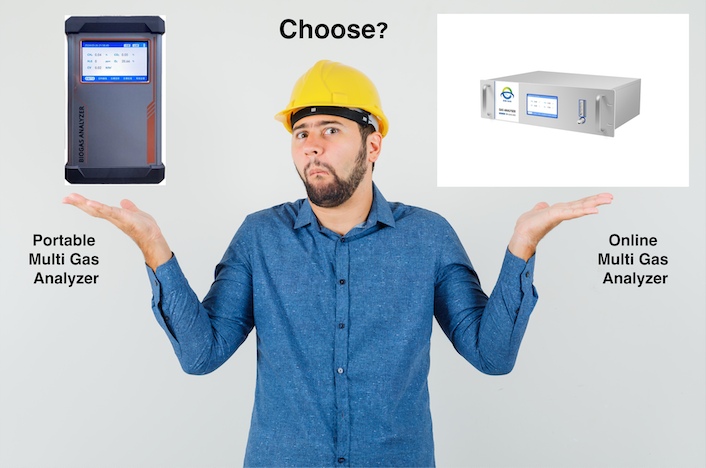
Biogas plants typically use two main analyzer types: online multi gas analyzers and portable multi gas analyzers. Both serve important roles, but they support different operational needs.
Online Multi Gas Analyzers
Online multi gas analyzers are permanently installed systems designed for continuous operation.
These analyzers automatically sample biogas from pipelines, digesters, upgrading systems, or CHP engine inlets and provide real-time gas data 24 hours a day.
Online multi gas analyzers are commonly used for: Continuous process monitoring, CHP engine protection, Biogas upgrading control, H₂S alarm management, Automatic process optimization, and SCADA and PLC integration. Because the multi gas analyzer continuously transmits gas data to the control system, operators can monitor plant performance remotely and respond immediately to abnormal conditions.
Most online systems also support: Alarm outputs, Historical data logging, Remote diagnostics, Multi-point sampling, and Automated calibration. For medium and large biogas facilities, online monitoring has become the standard solution for stable long-term operation.
Portable Multi Gas Analyzers
Portable multi gas analyzers serve a different purpose. Instead of continuous monitoring, they support temporary measurement and field inspection tasks.
Operators commonly use portable analyzers for Spot gas checks, Maintenance troubleshooting, Leak investigation, Temporary process verification, Mobile field inspection, and Backup measurement during servicing.
Portable multi gas analyzers allow technicians to quickly measure gas conditions at different locations without installing permanent equipment. They are especially useful during commissioning, maintenance shutdowns, or troubleshooting unexpected process changes. However, portable multi gas analyzers cannot fully replace online multi gas analyzers in large industrial plants because they do not provide continuous unattended monitoring.
Which Multi Gas Analyzer Solution Is Best for Biogas Plants? The answer depends on plant size, process complexity, and operational goals. Portable multi gas analyzers work well for routine inspection and maintenance support. Online multi gas analyzers are better suited for continuous process control, automated safety management, and long-term operational optimization.
In many modern biogas facilities, operators use both systems together. Online multi gas analyzers provide continuous real-time monitoring, while portable multi gas analyzers support field diagnostics and maintenance work. That combination gives operators greater flexibility, better process visibility, and stronger control over overall biogas plant performance.
How Does a Multi Gas Analyzer Improve Process Stability?
Biogas conditions change constantly. Feedstock quality, microbial activity, temperature, and gas composition can all shift during operation. Without continuous monitoring, operators may miss early warning signs of process instability or equipment problems. A multi gas analyzer helps solve this problem by monitoring CH₄, CO₂, H₂S, and O₂ simultaneously in real time. Here are seven key ways a multi gas analyzer improves biogas plant operation.
- Maximizes Methane Production Efficiency
Methane concentration directly affects biogas energy output. When CH₄ levels drop, digestion efficiency usually drops as well.
A multi gas analyzer helps operators detect digestion imbalance early through continuous gas trend monitoring. Changes in CH₄ and CO₂ often reveal unstable microbial activity before larger process issues appear. Real-time analysis also helps optimize feedstock mixing and maintain stable digestion conditions. Over time, this improves methane yield, stabilizes gas production, and increases overall energy efficiency.
- Protects CHP Engines and Upgrading Equipment
Hydrogen sulfide is one of the biggest threats to biogas equipment. High H₂S levels can corrode CHP engines, pipelines, compressors, and upgrading systems.
A multi gas analyzer continuously monitors H₂S concentration and alerts operators immediately when abnormal levels appear. Fast response helps prevent corrosion damage and costly downtime. Continuous gas monitoring also improves desulfurization efficiency and protects sensitive downstream equipment from contamination.
- Improves Process Stability
Anaerobic digestion is highly sensitive to process changes. Temperature fluctuations, feedstock variation, or biological imbalance can quickly affect gas composition.
A multi gas analyzer provides real-time gas trends that help operators identify process instability early. For example:
- Falling CH₄ may indicate microbial stress
- Rising CO₂ can signal unstable digestion
- Increasing O₂ may reveal air leakage
- Sudden H₂S spikes may indicate feedstock changes
With faster process visibility, operators can respond earlier and maintain more stable plant operation.
- Enhances Plant Safety
Biogas plants handle combustible and toxic gases every day. Continuous gas monitoring therefore plays a critical role in industrial safety.
A multi gas analyzer helps detect:
- Dangerous gas leaks
- Oxygen intrusion
- Explosive CH₄/O₂ mixtures
- Toxic H₂S exposure risks
Real-time alarms allow operators to react quickly before conditions become hazardous. Integrated monitoring also improves worker protection and supports safer plant operation.
- Reduces Maintenance Costs
Unexpected equipment failure can lead to expensive shutdowns in biogas plants.
A multi gas analyzer supports predictive maintenance by identifying abnormal gas trends early. Operators can detect corrosion risks, leakage issues, or process instability before major damage occurs. Compared with multiple standalone instruments, integrated analyzer systems also simplify calibration, reduce maintenance workload, and lower sensor replacement frequency.
- Supports Regulatory Compliance and Emission Reporting
Many biogas plants must monitor gas quality and maintain operational records for environmental and safety compliance.
A multi gas analyzer automatically stores:
- Gas concentration data
- Alarm history
- Process trends
- Calibration records
These digital records help simplify emission reporting, environmental audits, and plant performance analysis.
- Enables Smart and Automated Biogas Operations
Modern biogas plants increasingly rely on automation and remote monitoring.
Today’s multi gas analyzers often integrate with PLC and SCADA systems, allowing operators to monitor gas conditions in real time from a central control platform.
Advanced systems also support:
- Remote diagnostics
- Cloud-based monitoring
- Trend visualization
- Automated alarms
As biogas plants become more digital, multi gas analyzers are evolving into important tools for smarter and more efficient plant management.
Conclusion
Biogas production is no longer just about generating methane. Modern plants must maintain stable gas quality, protect expensive equipment, reduce safety risks, and keep the entire digestion process running efficiently under changing operating conditions. That is why the multi gas analyzer has evolved from a simple measurement device into a core process optimization and safety tool.
Simply put, the right multi gas analyzer does not just measure biogas — it helps operators fully understand and optimize the entire biogas process. If you need a reliable multi gas analyzer solution for your biogas plant, please feel free to contact us for technical support and application consultation.
FAQs
What gases should a multi gas analyzer measure in a biogas plant?
A biogas multi gas analyzer typically measures CH₄, CO₂, H₂S, and O₂. Methane (CH₄) indicates energy value, CO₂ affects calorific efficiency, H₂S causes corrosion and safety risks, and O₂ helps detect air leakage and explosion hazards. Monitoring these gases together provides a complete view of biogas process conditions.
Why is methane (CH₄) monitoring important in biogas production?
Methane is the primary combustible component in biogas. Its concentration directly affects energy output, CHP engine performance, and biomethane quality. Continuous CH₄ monitoring helps operators identify digestion instability early and optimize feedstock conversion efficiency.
Why does H₂S monitoring matter in biogas systems?
Hydrogen sulfide (H₂S) is toxic and highly corrosive. Excessive H₂S can damage gas engines, compressors, pipelines, and desulfurization equipment. Real-time H₂S monitoring allows operators to respond quickly to sulfur spikes before serious corrosion or safety incidents occur.
Why is oxygen (O₂) monitoring necessary in biogas plants?
Oxygen should remain very low in anaerobic digestion systems. Increased O₂ levels usually indicate air intrusion, leakage, or pipeline problems. O₂ monitoring helps prevent explosive gas mixtures and supports stable biological digestion conditions.
What is the difference between online and portable multi gas analyzers?
Online multi gas analyzers provide continuous fixed monitoring and usually connect with PLC or SCADA systems for automatic control and alarm management. Portable analyzers are mainly used for spot checking, maintenance troubleshooting, and temporary field inspection.
Which sensing technologies are commonly used in biogas multi gas analyzers?
Most biogas analyzers combine multiple sensing technologies, including:
- NDIR for CH₄ and CO₂ measurement
- Electrochemical or TDLAS sensors for H₂S detection
- Electrochemical or galvanic sensors for O₂ monitoring
Using different technologies together improves measurement accuracy, stability, and long-term reliability.
Can a multi gas analyzer reduce maintenance costs in biogas facilities?
Yes. Continuous gas monitoring helps operators detect abnormal conditions earlier, reducing unexpected shutdowns and equipment damage. Accurate H₂S monitoring also helps optimize desulfurization processes and extend the service life of engines, compressors, and pipelines.
Where are multi gas analyzers commonly installed in biogas plants?
Multi gas analyzers are often installed at:
- Digester outlets
- Gas storage systems
- CHP engine inlets
- Biogas upgrading systems
- Desulfurization units
- Gas pipelines and compressor stations
Different installation points help operators monitor gas quality throughout the entire biogas process.
How do I choose the right multi gas analyzer for a biogas plant?
Key factors include:
- Target gas components
- Detection range and accuracy
- Moisture handling capability
- Response time
- Sensor stability
- Communication protocols
- Maintenance requirements
- SCADA or PLC integration capability
For harsh biogas environments, analyzers with anti-condensation design and industrial-grade sampling systems usually provide better long-term performance.