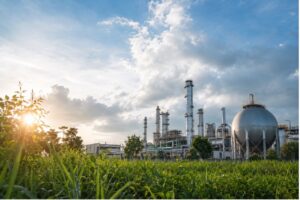




Hydrogen sulfide gas is not a minor process impurity; it is a toxic, corrosive, and potentially life-threatening gas that can appear in natural gas, petrochemical production, wastewater treatment, biogas, and other industrial environments. When H₂S concentration changes are not detected quickly, operators may face worker exposure risks, equipment corrosion, process instability, and unplanned shutdowns. At ESEGAS, we believe reliable hydrogen sulfide gas concentration detection should not only warn users after a problem appears, but also help them understand process conditions in real time and take preventive action earlier.
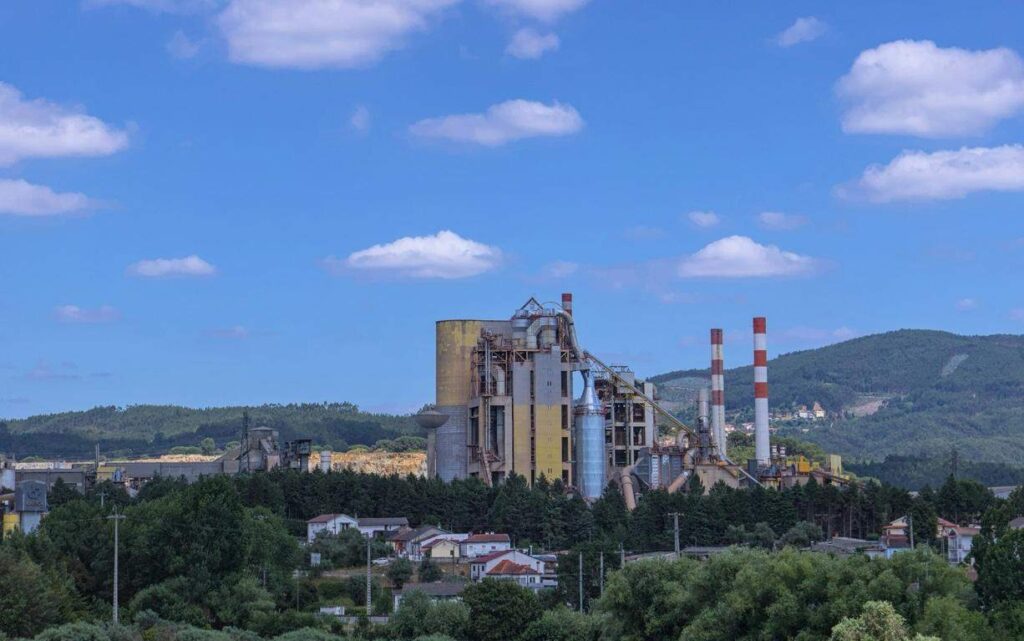
TDLAS technology improves hydrogen sulfide gas concentration detection by using a tunable diode laser to scan specific H₂S absorption lines, allowing fast, selective, and continuous online gas measurement. Compared with many traditional detection methods, TDLAS-based H₂S gas analyzers can provide rapid response, strong target-gas selectivity, minimal cross-interference, and lower maintenance requirements in demanding industrial applications. ASTM D8488-22 also defines an online test method for determining H₂S in natural gas using tunable diode laser spectroscopy, showing the recognized role of this technology in natural gas applications.
Getting a quick answer is useful, but choosing the right H₂S gas analyzer requires a deeper look at the application. Hydrogen sulfide may appear in wet, corrosive, high-pressure, high-temperature, or mixed-gas conditions. That means the real question is not simply whether TDLAS can detect H₂S, but how TDLAS should be configured for a specific industrial process. The following sections explain how ESEGAS views the practical application of this technology.
Why Is Hydrogen Sulfide Gas Concentration Detection So Critical in Industrial Processes?
A small delay in H₂S detection can become a serious safety and process-control problem. Hydrogen sulfide can affect workers through inhalation, and high concentrations can quickly become fatal. It is also flammable and corrosive, which means inaccurate monitoring may threaten both people and industrial assets. OSHA notes that H₂S exposure effects depend on concentration and duration, and very high concentrations can quickly cause death. (职业安全健康管理局)
For industrial users, H₂S monitoring is critical in several ways:
| Industrial Concern | Why H₂S Detection Matters |
| Personnel safety | H₂S is highly toxic and can accumulate in confined or low-ventilation areas. |
| Corrosion control | H₂S can accelerate corrosion in pipelines, reactors, and gas treatment systems. |
| Process optimization | Continuous H₂S data helps operators adjust desulfurization, gas treatment, and purification processes. |
| Product quality | In natural gas and biomethane, H₂S concentration must be controlled before transmission or use. |
| Environmental management | Monitoring H₂S supports odor control, emission supervision, and compliance-related operations. |
This is where TDLAS Technology becomes valuable. Instead of relying only on periodic manual sampling or slower sensor response, a properly configured TDLAS H₂S gas analyzer can provide continuous concentration data. For ESEGAS customers, this means better visibility into process changes and faster decision-making when H₂S levels fluctuate.
How Does TDLAS Technology Detect H₂S Gas Concentration?
Many gas streams contain water vapor, methane, carbon dioxide, hydrocarbons, and other interfering components. If the detection technology cannot distinguish H₂S clearly, the data may become unstable or misleading. In high-risk applications, unreliable data can be almost as dangerous as no data at all. TDLAS Technology solves this problem by focusing on optical absorption characteristics instead of relying on broad chemical reactions.
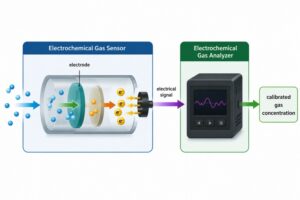
TDLAS stands for Tunable Diode Laser Absorption Spectroscopy. In an H₂S gas analyzer, a tunable diode laser is adjusted to a wavelength where hydrogen sulfide absorbs light. The laser beam passes through the gas sample or measurement path, and the detector measures how much light is absorbed. The analyzer then calculates H₂S concentration based on the absorption signal.
At ESEGAS, we design gas analysis solutions around several core TDLAS principles:
- Targeted wavelength selection
The laser wavelength must match the absorption feature of H₂S. This is essential because the measurable gases depend on the laser wavelength used in the analyzer. ESEGAS notes that TDLAS gas analysis systems can measure gases including H₂S when configured with the correct wavelength. (Gas Analyzer Manufacturers) - Fast optical response
Because TDLAS Technology uses optical absorption, it can respond quickly to changes in gas concentration. This is especially important in sour gas, refinery gas, and wastewater treatment processes where H₂S levels may change suddenly. - Reduced cross-interference
TDLAS targets specific absorption lines, helping reduce interference from common background gases. ASTM also highlights that TDLAS measurement of H₂S in natural gas can provide high selectivity with minimal interference from common natural gas constituents. (ASTM International | ASTM) - Continuous online measurement
TDLAS analyzers are suitable for online process monitoring. This allows operators to see real-time concentration trends instead of waiting for laboratory results or manual sampling.
What Advantages Does TDLAS Technology Offer Over Traditional H₂S Detection Methods?
Traditional H₂S detection methods can work well in certain conditions, but they may face limitations in harsh industrial environments. Sensor poisoning, drift, sample loss, slow response, and cross-interference can all reduce confidence in the data. When H₂S concentration is linked to safety, corrosion, and product quality, unstable readings can lead to delayed action or unnecessary process adjustments.
TDLAS Technology offers several practical advantages for hydrogen sulfide gas concentration detection:
| Comparison Point | Traditional H₂S Detection | TDLAS H₂S Detection |
| Response speed | May be affected by sample handling or sensor reaction time | Fast online response for process trend monitoring |
| Selectivity | May be influenced by background gases | Targets specific H₂S absorption lines |
| Maintenance | Some sensors may require frequent calibration or replacement | Optical measurement can reduce routine maintenance demand |
| Long-term stability | Sensor drift may occur depending on technology | Designed for stable continuous gas analysis |
| Process integration | Often depends on sampling method and installation condition | Can be integrated into process gas analysis systems |
| Harsh environment suitability | Performance may degrade in corrosive or wet gas | Can be engineered with sampling and pretreatment protection |
From the ESEGAS perspective, the main benefit is not only accuracy on paper. The bigger value is dependable process visibility. Our goal is to help users obtain H₂S concentration data that remains useful under real operating conditions, including changing temperature, pressure, humidity, dust, and background gas composition.
Where Can TDLAS-Based H₂S Gas Analyzers Be Applied?
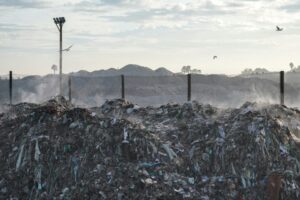
H₂S does not appear in only one industry. It can be released from natural gas, sewage sludge, liquid manure, and industrial processes such as petroleum production, refining, wastewater treatment, pulp and paper processing, food processing, and mining. OSHA identifies several workplace sources and risk scenarios, especially confined spaces where H₂S can accumulate. (职业安全健康管理局)
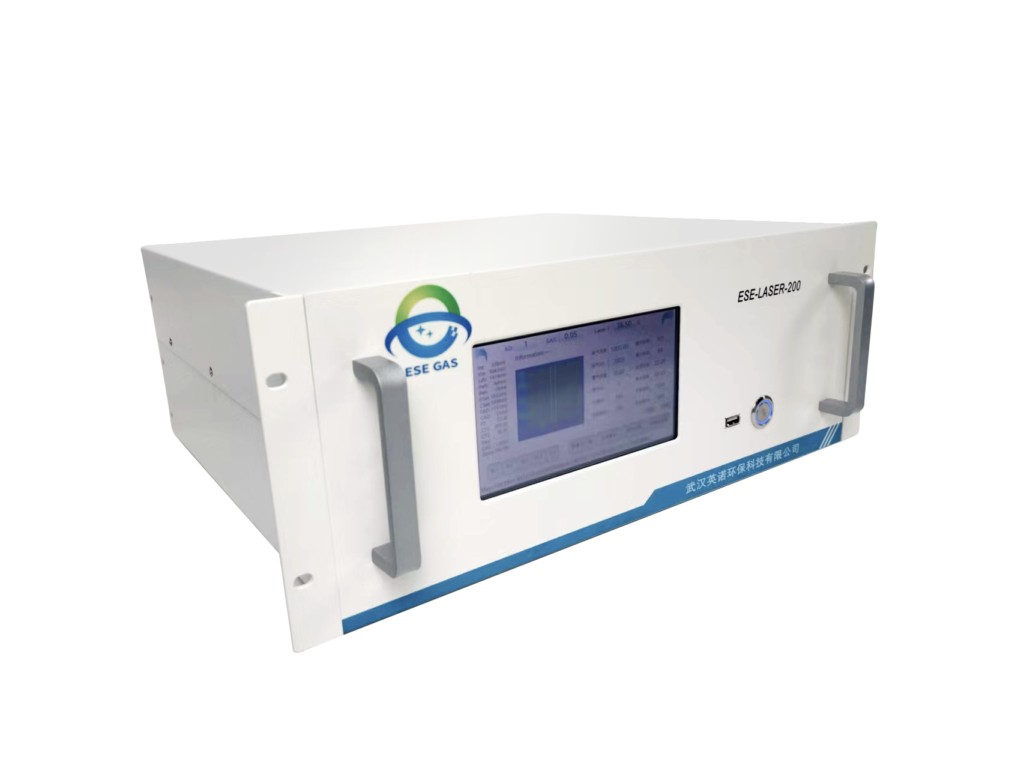
TDLAS Technology can be applied in many H₂S-related gas analysis scenarios, including:
Natural Gas Processing and Pipeline Monitoring
In natural gas systems, H₂S must be controlled to protect pipeline integrity, meet gas quality requirements, and prevent corrosion. ASTM D8488-22 specifically covers online H₂S determination in natural gas using TDLAS analyzers, with applications including raw natural gas and high-quality sales gas. (ASTM International | ASTM)
Refinery and Petrochemical Process Gas
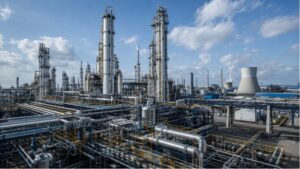
Refineries and petrochemical plants may generate or process gases containing hydrogen sulfide. TDLAS-based H₂S monitoring can support sulfur recovery, acid gas treatment, process optimization, and safety supervision.
Biogas and Biomethane Upgrading
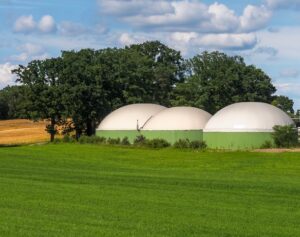
Biogas often contains H₂S from anaerobic digestion. If H₂S is not removed or monitored properly, it can damage engines, upgrading equipment, compressors, and downstream pipelines. TDLAS Technology can help operators track H₂S concentration before and after desulfurization units.
Wastewater and Environmental Monitoring
Wastewater treatment plants can generate hydrogen sulfide in sewers, sludge treatment areas, and confined spaces. Continuous H₂S monitoring helps improve odor control, worker safety, and ventilation management.
Chemical and Industrial Safety Applications
In chemical plants, pulp and paper mills, mining, and other industrial sites, H₂S gas analyzers can support leak detection, area monitoring, and process gas analysis.
What Should Users Consider When Selecting a TDLAS H₂S Gas Analyzer?
Choosing a gas analyzer only by gas name is risky. Two applications may both involve H₂S, but one may require trace ppm detection in dry natural gas, while another may involve wet, hot, corrosive process gas with dust and fluctuating pressure. If the analyzer configuration does not match the process, even advanced TDLAS Technology may fail to deliver stable results.
At ESEGAS, we usually recommend evaluating these factors before selecting a TDLAS H₂S gas analyzer:
- Measurement range
The required range may be ppm, low percentage, or high percentage concentration. ASTM notes that H₂S concentration ranges in TDLAS natural gas applications may vary widely, from low ppm ranges to high volume percentages depending on the analyzer and application. (ASTM International | ASTM) - Gas composition
Background gases such as CH₄, CO₂, H₂O, and heavier hydrocarbons should be considered because they may affect wavelength selection and spectral analysis. - Temperature and pressure
Process temperature and pressure influence sample handling, optical path design, and compensation strategy. - Moisture and corrosive conditions
Wet H₂S streams can be highly corrosive. The sampling system, tubing, filtration, and pretreatment design must protect the analyzer. - Installation method
Users should decide whether the application is better suited for extractive measurement, in-situ measurement, or a customized sampling system. - Response time requirement
Safety applications and process-control applications often require faster response than routine quality monitoring. - Communication and system integration
Industrial users may need 4–20 mA, RS485, Modbus, data logging, alarms, or integration with a DCS or PLC system. - Maintenance strategy
A good H₂S analyzer solution should consider calibration access, optical cleanliness, sample conditioning, and long-term serviceability.
How Does ESEGAS Support Reliable H₂S Concentration Detection with TDLAS Technology?
A common problem in gas analysis projects is treating the analyzer as a standalone instrument. In reality, H₂S detection performance depends on the full measurement chain: sampling point, probe design, gas transport, filtration, temperature control, optical measurement, signal processing, and data integration. If one part is poorly matched, the final data may become unstable.
ESEGAS supports H₂S concentration detection by building solutions around the actual operating environment. Our TDLAS gas analysis system uses tunable diode laser absorption spectroscopy for real-time gas concentration measurement, and the system can be configured for different target gases depending on laser wavelength and application requirements. (Gas Analyzer Manufacturers)
For H₂S applications, we focus on:
- Selecting a suitable laser wavelength for hydrogen sulfide absorption
- Designing the sampling and pretreatment system according to gas temperature, pressure, moisture, and corrosiveness
- Reducing interference from background gases through optical and algorithmic optimization
- Supporting continuous online monitoring for process control and safety management
- Providing industrial communication options for plant automation systems
- Helping users match the analyzer configuration to their real gas conditions
Our role is not only to provide a gas analyzer. We help users build a reliable gas detection solution that supports safer operation, better process control, and long-term measurement stability.
What Future Trends Will Shape TDLAS H₂S Gas Detection?
Industrial plants are under increasing pressure to improve safety, reduce emissions, protect assets, and digitize process operations. A basic alarm-only approach is no longer enough for many applications. Users need accurate concentration trends, remote diagnostics, lower maintenance, and analyzers that can operate reliably in more complex gas matrices.
We expect TDLAS Technology to continue evolving in several directions:
- Lower detection limits
More sensitive optical designs will support trace-level H₂S detection in high-purity gas and pipeline-quality gas applications. - Better interference correction
Advanced signal processing will improve stability in gas streams containing moisture, hydrocarbons, CO₂, and other background components. - Multi-component gas analysis
More users will look for integrated solutions that can measure H₂S together with gases such as H₂O, CO₂, CH₄, NH₃, or CO. - Digital diagnostics
Analyzer health monitoring, remote service support, and predictive maintenance will become more important for continuous industrial operation. - Application expansion in energy and environmental sectors
Biogas, carbon capture, hydrogen production, and low-carbon fuel systems will create new demand for reliable sulfur compound monitoring.
For ESEGAS, these trends point to one direction: gas analysis must become more intelligent, more application-specific, and easier for industrial users to operate over the long term.
Conclusion
TDLAS Technology gives industrial users a powerful method for hydrogen sulfide gas concentration detection. By using tunable laser absorption to target H₂S spectral features, it supports fast response, high selectivity, continuous online monitoring, and stable long-term operation. For industries such as natural gas, petrochemical processing, biogas upgrading, wastewater treatment, and environmental monitoring, reliable H₂S data is essential for safety, corrosion control, process optimization, and compliance management.
At ESEGAS, we approach H₂S detection as a complete gas analysis solution rather than a single instrument choice. By combining TDLAS measurement technology with proper wavelength selection, sampling design, pretreatment configuration, and system integration, we help users build dependable H₂S monitoring systems for demanding industrial applications.