


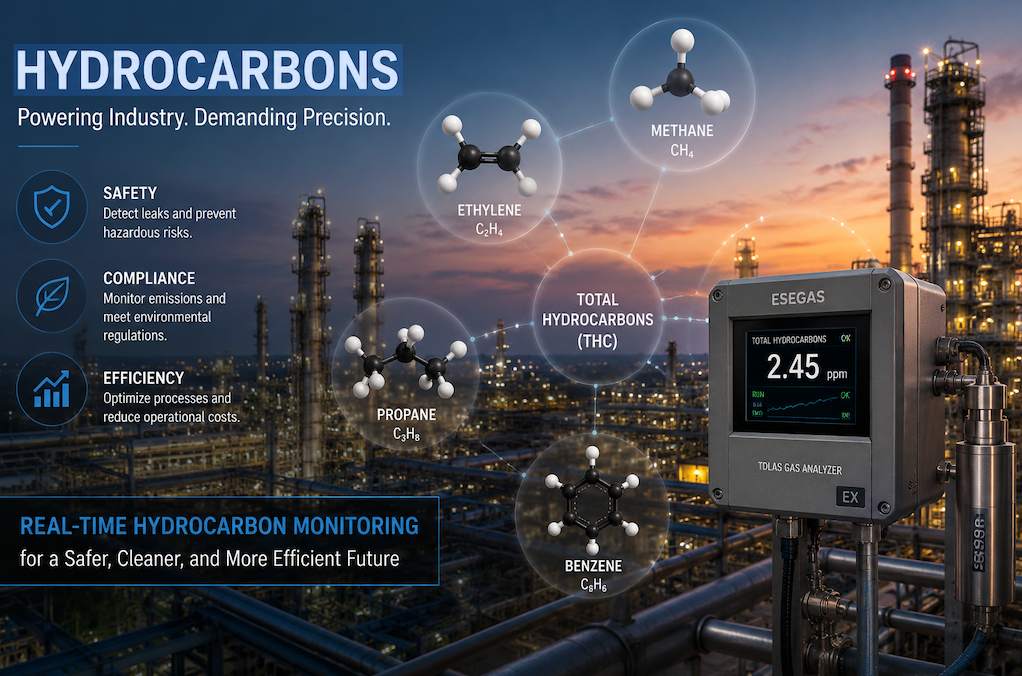
A continuous hydrocarbon analyzer is an online instrument that measures hydrocarbon gas concentrations in real time. It uses technologies such as FID, NDIR, or TDLAS to provide continuous data for safety, emissions compliance, and process optimization. Laser-based analyzers offer faster response, higher selectivity, and lower maintenance.
Hydrocarbon gases can change quickly, and even small delays in detection can create safety risks. Continuous monitoring solves this issue by providing real-time data without interruption. This allows operators to respond immediately when concentrations approach dangerous levels. It also supports compliance with environmental regulations that require continuous emissions tracking. At the same time, real-time hydrocarbon data improves efficiency. For example, detecting unburned hydrocarbons helps optimize combustion and reduce energy waste.
What Technologies Are Used in Continuous Hydrocarbon Analyzers?
Different technologies are used in continuous hydrocarbon analyzers because industrial conditions vary widely. No single method fits every application, so engineers must balance sensitivity, response time, selectivity, and maintenance.
The three most widely used technologies are FID, NDIR, and TDLAS, each based on a different measurement principle. Understanding their differences helps you choose the right analyzer for your process.
Technology Comparison: FID vs NDIR vs TDLAS
| Technology | Measurement Principle | Key Advantages | Limitations | Typical Applications |
| FID (Flame Ionization Detector) | Hydrocarbons are burned in a hydrogen flame and ionized; ion current indicates concentration | High sensitivity for total hydrocarbons (THC), strong response to VOCs | Requires hydrogen fuel, high maintenance, destructive measurement | Emission monitoring, VOC measurement |
| NDIR (Non-Dispersive Infrared) | Measures infrared absorption of gas molecules across broad wavelengths | Stable, cost-effective, mature technology | Cross-interference in complex gas mixtures, slower response | General industrial monitoring, combustion analysis |
| TDLAS (Tunable Diode Laser Absorption Spectroscopy) | Laser tuned to specific absorption wavelength of target gas | High selectivity, fast response, low maintenance, resistant to interference | Higher initial cost, requires proper optical setup | Process control, safety monitoring, harsh environments |
FID remains a common choice when measuring total hydrocarbons at low concentrations. It works by ionizing hydrocarbons in a hydrogen flame, which generates an electrical signal proportional to concentration. This makes it highly sensitive, but it also introduces complexity due to fuel gas supply and maintenance needs.
NDIR takes a different approach by measuring how hydrocarbons absorb infrared light. It uses a broadband source and optical filters to estimate concentration. While this method is stable and widely used, it may struggle when multiple gases overlap in the same spectral region.
TDLAS represents a more advanced optical method. It uses a tunable laser that targets a specific absorption line of a gas molecule. As the laser passes through the gas, the absorbed light directly indicates concentration. Because the wavelength is highly specific, the analyzer avoids cross-interference and achieves very high selectivity.
TDLAS stands out because it combines speed, accuracy, and reliability in one system.
It provides real-time measurement with fast response and ppm-level sensitivity. Unlike traditional methods, it does not rely on combustion or consumables. This reduces maintenance and improves long-term stability. It also performs well in harsh environments, including high dust and moisture conditions. These advantages make TDLAS especially suitable for modern industrial processes where reliability and uptime are critical.
Where Are Continuous Hydrocarbon Analyzers Commonly Used?
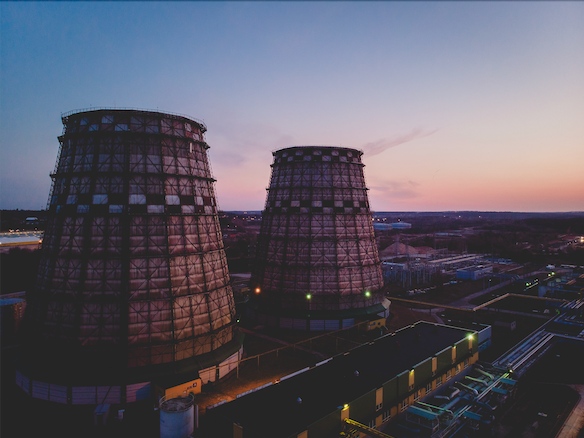
Continuous hydrocarbon analyzers play a role in many industries because hydrocarbons appear in various processes.
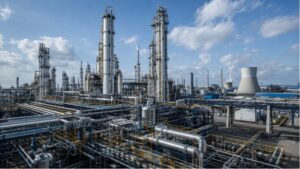
In oil and gas operations, they monitor pipelines and detect leaks before they become serious hazards.
In petrochemical plants, they support reaction control and track volatile organic compound emissions.
In power generation, they help optimize combustion by measuring unburned hydrocarbons in flue gas.
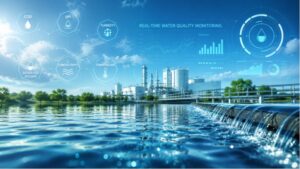
Environmental monitoring systems also depend on them to measure total hydrocarbons and VOC emissions in real time.
Across all these applications, the goal remains the same: improve safety while maintaining process efficiency.
How Do You Choose the Right Continuous Hydrocarbon Analyzer?
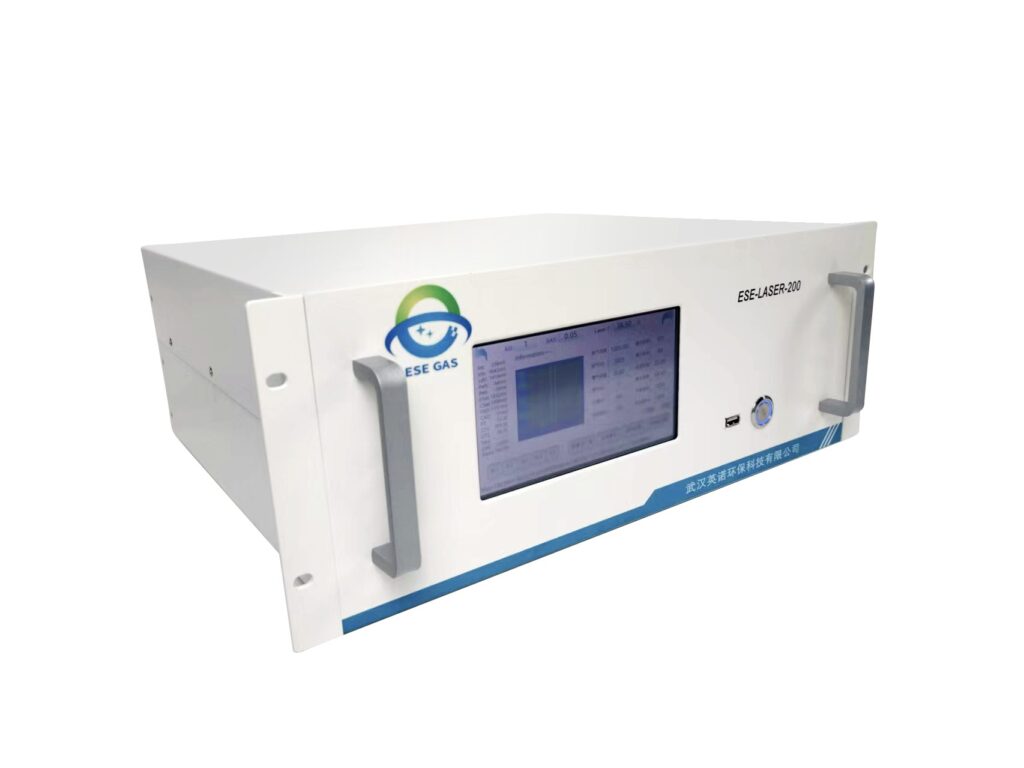
Choosing the right analyzer requires careful evaluation of process needs.
Start by identifying the target gas, whether total hydrocarbons or specific compounds.
Then define the measurement range, from trace ppm levels to higher concentrations.
Next, consider process conditions such as temperature, pressure, and contamination.
Response time is also important, especially for safety-critical applications. Continuous hydrocarbon analyzers are widely used across industries where gas monitoring is critical. For example, In oil and gas, they detect leaks and monitor pipeline composition. In petrochemical plants, they support reaction control and VOC emission monitoring. In power generation, they measure unburned hydrocarbons to improve combustion efficiency. In environmental systems, they track total hydrocarbons and VOC emissions in real time.
Finally, evaluate maintenance requirements to ensure long-term reliability and cost efficiency.
A well-matched analyzer delivers better performance and reduces operational risks.
Conclusion
Hydrocarbon monitoring is moving toward smarter, data-driven operation. Industries now use real-time data not only for compliance but also for optimization and predictive control.
TDLAS technology will continue to grow because it offers fast, accurate, and reliable measurements.
ESEGAS TDLAS continuous hydrocarbon analyzers focus on real-world process challenges rather than ideal laboratory conditions. They deliver fast response, allowing operators to detect hydrocarbon changes within seconds. This improves safety in dynamic environments. Their high selectivity reduces interference from other gases, which ensures accurate readings even in complex mixtures.At the same time, the system requires minimal maintenance because it avoids consumables and direct contact measurement.
If you are ready to explore your Continuous Hydrocarbon Analyzer, contact with us please!
FAQs:
What gases can a continuous hydrocarbon analyzer measure?
It can measure methane, total hydrocarbons, and VOCs depending on the technology used.
Which technology is best for fast hydrocarbon detection?
TDLAS offers fast response and high selectivity for real-time monitoring.
What is the difference between THC and VOC monitoring?
THC measures total hydrocarbons, while VOC focuses on reactive organic compounds.
Can TDLAS analyzers handle harsh environments?
Yes, they perform well in high dust, humidity, and complex industrial conditions.