



Hydrogen chloride is one of the most challenging acid gases in chemical production. It can appear in chlorination reactions, tail gas treatment, waste gas incineration, scrubber systems, and stack emissions. When HCl concentration is not measured in real time, operators may only discover problems after corrosion, abnormal emissions, process instability, or equipment damage has already occurred. At ESEGAS, we see the HCL analyzer as more than a measuring instrument. It is a practical tool that helps chemical plants control risk before small gas concentration changes become costly operational problems.
An HCL analyzer is used in chemical plants to continuously measure hydrogen chloride concentration in process gas, flue gas, scrubber outlet gas, and emission monitoring points. It helps operators optimize acid gas treatment, improve scrubber efficiency, protect equipment from corrosion, detect abnormal process conditions, and support environmental compliance. In harsh chemical plant environments, a real-time HCL analyzer provides fast, selective, and reliable data for safer and more stable operation.
For many chemical plants, the question is not simply whether HCl needs to be measured. The real question is where it should be measured, how the data should be used, and what type of analyzer can remain stable in corrosive, humid, and complex gas conditions. The following sections explain how we apply HCl gas analysis in chemical production from process control to emission management.
Where Does HCl Appear in Chemical Plants?
HCl is often treated as a tail gas issue, but in real chemical production, it can exist across multiple process points. The difficulty is that HCl concentration may change quickly when reaction conditions, feed composition, combustion efficiency, or scrubbing performance changes. Without continuous monitoring, the plant may lose visibility at the exact moment when corrosion risk or emission risk begins to rise. This is why an HCL analyzer is valuable for identifying where HCl is generated, transferred, treated, and discharged.
In chemical plants, HCl commonly appears in these areas:
| Chemical plant area | HCL analyzer application |
| Chlorination process | Monitor HCl by-product formation and reaction stability |
| Reactor outlet | Track process gas composition after chemical reaction |
| Acid gas absorption unit | Measure inlet and outlet HCl concentration |
| Scrubber system | Evaluate removal efficiency and alkali dosing performance |
| Waste gas incinerator | Monitor HCl generated from chlorine-containing waste gas |
| Stack emission point | Support continuous emission monitoring |
| Process safety area | Detect abnormal HCl release trends |
By placing the HCL analyzer at the right point, chemical plants can turn HCl measurement into useful operating data instead of only using it as a final emission number.
Why Is Real-Time HCl Monitoring Important for Chemical Plant Safety?
HCl is corrosive, irritating, and highly soluble in water. Once it contacts moisture, it can create acidic conditions that accelerate damage to pipelines, ducts, valves, sample lines, and downstream treatment equipment. If a plant relies only on manual sampling or delayed laboratory analysis, operators may not see a concentration spike until the process has already moved into an unsafe or unstable condition. Real-time HCl monitoring helps the control room respond before the problem expands.
An ESEGAS HCL analyzer supports safety management in several ways:
- Early abnormal condition detection
Continuous measurement helps operators identify sudden HCl concentration increases caused by reaction upset, feed change, combustion fluctuation, or scrubber malfunction. - Corrosion risk reduction
HCl data helps plants protect equipment exposed to acid gas, especially in humid gas streams where acid condensation may occur. - Process alarm support
The analyzer can provide concentration signals to DCS, PLC, or plant monitoring systems, allowing operators to set warning levels and response actions. - Reduced unplanned shutdown risk
When HCl trends are visible, maintenance and operation teams can act earlier, reducing the chance of emergency shutdowns caused by corrosion, blockage, or emission exceedance. - Improved workplace protection
In areas where accidental HCl release is possible, continuous monitoring supports safer plant operation and faster response.
How Does an HCL Analyzer Improve Scrubber Control?
A scrubber may look stable from the outside, but its removal efficiency can change quickly when gas flow, HCl load, liquid circulation, pH, nozzle condition, or packing performance changes. If operators cannot see the actual HCl concentration before and after treatment, chemical dosing may become guesswork. Too much alkali increases cost; too little creates emission risk. An HCL analyzer helps convert scrubber operation from experience-based adjustment into data-based control.
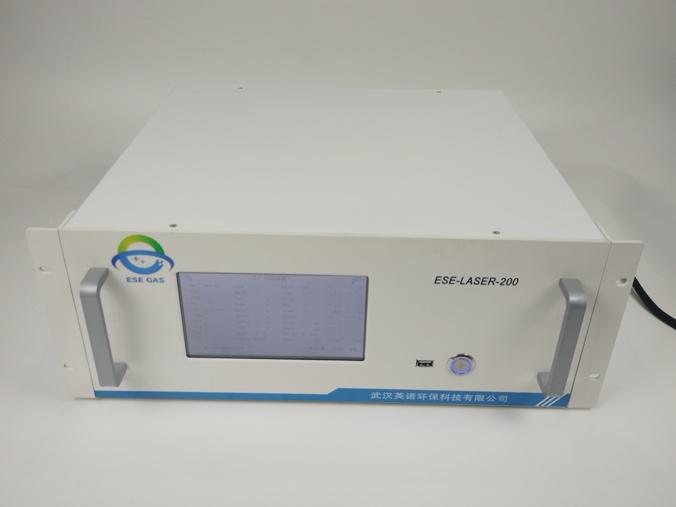
In a typical chemical plant scrubber system, we recommend measuring HCl at key points:
| Monitoring point | Purpose |
| Scrubber inlet | Understand the real HCl load entering the treatment system |
| Scrubber outlet | Confirm removal efficiency and emission stability |
| Stack or final discharge | Verify final HCl concentration before release |
| Bypass or abnormal vent line | Detect untreated or partially treated acid gas flow |
With continuous HCL analyzer data, plants can optimize alkali dosing, evaluate scrubber performance, identify nozzle or packing problems, and reduce unnecessary reagent consumption. The result is a better balance between compliance, safety, and operating cost.
Why Is TDLAS Technology Suitable for HCl Analysis in Chemical Plants?
Chemical plant gas streams are rarely clean or simple. They may contain moisture, dust, solvents, chlorine compounds, combustion products, and other acid gases. In these conditions, slow response, cross-interference, condensation, and frequent maintenance can make gas measurement unreliable. A suitable HCL analyzer must be selective enough to measure HCl accurately and robust enough to operate in demanding industrial environments.
TDLAS, or tunable diode laser absorption spectroscopy, is widely used for online HCl measurement because it detects gas concentration based on the specific light absorption characteristics of HCl molecules. For chemical plant applications, this brings several practical advantages:
- Fast response for process control
Operators can see concentration changes quickly and adjust the process or treatment system in time. - High selectivity for HCl
The analyzer focuses on HCl absorption features, helping reduce interference from other gas components. - Non-contact optical measurement option
In suitable configurations, laser-based measurement can reduce direct contact with corrosive gas. - Good fit for harsh gas streams
TDLAS-based HCl measurement is suitable for many corrosive, high-temperature, or complex industrial gas applications. - Continuous online monitoring
The HCL analyzer can provide real-time concentration data instead of isolated sampling results.
At ESEGAS, we focus on matching the measurement technology, sampling design, and installation method to the actual chemical plant conditions. For some applications, an online TDLAS HCL analyzer is the right choice. For others, an extractive system, heated sampling line, or customized sample conditioning design may be needed.
Where Should an HCL Analyzer Be Installed in a Chemical Plant?
Even a high-performance analyzer cannot deliver useful data if the installation point is poorly selected. HCl is highly reactive with moisture, and wrong sampling conditions can cause condensation, adsorption, corrosion, or measurement delay. This creates a serious problem: the control room may receive a number, but that number may not represent the real process condition. Correct installation allows the HCL analyzer to provide data that is both stable and meaningful.
Common installation points include:
- Reactor outlet
Used to monitor HCl generated during chemical reactions and help evaluate reaction stability. - Absorber inlet and outlet
Used to calculate acid gas absorption efficiency and identify abnormal treatment performance. - Scrubber outlet
Used to confirm whether HCl has been effectively removed before final discharge. - Waste gas incinerator outlet
Used to measure HCl generated after thermal treatment of chlorine-containing waste gas. - Stack emission point
Used for continuous emission monitoring and environmental data recording. - Acid gas recovery unit
Used to support recovery efficiency control and process optimization. - Leak-prone process areas
Used for early warning where HCl release risk exists.
For stable operation, chemical plants should also consider gas temperature, pressure, dust content, water vapor, acid dew point, sample line heating, probe material, calibration method, and signal integration. At ESEGAS, we evaluate these details before recommending an HCL analyzer configuration.
How Can an HCL Analyzer Support Emission Compliance?
Emission compliance is not only about passing a final test. It depends on continuous control, reliable records, and early response to changing process conditions. In chemical plants that handle chlorine-containing materials or acid gases, HCl emissions can fluctuate when upstream production changes. Without real-time data, emission problems may only become visible after the plant has already exceeded internal or regulatory limits.
An ESEGAS HCL analyzer can support emission management by providing:
- Continuous HCl concentration measurement at the stack
- Real-time trend data for environmental monitoring systems
- Stable signals for DCS, PLC, or CEMS integration
- Data support for scrubber optimization
- Early warning before HCl concentration reaches critical levels
- Long-term records for operation review and reporting
This helps chemical plants move from reactive emission control to proactive emission management. Instead of waiting for a problem to appear in final reports, operators can respond while the process is still controllable.
How Should Chemical Plants Choose the Right HCL Analyzer?
Selecting the wrong analyzer can create more problems than it solves. The instrument may require frequent maintenance, the sampling line may corrode or clog, the response may be too slow, or the measured value may drift because of moisture and condensation. In chemical plants, choosing an HCL analyzer requires a full understanding of both the gas condition and the purpose of measurement.
Key selection factors include:
| Selection factor | Why it matters |
| Measurement range | The analyzer must cover both normal operation and peak HCl concentration |
| Response time | Fast response is important for process control and safety alarms |
| Gas temperature | High-temperature gas may require special sampling or installation design |
| Moisture content | HCl easily dissolves in water, so condensation control is critical |
| Dust and particles | Dirty gas may require filtration or probe protection |
| Corrosive components | Wetted materials must be suitable for acid gas conditions |
| Installation type | Online, in-situ, extractive, or portable configuration should match the application |
| Output signals | 4–20 mA, RS485, Modbus, relay, or digital communication may be needed |
| Maintenance access | Easy service design reduces downtime and operating cost |
At ESEGAS, we do not recommend an HCL analyzer only by looking at the gas name. We consider the complete application: process location, gas composition, pressure, temperature, humidity, required response time, measurement range, control system interface, and maintenance environment. This is the only way to ensure the analyzer performs reliably after installation.
What Benefits Can Chemical Plants Gain from ESEGAS HCl Monitoring Solutions?
Many chemical plants already know they need HCl measurement, but they still struggle with unstable readings, high maintenance workload, sample line corrosion, or poor integration with control systems. These issues reduce confidence in the data. When operators do not trust the analyzer, they cannot use it for real process decisions. Our goal at ESEGAS is to provide HCL analyzer solutions that deliver practical value in daily plant operation.
Chemical plants can gain several benefits:
- More reliable process visibility
Operators can understand HCl concentration changes in real time. - Better scrubber efficiency
Plants can adjust alkali dosing based on actual HCl load and outlet concentration. - Lower corrosion risk
HCl trend data helps identify conditions that may damage equipment. - Improved emission control
Continuous data supports environmental compliance and internal emission management. - Reduced operating cost
Optimized dosing, earlier fault detection, and lower downtime all contribute to cost control. - Customized engineering support
Different chemical plants have different gas conditions, so analyzer configuration should be adapted to the real application.
Conclusion
An HCL analyzer plays a critical role in chemical plants by connecting process control, safety protection, corrosion prevention, scrubber optimization, and emission compliance. From chlorination reactions to acid gas absorption, waste gas incineration, and stack monitoring, continuous HCl measurement gives operators the data they need to make faster and better decisions.
At ESEGAS, we provide HCl gas analysis solutions for demanding chemical plant environments. By combining suitable measurement technology, proper sampling design, and practical system integration, we help chemical plants achieve safer operation, more stable process control, and more reliable acid gas monitoring.