


Inaccurate flue gas data can hide combustion problems, waste fuel, and increase emissions. Without reliable monitoring, ethylene cracking furnaces may operate inefficiently while critical issues remain undetected.
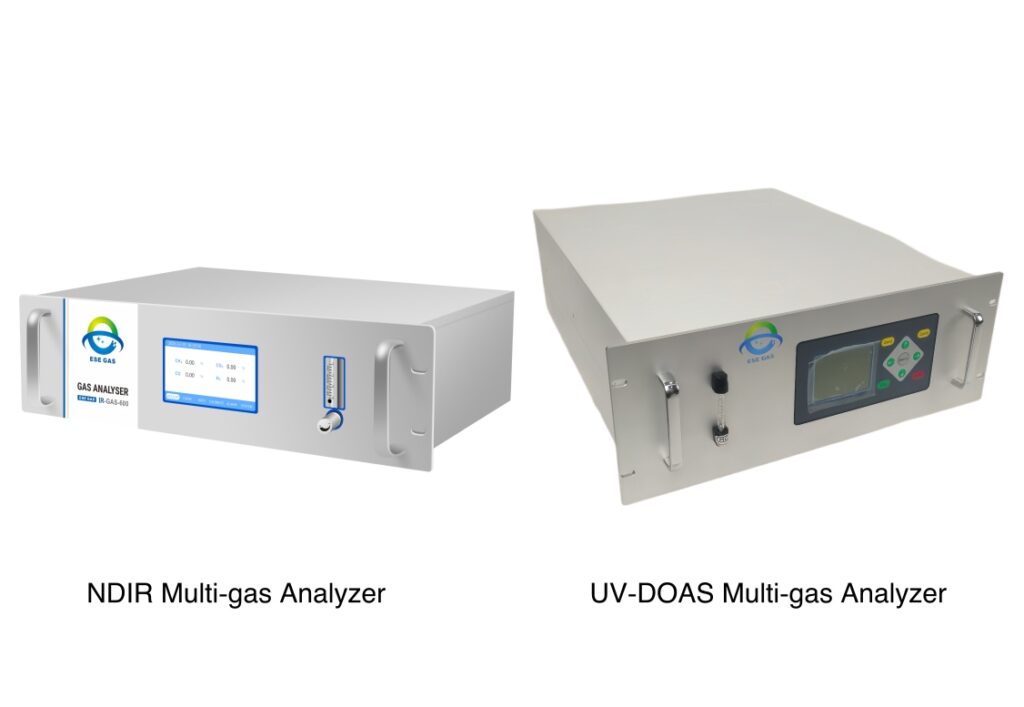
Multi-gas analyzers improve flue gas monitoring accuracy in ethylene cracking furnaces by simultaneously measuring O₂, CO, CO₂, NOx, CH₄, and other combustion gases. This comprehensive analysis enables precise combustion control, reduced fuel consumption, lower emissions, and improved furnace reliability.
Yet many operators still depend on limited measurements that reveal only part of the combustion picture. Understanding the advantages of multi-gas analyzers helps explain why they are becoming standard equipment in advanced ethylene production facilities.
Which Flue Gas Components Should Be Continuously Monitored in Ethylene Cracking Furnaces?
Missing a critical gas can lead to costly blind spots. Not all gases provide the same operational value. The most effective monitoring systems focus on parameters that directly influence efficiency, emissions, and safety.
For ethylene cracking furnace applications, industry experts commonly recommend monitoring O₂, CO, CO₂, NOx, and combustibles. Advanced in-situ systems can also measure CH₄ and H₂O for deeper combustion analysis.
Recommended monitoring parameters
| Parameters | Value |
|---|---|
| O₂ | Air-fuel ratio optimization |
| CO | Incomplete combustion detection |
| CO₂ | Combustion efficiency evaluation |
| NOx | Emissions compliance |
| CH₄ | Fuel loss monitoring |
| SO₂ | When sulfur-containing fuels are used |
| H2O | Assists combustion balancing and furnace diagnostics |
Monitoring these gases together allows operators to identify combustion inefficiencies much earlier than relying on a single measurement point. Modern petrochemical facilities increasingly use multi-gas analyzers intergrated in one flue gas monitoring system to support both process optimization and emissions management.
Which Multi-gas Gas Analyzers Technologies Are Most Suitable for Ethylene Cracking Furnace Applications?
Not every gas analysis technology performs well under high temperatures, dusty conditions, and complex gas compositions found in furnaces.
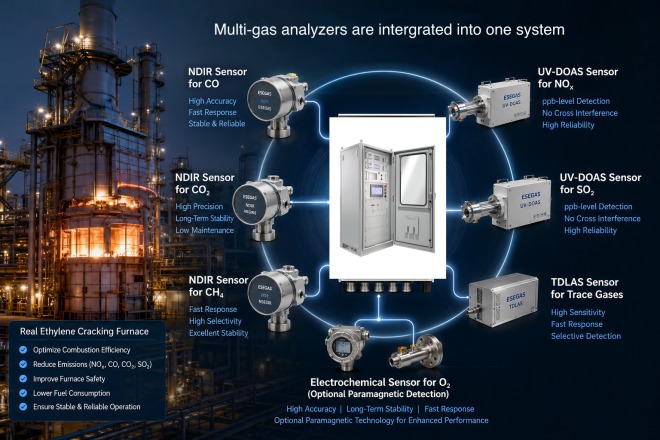
Several technologies are commonly used in multi-gas analyzers:
- UV-DOAS for NOx and SO₂ monitoring.
- NDIR for CO, CO₂, and hydrocarbons.
- TDLAS for O₂, CO, NH₃, HCl, and others.
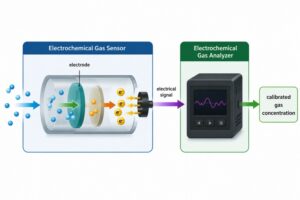
- Electrochemical sensors for common oxygen analysis.
- Paramagnetic technology for accuracy oxygen analysis.
For continuous flue gas monitoring in furnaces, NDIR and UV-DOAS combinations are widely adopted because they offer fast response times, excellent selectivity, low maintenance requirements, and high long-term stability.
Why Are Multi-Gas Analyzers Essential in Ethylene Cracking Furnaces?
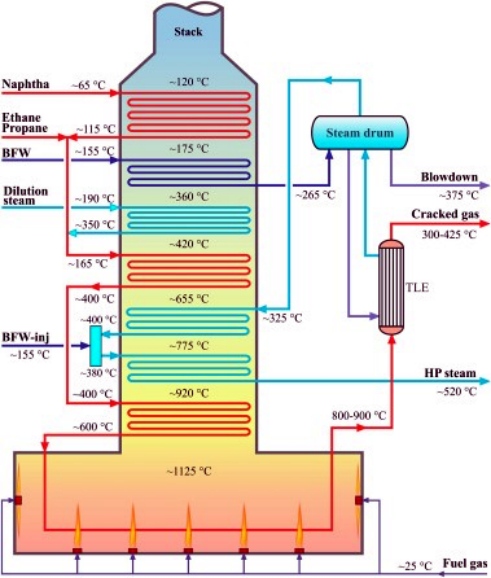
Ethylene cracking furnaces operate above 800°C and represent one of the most energy-intensive units in a petrochemical complex. Small deviations in combustion efficiency can significantly increase fuel consumption, tube metal temperatures, and emissions. Accurate flue gas monitoring enables operators to maintain optimal air-to-fuel ratios, maximize heat transfer efficiency, minimize emissions, and extend furnace run length.
Multi-Gas Analyzers Improve Furnace Efficiency and Reduce Fuel Costs
Excess air may seem safe, but it often wastes energy. Operators frequently add excess combustion air to avoid CO formation. However, too much excess air carries heat out of the stack and lowers furnace efficiency.
By simultaneously tracking O₂, CO, and CO₂, multi-gas analyzers allow operators to maintain combustion close to the optimal stoichiometric point. This reduces unnecessary fuel consumption while maintaining safe operation. Studies of industrial furnace combustion consistently show that improved combustion monitoring supports higher thermal efficiency and lower energy usage.
The result is lower fuel costs, improved heat transfer, and more stable furnace operation.
Multi-Gas Analyzers Help Reduce NOx, CO, and CO₂ Emissions
Environmental compliance is becoming increasingly demanding. Ethylene producers face growing pressure to reduce greenhouse gas emissions and meet stricter environmental regulations.
Multi-gas analyzers help operators balance combustion efficiency with emissions performance. Continuous monitoring of NOx, CO, and CO₂ enables rapid process adjustments before emission limits are exceeded. At the same time, optimized combustion lowers overall fuel consumption, which directly reduces CO₂ generation.
Continuous multi-gas analyzers support lower NOx emissions, reduced CO formation, improved CO₂ management, easier environmental reporting, and better CEMS compliance.
Multi-Gas Analyzers Are Important for Furnace Safety
Combustion problems often develop before operators notice them. A burner malfunction, air leakage, or fuel distribution issue can quickly create unsafe operating conditions.
Real-time multi-gas analyzers provide immediate detection of abnormal combustion patterns. Elevated CO, declining O₂, or increasing combustible gas concentrations can serve as early warning indicators before safety incidents occur.
Early detection helps prevent burner instability, incomplete combustion, excessive tube temperatures, unplanned shutdowns, and safety incidents.
Conclusion
Multi-gas analyzers provide a more complete and accurate understanding of combustion conditions than single-gas systems. They improve efficiency, reduce emissions, enhance safety, and support reliable furnace operation.
If you are looking to optimize ethylene cracking furnace performance, contact ESEGAS to discuss the right Multi-Gas Analyzer solution for your application.
FAQs:
1. What are Multi-Gas Analyzers in ethylene cracking furnace applications?
Multi-gas analyzers are intergrate into advanced flue gas measurement system that simultaneously detects multiple combustion gases such as O₂, CO, CO₂, NOx, CH₄, and SO₂. In ethylene cracking furnaces, it provides a full combustion profile instead of single-point data.
2. Why are Multi-Gas Analyzers more accurate than single-gas measurement?
Single-gas analyzers only show one parameter, usually oxygen, which cannot fully represent combustion behavior. Multi-gas analyzers combine multiple readings to reveal hidden conditions such as incomplete combustion or excess air imbalance. This cross-correlation between gases significantly improves diagnostic accuracy and reduces the risk of misinterpretation in furnace control.
3. Which gases are most important to monitor in ethylene cracking furnaces?
The most critical gases include O₂, CO, and CO₂ for combustion efficiency, NOx for emissions control, and CH₄ for unburned fuel detection. In some cases, SO₂ is also monitored depending on fuel composition. Together, these gases provide a complete picture of furnace performance, safety, and environmental compliance.
4. How do Multi-Gas Analyzers improve furnace efficiency?
Multi-gas analyzers optimize the air-to-fuel ratio by continuously tracking combustion indicators. When O₂ is too high, it signals excess air loss; when CO rises, it indicates incomplete combustion. By balancing these parameters in real time, operators can reduce fuel waste, improve heat transfer efficiency, and stabilize furnace output.
5. Can Multi-Gas Analyzers help reduce emissions in ethylene plants?
Yes. By continuously monitoring NOx, CO, and CO₂ levels, gas analyzers help operators adjust combustion conditions before emissions exceed limits. This leads to lower greenhouse gas output and improved compliance with environmental regulations, especially in large-scale petrochemical operations.
6. Are Gas Analyzers useful for furnace safety monitoring?
Yes. Sudden changes in CO, O₂, or combustible gases can indicate burner malfunction, air leakage, or unstable combustion. Real-time detection allows operators to respond quickly before unsafe conditions develop, reducing the risk of furnace damage or unplanned shutdowns.
7. What makes real-time monitoring important in cracking furnaces?
Ethylene cracking furnaces operate under extreme temperatures and fast reaction conditions. Even small combustion deviations can escalate quickly. Real-time multi-gas monitoring ensures immediate feedback, allowing operators to adjust parameters instantly and maintain stable furnace operation.
8. How often should a Multi-Gas Analyzer be calibrated?
Most industrial multi-gas analyzers require calibration every 3 to 6 months, depending on operating conditions. Regular zero and span calibration ensures long-term accuracy, especially in high-dust, high-temperature environments like cracking furnaces.
9. What technologies are used in Multi-Gas Analyzers?
Common technologies include NDIR for CO₂ and CO, electrochemical sensors or paramagnetic sensors for O₂, UV-DOAS for SO2 and NOx, and TDLAS for high-precision detection of specific components. These combined technologies allow stable and accurate multi-component gas measurement in harsh industrial conditions.