



Glass manufacturers often struggle with rising fuel costs, unstable furnace conditions, and tightening emission regulations. Without accurate CO2 monitoring, these problems can quietly reduce efficiency, product quality, and profitability.
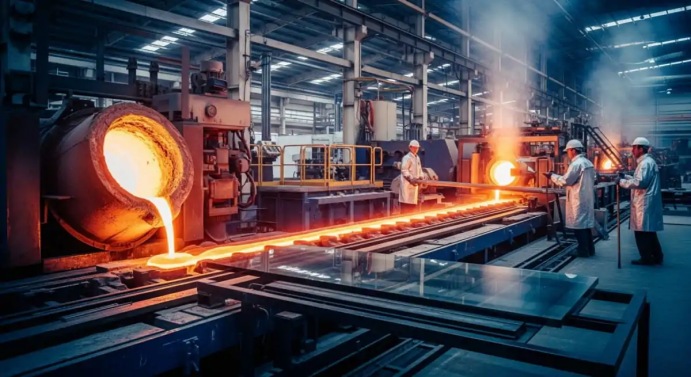
A CO2 Gas Analyzer is essential for glass melting furnaces because it provides real-time insight into combustion efficiency, furnace atmosphere, fuel consumption, and CO2 emissions. Accurate CO2 measurement helps manufacturers optimize air-fuel ratios, improve glass quality, reduce operating costs, and maintain environmental compliance.
However, the role of a CO2 gas analyzer goes far beyond emissions reporting. In modern glass production, it has become a critical tool for furnace optimization, process stability, and cost control. Let’s explore why.
Why Do Glass Melting Furnaces Generate Large Amounts of CO2?
Fuel expenses continue to rise, yet many operators cannot clearly identify where efficiency losses occur. At the same time, regulators demand greater transparency in greenhouse gas emissions.
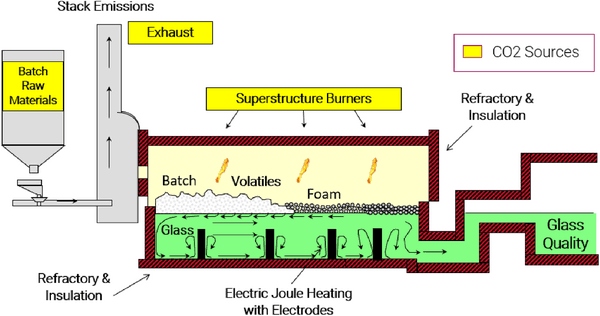
Glass melting furnaces generate CO2 from two primary sources: fuel combustion and the decomposition of carbonate-based raw materials. These combined sources make the glass industry one of the most significant industrial CO2 emitters. Continuous monitoring is therefore essential for understanding and controlling emissions.
During glass production, materials such as limestone, dolomite, and soda ash release CO2 as they decompose at high temperatures. Simultaneously, natural gas, fuel oil, or other fuels produce additional CO2 through combustion. According to regulatory guidance for glass manufacturing, both process-related and combustion-related CO2 emissions must often be monitored and reported.
As a result, accurate CO2 measurement becomes the foundation for effective furnace management.
How Does a CO2 Gas Analyzer Improve Furnace Combustion Efficiency?
Many glass furnaces operate with excessive combustion air as a safety margin. Unfortunately, excess air often increases fuel consumption and reduces thermal efficiency.
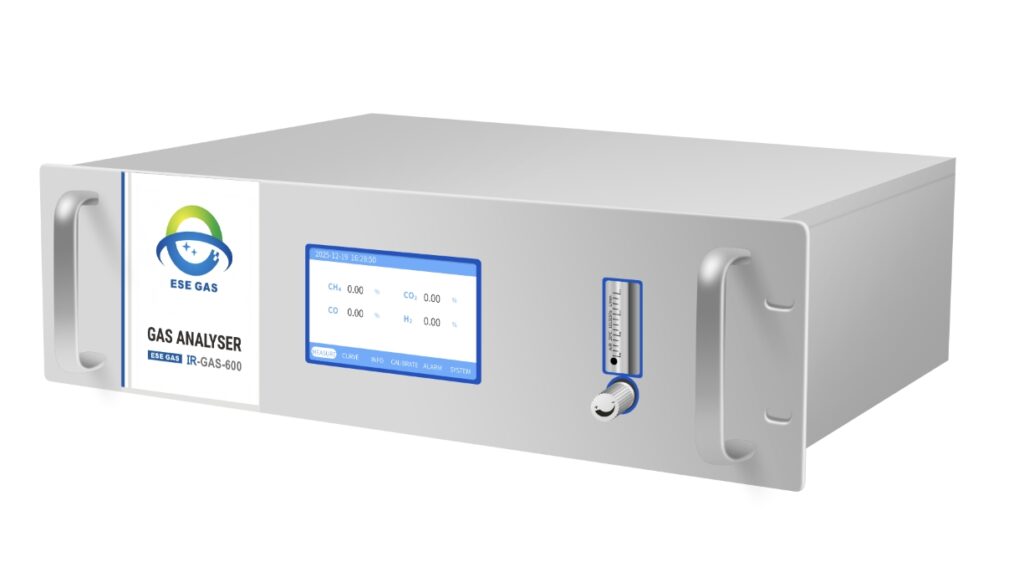
A CO2 Gas Analyzer improves combustion efficiency by helping operators maintain the optimal air-fuel ratio. Higher combustion efficiency typically translates into lower fuel consumption, reduced emissions, and more stable furnace temperatures.
Real-time CO2 data allows operators to detect over-fired or under-fired combustion conditions. When combined with O2 monitoring, furnace managers can precisely adjust burner settings to achieve efficient combustion. Industry studies indicate that optimizing combustion control can significantly reduce fuel usage while lowering CO2 emissions.
In large glass furnaces operating 24/7, even a small improvement in combustion efficiency can generate substantial annual fuel savings.
Why Is Continuous CO2 Monitoring Important for Glass Quality?
Product defects can quickly turn profitable production into costly waste. Many quality issues originate from unstable furnace atmospheres that are difficult to detect without continuous gas monitoring.
Continuous CO2 monitoring helps maintain a stable combustion environment, which supports consistent glass melting, refining, and product quality.
During the melting process, gases such as CO2, SO2, O2, and water vapor are generated inside the furnace. Excessive fluctuations can interfere with refining performance and contribute to defects such as bubbles, inclusions, and inconsistent glass properties. Continuous flue gas analysis enables operators to identify process deviations before they affect product quality.
Consequently, a CO2 Gas Analyzer becomes an important quality-control instrument, not just an emissions-monitoring device.
How Can a CO2 Gas Analyzer Help Reduce Emissions Compliance Risks?
Environmental regulations continue to become more stringent worldwide. Facilities that lack accurate emissions data may face reporting challenges, penalties, or compliance issues.
A CO2 Gas Analyzer supports emissions compliance by providing accurate and traceable CO2 measurements for environmental reporting and process verification.
Many glass manufacturing facilities use continuous emissions monitoring systems (CEMS) or equivalent monitoring approaches to quantify combined combustion and process CO2 emissions. Reliable CO2 measurement helps operators demonstrate compliance while identifying opportunities for emissions reduction.
Moreover, accurate emissions data often serves as the starting point for long-term decarbonization strategies.
What Happens When a Glass Furnace Operates Without a CO2 Gas Analyzer?
Many plants still rely on periodic measurements or indirect indicators. Unfortunately, critical combustion problems may remain unnoticed for weeks or months.
Without a CO2 Gas Analyzer, operators may experience higher fuel consumption, increased emissions, unstable furnace conditions, and avoidable maintenance costs.
A lack of continuous combustion monitoring can lead to excessive excess air, incomplete combustion, temperature instability, and refractory stress. Industry experience shows that furnaces without effective combustion atmosphere control often suffer from higher energy use, elevated emissions, and reduced operational efficiency.
In short, what appears to be a small instrumentation cost can become a significant operational expense over time.
Which Type of CO2 Gas Analyzer Is Best for Glass Melting Furnaces?
Not all analyzers perform equally well in the harsh environment of a glass furnace. High temperatures, dust, moisture, and corrosive gases demand a robust measurement solution.
For most glass melting furnace applications, NDIR-based CO2 Gas Analyzers are widely preferred because they provide reliable, selective, and continuous CO2 measurement with low maintenance requirements.
When selecting a system, engineers should consider:
- Measurement range
- Response time
- Dust tolerance
- Sample conditioning requirements
- Installation location
- Maintenance intervals
- Integration with furnace control systems
Depending on the application, both extractive and in-situ configurations can provide accurate CO2 monitoring. The best choice depends on furnace design and process conditions.
How Does ESEGAS Help Glass Manufacturers Optimize Furnace Performance?
Operators need more than accurate measurements. They need dependable instruments that can withstand demanding industrial environments year after year.
ESEGAS CO2 Gas Analyzer solutions deliver continuous, reliable monitoring for glass melting furnaces, helping manufacturers improve efficiency, control emissions, and stabilize production processes.
Using advanced NDIR technology, ESEGAS analyzers provide fast response, high measurement accuracy, and long-term stability. Real-time CO2 data enables operators to optimize combustion conditions, reduce unnecessary fuel consumption, and maintain furnace performance under varying production loads.
As environmental requirements become stricter and energy costs continue to rise, reliable gas analysis becomes a strategic advantage rather than simply a monitoring requirement.
Conclusion
A CO2 gas analyzer is no longer optional for modern glass melting furnaces. It helps improve combustion efficiency, maintain glass quality, reduce emissions, and support regulatory compliance.
If you are looking to optimize furnace performance while lowering operating costs, contact ESEGAS to discuss the most suitable CO2 Gas Analyzer solution for your application.
FAQs
1. What is a CO2 Gas Analyzer used for in a glass melting furnace?
A CO2 Gas Analyzer measures the concentration of carbon dioxide in furnace flue gas. Glass manufacturers use it to evaluate combustion efficiency, optimize the air-fuel ratio, reduce fuel consumption, and maintain stable furnace operating conditions.
2. Why is CO2 monitoring important in glass manufacturing?
CO2 monitoring helps operators understand combustion performance in real time. Accurate CO2 measurements enable better burner control, lower energy costs, reduced emissions, and more consistent glass quality throughout the melting process.
3. How does a CO2 Gas Analyzer improve combustion efficiency?
A CO2 Gas Analyzer continuously tracks combustion gases generated during melting. When CO2 levels deviate from the optimal range, operators can adjust burner settings and combustion air to improve thermal efficiency and reduce fuel waste.
4. Can a CO2 Gas Analyzer help reduce fuel consumption?
Yes. By optimizing combustion conditions and minimizing excess air, a CO2 Gas Analyzer can help improve furnace efficiency. Many glass manufacturers use continuous flue gas monitoring to identify energy-saving opportunities and lower operating costs.
5. What gases are typically monitored alongside CO2 in glass furnaces?
In addition to CO2, glass plants commonly monitor:
- O2 (Oxygen)
- CO (Carbon Monoxide)
- NOx (Nitrogen Oxides)
- SO2 (Sulfur Dioxide)
Multi-gas monitoring provides a more complete understanding of furnace combustion performance and emissions.
6. What is the best technology for measuring CO2 in glass furnace flue gas?
NDIR (Non-Dispersive Infrared) technology is one of the most widely used methods for industrial CO2 measurement. It offers high accuracy, excellent stability, fast response, and reliable long-term operation in harsh industrial environments.
7. How does CO2 concentration relate to the air-fuel ratio?
CO2 concentration is closely linked to combustion efficiency. Excessive air generally lowers CO2 levels, while optimized combustion typically produces higher CO2 concentrations. Monitoring CO2 helps operators maintain the proper air-fuel balance for efficient furnace operation.
8. Can a CO2 Gas Analyzer improve glass product quality?
Yes. Stable combustion conditions create more uniform furnace temperatures. This helps reduce defects such as bubbles, inclusions, and uneven glass quality while improving overall production consistency.
9. Is a CO2 Gas Analyzer necessary for emission compliance?
In many regions, accurate flue gas monitoring is essential for environmental reporting and emissions management. A CO2 Gas Analyzer provides reliable data to support carbon emission monitoring and regulatory compliance programs.