



Waste-to-energy (WtE) plants must monitor multiple air pollutants under demanding flue gas conditions. These include SO₂, NOₓ, HCl, HF, NH₃, CO, and other components, depending on the process and regulatory requirements. However, selecting the right Continuous Emissions Monitoring System (CEMS) involves more than comparing gas analyzer accuracy. Measurement range, gas interference, moisture management, sampling conditions, maintenance requirements, and the number of target gases all affect system performance.
Two commonly used optical technologies are Fourier Transform Infrared (FTIR) spectroscopy and Ultraviolet Differential Optical Absorption Spectroscopy (UV-DOAS). FTIR is generally more suitable when a plant needs simultaneous measurement of multiple infrared-active gases, including several acid gases and process-related components. UV-DOAS is a strong choice for monitoring selected UV-absorbing pollutants, particularly SO₂ and NOₓ, when the required measurement configuration is supported.
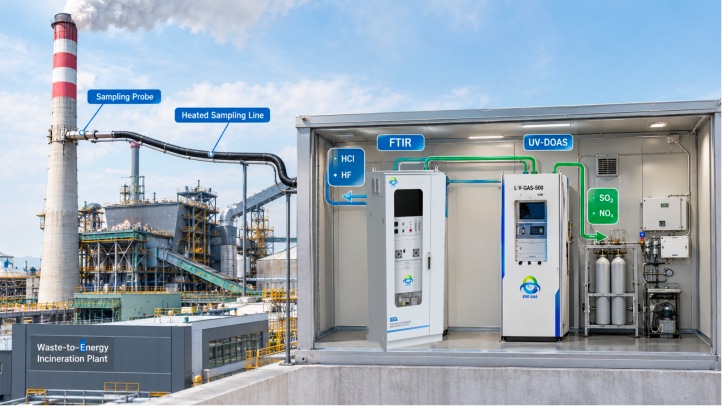
Neither technology is universally superior. The appropriate choice depends on the target pollutants, applicable measurement methods, flue gas composition, and sampling-system design.
How Do FTIR and UV-DOAS Work in Waste-to-Energy CEMS?
Both FTIR and UV-DOAS measure gas concentrations through optical absorption. However, they use different wavelength regions and identify different gas molecules. This difference determines which pollutants each technology can measure effectively.
1. How Does FTIR Gas Analysis Work?
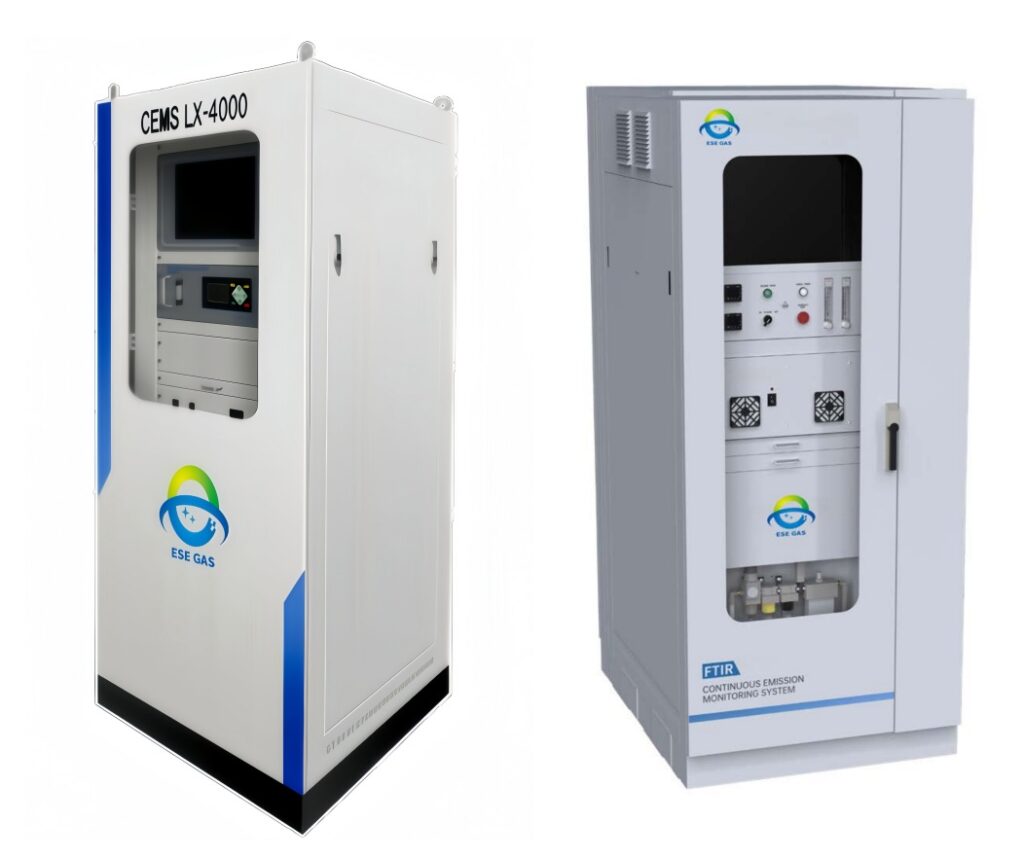
Fourier Transform Infrared Spectroscopy (FTIR) measures infrared absorption associated with molecular vibrations and rotations. It uses an interferometer to generate an interferogram, which is converted into an infrared spectrum through a Fourier transform. Each gas has characteristic infrared absorption features. The gas analyzer compares the measured spectrum with reference spectra to identify and quantify multiple gas components.
A major advantage is simultaneous multi-component measurement. One FTIR analyzer can measure several pollutants in the same sample without requiring a separate analyzer for every gas. For waste-to-energy applications, relevant gases include:
- SO₂ and NOₓ (NO and NO₂)
- HCl and HF
- CO and CO₂
- CH₄ and H₂O
- NH₃, N₂O and VOCs, depending on configuration
FTIR spectral fitting can help distinguish overlapping absorption features. However, measurement quality still depends on spectral resolution, calibration models, gas composition, and sample conditions.
2. How Does UV-DOAS Gas Analysis Work?
Ultraviolet Differential Optical Absorption Spectroscopy (UV-DOAS) measures gases through their characteristic ultraviolet absorption structures. It applies differential spectral analysis to distinguish target gas absorption from broader background effects.
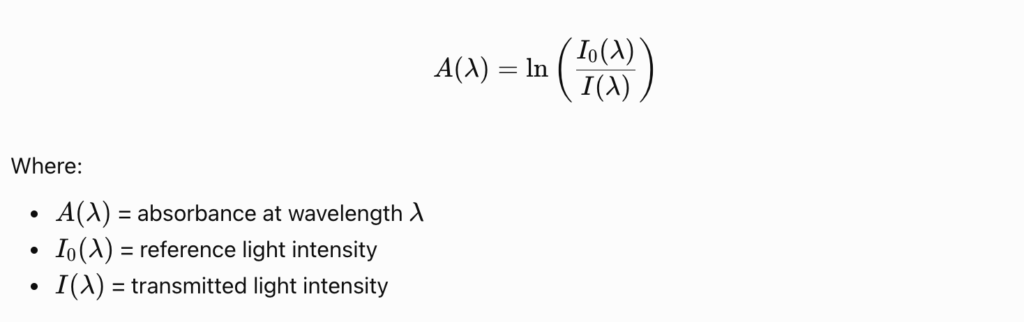
The analyzer sends ultraviolet light through a gas sample or measurement path. A spectrometer records the transmitted light and compares the measured absorption spectrum with reference spectra. The calculation follows the Beer–Lambert law.
UV-DOAS is particularly suitable for gases with distinctive UV absorption features, including SO₂, NO, and NO₂. It can also support other UV-active gases when the optical configuration and spectral analysis are suitable.
However, UV-DOAS should not be confused with a complete multi-gas measurement system. For example, CO and CO₂ generally require an additional infrared measurement channel, such as NDIR.
FTIR vs UV-DOAS: What Are the Main Technical Differences?
The main difference is their measurement coverage and suitability for different pollutant combinations. FTIR offers broad infrared multi-gas analysis. UV-DOAS provides selective measurement of specific UV-absorbing pollutants.
| Comparison | FTIR | UV-DOAS |
|---|---|---|
| Measurement principle | Infrared molecular absorption | Ultraviolet differential absorption |
| Main measurement gases | SO₂, NOₓ, HCl, HF, CO, CO₂ and others | SO₂, NO, NO₂ and other suitable UV-active gases |
| Multi-gas capability | Broad simultaneous multi-component analysis | Multiple UV-active gases within the configured spectral range |
| CO measurement | Yes, through FTIR | Requires an additional measurement technology |
| CO₂ measurement | Yes, through FTIR | Requires an additional measurement technology |
| HCl and HF | Supported by suitable FTIR configurations | Must be verified for the specific analyzer and measurement configuration |
| Water vapor | Can cause spectral interference; spectral compensation is required | Generally less affected by water-vapor absorption in relevant UV bands |
| Sampling requirements | Can use heated extractive measurement | Depends on extractive or in-situ architecture |
| Main advantage | Broad multi-pollutant coverage | Selective measurement of key UV-absorbing pollutants |
| Main consideration | Spectral overlap and sample-temperature control | Target-gas coverage and optical-system condition |
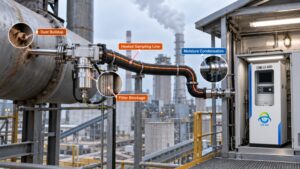
Important: Neither technology eliminates sampling-system problems. Dust, condensation, gas adsorption, leaks, and optical contamination can affect measurement reliability. The choice should therefore consider the complete CEMS configuration, not just the analyzer’s optical principle.
Which Technology Is Better for Monitoring Waste-to-Energy Emissions?
The answer depends on which pollutants the plant must monitor and how the measurement data will be used.
1. SO₂ and NOₓ Monitoring
SO₂ and NOₓ are important indicators of combustion performance and flue gas treatment efficiency.
UV-DOAS is a strong option for these pollutants because their ultraviolet absorption features support selective measurement. It is particularly relevant when a plant needs dedicated SO₂ and NO/NO₂ measurement channels, including low-emission configurations.
FTIR can also measure SO₂ and NOₓ simultaneously with other infrared-active gases. However, engineers should verify the required measurement ranges, detection limits, and interference performance under actual flue gas conditions.
Recommendation: Consider UV-DOAS for dedicated SO₂ and NOₓ monitoring. Choose FTIR when these measurements form part of a broader multi-gas monitoring requirement.
2. HCl and HF Monitoring
HCl and HF deserve particular attention in waste incineration. Their concentrations depend on waste composition, combustion conditions, and flue gas treatment performance. These acid gases are also important indicators of flue gas cleaning efficiency.
FTIR can measure HCl and HF using their characteristic infrared absorption features. An appropriate heated sampling configuration can help prevent condensation and sample loss. However, engineers must consider spectral interference, gas-cell temperature, material compatibility, and the potential adsorption of acid gases within the sampling path.
UV-DOAS should not automatically be selected for HCl or HF simply because the analyzer is described as a multi-gas UV system. The actual measurement principle and validated gas channels must be confirmed.
Recommendation: FTIR is a practical option when simultaneous HCl, HF, SO₂, and NOₓ measurement is required. Dedicated TDLAS systems are another option when highly selective HCl or HF measurement is the priority.
3. CO and CO₂ Monitoring
CO indicates incomplete combustion and can help operators evaluate combustion stability. CO₂ provides additional information about combustion conditions and flue gas composition.
FTIR can measure both gases within one multi-component analyzer. A UV-DOAS-based system generally requires NDIR or another suitable infrared measurement channel for CO and CO₂.
Recommendation: FTIR is attractive when CO and CO₂ must be measured alongside acid gases and other infrared-active pollutants. A UV-DOAS + NDIR configuration is suitable when the plant prioritizes dedicated UV measurement of SO₂ and NOₓ while retaining CO and CO₂ monitoring.
4. NH₃ Monitoring and Ammonia Slip
Waste-to-energy plants may use Selective Non-Catalytic Reduction (SNCR) or Selective Catalytic Reduction (SCR) to control NOₓ emissions. These processes can introduce ammonia slip when reagent injection and reaction conditions are not properly controlled. NH₃ monitoring helps operators evaluate reagent utilization and optimize NOₓ reduction.
FTIR can support NH₃ measurement when the required gas channel and spectral model are configured. UV-DOAS can also measure NH₃ in suitable configurations, but its availability and performance must be verified for the specific wavelength range and gas matrix.
Recommendation: Select the measurement technology according to the required NH₃ range, expected concentration, interference gases, and response time. Do not assume that every FTIR or UV-DOAS analyzer includes an NH₃ channel as standard.
What Do Waste Incineration Regulations Require CEMS to Monitor?
Technology selection should begin with the applicable emission requirements, not the analyzer catalog. For example, the European Commission’s Waste Incineration BAT Conclusions (2019/2010) identify several pollutants and process parameters for continuous monitoring.
For plants covered by these EU requirements, the relevant monitoring includes:
| Parameter | Monitoring requirement under EU Waste Incineration BAT |
|---|---|
| NOₓ | Continuous |
| CO | Continuous |
| SO₂ | Continuous |
| HCl | Continuous |
| HF | Continuous, subject to specified exceptions |
| NH₃ | Continuous when SNCR and/or SCR is used |
| Dust | Continuous |
| Mercury | Continuous |
The applicable monitoring standards include the generic EN standards, such as EN 15267 and EN 14181. The required measurement method must also be appropriate to the pollutant and regulatory application.
Why Is Continuous HCl and SO₂ Measurement Important?
Waste incineration plants use flue gas cleaning technologies to control acid gas emissions. These systems may include:
- Dry sorbent injection
- Semi-dry absorption
- Wet scrubbing
- Activated carbon injection
- Baghouse filtration
Continuous HCl and SO₂ measurements can help optimize reagent dosing and reduce peak emissions.
The EU BAT conclusions specifically identify continuous HCl and/or SO₂ measurements as a way to support automated reagent dosage in relevant flue gas cleaning systems. Therefore, CEMS selection should consider both regulatory reporting and process control.
Which ESEGAS Gas Analyzer Is Suitable for Waste-to-Energy CEMS?
ESEGAS provides FTIR and UV-DOAS-based gas analysis solutions for industrial emission monitoring. The selection depends on the required pollutant list, concentration ranges, sampling architecture, and monitoring objectives.
1. ESEGAS ESE-FT600 Online FTIR Gas Analyzer
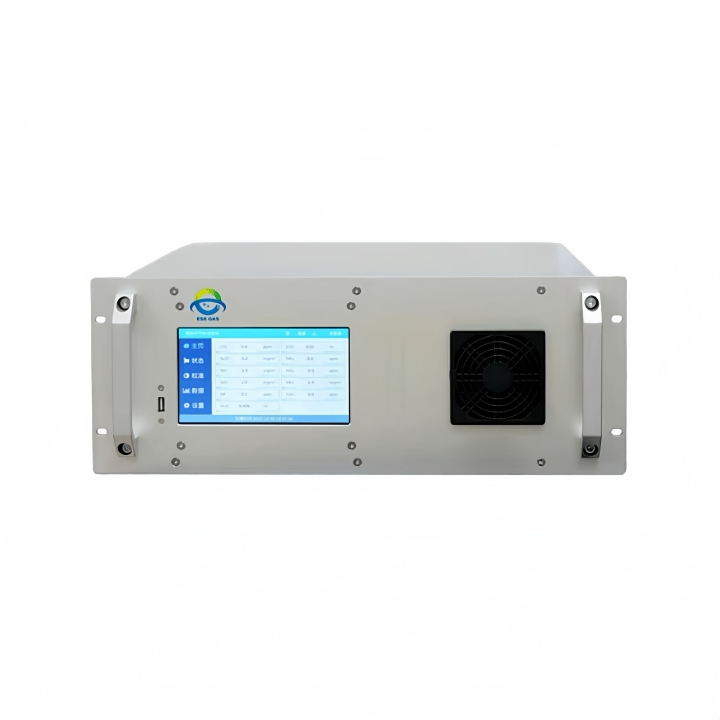
The ESE-FT600 FTIR Gas Analyzer uses FTIR spectroscopy to measure multiple gas components through their characteristic infrared absorption features. Its gas measurement list includes SO₂, NO, NO₂, CO, CO₂, CH₄, HCl, HF, and H₂O. Additional components, including NH₃, N₂O, SO₃, and VOCs, can be configured according to monitoring requirements.
Published technical specifications:
| Measurement parameter | Published range |
|---|---|
| SO₂ | 200 mg/m³ |
| NO | 300 mg/m³ |
| NO₂ | 300 mg/m³ |
| NOₓ | 759 mg/m³ |
| CO | 300 mg/m³ |
| HCl | 200 mg/m³ |
| HF | 200 mg/m³ |
| CO₂ | 20% |
| H₂O | 40% |
| CH₄ | 300 mg/m³ |
| O₂ | 25% |
Other published performance specifications include:
- Zero drift: ≤ ±2% FS/7 days
- Span drift: ≤ ±2% FS/7 days
- Linearity error: ≤ ±2% FS
- Communication: RS232, RS485, and Modbus support
The O₂ measurement uses a zirconia principle. The product also features high-temperature sample tracing to help prevent condensation and spectral compensation to reduce water-vapor interference.
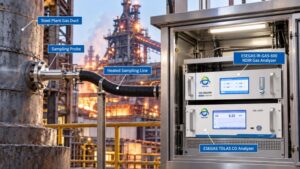
2. ESEGAS UV-GAS-500 Emission Gas Analyzer
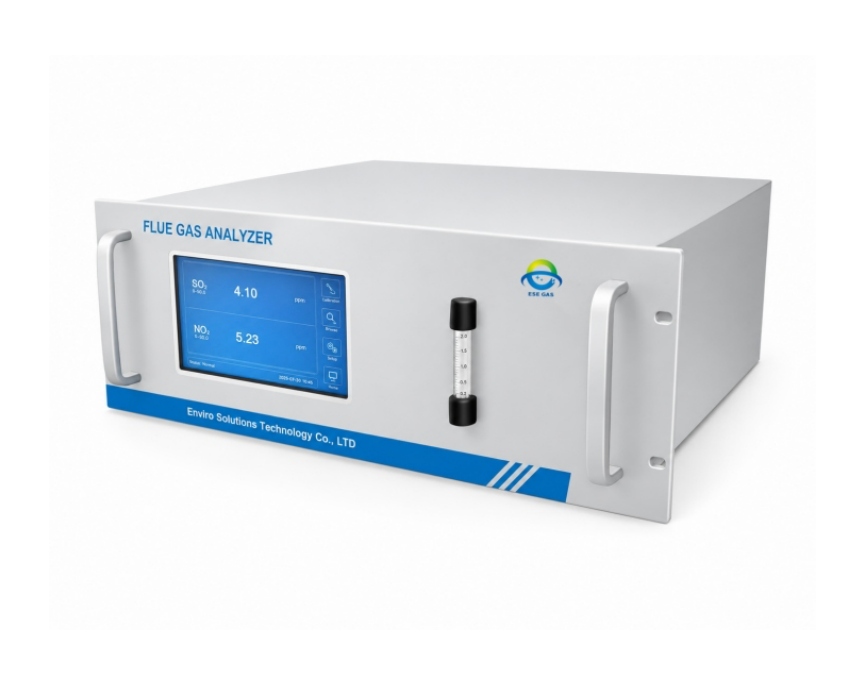
The UV-GAS-500 emission gas analyzer combines different measurement principles according to the required gas components. Its published configuration includes:
- UV-DOAS for SO₂, NO, and NO₂.
- NDIR for CO and CO₂.
- Electrochemical or paramagnetic measurement options for O₂.
The product page also lists HCl, HF, and NH₃ among its available gas measurement options. However, the specific measurement technology and range for these additional gases should be confirmed with ESEGAS for each configuration.
Published performance specifications:
| Parameter | Published specification |
|---|---|
| Linearity | ≤ ±1.5% FS |
| Repeatability | ≤ ±0.5% FS |
| Zero drift | ≤ ±2% FS/7 days |
| Span drift | ≤ ±2% FS/7 days |
| Response time (T90) | ≤ 10 s or ≤ 30 s, depending on configuration |
| Output | RS485 / 4–20 mA |
The analyzer offers standard, low-emission, and ultra-low-emission measurement configurations. Engineers should confirm the selected range, pollutant channels, and response-time specification before finalizing the system.
3. How Should Plants Choose Between These Two ESEGAS Solutions?
Plant requirement | Recommended direction |
|---|---|
| Simultaneous SO₂, NOₓ, HCl, HF, and CO measurement | ESE-FT600 FTIR |
| Broad multi-component emissions analysis | ESE-FT600 FTIR |
| Dedicated SO₂ and NOₓ monitoring | UV-GAS-500 |
| SO₂ and NOₓ with additional CO and CO₂ measurement | UV-GAS-500 UV-DOAS + NDIR |
| Multiple acid gases and process-related components | Evaluate FTIR or a hybrid configuration |
| Dedicated low-concentration HCl measurement | Consider a suitable TDLAS configuration |
The table provides initial selection guidance. Final selection requires checking the applicable reference methods, measurement ranges, detection limits, and full-system performance.
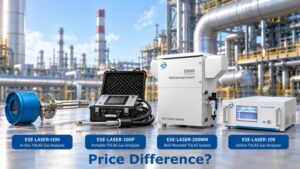
For plants with demanding HCl requirements, ESEGAS also offers dedicated ESE-LASER-200 online TDLAS Gas Analyzer solutions.
4. Can FTIR and UV-DOAS Be Combined in One CEMS?
A hybrid CEMS can combine different technologies to address different pollutants.For example: UV-DOAS measures SO₂ and NOₓ. NDIR measures CO and CO₂. TDLAS measures selected gases such as HCl or NH₃. Separate dust and mercury monitors measure particulate and mercury emissions. This configuration can be useful when one measurement technology cannot satisfy every monitoring requirement.
However, integration increases the importance of sampling coordination, calibration procedures, data synchronization, and maintenance planning. The best CEMS architecture should be based on the complete pollutant list rather than the number of gas analyzers installed.
Frequently Asked Questions About FTIR vs UV-DOAS CEMS
1. Is FTIR better than UV-DOAS for waste incineration?
FTIR is generally more suitable for simultaneous measurement of multiple pollutants, including HCl, HF, SO₂, NOₓ, and CO. UV-DOAS is particularly suitable for dedicated SO₂ and NOₓ monitoring. The better option depends on the required gas list and operating conditions.
2. Can UV-DOAS measure CO and CO₂?
UV-DOAS is not normally used as the primary measurement principle for CO and CO₂. These gases are generally measured using infrared technologies such as NDIR. A combined UV-DOAS + NDIR analyzer can measure both groups.
3. Can FTIR measure HCl, HF, and NH₃ simultaneously?
Yes, an appropriately configured FTIR analyzer can measure these gases together with other infrared-active components. However, the gas channels, measurement ranges, spectral models, and sampling conditions must be confirmed for the selected configuration.
4. Does FTIR eliminate water-vapor interference?
No. Water vapor absorbs infrared radiation and can overlap with other gas absorption features. FTIR spectral fitting and compensation can reduce this interference, but reliable measurement still requires suitable temperature control, calibration, and sample handling.
5. Is UV-DOAS suitable for ultra-low emission monitoring?
Yes. UV-DOAS is suitable for low-concentration SO₂ and NOₓ monitoring when the analyzer has an appropriate measurement range, detection limit, and verified performance. The selected configuration must meet the applicable regulatory requirements.
6. Do FTIR and UV-DOAS CEMS automatically meet emission regulations?
No. Using either technology does not automatically establish regulatory compliance. The complete CEMS must satisfy the applicable performance specifications, reference methods, calibration, and quality-assurance requirements.
For example, US EPA Performance Specification 18 establishes specific performance tests for gaseous HCl CEMS.
Conclusion
FTIR and UV-DOAS both offer practical advantages for waste-to-energy emission monitoring. However, their measurement capabilities serve different requirements. Choose FTIR when simultaneous multi-gas measurement is the priority, particularly for applications involving HCl, HF, SO₂, NOₓ, CO, and CO₂. Choose UV-DOAS when selective SO₂ and NOₓ monitoring is the primary requirement, especially in low-emission applications. Consider a hybrid CEMS when the plant needs broader pollutant coverage using different measurement principles.
Ultimately, reliable emissions monitoring depends on matching the measurement technology, sampling system, and gas analyzer configuration to the actual flue gas conditions. ESEGAS provides FTIR, UV-DOAS, TDLAS, and integrated CEMS solutions for industrial emission monitoring.
Looking for the right CEMS configuration for your waste-to-energy plant? Contact ESEGAS to discuss your target gases, emission ranges, sampling conditions, and customized gas monitoring requirements.