Category: Gas Sensing Technology Hub

Blog

In cement production, oxygen content is more than a basic gas value on a control screen. When O₂ is too

Industrial gas monitoring becomes risky when the data arrives too late, changes during sampling, or requires constant maintenance before it

Industrial gas monitoring becomes difficult when the process gas is hot, wet, dusty, corrosive, or changing quickly. In these conditions,

Choosing a gas analyzer should never be a guess. In many industrial applications, one wrong selection can lead to unstable

Industrial fluid welding is unforgiving. A small change in shielding gas composition, residual gas concentration, moisture, carbon dioxide, carbon monoxide,

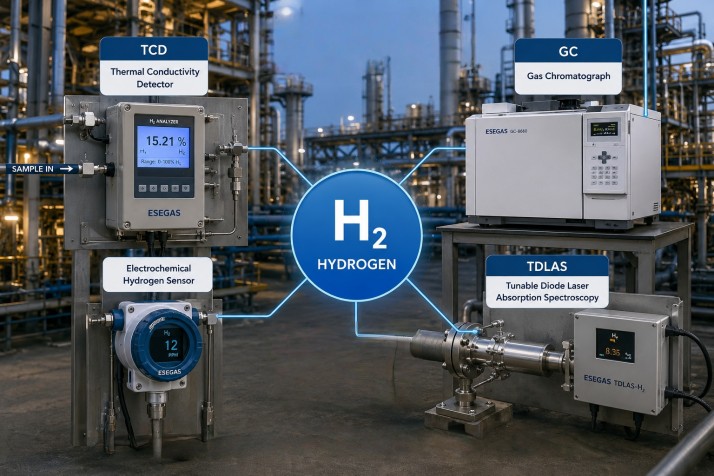
Hydrogen analyzer readings keep drifting, yet production targets remain unchanged. As a result, operators struggle with unstable processes, safety concerns,

Unexpected gas composition changes in CDQ systems can trigger explosions, equipment damage, and production shutdowns. Without a reliable continuous gas

In many industrial processes, oxygen is both necessary and dangerous. When oxygen concentration is not monitored accurately in reactors, storage

Industrial emission monitoring becomes far more difficult when flue gas contains moisture, acid gases, ammonia slip, nitrogen oxides, carbon compounds,

H2S is not a gas that industrial operators can afford to underestimate. It may appear in only trace amounts, yet

Unexpected CO spikes can turn a cement kiln ESP into a serious explosion risk. Without continuous monitoring, plants face equipment

A single oxygen spike in converter gas can trigger an explosion, damage equipment, and endanger workers. Without fast and accurate

Ask For A Quick Quote !

We will contact you within 1 working day, please pay attention to the email with the suffix [email protected] .

[gravityform id="3" title="false" ajax="false"]