



Your gas analyzer passed yesterday but fails today. A missed bump test or overdue calibration can create false confidence, inaccurate readings, and serious safety risks.
A bump test for gas analyzer verifies that sensors and alarms respond to a known gas. Calibration verifies and adjusts measurement accuracy. A bump test confirms functionality, while calibration confirms accuracy. Both are required for reliable gas monitoring.
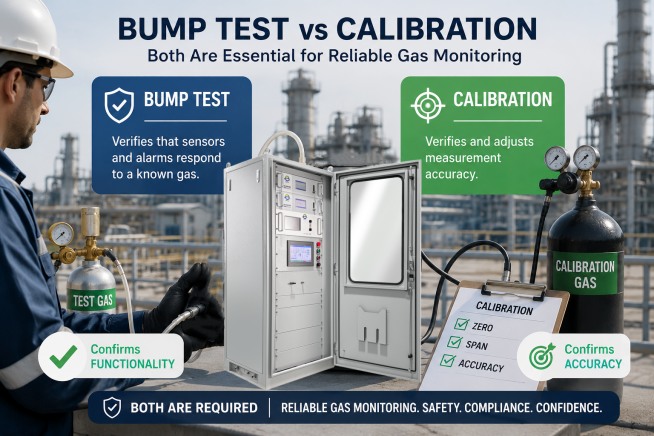
However, many users still confuse the two. Since both procedures use test gas, they often appear similar. In reality, they solve different problems and protect against different failures. Understanding the difference helps operators avoid costly mistakes and maintain trustworthy measurements.
What Is a Bump Test for Gas Analyzer?
A bump test is a quick functional check performed before using a gas analyzer. During the test, operators briefly expose the gas analyzer to a certified concentration of target gas. The purpose is simple: verify that the sensor responds and that alarms activate correctly. The procedure typically takes less than one minute.
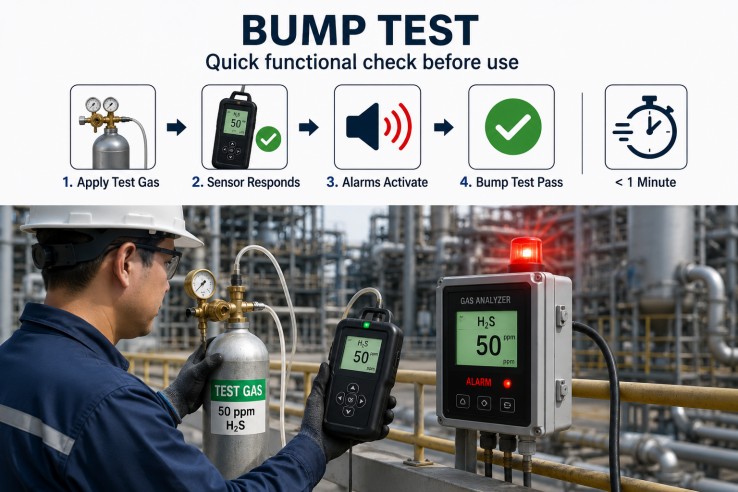
Think of a bump test as turning on a fire alarm and checking whether it sounds. The test confirms that the system works, but it does not verify whether the measurement is perfectly accurate.
| Bump Test Verify | Bump Test Cannot Verify |
|---|---|
| Sensor response | Measurement accuracy |
| Alarm activation | Sensor drift |
| Gas flow path integrity | Span errors |
| Sampling system functionality | Long-term stability |
| Basic response time performance | Compliance with calibration requirements |
| If the gas analyzer responds as expected, it passes. If the gas analyzer fails to react or triggers alarms incorrectly, it should not be used until further inspection or calibration is completed. | A gas analyzer can pass a bump test and still report incorrect gas concentrations. |
What Is Gas Analyzer Calibration?
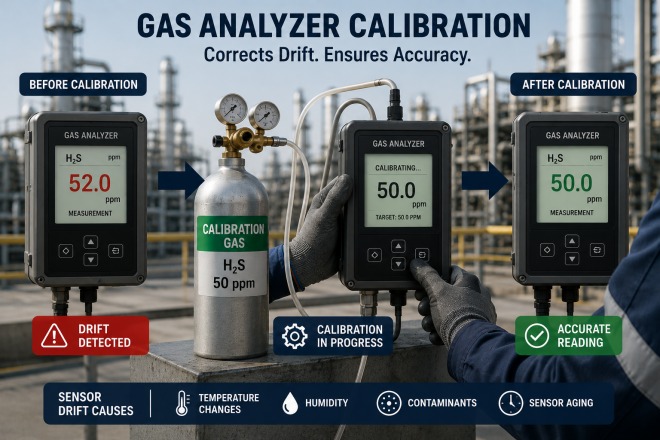
While a bump test checks functionality, calibration focuses on accuracy. Over time, all gas sensors experience drift. Exposure to temperature changes, humidity, contaminants, and normal aging gradually shifts sensor output. As a result, displayed readings may no longer match the actual gas concentration. Gas Analyzer calibration corrects this drift.
During calibration, technicians expose the gas analyzer to certified reference gas and adjust the instrument so that its reading matches the known concentration.
In simple terms:
- Bump test = “Does it work?”
- Calibration = “Is it accurate?”
How Calibration Works
Most calibration procedures include four steps:
- Zero adjustment
- Span gas application
- Sensor output correction
- Verification test
After calibration, the analyzer should display values that closely match the certified gas concentration. This process ensures reliable measurements for process control, emissions monitoring, and workplace safety.
What Is the Main Difference Between a Bump Test for Gas Analyzer and Calibration?
The easiest way to understand the difference is through comparison.
| Parameter | Bump Test | Calibration |
|---|---|---|
| Purpose | Verify operation | Verify and adjust accuracy |
| Uses test gas | Yes | Yes |
| Adjusts sensor output | No | Yes |
| Detects sensor failure | Yes | Yes |
| Corrects sensor drift | No | Yes |
| Typical duration | Less than 1 minute | 5–15 minutes |
| Result | Pass/Fail | Accuracy verification |
| Frequency | Before use or daily | Scheduled intervals |
The key distinction is that a bump test is a functional check, while calibration is a measurement adjustment process.
Can a Gas Analyzer Pass a Bump Test for Gas Analyzer Verification but Fail Accuracy Requirements?
Yes—and this happens more often than many operators realize.
Imagine a portable H₂S analyzer exposed to 25 ppm test gas. The sensor responds. The alarms activate. The gas analyzer passes the bump test. However, instead of displaying 25 ppm, it displays only 18 ppm. The instrument functions, but it is inaccurate. This situation occurs when sensor drift develops between calibration intervals. A bump test may not detect the problem, but calibration will.
Common Causes of Inaccuracy
Several factors can cause this situation:
- Sensor aging
- Exposure to corrosive gases
- Temperature fluctuations
- High humidity
- Sensor poisoning
- Mechanical damage
According to experienced instrumentation professionals, sensor poisoning remains one of the most overlooked causes of poor gas detector performance. A sensor may still react during a bump test while producing readings that are significantly lower than the actual gas concentration.
How Often Should You Perform a Bump Test for Gas Analyzer?
Frequency depends on the application, but industry guidance is generally clear.
For portable safety monitors, many manufacturers and safety organizations recommend performing a bump test before each day’s use. Daily bump testing is particularly important in:
- Oil and gas facilities
- Chemical plants
- Wastewater treatment plants
- Mining operations
- Confined-space entry applications
In these environments, gas hazards can develop quickly. A 30-second test can reveal sensor failures before workers enter hazardous areas.
How Often Should Gas Analyzer Calibration Be Performed?
Calibration frequency varies according to sensor technology, operating environment, regulatory requirements, and manufacturer recommendations. Many gas analyzers require calibration every 30 to 180 days. Harsh environments may require more frequent calibration schedules.
Immediate calibration is recommended when:
- A bump test fails
- Sensors are replaced
- Readings appear abnormal
- The analyzer experiences contamination
- Significant environmental changes occur
Rather than treating calibration as a fixed calendar event, many plants now use performance-based maintenance programs that combine scheduled calibration with routine bump testing.
What Common Mistakes Can Affect a Bump Test for Gas Analyzer Performance?
Even experienced operators occasionally make mistakes.
Mistake #1: Treating Bump Tests as Calibration
This is the most common misconception. A successful bump test does not prove measurement accuracy. It only proves that the analyzer responds.
Mistake #2: Using Expired Calibration Gas
Calibration gas has an expiration date for a reason. As gas mixtures age, their certified concentration can change. Using expired gas can produce inaccurate calibration results and false confidence in gas analyzer performance. OSHA specifically recommends using certified traceable gas before expiration.
Mistake #3: Ignoring Sensor Response Time
A gas sensor may eventually reach the correct reading but respond too slowly. In hazardous environments, response speed matters. Several field technicians recommend monitoring T90 response performance during routine maintenance because delayed response can indicate sensor degradation.
Mistake #4: Skipping Tests to Save Time
A bump test usually takes less than one minute. By contrast, a gas sensor failure can lead to production interruptions, regulatory violations, or worker exposure incidents.
How Do ESEGAS Gas Analyzers Support Reliable Bump Test and Calibration?
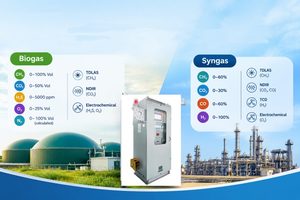
Reliable testing starts with stable gas analyzer technology. ESEGAS offers gas analyzers and gas monitoring systems based on multiple gas sensing technologies, including:
- NDIR for CO, CO₂, and CH₄
- TCD for H₂
- TDLAS for trace gas monitoring
- UV-DOAS for NOx, SO₂, and other reactive gases
- Zirconia or paramagnetic for O2
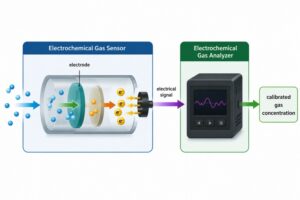
- Electrochemical for save cost and common use
These gas analyzers are designed for long-term stability, fast response, and simplified maintenance. For example, the ESEGAS IR-GAS-600 online gas analyzer supports zero/span calibration adjustment, RS485/Modbus communication, rapid response performance, and continuous industrial monitoring. Combined with proper bump testing and scheduled calibration, these features help maintain measurement reliability throughout the gas analyzer’s service life.
Conclusion
Bump test and calibration are both important. A bump test for gas analyzer confirms that sensors and alarms function properly, while calibration ensures measurement accuracy. Neither replaces the other.
For safety monitoring, emissions compliance, and process optimization, operators should view bump test and calibration as complementary procedures rather than competing options. Together, they create a complete verification strategy that reduces risk and improves confidence in every measurement.
For dependable gas monitoring, perform routine bump tests and scheduled calibrations. If you need help selecting or maintaining an industrial gas analyzer, contact ESEGAS for application-specific guidance and customized monitoring solutions.