



Struggling to capture CO₂ efficiently from complex emission sources? Discover how FTIR gas analyzer provides a precise, real-time solution to this urgent industrial challenge.
The FTIR gas analyzer offers real-time, multi-component detection of CO₂, making it a cornerstone in modern carbon capture systems across pre-combustion, oxy-fuel, and post-combustion processes.

While carbon capture technologies evolve rapidly, many industries remain unclear about how FTIR gas analyzers fit into these systems. Understanding this integration is key to maximizing efficiency, meeting regulatory standards, and moving toward decarbonization.
How does an FTIR gas analyzer detect carbon dioxide?
In any carbon capture system, accurate gas detection is the foundation of operational success. Whether you’re separating CO₂ from synthesis gas or monitoring flue gases post-combustion, the ability to track gas concentrations in real-time determines how efficiently and safely the system performs. Without precise monitoring, over-absorption, system imbalances, and even safety risks may occur.
The FTIR gas analyzer—based on Fourier Transform Infrared Spectroscopy—detects CO₂ by analyzing its unique infrared absorption signature. Each gas molecule absorbs infrared light at specific wavelengths. When a gas sample passes through the analyzer’s optical chamber, the system detects how much IR light is absorbed at various wavelengths. This absorption pattern is then matched against a spectral database to identify and quantify the gases present, including CO₂, H₂O, CO, NOx, and other relevant compounds.
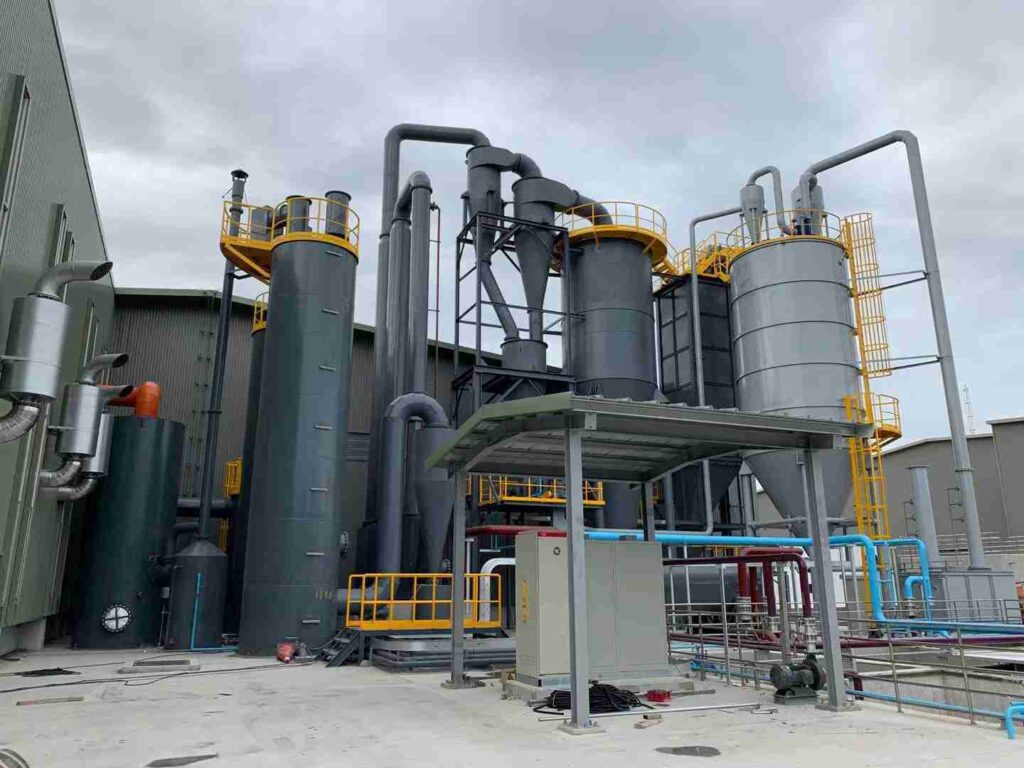
This makes FTIR gas analyzer highly suited to carbon capture applications, where gas streams often contain multiple components. Unlike single-gas sensors, FTIR can provide a complete gas profile in one scan, which is critical when monitoring efficiency, process changes, or potential leaks in real time.
In which carbon capture scenarios is FTIR commonly used?
CO₂ capture technologies can generally be classified into three main categories: pre-combustion, oxy-fuel combustion, and post-combustion. Each method has its unique challenges in terms of gas composition, temperature, pressure, and system complexity—making gas analysis a non-trivial task. The FTIR gas analyzer proves to be highly adaptable across these different scenarios.
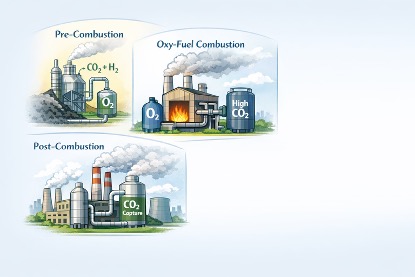
1. Pre-combustion CO₂ capture:
Used primarily in IGCC (Integrated Gasification Combined Cycle) systems, pre-combustion involves converting coal into syngas (a mixture of CO and H₂) through gasification, followed by a water-gas shift reaction that converts CO into CO₂ and more H₂. The resulting gas mixture is rich in both hydrogen (as a usable fuel) and CO₂ (to be captured). Because the CO₂ here exists under high pressure and in relatively high concentrations, it is easier to separate. The FTIR gas analyzer can continuously monitor both CO₂ and H₂ concentrations in syngas, ensuring optimal conversion rates and capturing conditions. Additionally, its ability to handle high-pressure environments and detect multiple gases simultaneously reduces the need for multiple instruments.
2. Oxy-fuel combustion:
This method involves burning fuel in nearly pure oxygen rather than air, thus eliminating most nitrogen from the combustion process. The result is a flue gas that primarily consists of CO₂ and water vapor, which can be easily condensed and separated. However, the combustion process must be tightly controlled due to high flame temperatures and increased corrosion risks. The FTIR gas analyzer plays a crucial role by continuously monitoring flue gas composition, particularly the CO₂, O₂, and residual NOx levels. By analyzing these components in real time, operators can adjust oxygen supply, flue gas recirculation, and combustion parameters to maintain safe and efficient operation.
3. Post-combustion CO₂ capture:
This is the most commonly used method, particularly in retrofitted coal and gas power plants. It involves capturing CO₂ from the flue gas after combustion has occurred. The flue gas is typically treated with chemical solvents like monoethanolamine (MEA), which absorbs CO₂. Later, the solvent is heated to release the captured CO₂ for compression and storage. Post-combustion presents the most complex gas environment due to the presence of SO₂, NOx, water vapor, and other contaminants. The FTIR gas analyzer excels here by providing real-time feedback on CO₂ concentrations before and after the absorber, allowing operators to monitor the solvent efficiency and ensure compliance with emission standards. It can also detect trace gases that may indicate solvent degradation or leaks.
What advantages does FTIR offer over other gas analysis methods?
While technologies like NDIR (Non-Dispersive Infrared), gas chromatography, and paramagnetic sensors have traditionally been used for gas analysis, they each come with limitations. NDIR, for instance, is typically limited to one or two gases at a time, and requires frequent calibration. Gas chromatography offers high accuracy but lacks real-time capability and is not suited for continuous emission monitoring. Paramagnetic sensors are highly selective but limited to oxygen measurement.
In contrast, the FTIR gas analyzer combines real-time detection with multi-gas capability, offering unmatched versatility for complex emissions. Its key advantages include:
- Multi-component analysis: Simultaneously detect CO₂, CH₄, CO, NOx, SO₂, H₂O, and others in a single scan.
- High selectivity and sensitivity: It can differentiate gases with overlapping spectra thanks to advanced algorithms and spectral libraries.
- Non-contact, low-maintenance design: Optical analysis reduces wear and drift, minimizing the need for recalibration and consumables.
- Fast response time: Provides near-instantaneous readings, essential for process optimization and safety.
- Industrial compatibility: Robust design for high temperature, pressure, and corrosive environments often found in CCS systems.
These features make FTIR gas analyzers not just analytical instruments, but central components of control and automation systems in carbon capture facilities.
How is FTIR integrated into pre-, oxy-fuel, and post-combustion capture systems?
Integration is critical in industrial applications, where instrumentation must seamlessly interface with process control systems. The FTIR gas analyzer offers multiple integration options, including analog/digital I/O, Modbus, Profibus, and Ethernet protocols, allowing it to communicate with distributed control systems (DCS) or programmable logic controllers (PLC).
In pre-combustion systems, FTIR units are installed downstream of the water-gas shift reactor to monitor syngas purity. The data ensures the correct stoichiometry for the shift reaction and verifies that CO₂ levels are high enough for economical capture. Real-time monitoring helps detect catalyst degradation or process deviations early.
In oxy-fuel systems, FTIR is placed in the flue gas line to verify that CO₂ concentrations remain at target levels, typically above 70%. It also helps manage oxygen flow and minimize excess air, improving overall combustion efficiency and lowering operational cost.
In post-combustion setups, FTIR is used both upstream and downstream of the CO₂ absorber columns. Upstream, it provides data on raw flue gas composition; downstream, it verifies the efficiency of CO₂ removal and solvent regeneration. This dual monitoring is essential for maintaining solvent life, reducing energy use, and achieving environmental compliance.
Additionally, FTIR analyzers with heated sampling systems can handle moisture-laden gases without condensation or spectral interference—ideal for humid flue gases.
Conclusion
As the pressure to decarbonize intensifies, industries must adopt not only effective CO₂ capture technologies but also the precise monitoring tools that enable them. The FTIR gas analyzer stands out as an essential instrument in this effort. Its ability to perform real-time, multi-gas analysis with high accuracy and robustness across various capture technologies makes it a cornerstone of any modern carbon capture strategy. Whether in IGCC plants, oxy-fuel systems, or post-combustion retrofits, FTIR is not just monitoring the future of energy—it’s helping shape it.