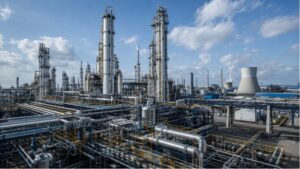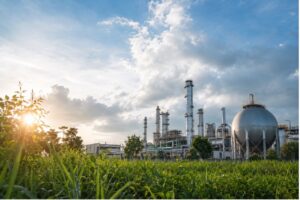




The Hidden Emission Problem Slowing Down Your Steel Plant. Struggling to meet environmental regulations while trying to maximize furnace efficiency? You’re not alone. Steel manufacturing releases complex gases under extreme conditions. A Laser Gas Analyzer might be the breakthrough your operations need.
Laser Gas Analyzers offer real-time, non-contact gas detection that helps steel manufacturers accurately control emissions and optimize critical reaction conditions for efficient and compliant production.
Not All Analyzers Are Equal — Why Steel Plants Are Switching to Laser Technology
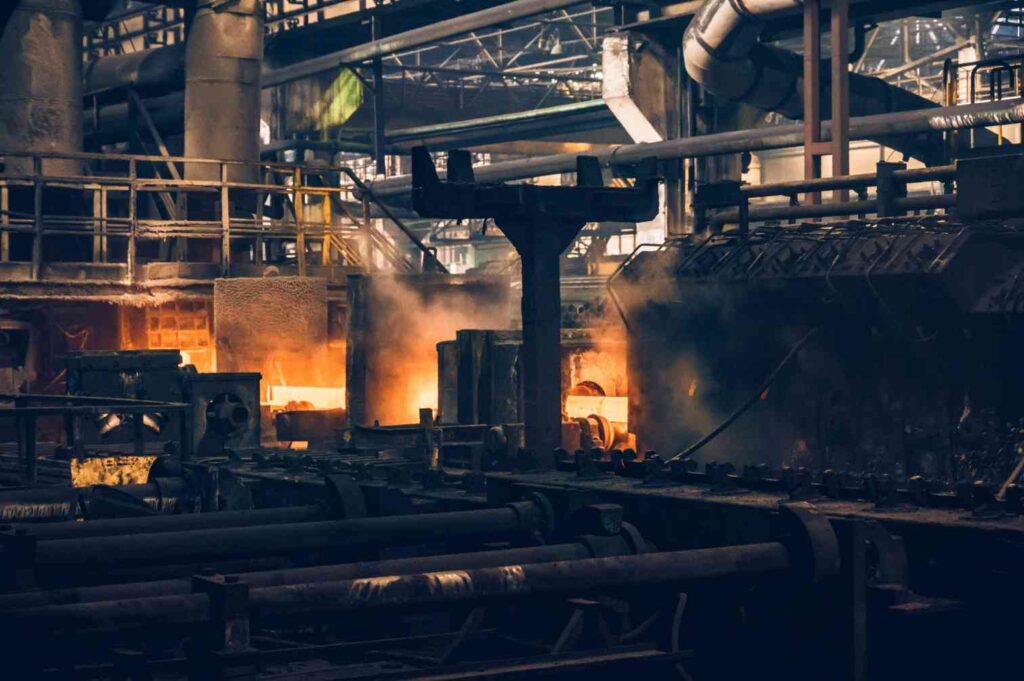
Traditional analyzers have long been the industry standard, but they are slow, maintenance-heavy, and often imprecise. As steel production grows more regulated and competitive, decision-makers are turning to Laser Gas Analyzer systems for smarter, faster solutions. Let’s explore exactly how they work and where they provide value.
What Are the Key Applications of Laser Gas Analyzers in the Steel
Manufacturing is an energy-intensive process that involves the generation and transformation of various gases at multiple high-temperature stages. Monitoring these gases is essential for both process optimization and emissions control, yet traditional gas analyzers often fall short in terms of accuracy, speed, and durability.
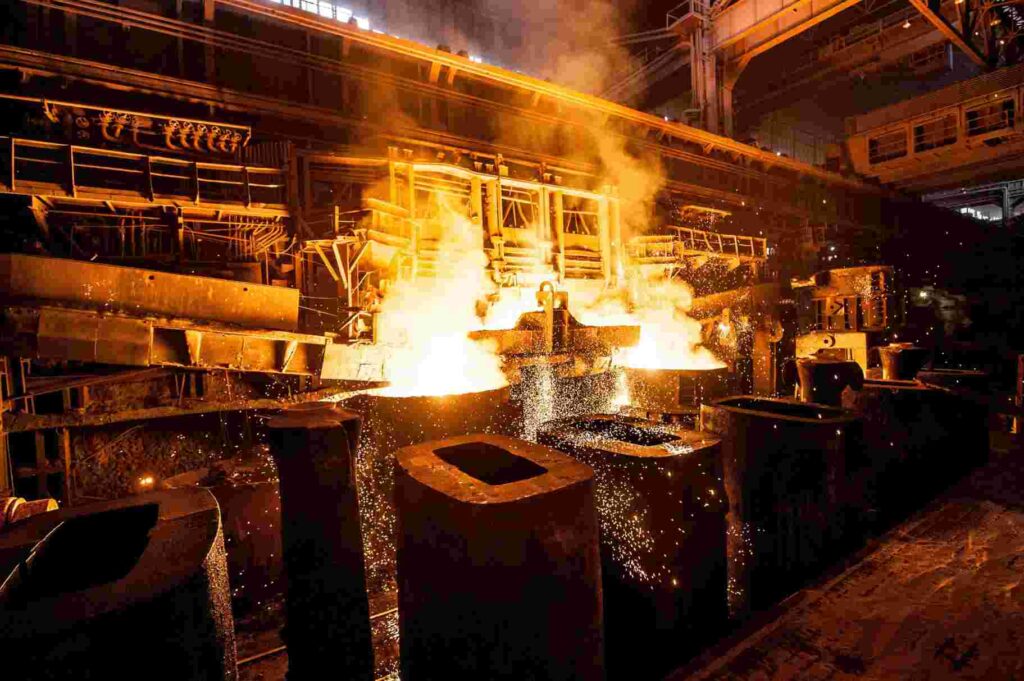
Delayed or inaccurate gas measurements can lead to inefficient combustion, excessive pollutant formation, and violations of environmental standards. Steel producers require fast, reliable gas detection solutions that can withstand extreme industrial environments and provide actionable data in real time.
The Laser Gas Analyzer offers an advanced, contactless method to measure specific gas concentrations instantly and continuously. This technology—typically based on Tunable Diode Laser Absorption Spectroscopy (TDLAS)—is highly selective, stable, and ideal for the harsh and dusty conditions common in steel plants. Its key application areas include:
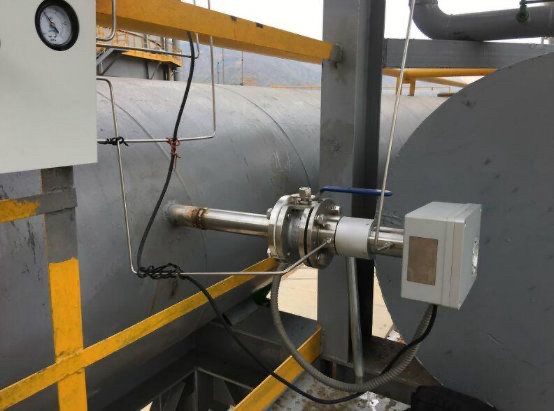
1. Blast Furnace Top Gas Analysis
In a blast furnace, iron ore is reduced with coke under high temperatures, generating top gas composed of CO, CO₂, H₂, and N₂. Monitoring this gas is critical for thermal balance and fuel efficiency.
- Laser Gas Analyzers allow continuous measurement of CO and CO₂ levels at the furnace top, enabling operators to adjust the burden and oxygen enrichment strategies accordingly.
- Real-time feedback improves fuel efficiency, prevents overblowing, and ensures optimal use of reducing agents.
2. Basic Oxygen Furnace (BOF) Off-Gas Monitoring
The BOF process involves blowing oxygen into molten iron, producing intense reactions and gas emissions such as CO and O₂.
- Laser Gas Analyzers are used to monitor CO concentration during the blow, which helps determine the end point of the oxygen blow and optimize steel quality.
- This non-intrusive measurement eliminates the lag and errors associated with probe-based systems and supports better slag management and reduced reblowing times.
3. Sintering and Pelletizing Process Control
During sintering, fine iron ores are agglomerated under high temperature with the release of NOx, SO₂, and CO.
- Real-time NOx and CO monitoring using Laser Gas Analyzer systems helps regulate combustion efficiency, reduce NOx formation, and ensure uniform sinter quality.
- These analyzers are installed in stack ducts or process flues, with built-in self-cleaning optics to resist dust and corrosion.
4. Flue Gas Desulfurization (FGD) and Denitrification (DeNOx)
To meet emissions standards, many steel plants implement scrubbing systems for SO₂ and NOx removal.
- Laser Gas Analyzers provide precise inlet and outlet gas readings for FGD and DeNOx units, supporting automated reagent control (e.g., lime or ammonia injection).
- This helps prevent overuse of chemicals, reduce operational costs, and maintain compliance with environmental regulations.
5. Coke Oven Gas Monitoring
Coke oven gas is a byproduct rich in combustible gases like CH₄, H₂, and CO, and requires careful monitoring before reuse or flaring.
- A Laser Gas Analyzer ensures the precise measurement of CO and CH₄ to detect leaks or combustion inefficiencies.
- The analyzer’s fast response time is particularly useful in safety-critical applications where explosive gases are present.
6. Stack Emission Monitoring
As part of Continuous Emissions Monitoring Systems (CEMS), steel plants must monitor gases like NOx, SO₂, and CO₂ at the final stack.
- Laser Gas Analyzers offer a reliable and low-maintenance alternative to traditional CEMS, delivering accurate emissions data to meet regulatory requirements.
- Their fast response time allows for better process tuning and regulatory reporting.
Summary of Application Benefits:
| Application Area | Gases Measured | Benefit |
| Blast Furnace | CO, CO₂ | Optimize combustion & reduce coke consumption |
| BOF | CO, O₂ | Improve steel quality & reduce cycle time |
| Sintering | CO, NOx | Ensure sinter uniformity & lower NOx |
| FGD/DeNOx | SO₂, NOx | Precise reagent dosing & cost savings |
| Coke Oven | CO, CH₄ | Safety monitoring & energy recovery |
| Stack Emissions | NOx, SO₂, CO₂ | Legal compliance & emission reduction |
By integrating Laser Gas Analyzer systems into each of these stages, steel manufacturers can gain complete control over their gas-related processes. This leads to not only better product consistency but also reduced environmental impact and improved profitability.
How Do Laser Gas Analyzers Outperform Traditional Methods?
The difference is in the technology. Conventional gas analyzers require sampling systems, filters, and chemical processing, which introduce errors and delays.
Manual sampling is labor-intensive and often fails in extreme environments.
These outdated systems lead to high maintenance costs and inconsistent data.
Laser Gas Analyzer devices offer in-situ, contactless measurement with minimal drift. Their precision stems from targeting specific absorption wavelengths, ensuring high selectivity even in mixed-gas environments. With no moving parts and no consumables, their long-term cost efficiency is unmatched.
Are Laser Gas Analyzers Reliable in Harsh Steel Plant Conditions?
Steel manufacturing environments are among the most extreme in any industry—characterized by high temperatures, dense dust, corrosive gases, and intense vibration. Many gas analysis systems struggle to survive in these conditions, leading to frequent breakdowns and unreliable data.
Traditional analyzers rely on sampling lines, filters, and sensors that easily clog, corrode, or drift in accuracy. This results in downtime, increased maintenance, and gaps in critical process or emissions monitoring—often when the data is needed most.
The Laser Gas Analyzer is engineered specifically for harsh industrial applications like steel production. With advanced optical design, rugged enclosures, and automated self-maintenance features, it delivers stable and accurate performance even in the toughest plant environments.
Laser Gas Analyzers are highly reliable in high-temperature, high-dust, and corrosive environments. Designed with robust housing, purged optical paths, and non-contact sensing, they maintain long-term accuracy and minimize maintenance in steel plants.
Built for Extremes: Key Design Features That Ensure Reliability
Unlike conventional analyzers, which depend on gas extraction and conditioning systems, the Laser Gas Analyzer uses in-situ, non-contact measurement. This means the sensor components are physically isolated from hot and dirty process gases. Instead, a laser beam is transmitted across a duct, furnace, or stack to measure gas concentration based on specific absorption lines.
Summary Table: How Laser Gas Analyzers Withstand Harsh Environments
| Environmental Factor | Challenge | Laser Gas Analyzer Solution |
| High Dust | Optical fouling, signal loss | Purged optics, self-cleaning |
| Extreme Heat | Sensor damage, drift | Non-contact probes, heat-resistant housings |
| Corrosive Gases | Sensor degradation | Inert gas shielding, corrosion-resistant materials |
| Vibration | Mechanical failure | Solid-state design, no moving parts |
| Remote Location | Difficult access | Remote monitoring & diagnostics |
What Are the Economic Benefits for Steel Producers?
Steel companies operate on tight margins and must justify every capital expense.
Frequent maintenance and inefficient combustion waste both time and fuel.
Laser technology reduces unplanned downtime and improves energy efficiency. Operators can optimize combustion in real time, minimize reagent overuse in scrubbers, and avoid penalties for emissions breaches. Some plants report up to 15% energy savings after integration.
Do Laser Gas Analyzers Support Compliance with Modern Emission Regulations?
Global environmental standards are tightening. Steel producers face increased scrutiny over NOx, SO₂, and particulate emissions, with hefty fines for violations.
Meeting evolving standards with outdated equipment is nearly impossible.
Falling behind on compliance means risking shutdowns or reputational damage.
Laser Gas Analyzer systems support real-time reporting and integration with digital environmental monitoring platforms. They provide the precision and speed necessary to stay within limits set by the EU Industrial Emissions Directive, U.S. EPA MACT standards, and China’s GB regulations.
Conclusion
The Laser Gas Analyzer is no longer just an upgrade — it’s a strategic investment. For steelmakers looking to enhance efficiency, reduce emissions, and future-proof their operations, laser-based gas analysis offers unmatched performance and reliability.