TDL Gas Analysis System ESE-LASER-200WM

TDL Gas Analysis System ESE-LASER-200WM

TDL Gas Analysis System ESE-LASER-200WM

Introduction

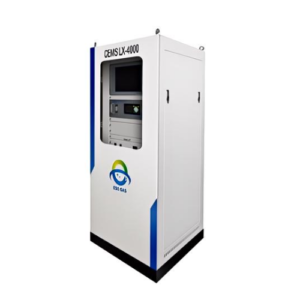
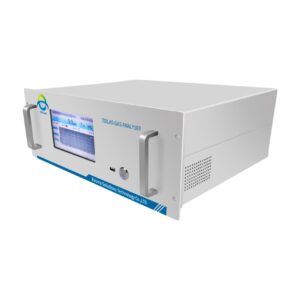
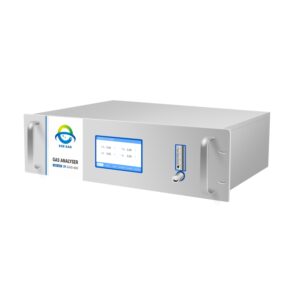
TDL gas analysis system ESE-LASER series uses the whole process of high temperature combined heat extraction to monitor HCl/HF/NH3 gas in sample gas.The system consists of a sampling unit, a transmission unit, a preprocessing unit, a control unit, and an analysis unit. The analysis unit uses TDLAS technology.

Based on the principle of tunable laser absorption spectroscopy (TDLAS), laser gas analyzer scans and analyzes the gas absorption spectrum lines of specific wavelength, and realizes the gas concentration measurement by combining the digital lock-in amplifier and the advanced technology such as long path gas chamber. ESE-LASER series can realize high resolution, high precision, stable and reliable measurement of trace gases, and meet the requirements of process analysis and environmental detection.


Applications

  • SCR, incineration & combustion processes
  • Emission monitoring: Power generation, engine development, waste incineration furnaces
  • Environmental monitoring: Landfill & green-house gases, livestock, …
  • Chemical engineering: Production control & monitoring…
  • Safety: Leak detection, refrigeration, toxic gases, .
  • Climate control & monitoring: Livestock, climate chambers & rooms
A TDL gas analysis system uses Tunable Diode Laser Absorption Spectroscopy to monitor and measure gas concentrations in real time. Moreover, it fits industrial, environmental, and research settings perfectly.

Application Tips:

  • Choose the Right Wavelength: Match laser tuning to your target gas.
  • Optimize Sample Flow: Keep flow rates steady for stable readings.
  • Schedule Regular Calibration: Maintain accuracy over the long term.
  • Follow Industry Standards: Comply with EPA, ISO, or other relevant regulations.

Key components and features:

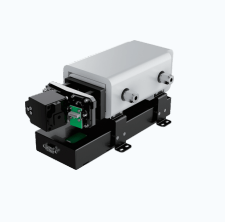
  • Laser Source : The system incorporates a tunable diode laser as the light source. The laser emits light at specific wavelengths that correspond to the absorption lines of the target gas to be analyzed.
  • Gas Measurement Cell : A gas measurement cell or sample chamber is used to contain the gas sample being analyzed. The laser beam passes through this cell, and the gas molecules absorb specific wavelengths of light based on their concentration.
  • Detector : A photodetector or photodiode detects the intensity of the laser light after it has passed through the gas sample. The detector measures the amount of light absorbed by the gas, which is used to determine the gas concentration.
  • Optical Path and Beam Alignment : The system includes an optical path that ensures the laser beam passes through the gas sample cell accurately. Beam alignment is crucial to optimize the measurement accuracy and stability.
  • Signal Processing and Analysis : The detected signal is processed and analyzed to calculate the concentration of the target gas. This involves comparing the absorbed light intensity to a reference measurement and applying calibration algorithms to obtain accurate results.
  • Data Display and Communication : TDL laser gas analysis systems often include displays to show real-time gas concentrations and system status. They may also have communication interfaces for data logging, remote monitoring, and integration with control systems.

Key Advantages:

  • Ultra‑fast Response: Get updated readings in under one second.
  • High Selectivity: Target trace gases without cross‑interference.
  • Wide Dynamic Range: Measure from parts‑per‑million to percent levels.
  • Robust Performance: Operate in harsh, high‑temperature, or dusty environments
 

Specification

Measured gas HCL/HF/NH3
Method Tunable Diode Laser Spectrometry (TDLAS)
Range HCL/HF: 0-50ppm,0-100ppm,0-500ppm( Customized)

NH3:Above 20ppm

Accuracy ± 1% full scale reading depending on integration stability (temperature & pressure)
Precision 1ppm
Displayed resolution 0.1ppm
Response time Less than 15S (at gas flow rate of 3 L/min)
Sampling Gas Temperature ≥180℃
Analog Output 4`20mA DC, Insulating output, maximum load is 900 ohm,
Digital Output RS232/485
Power Supply 90-240VAC / 50/60Hz 120W
Warm up time 30 minutes
Interface RS232
Ambient Temperature Temp:-10-50℃       Humidity:0-90%RH
Dimension 760(H)×500(L)×255(W)mm(analysis cabinet)

700(H)×450(L)×210(W)mm(control cabinet)

1. What is a TDLAS Gas Analysis System?

A TDLAS Gas Analysis System (Tunable Diode Laser Absorption Spectroscopy) is an advanced gas measurement technology that uses a laser tuned to a specific wavelength to detect gas molecules. By measuring how the gas absorbs the laser light, the system can accurately determine the gas concentration in real time. TDLAS systems are widely used in industrial process monitoring and emission control.

2. What gases can be measured by a TDLAS gas analyzer?

A TDLAS Gas Analysis System can measure a variety of gases, including:

  • NH₃ (Ammonia)
  • HCl (Hydrogen Chloride)
  • HF (Hydrogen Fluoride)
  • CH₄ (Methane)
  • CO (Carbon Monoxide)
  • CO₂ (Carbon Dioxide)
  • H₂S (Hydrogen Sulfide)
  • O₂ (Oxygen)
  • H₂O (Moisture)

The measurable gases depend on the laser wavelength used in the analyzer.

3. What are the advantages of using a TDLAS gas analysis system?

The TDLAS gas analysis system offers several advantages:

  • High measurement accuracy
  • Fast response time
  • Strong selectivity for target gases
  • Minimal cross-interference
  • Low maintenance requirements
  • Suitable for harsh industrial environments

These advantages make TDLAS one of the most reliable technologies for gas monitoring.

4. What industries use TDLAS Gas Analysis Systems?

A TDLAS gas analysis system is widely used in industries such as:

  • Power plants
  • Cement plants
  • Steel and metallurgical industries
  • Petrochemical plants
  • Waste incineration facilities
  • Chemical manufacturingplants

These industries require accurate gas monitoring to optimize processes and meet environmental regulations.

5. What are the main applications of a TDLAS Gas Analysis System?

Common applications of a TDLAS gas analysis system include:

  • Ammonia slip monitoring in SCR/SNCR systems
  • Flue gas emission monitoring
  • Process gas analysis
  • Combustion optimization
  • Safety monitoring in industrial processes

6. Why is a TDLAS Gas Analysis System suitable for harsh environments?

A TDLAS gas analysis system uses optical laser measurement and does not require direct contact with the gas sample. This allows it to operate reliably in environments with high temperature, high dust concentration, and corrosive gases, making it ideal for industrial stacks and process lines.

7. What is the measurement range of a TDLAS Gas Analysis System?

A TDLAS gas analysis system can measure gas concentrations from parts-per-billion (ppb) to percentage levels, depending on the optical path length and system configuration. This wide measurement range makes it suitable for both trace gas detection and high-concentration process monitoring.

8. How accurate is a TDLAS Gas Analysis System?

A TDLAS gas analysis system provides very high accuracy because it measures the specific absorption spectrum of a target gas. This reduces cross-interference from other gases and ensures stable and reliable long-term measurements.

9. How do you choose the right TDLAS Gas Analysis System?

When selecting a TDLAS gas analysis system, important factors include:

  • Target gas typeand your application
  • Measurement range
  • Process temperature and pressure
  • Installation location (in-situ or extractive)
  • Maintenance requirements
  • Integration with existing monitoring systems

Choosing the right system ensures accurate measurements and long-term operational stability.

Still having questions? Please just contact us directly!

Please enable JavaScript in your browser to complete this form.

Applications

  • SCR, incineration & combustion processes
  • Emission monitoring: Power generation, engine development, waste incineration furnaces
  • Environmental monitoring: Landfill & green-house gases, livestock, …
  • Chemical engineering: Production control & monitoring…
  • Safety: Leak detection, refrigeration, toxic gases, .
  • Climate control & monitoring: Livestock, climate chambers & rooms

A TDL gas analysis system uses Tunable Diode Laser Absorption Spectroscopy to monitor and measure gas concentrations in real time. Moreover, it fits industrial, environmental, and research settings perfectly.

Application Tips:

  • Choose the Right Wavelength: Match laser tuning to your target gas.
  • Optimize Sample Flow: Keep flow rates steady for stable readings.
  • Schedule Regular Calibration: Maintain accuracy over the long term.
  • Follow Industry Standards: Comply with EPA, ISO, or other relevant regulations.

Key components and features:

  • Laser Source : The system incorporates a tunable diode laser as the light source. The laser emits light at specific wavelengths that correspond to the absorption lines of the target gas to be analyzed.
  • Gas Measurement Cell : A gas measurement cell or sample chamber is used to contain the gas sample being analyzed. The laser beam passes through this cell, and the gas molecules absorb specific wavelengths of light based on their concentration.
  • Detector : A photodetector or photodiode detects the intensity of the laser light after it has passed through the gas sample. The detector measures the amount of light absorbed by the gas, which is used to determine the gas concentration.
  • Optical Path and Beam Alignment : The system includes an optical path that ensures the laser beam passes through the gas sample cell accurately. Beam alignment is crucial to optimize the measurement accuracy and stability.
  • Signal Processing and Analysis : The detected signal is processed and analyzed to calculate the concentration of the target gas. This involves comparing the absorbed light intensity to a reference measurement and applying calibration algorithms to obtain accurate results.
  • Data Display and Communication : TDL laser gas analysis systems often include displays to show real-time gas concentrations and system status. They may also have communication interfaces for data logging, remote monitoring, and integration with control systems.

Key Advantages:

  • Ultra‑fast Response: Get updated readings in under one second.
  • High Selectivity: Target trace gases without cross‑interference.
  • Wide Dynamic Range: Measure from parts‑per‑million to percent levels.
  • Robust Performance: Operate in harsh, high‑temperature, or dusty environments


Ask For A Quick Quote !

We will contact you within 1 working day, please pay attention to the email with the suffix [email protected] .

Get An Quote

We’ll send you the catalog as soon as you submit your email