



Snippet
Carbon capture systems in glass factories protect CO₂ purity by combining flue gas cleaning, continuous monitoring, and responsive control. Flue gas from glass furnaces carries CO₂, O₂, and pollutants like SOx and NOx, and its composition shifts with combustion and temperature changes . With gas analyzers, operators track CO₂, O₂, CO, SO₂, and NO₂ in real time, adjust combustion conditions, reduce impurities, and keep the process stable.
This matters because glass furnace flue gas is never steady. Changes in fuel, raw materials, and air leakage can quickly dilute CO₂ and affect capture performance . Real-time data allows operators to respond fast, maintain consistent CO₂ concentration, and deliver high-purity CO₂ for downstream use.
Why Is CO₂ Purity So Difficult to Control in Glass Factory Carbon Capture Systems?

European glass factories are under growing pressure to reach carbon neutrality and enable CO₂ reuse. Carbon capture has become a key pathway, but the real challenge goes beyond simple CO₂ removal. Operators need stable, high-purity CO₂ that meets downstream requirements. What factors affect capture performance?
Complex and Dynamic Flue Gas Composition Affect CO₂ Capture
Flue gas in glass furnaces changes constantly, which makes carbon capture harder to control. Its composition depends on batch chemistry, cullet ratio, furnace design, and combustion mode. For example, air-fuel systems introduce large amounts of nitrogen, while oxy-fuel systems increase CO₂ concentration but shift thermal behavior . At the same time, air leakage and unstable combustion can further disturb gas balance, causing CO₂ levels to rise or fall unexpectedly. Even small variations in operation can lead to noticeable fluctuations in gas composition.
When excess air enters the furnace, O₂ levels increase and dilute CO₂ concentration. This dilution forces the capture system to handle larger gas volumes with lower CO₂ content. As a result, operators face higher energy demand and reduced capture efficiency. In some cases, air infiltration alone can significantly impact overall furnace efficiency and gas composition . This dynamic behavior makes stable CO₂ recovery much more difficult than in steady industrial processes.
Multiple Pollutants Interfere with Carbon Capture Performance
Glass furnace flue gas contains more than just CO₂, and these extra components create real challenges. Along with CO₂ and O₂, the gas stream often includes CO, NOx, SOx, and fine particulates formed during high-temperature combustion . These pollutants do not simply pass through the system, but actively interfere with capture performance and downstream processing.
Acid gases like SO₂ and NOx can degrade solvents used in absorption systems, reducing their lifetime and efficiency. Particulates and volatile compounds can foul equipment, increase maintenance needs, and disrupt purification stages. Over time, these effects raise operational costs and reduce system reliability. This is why carbon capture in glass factories requires not only separation technology, but also precise gas analysis and control to manage impurities effectively.
This is exactly why users search for better solutions. They want to understand why CO₂ purity drops, how to improve capture efficiency, and how to design a system that fits their furnace. Just as important, they want to know how real-time gas analysis and monitoring can turn unstable flue gas into a controlled, optimized process.
How Do Flue Gas Dynamics Directly Impact CO₂ Purity in Glass Factories?
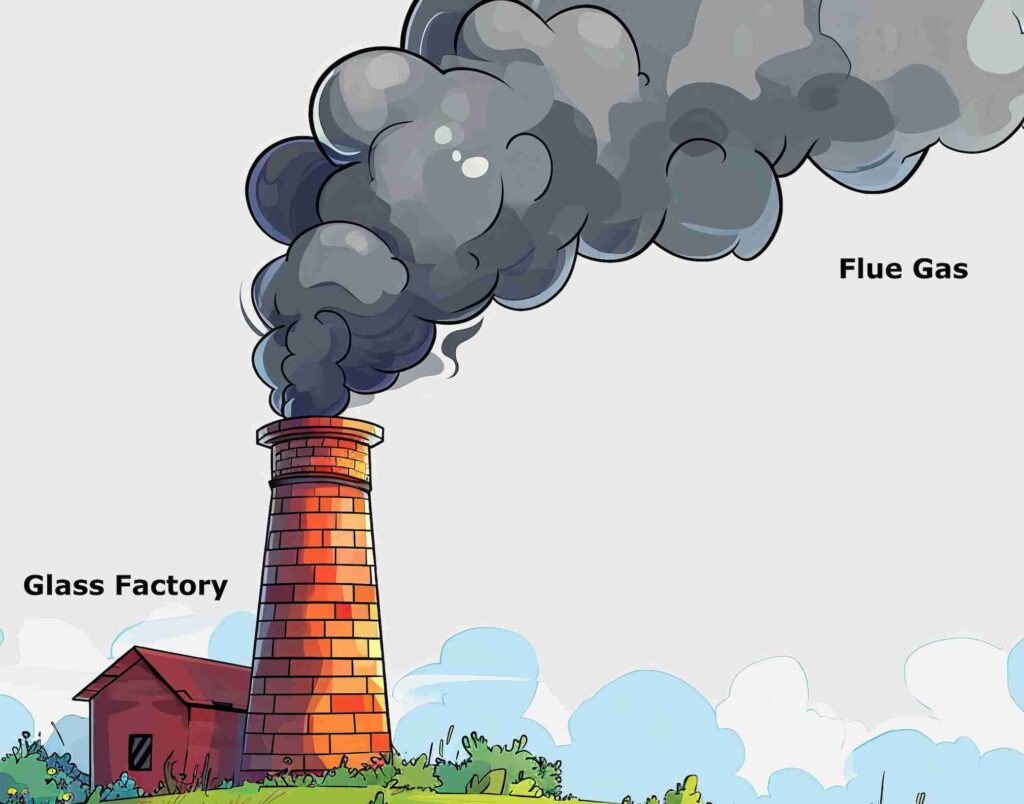
Combustion Efficiency Shape CO₂ Quality
Combustion conditions directly define the quality of CO₂ entering the capture system. When combustion is incomplete, CO levels rise and indicate poor fuel utilization. At the same time, excess air increases O₂ content and dilutes CO₂ concentration. This dilution forces the capture system to process more gas with less usable CO₂. In industrial flue gas, CO₂ concentration can already vary widely, often between 5% and 25% , so any additional dilution quickly reduces efficiency.
Stable combustion creates a more consistent gas composition and improves capture performance. When operators control air-to-fuel ratio precisely, CO₂ concentration stays stable and easier to process. This balance reduces energy demand and supports higher purity output. In practice, combustion stability is not just a furnace issue, but a key factor for carbon capture success.
Temperature, Flow, and Moisture Affect CO₂ Capture
Glass furnace flue gas carries high thermal energy, but it also brings challenges. Along with CO₂, the gas stream contains water vapor and volatile compounds formed at high temperature. As flue gas cools, chemical composition can shift and certain components may condense or react . These changes can affect downstream equipment and gas quality.
If gas conditioning is not well controlled, moisture and impurities can reduce absorber efficiency. High humidity can dilute CO₂ partial pressure, while volatile species may interfere with separation processes. Flow variations add another layer of complexity by changing residence time and reaction conditions. Together, these factors make stable CO₂ capture harder to maintain.
Real-Time Monitoring Essential for Stable Operation
Flue gas conditions in glass factories never stay constant. They shift with production load, fuel switching, and furnace aging. Even small air leaks or raw material changes can alter gas composition and impact capture efficiency. Without continuous data, operators cannot detect these changes in time.
Real-time monitoring provides a clear view of process conditions as they evolve. It allows operators to respond quickly, adjust combustion, and stabilize CO₂ concentration. Without it, the system runs on assumptions rather than facts. In practice, that means lower efficiency, unstable purity, and higher operating costs.
What Role Do Gas Analyzers Play in Carbon Capture Systems for Glass Factories?
Multi-Point Gas Analysis Improve Process Visibility
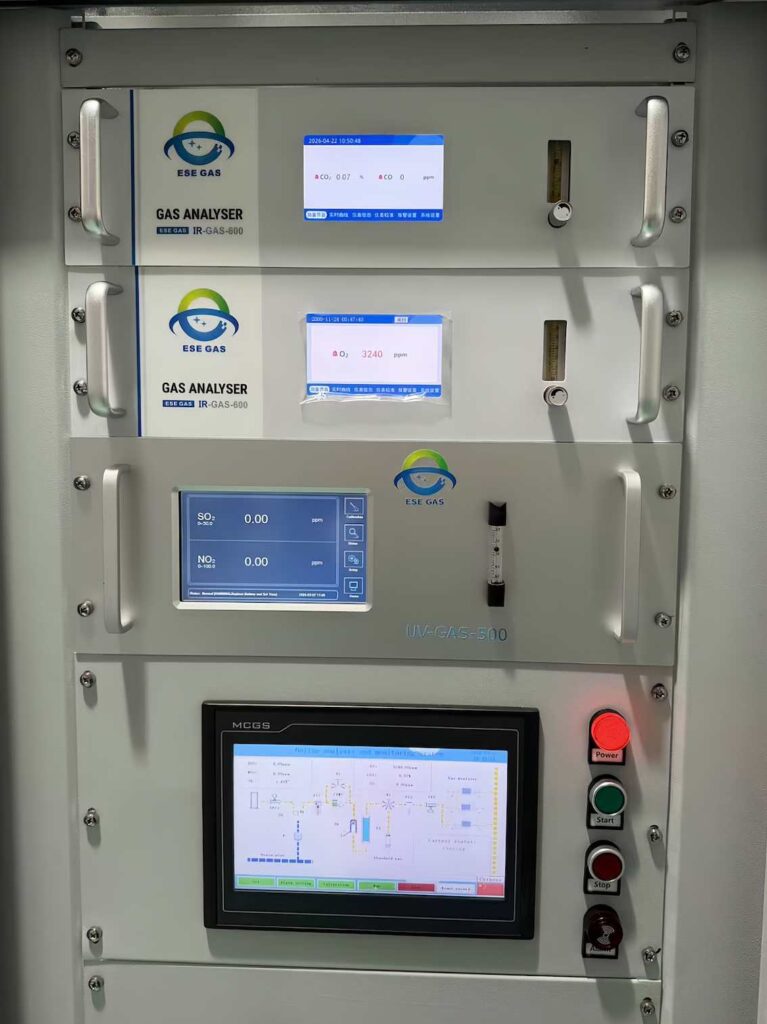
Gas analyzers give operators a clear view of what happens across the entire capture process. Sampling probes are placed at key points, including the raw flue gas inlet, after pre-treatment, and before and after CO₂ separation. This setup tracks how gas composition changes at each stage instead of relying on a single measurement point. Flue gas typically contains CO₂, O₂, and CO along with other components , so monitoring multiple parameters is essential for accurate control.
Each parameter serves a specific purpose in process optimization. CO₂ defines capture efficiency and purity baseline, while O₂ reflects combustion balance. CO indicates incomplete combustion and potential energy loss. By combining these signals, operators gain a full picture of system performance and can respond to changes in real time.
Gas Analyzers Improve CO₂ Purity
Continuous CO₂ tracking keeps the capture system stable and predictable. When CO₂ levels drop, operators can quickly identify dilution caused by air ingress or process shifts. This early detection prevents efficiency losses and avoids unstable absorber operation. At the same time, O₂ and CO monitoring help fine-tune the air-to-fuel ratio, which directly impacts gas quality.
Better combustion control reduces unwanted by-products and increases usable CO₂ concentration. With a higher CO₂ fraction entering the capture unit, separation becomes easier and more energy-efficient. This leads to cleaner output streams and supports high-purity CO₂ production for industrial or food-grade applications. In practice, stable input always leads to better output.
Gas Analyzers Enable Smarter Operator Decisions
Real-time gas data turns complex processes into manageable systems. Operators can quickly spot inefficiencies, adjust combustion settings, and correct process deviations before they escalate. Changes in fuel quality, load conditions, or furnace behavior become visible instead of hidden.
This level of insight shifts carbon capture from a passive add-on to an active optimization tool. Instead of reacting to problems, operators can prevent them through data-driven control. Over time, this improves stability, reduces energy use, and increases overall system performance.
Conclusion
Carbon capture systems in glass plants goes far beyond emission control, and it directly ties into how the furnace operates every day. Flue gas is not a fixed stream, but a moving target shaped by combustion, raw materials, and plant conditions. Its composition can shift widely, and even small changes can affect capture performance and CO₂ purity . That is why successful projects focus on understanding flue gas behavior rather than treating it as a simple input. When operators truly understand these dynamics, they can stabilize the process and improve both efficiency and output quality.
ESEGAS gas analyzers act as the “eyes” of the carbon capture system, giving operators clear and continuous insight into flue gas conditions. By tracking CO₂, O₂, CO, and trace pollutants in real time, they help maintain high CO₂ purity and stable system operation. Operators can quickly detect air ingress, combustion imbalance, or abnormal furnace behavior, and take action before these issues affect capture efficiency.
If you are ready to design a carbon capture system tailored to your facility, contact us please.
FAQs:
1. Why is CO₂ purity unstable in glass factories?
CO₂ purity fluctuates because flue gas composition keeps changing. Raw materials, combustion, and air leakage all affect CO₂ levels. Typical flue gas contains CO₂, O₂, and impurities like SOx and NOx . These variations make stable capture difficult.
2. How can CO₂ capture efficiency be improved?
Operators should stabilize combustion and reduce excess air. Proper pre-treatment removes dust and acid gases. Real-time monitoring helps maintain stable CO₂ concentration and improves efficiency.
3. What is the role of gas analyzers in carbon capture?
Gas analyzers measure CO₂, O₂, CO, and pollutants in real time. They help control combustion, detect air ingress, and monitor impurities. This ensures stable operation and consistent CO₂ quality.
4. Why is real-time monitoring important?
Flue gas conditions change with load, fuel, and furnace aging. Without real-time data, operators cannot react quickly. Continuous monitoring keeps CO₂ concentration stable and avoids efficiency loss.
5. How do impurities affect CO₂ capture?
Impurities like SO₂, NOx, and moisture reduce capture efficiency. They can damage solvents and contaminate CO₂ streams. This increases cost and lowers final purity.
6. Why is customization important for glass plants?
Each factory has different furnace types, gas conditions, and purity needs. A customized system matches real conditions and ensures stable performance. Standard solutions often fail in dynamic environments.