



High dust, extreme temperatures, unstable combustion, and tight emission limits make cement kiln gas difficult to measure. Without reliable gas data, operators can lose fuel efficiency and miss process problems.
A flue gas analyzer in a cement plant continuously measures gases such as O2, CO, CO2, NOx, and SO2 at key process or emission points. This data helps operators optimize combustion, monitor kiln stability, improve fuel efficiency, and control emissions.
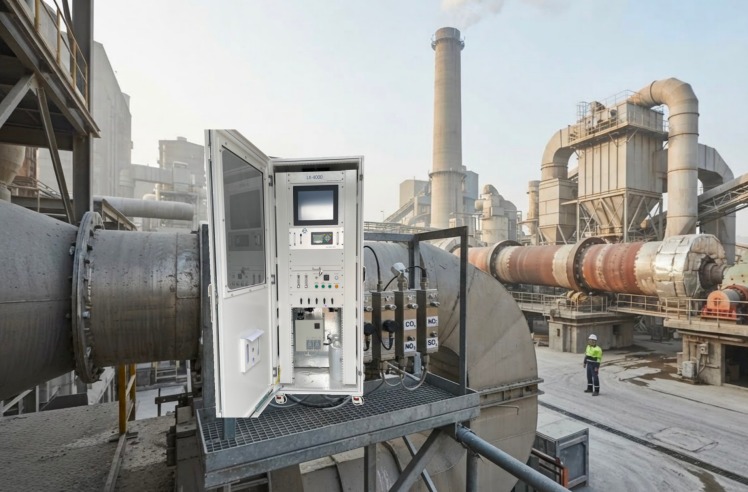
The key is choosing the right measurement point and analyzer configuration. A kiln outlet, calciner, preheater, coal mill, and stack each have different monitoring goals. Therefore, a practical system must match the gas measurement to the process—not simply measure as many gases as possible.
Why Is Flue Gas Analysis Important in Cement Plants?
Cement production depends on stable combustion and precise heat management. The rotary kiln and calciner must maintain suitable combustion conditions while transferring heat efficiently to the raw material. Even small changes in excess air or combustion can affect fuel use, clinker quality, and emissions.
Kiln Combustion
O2 and CO are two of the most useful process indicators. O2 shows the oxygen remaining in the exhaust gas, while CO indicates incomplete combustion or reducing conditions. Used together, they help operators understand the air-fuel balance and adjust combustion accordingly.
In practical terms:
Too much excess air → unnecessary heat loss → higher fuel demand
Too little air → incomplete combustion → higher CO and unstable operation
Fuel Consumption
A cement kiln consumes significant thermal energy, so combustion efficiency directly affects operating cost. Continuous gas data gives operators a faster view of changing process conditions than occasional laboratory sampling.
For example, trends in O2, CO, CO2, and NOx can help identify changes in combustion or air leakage. This is where online analysis becomes valuable: operators can see a process trend while the kiln is running and respond before a small deviation becomes a larger production problem.
Emission Control
Better combustion can reduce fuel waste and help limit the formation of combustion-related pollutants. At the same time, cement plants may need dedicated emission monitoring at the stack, depending on local regulations and permit requirements.
Which Gases Should a Flue Gas Analyzer Measure in a Cement Plant?
There is no universal gas list for every cement plant. The required parameters depend on the measurement point and the purpose of the analysis.
| Gas | Main Purpose | Typical Application |
|---|---|---|
| O2 | Combustion and excess-air control | Kiln, calciner, preheater, stack |
| CO | Incomplete combustion and safety | Kiln, preheater, coal mill |
| CO2 | Combustion and process monitoring | Kiln, stack |
| NOx | Emission and combustion monitoring | Kiln, calciner, stack |
| SO2 | Sulfur-related emission monitoring | Kiln, stack |
| CH4 / hydrocarbons | Combustion diagnostics | Selected process points |
| NH3 | DeNOx/SNCR control | DeNOx section |
| HCl / HF / VOC | Specific emission monitoring | Stack, where required |
A cement plant does not need the same gas measurements at every location. The flue gas analyzer should be configured around the kiln process, combustion conditions, and emission-control objective. At the rotary kiln outlet, O2 and CO are central to combustion control. NOx can provide additional information about combustion conditions, while CO2 helps track the overall flue gas composition. SO2 becomes important when sulfur in the fuel or raw materials affects the process.
In other words, a cement plant flue gas analyzer configuration should start with where the gas is measured and what the plant needs to control, then determine the appropriate gases, ranges, sampling method, and analyzer technology.
Where Should a Flue Gas Analyzer Be Installed in a Cement Plant?
For cement plants, two measurement points are especially important: the kiln gas outlet for process optimization and the main stack for emission monitoring. The two points serve different purposes, so the flue gas analyzer configuration should not be identical.
Kiln Gas Outlet
The kiln gas outlet provides a direct view of the combustion process. Gas analysis at this point helps operators understand whether the primary firing system is operating within a stable combustion window.
Cement-industry gas-analysis systems commonly use the kiln gas outlet to optimize primary firing, reduce fuel consumption, and maintain clinker quality. However, this is a demanding sampling point: published cement applications describe gas temperatures above 900°C, with specialized probes and sample conditioning required. Therefore, the flue gas analyzer itself is only one part of the solution. A reliable system such aas CEMS needs a suitable sampling probe, cooling or conditioning, filtration, and stable sample transport.
Main Stack
What is the plant actually releasing to the atmosphere? Here, the focus shifts from kiln combustion optimization to emission monitoring and regulatory compliance. Depending on local requirements, a cement plant may monitor NOx, SO2, CO, O2, CO2, THC, HCl, HF, and other pollutants. This makes the main stack a natural location for a dedicated CEMS or flue gas analyzer.
| Measurement Point | Main Objective | Typical Gases |
|---|---|---|
| Kiln Gas Outlet | Combustion and process optimization | O2, CO, NO, CO2, SO2, CH₄ |
| Main Stack | Emission monitoring and compliance | NOx, SO2, CO, O2, CO2, HCl, HF, THC/VOC |
The distinction is important for procurement. A kiln flue gas analyzer should be designed around harsh process conditions, while a stack system should be designed around emission requirements and applicable standards.
Which Flue Gas Analyzer Technology Is Suitable for Cement Plants?
For cement applications, UV-DOAS is a strong primary technology for measuring SO2, NO, and NO2, particularly when the system needs multi-component emission analysis. Other technologies such as NDIR, electrochemical, zirconia, and TDLAS can complement UV-DOAS for gases with different measurement characteristics.
| Technology | Typical Gas | Main Role |
|---|---|---|
| UV-DOAS | SO2, NO, NO2 | Primary emission-gas analysis |
| NDIR | CO2, CH4, selected gases | Process gas analysis |
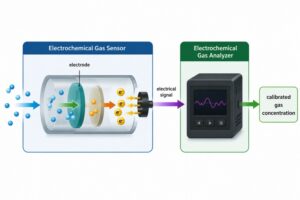
| Electrochemical | O2 | Cost-effective O2 measurement |
| Zirconia | O2 | High-temperature process O2 |
| TDLAS | Selected gases | Fast, highly selective measurement |
| FTIR | Multiple gases | Broad multi-component analysis |
For example, ESEGAS combines UV-DOAS for SO2/NO/NO2, NDIR for CO2, and ECD for O2 in its UV-GAS-500 configuration. The flue gas analyzer provides 4–20 mA and RS485 outputs for integration with plant control or data systems.
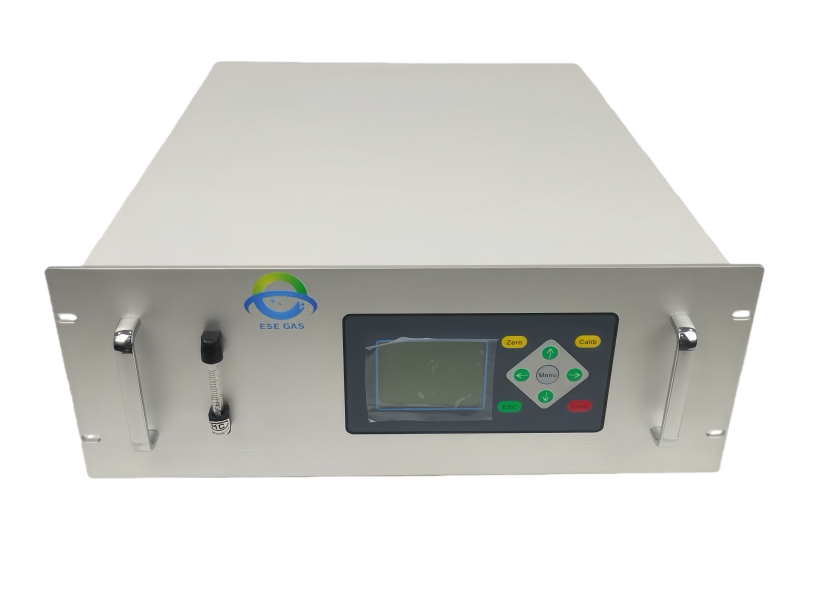
For cement plants dealing with high-temperature kiln gas and strict stack monitoring requirements, the analyzer should therefore be purchased as a complete measurement system, not simply as a standalone instrument.
How Does ESEGAS Design a Flue Gas Analyzer System for Cement Plants?
A cement plant needs more than a gas analyzer box. The sampling probe, filtration, conditioning, flue gas analyzer, calibration, and communication system all affect the final measurement. ESEGAS therefore designs the gas monitoring system around the measurement point and gas conditions.
Kiln Gas Outlet System
At the kiln gas outlet, the main challenge is the combination of high temperature, heavy dust, moisture, and corrosive components. Cement kiln applications can expose sampling equipment to temperatures approaching 1,400°C and very high dust concentrations.
ESEGAS can configure the system around:
- High-temperature sampling probe
- Dust filtration
- Automatic back-purge
- Heated sample line
- Gas cooling and conditioning
- UV-DOAS for SO2, NO, and NO2
- Complementary gas analyzers for CO, CO2, and O2
The objective is simple: deliver a representative gas sample to the gas analyzer without allowing dust, condensation, or corrosion to compromise the measurement.
Main Stack System
The main stack requires a different approach because the priority is usually emission monitoring and compliance rather than direct kiln combustion control.
ESEGAS can combine UV-DOAS, NDIR, and electrochemical measurement technologies according to the required pollutants. Its UV-DOAS platform can measure SO2, NO, and NO2, while complementary technologies can handle CO, CO2, and O2. Or intergrate technologies in one flue gas analyzer.
The flue gas analyzer in CEMS can also connect measurement data to plant control or data acquisition systems. ESEGAS supports industrial communication and DAHS integration for continuous gas monitoring applications.
Conclusion
A reliable cement plant flue gas analyzer must handle the process, not just the gas. The kiln gas outlet requires robust sampling and combustion-focused analysis, while the main stack requires emission-focused monitoring.
If you are selecting a flue gas analyzer for a cement kiln or main stack, contact ESEGAS with your measurement gases, ranges, sampling conditions, and installation point. The right system starts with the process—not simply the gas analyzer.