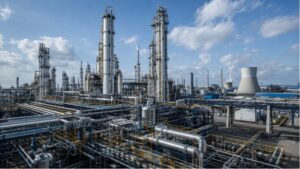




Complex refinery emissions, harsh flue gas, and demanding compliance requirements can make CEMS difficult to maintain. A properly designed system provides reliable emission data without constant troubleshooting.
A Continuous Emission Monitoring System (CEMS) continuously measures and records pollutants from stationary emission sources. In oil and gas processing plants, a CEMS can monitor SO₂, NOx, CO, CO₂, O₂, and other gases while also tracking flow and key flue gas conditions.
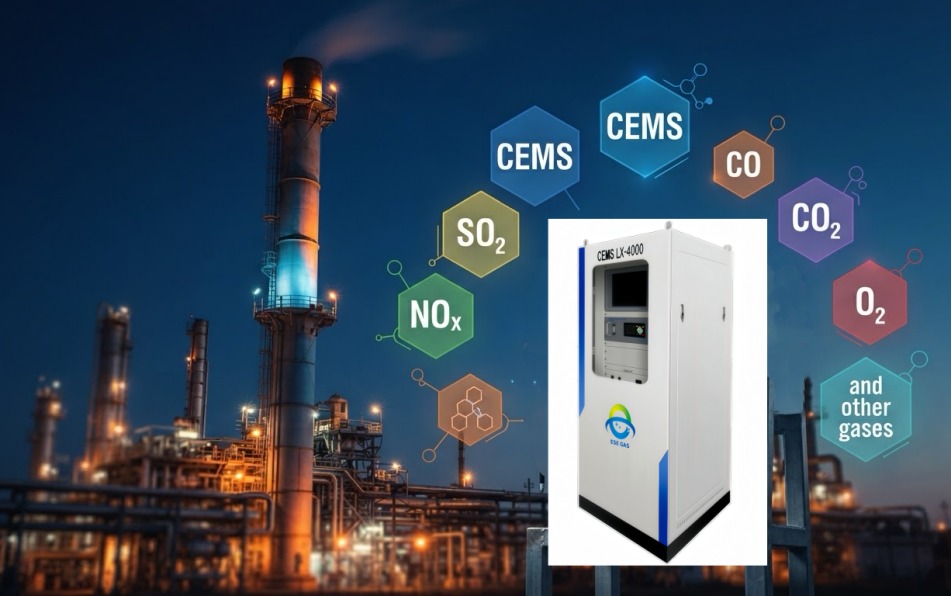
However, refinery emission monitoring is rarely a one-size-fits-all job. A process heater, boiler, catalytic cracking unit, sulfur recovery unit, or flare can produce a very different gas stream. Therefore, the right CEMS starts with the emission source, required pollutants, and actual operating conditions.
Which Pollutants Should a CEMS Measure in Oil and Gas Processing Plants?
The required CEMS parameters depend on the emission source, process conditions, and applicable regulations. For many refinery combustion sources, SO₂, NOx, CO, CO₂, and O₂ form the core measurement group. Additional gases and process parameters may be needed for specific applications.
| Parameter | Why Is It Monitored? | Typical Refinery Application |
|---|---|---|
| SO₂ | Tracks sulfur-related emissions | Boilers, heaters, SRU |
| NOx | Monitors combustion emissions | Process heaters, boilers |
| CO | Indicates incomplete combustion | Furnaces, boilers |
| CO₂ | Supports carbon emission monitoring | Combustion and process units |
| O₂ | Supports combustion assessment and correction | Stack emissions |
| H₂O | Supports wet/dry gas correction | Flue gas systems |
| Flow | Helps determine total emission load | Stack and flare systems |
| Temperature | Supports measurement correction | Stack monitoring |
| Pressure | Supports flow and emission calculations | Stack systems |
The CEMS configuration should follow the emission source and applicable monitoring requirements. A process heater may primarily require NOx, CO, CO₂, and O₂. A sulfur-related process may place greater emphasis on SO₂. A more complex application may require additional gases such as HCl, HF, NH₃, or H₂O.
That distinction is important when purchasing a CEMS. Instead of asking only, “How many gases can this gas analyzer measure?”, buyers should first ask, “Which gases does this emission source actually require us to measure?” Once the target pollutants are defined, the next challenge is choosing a CEMS technology that can handle the refinery’s hot, wet, and potentially corrosive flue gas.
Which CEMS Measurement Technologies Are Suitable for Oil and Gas Processing Plants?
Oil and gas processing plants do not need one measurement technology for every gas. The better approach is to match the detection principle with the target pollutant, concentration range, gas matrix, and required measurement performance.
| CEMS Technology | Typical Gases | Key Strength |
|---|---|---|
| NDIR | CO, CO₂, SO₂ | Continuous multi-gas measurement |
| UV-DOAS | SO₂, NO, NO₂ | Good selectivity for UV-active gases |
| TDLAS | O₂, NH₃, HCl, H₂O | Fast and selective measurement |
| FTIR | Multiple gases | Broad multi-component analysis |
| Paramagnetic | O₂ | Stable continuous O₂ measurement |
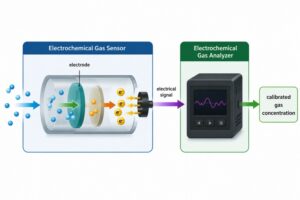
| Electrochemical | O₂ and selected gases | Compact and economical |
NDIR is widely used for major combustion gases such as CO and CO₂. UV-DOAS can measure SO₂, NO, and NO₂, while TDLAS can target specific gases with strong absorption lines. FTIR becomes attractive when one system needs to monitor a wider range of components. ESEGAS uses these technologies across its CEMS solutions according to gas type and measurement requirements.
For regulated applications, however, technology selection should go beyond a simple comparison of sensor principles. The applicable regulation may specify performance specifications, reference methods, and QA/QC requirements. The U.S. EPA, for example, lists separate performance specifications for SO₂/NOx, O₂/CO₂, CO, flow, H₂S, VOCs, and FTIR-based CEMS.
How Does a Complete CEMS Handle Hot, Wet and Dusty Refinery Flue Gas?
The gas analyzer is only one part of a CEMS. In a refinery, the gas must first travel from the stack to the measurement cell without losing or changing important components. A typical extractive CEMS follows this path:
Stack → Heated Sampling Probe → Filtration → Heated Sample Line → Gas Conditioning → Gas Analyzer → Data Acquisition
Hot flue gas can contain water vapor and condensable compounds. A heated probe and heated sample line help keep the sample above the relevant dew point during transport.
Dust can block filters and restrict sample flow. Moisture can cause condensation, while corrosive or condensable compounds can contaminate downstream components. The filtration and gas conditioning system can solve the problem.
The key point is simple: a high-quality gas analyzer cannot correct a poor sample. The sampling system and gas analyzer must work as one measurement chain, such as CEMS.
What Makes Refinery CEMS Different From Standard Industrial CEMS?
A refinery CEMS often faces a more complicated operating environment than a simple combustion stack. One plant can have boilers, process heaters, furnaces, FCC units, sulfur-related processes, and flares, each producing a different gas stream.
Refinery flue gas can vary in: Temperature, Moisture, Gas composition, Pollutant concentration, Flow rate, Corrosive components, and Hydrocarbon content. As a result, the same CEMS configuration may not suit every stack. For example, a process heater may focus on NOx, CO, CO₂, and O₂, while another process may require SO₂ or additional gases. Some applications may also need H₂O, HCl, HF, NH₃, or hydrocarbon monitoring.
Refinery emission monitoring is not a once-a-day measurement task. CEMS must provide stable data over long operating periods while handling calibration, sample flow, temperature changes, and maintenance events.
EPA defines CEMS as the complete equipment needed to determine gas or particulate concentration or emission rate, not simply the gas analyzer itself. Applicable regulations can also require specific performance and QA procedures when CEMS data are used for compliance.
That distinction matters when purchasing a system. Refinery CEMS should be evaluated as a complete monitoring solution—gas analyzer, sampling system, conditioning, calibration, data acquisition, and maintenance—not as a standalone gas analyzer.
With the measurement technology and sampling architecture established, the next step is to design a CEMS around the specific emission source and operating conditions of the oil and gas processing plant.
How Does ESEGAS Design CEMS for Oil and Gas Processing Plants?
A refinery CEMS should fit the emission source, not the other way around. ESEGAS therefore starts with the plant process, target pollutants, flue gas conditions, and applicable monitoring requirements before selecting the gas analyzer and sampling architecture.
First, ESEGAS identifies the emission source and defines what the plant needs to measure.
Next, the team reviews SO₂, NOx, CO, CO₂, O₂, H₂O, flow, temperature, pressure, and humidity requirements. This matters because EPA performance specifications cover different CEMS parameters, including SO₂/NOx, O₂/CO₂, CO, flow rate, H₂S, VOCs, and FTIR applications.
Then, ESEGAS selects the measurement principle according to the target gas and application. For example:
| Measurement Need | Possible Technology |
|---|---|
| CO, CO₂, SO₂ | NDIR |
| SO₂, NO, NO₂ | UV-DOAS |
| Multiple gases | FTIR |
| Selected trace gases | TDLAS |
| O₂ | Electrochemical / Paramagnetic |
The LX-4000 CEMS can monitor SO₂, NO, NO₂, O₂, CO, CO₂, HCl, HF, and H₂O, while also measuring flow, pressure, temperature, and humidity.
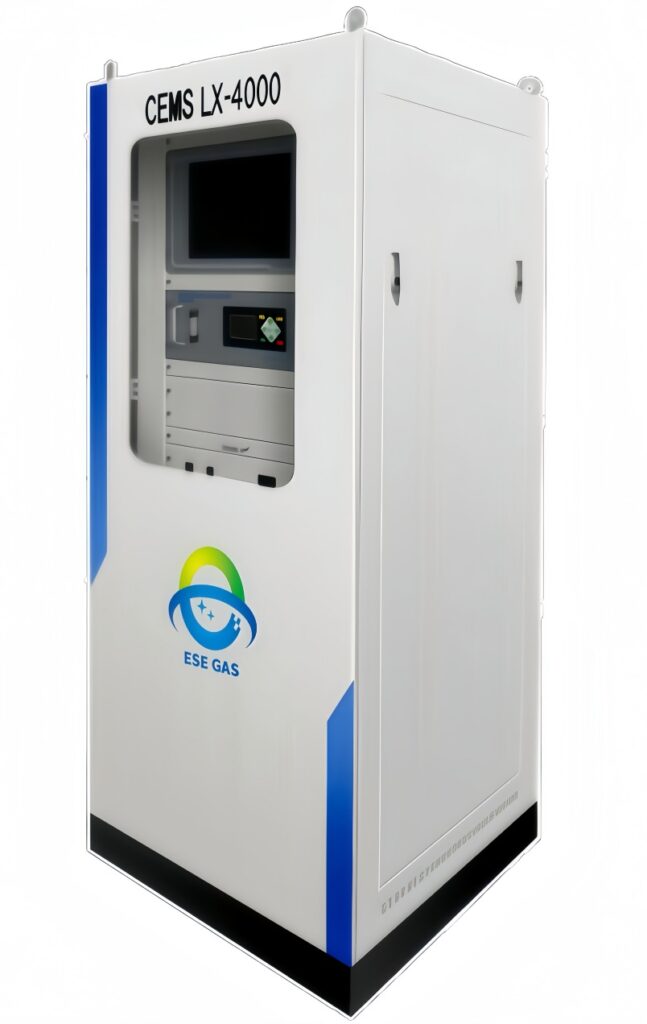
This multi-parameter approach is useful when one refinery has several emission sources with different monitoring requirements.
Conclusion
For oil and gas processing plants, a reliable CEMS turns continuous gas measurements into usable emission data. The system can monitor key pollutants, track changing process conditions, and support applicable compliance requirements. However, performance depends on the complete system—not the gas analyzer alone. ESEGAS combines gas analysis, sampling, conditioning, calibration, and data functions into application-specific CEMS designs.