


Textile boilers consume too much coal while struggling to meet emission limits?Coal-fired boilers remain a major steam source for textile dyeing, bleaching, and finishing. However, unstable combustion often increases fuel costs, raises SO₂ and CO emissions, and makes environmental compliance more difficult.
A flue gas analyzer continuously measures SO₂ and CO concentrations to optimize combustion, reduce coal consumption, improve steam stability, and support emission compliance. For textile coal-fired boilers, measuring SO₂ (0–1500 mg/m³) and CO (0–3000 mg/m³) provides reliable data for both combustion control and environmental management.
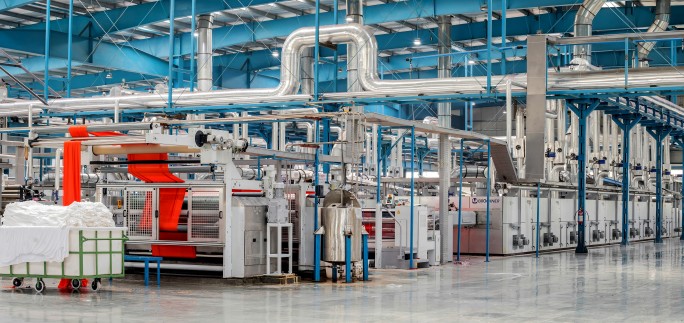
Although the benefits are clear, choosing the right gas analyzer involves more than selecting measurement ranges. Textile factories operate under demanding conditions where dust, moisture, fluctuating boiler loads, and corrosive gases challenge measurement accuracy. Understanding why SO₂ and CO matter is the first step toward selecting a reliable monitoring solution.
Why Are SO₂ and CO the Key Indicators of Coal-Fired Textile Boiler Performance?
Textile manufacturing depends on stable steam. Whether producing fabrics, dyeing yarn, or finishing garments, steam pressure directly affects product quality and production efficiency. Consequently, boiler performance has an immediate impact on operating costs. Among all combustion gases, SO₂ and CO provide the clearest picture of boiler health.
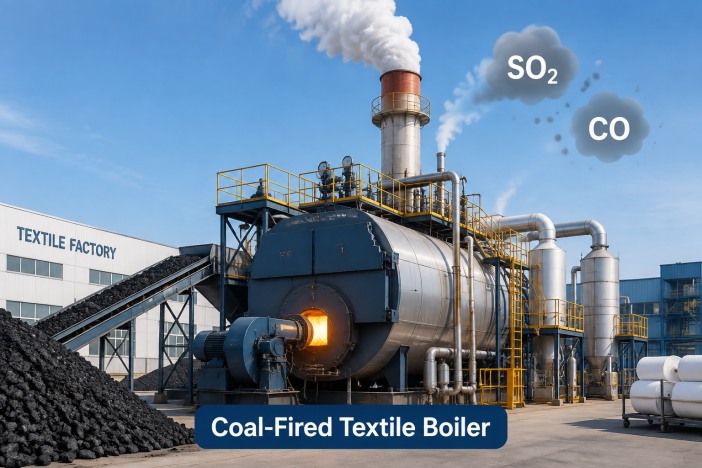
SO₂ reflects fuel quality and desulfurization performance
Sulfur dioxide is generated when sulfur contained in coal reacts with oxygen during combustion. Therefore, SO₂ concentration depends primarily on:
- Sulfur content of the coal
- Boiler operating conditions
- Efficiency of the flue gas desulfurization (FGD) system
- Air leakage and process stability
High SO₂ levels increase corrosion risks in downstream equipment such as economizers, ducts, and stacks. More importantly, SO₂ is one of the regulated pollutants monitored by environmental authorities, making continuous measurement essential for compliance.
CO reveals combustion efficiency
Unlike SO₂, carbon monoxide tells operators how efficiently fuel burns.
Ideally, coal combustion converts carbon into carbon dioxide (CO₂). However, when combustion becomes incomplete because of insufficient oxygen, uneven air distribution, poor burner performance, or changing coal quality, CO concentration rises rapidly.
High CO often indicates:
- Insufficient combustion air
- Burner imbalance
- Coal feeder instability
- Air leakage
- Poor fuel distribution
- Furnace operating problems
Simply put, high CO means valuable fuel energy is leaving through the chimney instead of producing steam.
Why monitor both gases together?
Monitoring SO₂ alone cannot reveal combustion efficiency. Monitoring CO alone cannot determine emission performance. Together, they provide a complete assessment of both environmental compliance and combustion quality.
Typical monitoring ranges for textile coal-fired boilers include:
| Parameter | Typical Measurement Range |
|---|---|
| SO₂ | 0–1500 mg/m³ |
| CO | 0–3000 mg/m³ |
These ranges cover most medium-sized textile boilers and provide sufficient resolution for combustion optimization while maintaining measurement stability.
How Does a Flue Gas Analyzer Improve Textile Boiler Efficiency?
For textile factories operating coal-fired boilers, improving efficiency is about controlling the combustion process accurately, reducing heat loss, and producing stable steam with less fuel. A flue gas analyzer provides real-time information about combustion conditions by measuring key gases such as SO₂ and CO.
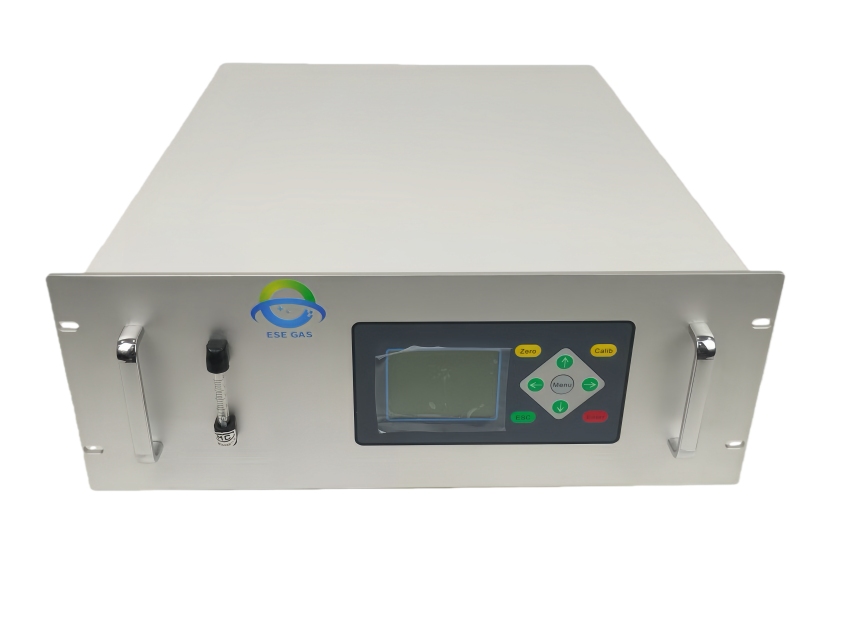
Without continuous gas measurement, operators may unknowingly run boilers with excessive air, incomplete combustion, or unstable flame conditions. A properly designed flue gas analyzer turns invisible combustion problems into measurable data, allowing operators to make faster and more accurate decisions.
Optimizing the Air-Fuel Ratio to Reduce Coal Consumption
The relationship between coal and combustion air determines boiler efficiency. A flue gas analyzer helps operators monitor combustion conditions by continuously measuring gas concentrations.
For textile factories, even a small improvement in combustion efficiency can create significant savings because boilers operate for long production hours every day.
Reducing CO Emissions Through Better Combustion Control
A stable coal-fired boiler should convert most carbon into CO₂. However, several operating problems can increase CO: High CO does not only represent an emission problem. It also means chemical energy remains unused and leaves the boiler through the flue gas.
For example:
- Normal CO level → complete combustion and better fuel utilization
- Rising CO level → incomplete combustion and possible coal waste
- Sudden CO peak → potential burner or air distribution problem
This makes CO measurement a practical tool for both energy saving and equipment protection.
Improving Steam Stability for Textile Production
Unlike some industries where boiler fluctuations may have limited impact, textile manufacturing requires highly stable steam supply. Processes, such as: Fabric dyeing, Washing, Drying, Finishing, and Chemical treatment, depend on consistent temperature and pressure. When boiler combustion becomes unstable, steam production can fluctuate.
A flue gas analyzer provides continuous feedback about combustion performance. By maintaining stable SO₂ and CO levels, operators can keep the boiler operating closer to its designed condition. So, textile factories can achieve more predictable production performance while reducing unnecessary fuel consumption.
What Measurement Technologies Are Best for Textile Boiler Flue Gas Monitoring?
Selecting the right measurement technology is just as important as choosing the gas analyzer itself. Coal-fired textile boilers generate flue gas with high dust concentrations, variable moisture, and changing temperatures. Therefore, the analyzer must deliver stable, accurate measurements under harsh operating conditions while requiring minimal maintenance.
| Gas | Recommended Technology | Reason |
|---|---|---|
| SO₂ | UV-DOAS or NDIR (depending on application) | Stable measurement over industrial ranges |
| CO | NDIR | High selectivity and reliability |
| O₂ | Electrochemical or Paramagnetic | Combustion optimization |
| CO₂ | NDIR | Efficiency calculation |
For CO measurement (0–3000 mg/m³), Non-Dispersive Infrared (NDIR) technology remains the preferred choice. For SO₂ measurement (0–1500 mg/m³), UV-DOAS (Ultraviolet Differential Optical Absorption Spectroscopy) is widely recognized as the best solution for industrial flue gas applications. UV-DOAS also provides excellent sensitivity across a wide concentration range, enabling reliable emission monitoring before or after the flue gas desulfurization (FGD) system.
Oxygen measurement is equally important because it determines whether the boiler operates with the correct excess-air ratio. Depending on the application, paramagnetic or electrochemical O₂ sensors are commonly integrated with the gas analyzer to support combustion tuning and O₂-corrected emission calculations. Together with continuous CO and SO₂ monitoring, O₂ data helps operators maximize thermal efficiency while minimizing fuel consumption.
However, measurement technology alone cannot guarantee reliable results. The quality of the sample gas is equally critical. A complete extractive flue gas monitoring system typically includes a heated sampling probe, heated sample line, dust filtration, gas cooler, condensate removal, and automatic zero/span calibration. Proper gas conditioning protects the analyzer from contamination, reduces maintenance frequency, and ensures consistent measurement accuracy throughout long-term operation.
Conclusion
A flue gas analyzer helps coal-fired textile boilers improve combustion efficiency, reduce coal waste, control SO₂ and CO emissions, and maintain stable steam production. With customized SO₂ (0–1500 mg/m³) and CO (0–3000 mg/m³) monitoring solutions, ESEGAS provides reliable and cost-effective gas analysis systems for textile boiler optimization and emission management.