



Cement kilns operate under intense heat, heavy dust loads, and constantly changing combustion conditions. A kiln may appear stable based on temperature alone while incomplete combustion, insufficient oxygen, or poor fuel-air mixing is already developing inside the process. When these changes are not identified early, the result can be higher fuel consumption, unstable clinker production, excessive emissions, or potentially unsafe concentrations of combustible gases. For this reason, reliable monitoring of carbon monoxide and oxygen gives cement plant operators the information they need to identify abnormal combustion conditions earlier and keep the kiln operating within a more efficient and controlled range.
CO and O₂ monitoring is critical in cement kilns because these two gases provide real-time information about combustion completeness, excess air, fuel utilization, and potentially unsafe operating conditions. CO indicates incomplete combustion or reducing conditions, while O₂ shows whether sufficient combustion air is available. Monitoring both parameters continuously allows operators to maintain stable combustion, improve fuel efficiency, detect abnormal CO formation, and support safer kiln operation.
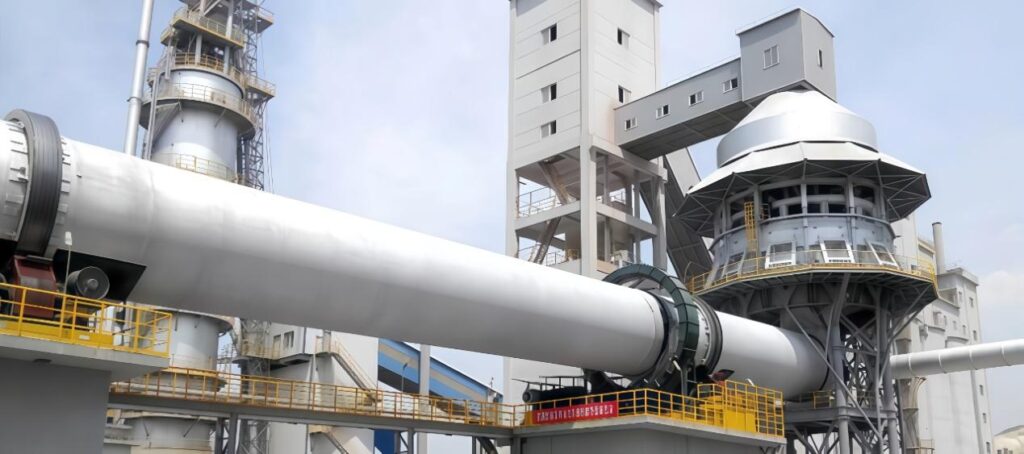
Temperature, fuel feed rate, draft pressure, and fan operation are all important process indicators, but they do not always reveal what is actually happening during combustion. Gas composition provides another layer of information by showing how effectively fuel is reacting with oxygen inside the kiln system. At ESEGAS, we therefore view CO and O₂ as complementary combustion parameters rather than isolated measurements. Understanding how each parameter behaves—and especially how they change together—can help operators make better decisions about combustion control, process stability, and analyzer system design.
Why Does CO Monitoring Matter in a Cement Kiln?
A cement kiln can maintain a high operating temperature while still experiencing incomplete combustion in certain process zones. Changes in fuel quality, insufficient mixing, unstable airflow, alternative fuel feeding, or localized oxygen deficiency can all contribute to increased carbon monoxide formation. If operators rely only on temperature or airflow values, these combustion problems may not be obvious until process performance has already deteriorated.
For this reason, CO and O₂ Monitoring gives operators a much clearer view of combustion quality. CO is particularly valuable because an increase in its concentration can indicate that the available fuel is not being completely oxidized.

Several conditions can contribute to elevated CO levels:
- Insufficient combustion air: If the oxygen supply is too low, carbon in the fuel may not be completely converted into carbon dioxide.
- Poor fuel-air mixing: Even when the overall oxygen concentration seems adequate, localized zones can remain oxygen-deficient.
- Fuel fluctuations: Changes in calorific value, particle size, moisture, or feed rate can disturb combustion stability.
- Alternative fuel variability: Refuse-derived fuels, biomass, and other alternative fuels may introduce greater variation in combustion characteristics.
- Process disturbances: Changes in kiln feed, draft, burner operation, or material movement can temporarily alter the combustion environment.
A rising CO trend can therefore serve as an early warning signal. Rather than treating CO only as an emission-related parameter, we recommend using it as a process diagnostic variable. Continuous trend information allows plant personnel to see whether combustion is gradually becoming less complete and respond before the condition develops into a larger process or safety problem.
Why Is O₂ Monitoring Essential for Combustion Control?
Supplying enough oxygen is essential for complete combustion, but adding excessive air is not an efficient solution. Too little oxygen increases the possibility of incomplete combustion, while excessive combustion air can increase heat losses and reduce thermal efficiency. The objective is therefore not to maximize O₂, but to maintain an appropriate oxygen level for the kiln’s actual operating conditions.
Through continuous CO and O₂ Monitoring, operators can use O₂ concentration as an indicator of excess air and combustion balance.
When O₂ becomes too low, it can indicate:
- Insufficient combustion air
- Excessive fuel input
- Poor distribution of combustion air
- Changes in kiln draft conditions
- Increased risk of incomplete combustion
When O₂ remains unnecessarily high, the kiln may be operating with too much excess air. This can increase the amount of gas that must be heated and moved through the system, potentially contributing to unnecessary thermal losses and higher fan loads.
O₂ measurement therefore supports the adjustment of the air-to-fuel ratio. When combined with other kiln operating parameters, it helps plant operators determine whether combustion air should be increased, reduced, or redistributed.
At ESEGAS, we consider stable oxygen measurement especially important because combustion optimization depends on reliable trends rather than occasional manual measurements. A continuous gas analyzer allows the control room to see changes as they happen and compare those changes with fuel feed, kiln load, draft, and other process conditions.
Looking at CO alone can tell operators that incomplete combustion may be occurring, but it does not always explain why. Looking at O₂ alone can indicate whether oxygen is present, but it does not prove that the fuel is being burned efficiently. The real diagnostic value comes from evaluating both gases together.
This is why CO and O₂ Monitoring is much more useful as a combined combustion measurement strategy.
| O₂ Condition | CO Condition | Possible Interpretation |
| Stable | Low | Combustion is generally stable |
| Low | Rising | Oxygen deficiency or deteriorating combustion |
| High | Low | Possible excessive combustion air |
| Normal or high | Rising | Poor mixing, localized reducing zones, or fuel-related disturbance |
| Rapidly fluctuating | Fluctuating | Unstable combustion or changing process conditions |
For example, if CO rises while O₂ falls, insufficient combustion air may be the most likely explanation. However, if CO increases while O₂ remains relatively high, the issue may not be total air supply. Poor mixing, uneven fuel distribution, or localized reducing conditions may instead be responsible.
This combined interpretation helps operators avoid oversimplified adjustments. Increasing combustion air every time CO rises may solve some problems, but it can also create unnecessary heat loss if insufficient air was not the root cause.
By analyzing the relationship between the two gases, operators can make more informed decisions and reduce unnecessary process adjustments.
How Does CO and O₂ Monitoring Improve Cement Kiln Safety?
Combustion instability is not only an efficiency concern. Under certain conditions, high CO concentrations can indicate the presence of significant amounts of incompletely burned fuel. If combustible gases accumulate and later encounter sufficient oxygen, potentially dangerous combustion conditions can develop.
Continuous CO and O₂ Monitoring helps identify these changes before they become more severe.
From a safety perspective, real-time gas monitoring can support cement plants in several ways:
- Early detection of abnormal CO formation
A sudden or sustained increase in CO can warn operators that combustion conditions are deteriorating. - Identification of oxygen-deficient conditions
Low O₂ measurements help reveal whether insufficient air may be contributing to incomplete combustion. - Trend-based alarms
Alarm thresholds can be integrated into a plant control system so that personnel are notified when concentrations move outside acceptable operating ranges. - Faster operational response
Continuous analysis provides information much faster than periodic manual gas sampling. - Improved understanding of process disturbances
Operators can compare gas concentration changes with burner adjustments, alternative fuel feeding, draft changes, or kiln upset conditions.
The specific alarm limits and control actions should always be established according to the cement plant’s process design, equipment configuration, fuel type, and safety procedures. Gas analysis does not replace plant safety systems, but it provides valuable process information that can support them.
How Can CO and O₂ Monitoring Improve Fuel Efficiency?
Fuel is one of the most significant operating costs in cement production, so even relatively small improvements in combustion efficiency can have a meaningful impact on plant performance. Poor combustion wastes part of the fuel’s available energy, while excessive air can carry additional heat out of the combustion zone.
CO and O₂ Monitoring helps operators find a more appropriate balance between these two extremes.
High CO can indicate that fuel energy is not being fully released because combustion is incomplete. At the same time, unnecessarily high O₂ can indicate that more air is entering the process than required for efficient combustion.
By continuously tracking both values, operators can work toward a more stable combustion window in which:
- CO remains controlled
- O₂ remains within an appropriate operating range
- Fuel combustion is more complete
- Excess air is minimized without creating reducing conditions
- Kiln thermal performance becomes more stable
The advantage becomes even more important when alternative fuels are used. Alternative fuels can vary in moisture, calorific value, composition, size, and combustion behavior. These changes can affect oxygen demand and CO formation more rapidly than conventional fuel systems.
A continuous analyzer helps the plant recognize these variations quickly rather than relying on delayed laboratory or manual sampling information.
Where Should CO and O₂ Be Measured in a Cement Plant?
Measurement location strongly influences the value of gas analysis data. Different points in the cement process provide different information, and the correct location depends on the plant’s control objective.
Common measurement areas can include:
Kiln Inlet
The kiln inlet is one of the most valuable locations for combustion diagnosis because gas composition here can provide important information about kiln combustion conditions and reducing atmospheres.
However, it is also one of the most demanding measurement points because of high dust concentrations, elevated temperatures, and the possibility of material buildup around the sampling system.
Preheater and Calciner
Measurements around the preheater or calciner can help plant operators evaluate combustion associated with secondary or tertiary fuel addition and understand how gas conditions change through the upstream process.
These measurements can be particularly useful in plants with extensive alternative fuel utilization.
Kiln Exhaust or Other Process Gas Locations
Depending on the kiln configuration, additional gas measurements may be used to support process optimization, emissions monitoring, or combustion troubleshooting.
At ESEGAS, we do not recommend selecting a gas analyzer before evaluating the measurement point. The gas temperature, dust load, moisture content, pressure, expected concentration range, and required response time all influence how the complete measurement system should be configured.
What Should You Look for in a CO and O₂ Gas Analyzer for Cement Kilns?
Because cement kiln conditions are demanding, selecting a gas analyzer based only on laboratory accuracy can lead to disappointing field performance. A useful analyzer system must remain reliable under the actual process conditions in which it will operate.
When evaluating a system for CO and O₂ Monitoring, we recommend considering the following factors.
Suitable Measurement Range
The analyzer should cover both normal operating concentrations and the higher concentrations that may appear during abnormal process conditions.
Fast Response
Combustion conditions can change quickly. Excessive delay between the sampling point and analyzer can reduce the usefulness of the measurement for process control.
Continuous Operation
Cement kilns operate continuously for long periods, so the analyzer should be designed for stable long-term measurement rather than occasional spot checks.
Effective Sample Conditioning
Dust removal, temperature management, moisture control, and stable sample flow are essential for extractive systems.
Calibration and Maintenance
The system should allow routine calibration, filter replacement, flow inspection, and other maintenance tasks to be performed efficiently.
Control System Integration
Analog signals, digital communication, alarm outputs, and other interfaces can allow CO and O₂ data to be integrated into a plant PLC or DCS.
Long-Term Measurement Stability
Repeatability and stability are especially important because operators often make decisions based on trends rather than a single measurement value.
A reliable system therefore depends on much more than the sensing technology inside the analyzer. Probe design, filtration, heated lines, sample conditioning, flow control, calibration, installation, and maintenance strategy all influence the final measurement quality.
How Can ESEGAS Support CO and O₂ Monitoring in Cement Kilns?
Every cement kiln has different operating conditions, so a successful gas monitoring solution should be matched to the actual application rather than selected as a generic instrument.
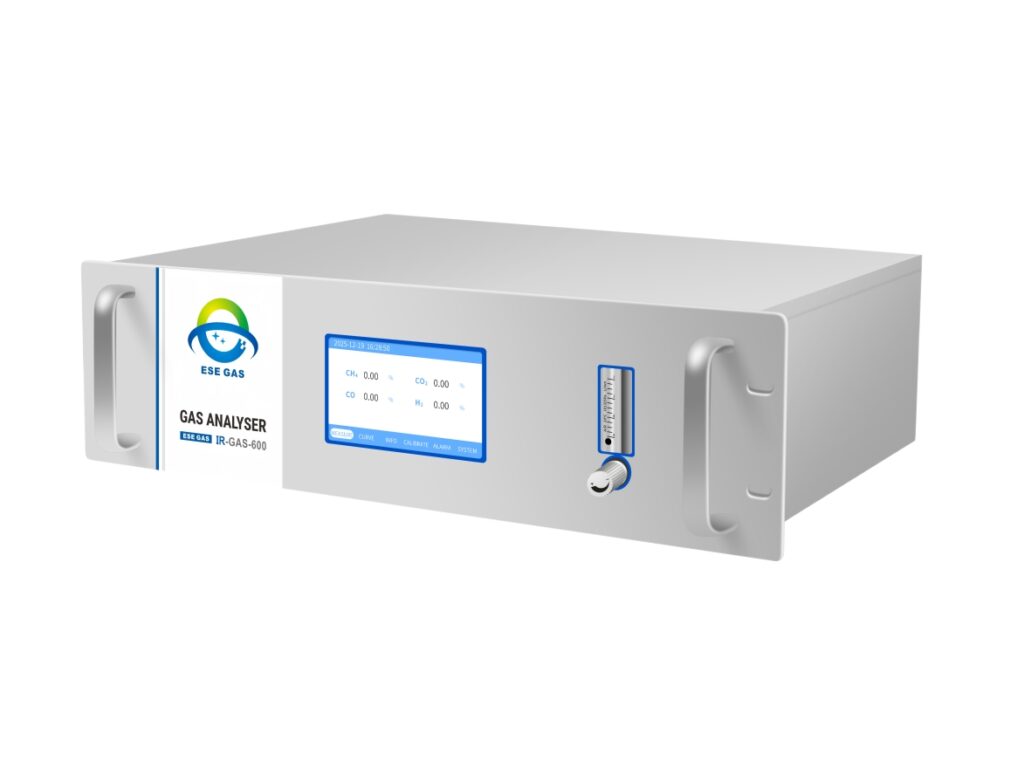
At ESEGAS, we approach CO and O₂ Monitoring from the perspective of the complete gas analysis system. Before recommending a configuration, we consider factors such as the measurement location, process temperature, dust concentration, moisture level, expected CO and O₂ ranges, sample distance, response requirements, and the plant’s existing control infrastructure.
Depending on the application, a complete solution may involve:
- A process-appropriate sampling probe
- Dust filtration
- Heated sample transport
- Sample gas conditioning
- CO measurement
- O₂ measurement
- Flow monitoring
- Calibration arrangements
- Alarm and signal outputs
- PLC or DCS integration
This system-level approach is particularly important in cement applications because analyzer performance can only be as reliable as the sample reaching the analyzer.
Our objective is not simply to provide a CO or oxygen analyzer. We aim to help cement plants obtain stable, meaningful gas concentration data that can be used for combustion evaluation, operational troubleshooting, and process optimization.
Conclusion
CO and oxygen provide different but complementary views of cement kiln combustion. CO helps indicate whether combustion is incomplete or reducing conditions are developing, while O₂ helps operators evaluate whether the combustion air level is appropriate. When the two values are monitored together, they provide a much clearer picture of fuel-air balance, combustion stability, and abnormal process conditions.
For cement plants, effective CO and O₂ Monitoring can support safer operation, better combustion control, improved fuel utilization, and more stable kiln performance. However, dependable results require more than selecting the right analyzer. Sampling, filtration, sample conditioning, measurement response, calibration, and system integration must all be designed around the actual kiln environment.
At ESEGAS, this complete-system perspective is central to how we develop gas analysis solutions for demanding cement applications. By combining appropriate CO and O₂ measurement technologies with a properly engineered sampling and conditioning system, we help plants turn gas concentration data into practical information for safer and more efficient kiln operation.