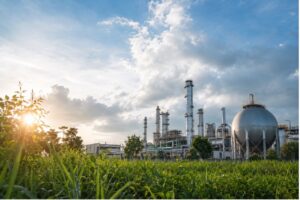




Natural gas processing plants handle large volumes of hydrocarbons under changing pressure and operating conditions. As a result, even small changes in hydrocarbon emissions can become difficult to track without continuous measurement.
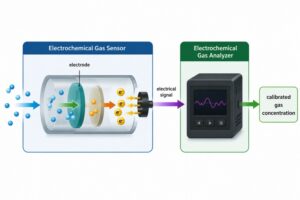
A VOC analyzer continuously measures hydrocarbon concentrations in natural gas processing plants. Depending on the application, it can measure total hydrocarbons (THC) or non-methane hydrocarbons (NMHC), supporting emission monitoring, process control, and environmental management.
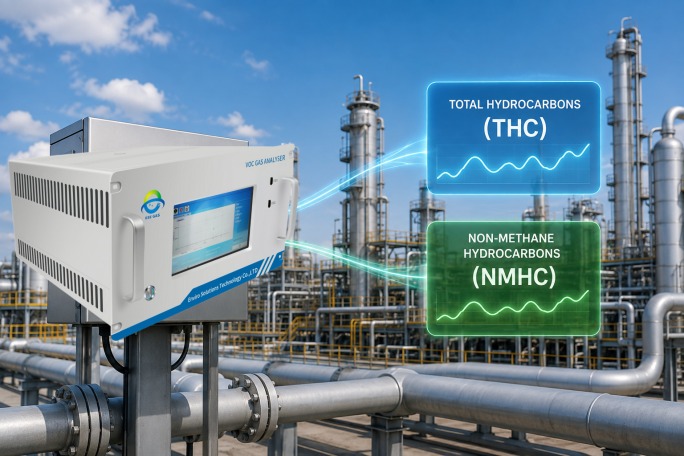
For buyers, choosing a A properly configured online analyzer can provide continuous hydrocarbon data for emission monitoring, process control, and environmental management. However, the measurement definition matters because VOC, THC, and NMHC are related terms, but they do not mean the same thing.
What Is a VOC Analyzer and What Does It Actually Measure?
A VOC analyzer is an instrument designed to measure volatile organic compounds or related hydrocarbon concentrations in a gas stream. Depending on the analyzer technology and application, it may report THC, NMHC, VOCs, or individual compounds.
The important point is that “VOC analyzer” does not automatically define one specific measurement. The required parameter depends on the gas composition, analytical method, measurement range, reporting basis, and applicable standard.
What Is VOC?
VOC stands for Volatile Organic Compounds. In general, VOCs are carbon-containing organic compounds that can participate in atmospheric photochemical reactions. However, the regulatory definition is more specific.
For example, the U.S. EPA defines VOC under 40 CFR 51.100 and excludes compounds determined to have negligible photochemical reactivity. Methane and ethane are among the important examples of excluded compounds under the federal definition. This means VOC is not simply “all hydrocarbons in the gas.”
The distinction matters in natural gas processing because methane can represent a major part of the hydrocarbon stream while being excluded from the EPA regulatory VOC definition.
In addition, different jurisdictions and regulations can define or measure VOC differently. EPA notes that the measured quantity and composition can vary with the measurement method and regulatory context. For buyers, this leads to a simple rule: Define the required regulatory or process parameter before selecting the analyzer.
What Is NMHC?
NMHC means Non-Methane Hydrocarbons. As the name suggests, NMHC represents hydrocarbons other than methane. However, the actual result depends on the analyzer method, calibration approach, gas composition, measurement basis, and applicable standard.
This distinction is particularly important for natural gas processing because methane can strongly influence a total hydrocarbon measurement. EPA’s natural gas emission-factor work provides a useful example: EPA used NMHC data as the basis for estimating VOC emissions for natural gas combustion, then applied adjustments for compounds such as ethane and formaldehyde.
So, NMHC can be a useful measurement for VOC-related emission assessment, but NMHC and regulatory VOC are not automatically identical.
Which Natural Gas Processing Applications Need a VOC Analyzer?
A VOC analyzer can add value wherever hydrocarbon-rich gas streams need continuous measurement or trend analysis. However, not every emission source requires the same analyzer configuration. The right solution depends on the gas composition, target compounds, concentration range, and monitoring objective.
| TerNatural Gas Processing Applicationm | Why VOC Analysis Matters | Typical Monitoring Focus |
|---|---|---|
| Gas Processing Units | Track hydrocarbon changes during treatment | THC, NMHC, selected VOCs |
| Compressors | Check hydrocarbon releases and process changes | THC, NMHC |
| Dehydration Units | Monitor hydrocarbons associated with vent streams | THC, NMHC, VOCs |
| Acid Gas Removal | Characterize hydrocarbons in process vents | THC, NMHC, selected VOCs |
| Storage Tanks | Monitor hydrocarbon-rich vapor emissions | THC, NMHC, BTEX |
| Flare Systems | Evaluate hydrocarbon content in flare-related streams | THC, NMHC, selected hydrocarbons |
| Equipment Leak Monitoring | Identify abnormal hydrocarbon releases | VOCs, THC |
In short, the application determines the analyzer configuration. A simple THC trend, an NMHC value, and detailed BTEX analysis are different measurement tasks.
What Is the Difference Between VOC, THC, and NMHC?
The terms are closely related, but each answers a different measurement question.
| Term | Meaning | Methane Included? | Typical Application |
|---|---|---|---|
| VOC | Volatile organic compounds defined by the applicable regulation or method | Usually excluded under EPA regulatory VOC definition | Environmental emissions |
| THC | Total hydrocarbons measured by a specified analytical method | Typically yes | Process and emission monitoring |
| NMHC | Non-methane hydrocarbons | No | Hydrocarbon emission monitoring |
| CH₄ | Methane | Yes | Fuel gas and methane correction |
| Specific VOC | Individual compounds such as benzene or toluene | No | Compound-specific monitoring |
That last distinction is crucial. EPA’s own technical documentation shows that VOC emission estimates may require adjustments to NMHC measurements rather than simply treating NMHC as VOC.
Which VOC Analyzer Technology Is Best for Hydrocarbon and NMHC Measurement?
The best VOC analyzer technology depends on what the plant needs to know. FID is usually a strong choice for continuous THC/NMHC measurement, while FTIR and GC become more useful when engineers need individual compounds or a broader gas profile.
| Technology | Typical Measurement | Key Advantage |
|---|---|---|
| FID | THC, NMHC, hydrocarbons | High sensitivity and fast continuous response |
| NDIR | Selected hydrocarbons, CO₂, CH₄ | Practical continuous measurement |
| TDLAS | Selected target gases | High selectivity |
| FTIR | Multiple VOCs and gases | Multi-component analysis |
| GC | Individual hydrocarbons | Detailed component identification |
For natural gas processing, this distinction matters. A plant looking for one continuous THC or NMHC value does not necessarily need a full component-by-component analysis. On the other hand, applications involving benzene, toluene, xylene, or other individual hydrocarbons may need a more detailed analytical method.
So, if the buyer only needs a continuous THC or NMHC value, a GC may provide more analytical capability than necessary. If the buyer needs to know which hydrocarbons are present, GC becomes much more compelling. The technology decision therefore starts with the measurement question—not the analyzer brand.
How Does ESEGAS Design a VOC Analyzer System for Natural Gas Processing Plants?
For natural gas processing applications, ESEGAS VOC analyzer uses a GC-FID approach to measure benzene-series compounds, THC, and NMHC, allowing the system to combine continuous hydrocarbon monitoring with more detailed component analysis. This is particularly useful when a plant needs more than a single THC number.
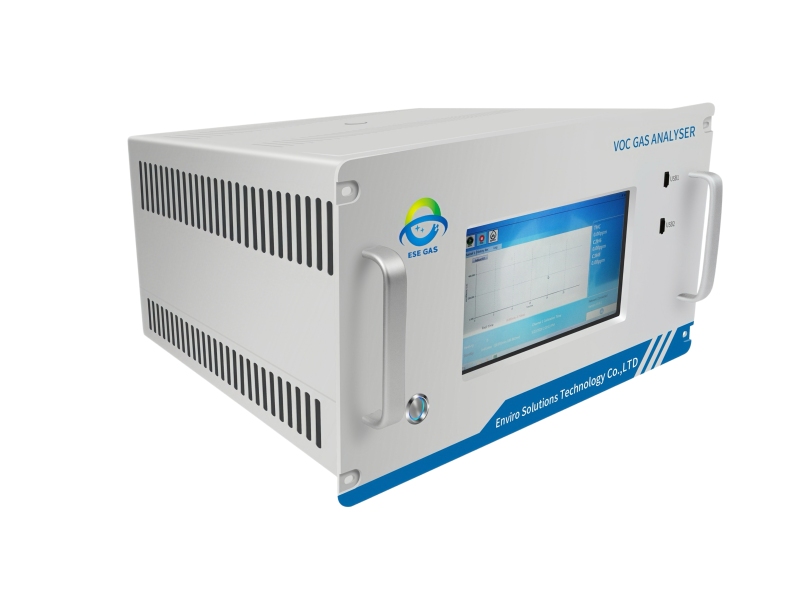
The ESEGAS GC-FID system uses gas chromatography to separate hydrocarbon components before FID detection. This gives the VOC analyzer access to both compound-specific information and hydrocarbon concentration data.
The basic analytical path can be understood as:
Process Gas → Sample Conditioning → GC Separation → FID Detection → Data Processing → THC / NMHC / Target Hydrocarbons
This architecture is useful when the customer’s specification includes both broad hydrocarbon monitoring and selected compounds such as benzene, toluene, or xylene.
The main advantage is flexibility. A plant can obtain THC and NMHC information while also examining specific hydrocarbon components. That makes the system suitable for applications where procurement teams need both routine monitoring and deeper process information without installing completely separate analytical systems.
More importantly, ESEGAS can configure the measurement system around the customer’s actual gas composition, concentration range, and monitoring objective rather than selecting technology based on a generic VOC specification.
Conclusion
THC, NMHC, and individual hydrocarbons require different analytical approaches. FID is well suited to continuous THC/NMHC measurement, while GC-FID provides additional component identification for compounds such as benzene, toluene, and xylene.
For natural gas processing plants, ESEGAS uses GC-FID to combine hydrocarbon measurement with detailed component analysis, supported by application-specific sampling and conditioning.