



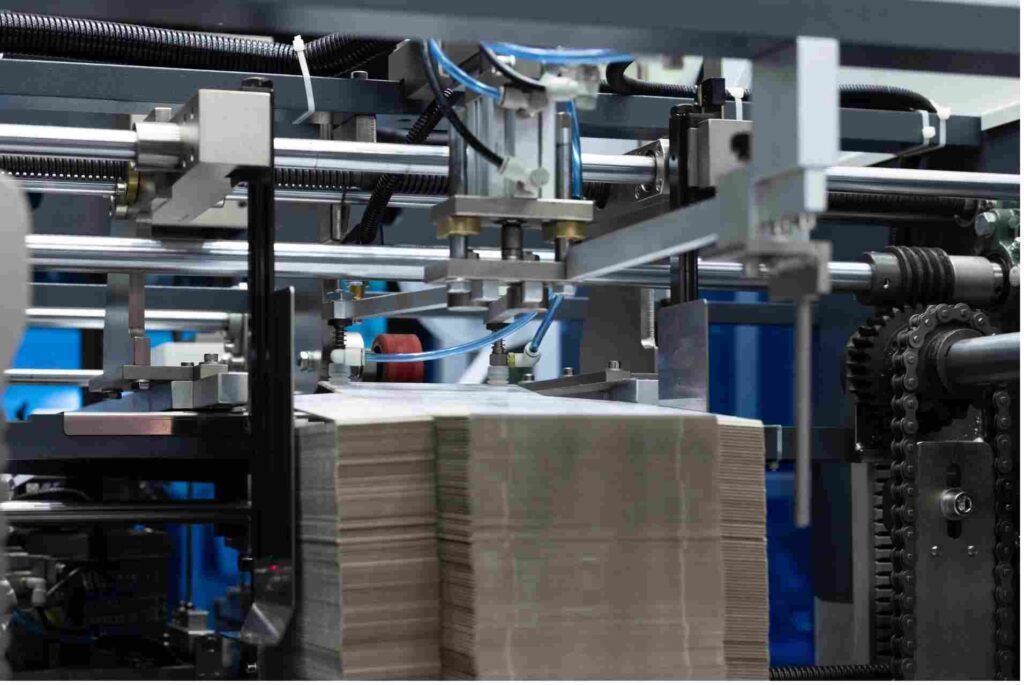
Printing operations can generate significant amounts of volatile organic compounds during ink application, dilution, drying, equipment cleaning, and solvent handling. When these emissions fluctuate with production speed, ink formulation, or order changes, relying only on periodic manual testing can make it difficult to understand what is actually happening inside the exhaust system. This lack of continuous data may lead to delayed detection of abnormal emissions, unstable treatment performance, and inefficient operation of VOC control equipment. A properly configured monitoring solution gives printing plants a clearer picture of VOC concentration changes and allows operators to manage emissions with greater confidence.
A VOC system is used in the printing industry to continuously detect and measure volatile organic compounds released from inks, solvents, cleaning agents, drying processes, and exhaust treatment systems. It can help printing plants monitor VOC concentration, evaluate treatment efficiency, identify abnormal emission changes, record historical data, and support process optimization and environmental emission management.
However, simply installing a VOC analyzer does not automatically guarantee meaningful monitoring results. Printing processes differ significantly depending on the printing technology, ink system, solvent composition, drying method, exhaust design, and waste-gas treatment equipment. Gravure printing, flexographic printing, offset printing, and screen printing may all have very different VOC emission profiles. To obtain useful monitoring data, it is therefore important to understand where VOCs come from, where they should be measured, which detection technology is suitable, and how the monitoring system should be integrated with existing treatment equipment.
Why Does the Printing Industry Need a VOC System?
VOC emissions in a printing plant are rarely completely stable. A production line may show relatively low VOC concentrations during normal operation, followed by a sharp increase when solvent is added, printing speed is changed, a new ink is introduced, or equipment cleaning begins. Without continuous monitoring, these concentration changes may go unnoticed until they affect treatment performance or final stack emissions. A well-designed VOC system helps operators move from occasional measurement to continuous process visibility.
The main sources of VOC emissions in printing applications usually include the following.

1. Printing Inks
Solvent-based inks are an important VOC source in many printing processes. During printing and drying, organic solvents contained in the ink can evaporate and enter the exhaust air.
The actual VOC composition depends on the ink formulation and production process. Depending on the application, compounds may include ethanol, ethyl acetate, isopropyl alcohol, toluene, xylene, or other organic solvents.
2. Thinners and Solvents
Printing operators may use solvents to adjust ink viscosity, improve printability, or support specific production requirements. These materials can evaporate rapidly, especially in open ink systems or heated production environments.
A continuous VOC system can help identify how solvent usage affects overall VOC concentration in the exhaust duct.
3. Equipment Cleaning
Printing cylinders, rollers, ink trays, pipes, and other components often require cleaning. Organic cleaning agents can create temporary but significant VOC concentration peaks.
These short-duration events are particularly difficult to capture with occasional manual sampling, which is why continuous VOC monitoring is valuable in many printing plants.
4. Drying Processes
Drying ovens and hot-air drying systems accelerate solvent evaporation from printed materials. As a result, the exhaust from the drying section may contain relatively high VOC concentrations compared with other areas of the production line.
For this reason, the drying exhaust is often an important monitoring point when designing a VOC system for printing applications.
Where Should a VOC System Be Installed in a Printing Plant?
Even a high-quality analyzer cannot provide useful information if the sampling point is poorly selected. In a printing plant, the location of the sampling point determines what the measured concentration actually represents. When we design or recommend a VOC system at ESEGAS, we consider both the measurement objective and the gas conditions at each potential monitoring point.
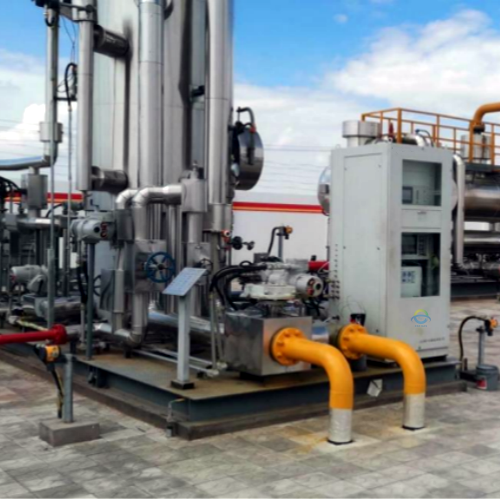
Typical monitoring locations include the printing exhaust, the inlet and outlet of VOC treatment equipment, and the final stack.
| Monitoring Point | Main Purpose | Typical Use |
| Printing machine exhaust | Monitor process-generated VOCs | Production monitoring |
| Treatment system inlet | Measure incoming VOC load | RTO/RCO operating control |
| Treatment system outlet | Evaluate treatment performance | Efficiency monitoring |
| Final stack | Monitor final emission concentration | Emission management |
Printing Machine Exhaust
Installing a VOC system in the printing exhaust duct allows operators to observe VOC concentration directly from the production process.
This data can be used to compare VOC emissions between:
- Different printing orders
- Different ink formulations
- Different machine speeds
- Different solvent consumption levels
- Cleaning and production cycles
Over time, these trends can help the plant better understand the relationship between production activity and VOC generation.
Treatment System Inlet
The inlet of an RTO, RCO, adsorption unit, or other treatment system is another important monitoring position.
Measuring the inlet VOC concentration helps operators understand the organic load entering the treatment equipment. This can support operating adjustments, load evaluation, and abnormal condition detection.
Treatment System Outlet
Monitoring the outlet makes it possible to evaluate how effectively the treatment system is removing VOCs.
If the inlet concentration remains stable but the outlet concentration begins to increase, the change may indicate that the treatment system requires inspection or operating adjustment.
Final Stack
The final stack is often selected when the primary objective is emission monitoring.
A continuous VOC system at this location can provide long-term concentration trends, alarm functions, and historical data that support environmental management.
How Does a VOC System Work in Printing Applications?
Printing exhaust conditions can change rapidly, so VOC measurement is not only about selecting a detector. The complete measurement chain must transport the sample correctly, condition it when necessary, measure the target gas reliably, and transfer the result to the plant control system. In practice, a complete VOC systemusually consists of several coordinated components rather than a single sensor.
A typical measurement process can be summarized as:
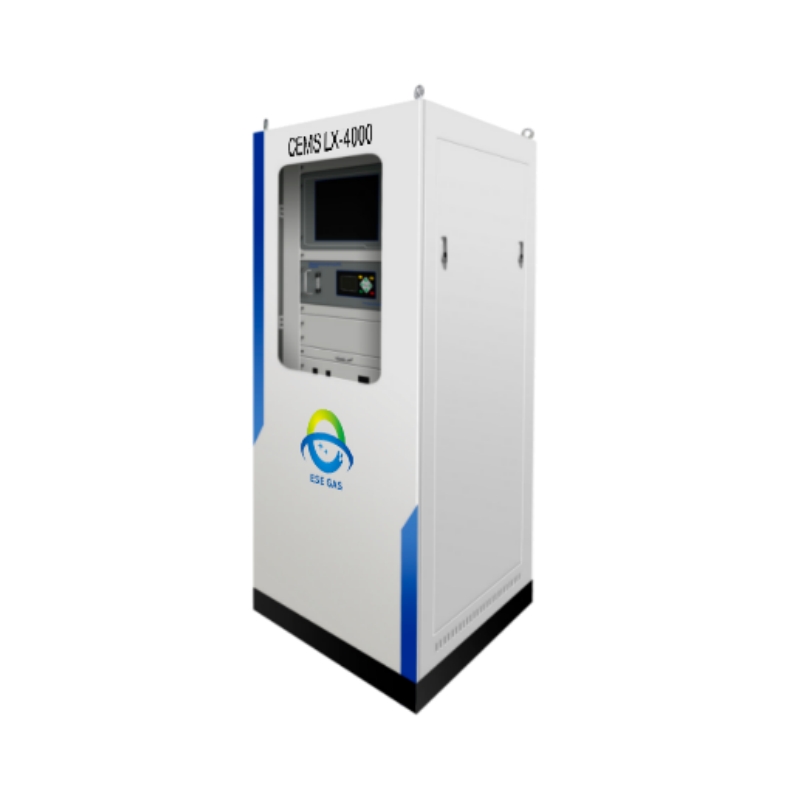
Gas Sampling → Sample Pretreatment → VOC Measurement → Signal Processing → Data Transmission
Gas Sampling
The system continuously extracts a representative sample from the exhaust duct or stack.
The sampling probe and sample line should be selected according to gas temperature, humidity, pressure, dust content, and the physical properties of the target VOCs.
Sample Pretreatment
Depending on the application, pretreatment may be necessary before the sample reaches the analyzer.
A pretreatment system may perform functions such as:
- Particle removal
- Temperature control
- Moisture management
- Flow regulation
- Pressure stabilization
The objective is to protect the analyzer while preserving the representative characteristics of the sample.
VOC Measurement
The conditioned sample is then introduced into the VOC analyzer.
The appropriate detection method depends on the VOC composition, expected concentration range, required response time, and measurement purpose.
Signal Processing
The analyzer converts the detector response into a usable concentration value.
Depending on the configuration, the measured result may be displayed in units such as ppm or mg/m³.
Data Transmission
The VOC system can then transmit measurement data to the plant’s PLC, DCS, data acquisition platform, or environmental monitoring system.
Common communication options may include:
- 4–20 mA
- RS485
- Modbus
- Relay alarm outputs
At ESEGAS, we consider this integration an important part of a complete gas analysis solution because measurement data becomes much more useful when it can be incorporated into plant operating logic.
Which VOC Detection Technologies Are Suitable for Printing Applications?
One of the most common mistakes in VOC monitoring is selecting an analyzer based only on range or price. In reality, different VOC compounds can respond differently to different detection principles. The correct technology should therefore be selected according to the actual gas composition and monitoring objective. For printing plants, the VOC system may use technologies such as PID or FID depending on the application.
PID: Photoionization Detection
A PID uses ultraviolet energy to ionize suitable organic compounds and measure their concentration.
Typical advantages include:
- Fast response
- High sensitivity
- Suitability for many common VOCs
- Compact detector configurations
PID technology can be useful for process monitoring, leakage detection, and concentration trend monitoring.
However, different organic compounds have different response factors, so PID measurements should always be evaluated according to the expected VOC composition.
FID: Flame Ionization Detection
FID technology measures ions generated when organic compounds are burned in a hydrogen flame.
It is widely used for hydrocarbon and total VOC measurement because of its broad response to many carbon-containing compounds.
Typical advantages include:
- Good response to many hydrocarbons
- Suitable for continuous TVOC measurement
- Stable long-term monitoring performance
- Wide applicability in fixed-source monitoring
A comparison can be summarized as follows:
| Technology | Main Strength | Typical Printing Application |
| PID | Fast response and high sensitivity | Process VOC monitoring |
| FID | Broad response to hydrocarbons | Continuous TVOC monitoring |
There is no single detection technology that is ideal for every printing application. When selecting a VOC system, we recommend evaluating the expected VOC compounds, concentration range, gas conditions, required accuracy, and measurement objective together.
How Can a VOC System Work with RTO or RCO Equipment?
Many printing plants use RTO, RCO, activated carbon adsorption, or other treatment technologies to reduce VOC emissions. However, treatment equipment cannot be effectively evaluated without reliable concentration data. A VOC system installed before and after the treatment unit can provide operators with direct information about both inlet loading and outlet performance.
RTO or RCO Inlet Monitoring
Monitoring the inlet VOC concentration helps determine how much organic material is entering the treatment system.
This information can help operators:
- Identify high VOC loading
- Observe sudden concentration changes
- Compare production conditions
- Support operating adjustments
- Detect abnormal process conditions
For applications where VOC concentrations vary considerably during production, continuous inlet monitoring can be especially useful.
RTO or RCO Outlet Monitoring
Outlet monitoring shows the VOC concentration after treatment.
When inlet and outlet measurements are both available, the treatment efficiency can be estimated using:
VOC Removal Efficiency (%) = (Cin − Cout) / Cin × 100
Where:
- Cin = VOC concentration at the treatment system inlet
- Cout = VOC concentration at the treatment system outlet
For example, if the inlet concentration is 1,000 mg/m³ and the outlet concentration is 50 mg/m³, the calculated removal efficiency is 95%.
This approach allows a VOC system to function not only as an emission monitoring tool but also as part of the operational management of the waste-gas treatment process.
What Are the Benefits of Using a VOC System in the Printing Industry?
If VOC monitoring is viewed only as an environmental requirement, its broader operational value can easily be overlooked. In practice, continuous VOC data can help printing companies understand production behavior, treatment-system performance, and abnormal operating conditions at the same time. This makes a VOC system useful for both environmental management and process analysis.
Real-Time VOC Monitoring
Continuous measurement allows operators to see concentration changes as they occur.
This is especially valuable during:
- Startup
- Shutdown
- Ink replacement
- Solvent addition
- Equipment cleaning
- Production speed changes
Treatment Efficiency Evaluation
By comparing inlet and outlet VOC concentrations, operators can evaluate the performance of RTO, RCO, adsorption, or other treatment systems.
This provides a clearer basis for maintenance and operating decisions.
Process Optimization
Historical VOC data can be compared with production parameters.
For example, a printing company may analyze whether a certain ink formulation, solvent ratio, or machine speed is associated with higher VOC emissions.
Emission Management
A continuous VOC system can record long-term concentration data and generate trend information.
This can support internal environmental management, reporting, and performance evaluation.
Alarm and Early Warning
Alarm thresholds can be configured so that operators are notified when VOC concentrations exceed predefined limits.
This allows potential problems to be investigated before they develop into larger process or emission issues.
How Should Printing Companies Select a VOC System?
A VOC monitoring solution should not be selected simply by choosing a sensor with the correct measurement range. Printing exhaust may contain moisture, dust, mixed solvents, elevated temperatures, or highly variable VOC concentrations. If these conditions are not considered, measurement stability and system life may be affected. For this reason, we recommend evaluating the complete application before specifying a VOC system.
1. Identify the VOC Composition
The first step is to understand which volatile organic compounds are likely to be present.
Depending on the printing process, possible compounds may include:
- Ethanol
- Ethyl acetate
- Isopropyl alcohol
- Toluene
- Xylene
- Other organic solvents
The actual composition should be confirmed from the ink, solvent, and cleaning materials used at the site.
2. Determine the Expected Concentration Range
The analyzer must be suitable for the concentration range at the actual monitoring point.
A treatment-system inlet may experience much higher VOC concentrations than a final stack, so different monitoring positions may require different analyzer configurations.
3. Define the Monitoring Objective
The required VOC system configuration depends heavily on what the plant wants to achieve.
Typical objectives include:
- Process monitoring
- Environmental monitoring
- RTO efficiency monitoring
- Treatment system optimization
- Safety-related concentration monitoring
A system designed for process control may have different requirements from one designed for final stack monitoring.
4. Evaluate Sample Conditions
Gas conditions should be reviewed before the analyzer is selected.
Important parameters include:
- Temperature
- Humidity
- Dust content
- Pressure
- Flow conditions
- Condensation risk
These conditions determine whether sample conditioning or additional pretreatment is necessary.
5. Confirm Communication Requirements
The monitoring system should be able to communicate with existing plant equipment.
Depending on the project, this may require:
- 4–20 mA
- RS485
- Modbus
- Alarm relay outputs
- PLC integration
- DCS integration
6. Consider Calibration and Maintenance
A reliable VOC system also requires regular maintenance.
Typical maintenance tasks may include:
- Analyzer calibration
- Sample line inspection
- Filter replacement
- Flow checking
- Detector inspection
- Calibration gas management
When these requirements are considered during the design stage, the system is easier to operate and maintain over the long term.
How Can ESEGAS Support VOC Monitoring in Printing Applications?
No two printing plants have exactly the same VOC emission conditions. Different inks, solvents, printing speeds, drying temperatures, treatment technologies, and sampling locations can all affect the measurement requirements. This is why we do not view a VOC system as a single standalone analyzer. At ESEGAS, we approach VOC monitoring as a complete gas analysis application.
We develop VOC monitoring solutions according to the actual gas composition, concentration range, sample conditions, and monitoring objectives of the printing process.
Depending on the application, our solution evaluation may include:
- VOC analyzer selection
- Sampling probe configuration
- Sample pretreatment design
- Continuous VOC measurement
- Alarm setting
- PLC or DCS communication
- RTO inlet monitoring
- RTO outlet monitoring
- Customized gas analysis integration
For printing applications, we normally recommend collecting several key parameters before selecting the finalVOC system.
These include:
- Main VOC compounds
- Expected concentration range
- Gas temperature
- Gas humidity
- Dust content
- Sampling pressure
- Monitoring location
- Treatment technology
- Required signal output
- Measurement objective
With this information, we can evaluate the appropriate analyzer principle, measurement range, sampling configuration, and system architecture more accurately.
Conclusion
A VOC system in the printing industry provides much more than a single concentration reading. When properly designed, it can continuously monitor VOC emissions from printing processes, identify abnormal concentration changes, evaluate RTO or RCO treatment performance, record historical trends, and provide useful data for process and environmental management.
The effectiveness of the system depends on more than the analyzer itself. VOC composition, concentration range, sampling position, gas temperature, humidity, pretreatment requirements, detection technology, and communication interface should all be considered together.
At ESEGAS, we help printing companies configure VOC monitoring solutions according to their actual operating conditions. By combining suitable gas analysis technology with practical sampling and system integration, we aim to provide reliable VOC measurement data for emission monitoring, treatment-system management, and long-term process optimization.