



Industrial plants cannot afford unreliable gas data. Missed SO₂, NOx, or NH₃ readings can lead to emission violations, poor combustion control, and unplanned maintenance. A UV-DOAS gas analyzer helps operators measure key pollutants continuously and act before small process issues become expensive problems.
A UV-DOAS gas analyzer measures gas concentration by detecting the unique ultraviolet-light absorption patterns of different molecules. It compares measured spectra with reference spectra to identify and quantify gases such as SO₂, NO, NO₂, NH₃, O₃, and ClO₂ in industrial process gas and flue gas.
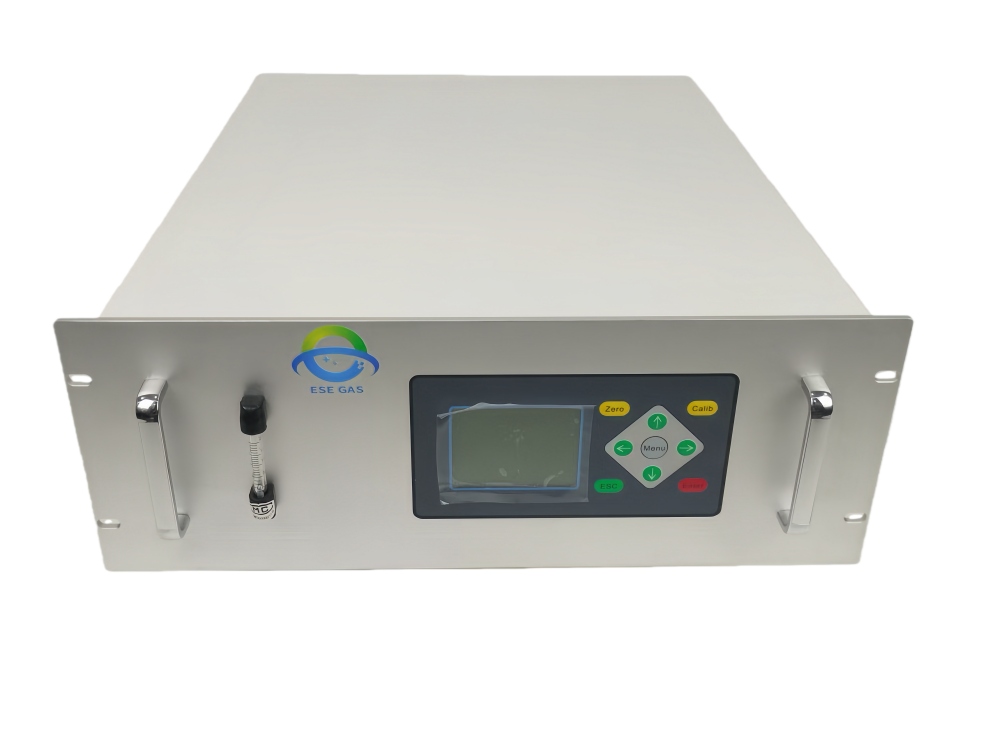
That basic answer matters, but analyzer selection requires more than knowing the principle. Plant engineers also need to understand the gas list, sample conditions, optical path, interference risks, and how UV-DOAS compares with NDIR, FTIR, and TDLAS in real operating environments.
What Is UV-DOAS?
UV-DOAS stands for Ultraviolet Differential Optical Absorption Spectroscopy. It is an optical measurement method that detects gases by analyzing how they absorb ultraviolet light over a defined wavelength range.
Every gas molecule interacts with light differently. In the UV range, gases such as sulfur dioxide, nitrogen dioxide, ozone, and chlorine dioxide create recognizable absorption structures. These structures act like spectral fingerprints. The analyzer uses them to determine which gases are present and how much of each gas the sample contains.
The word “differential” is important. A basic UV absorption system may measure a broad reduction in light intensity. However, UV-DOAS focuses on narrow, gas-specific absorption features. As a result, it can reduce the impact of broad background effects caused by lamp changes, dust, aging optical parts, or non-specific absorption.
For industrial users, the best configuration depends on the process location, gas temperature, moisture level, dust load, and required response time.
How Does UV-DOAS Gas Analyzer Work?
A UV-DOAS gas analyzer follows a clear sequence: it sends UV light through gas, measures the remaining light, and calculates the concentration of each target gas.
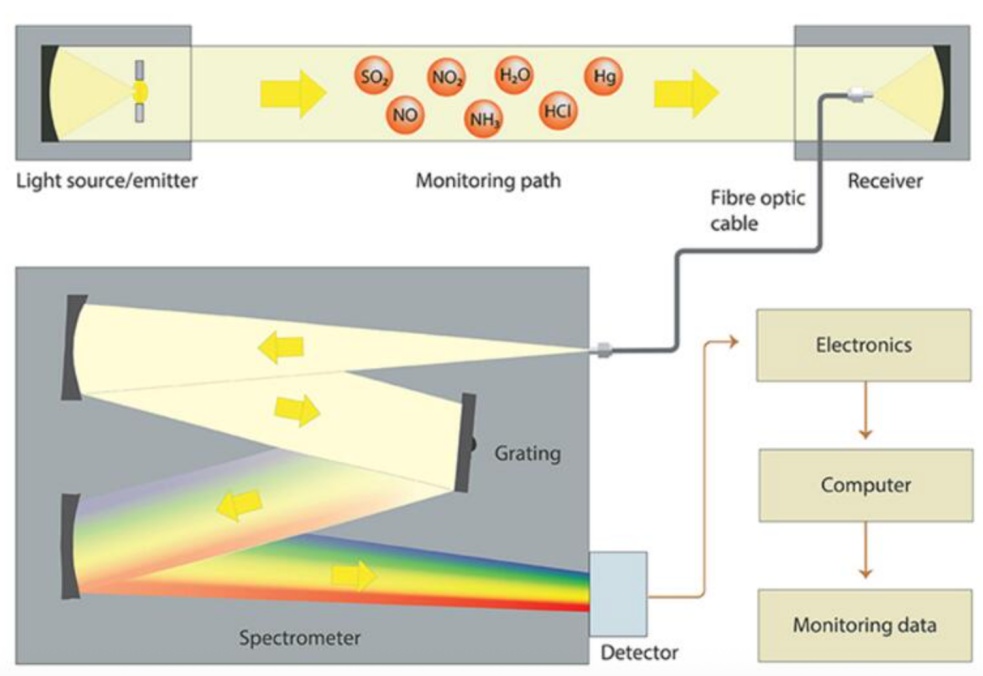
First, a stable ultraviolet light source emits light through the sample cell or across an open measurement path. If the gas contains UV-active molecules, those molecules absorb specific wavelengths. The transmitted light then reaches a spectrometer.
Next, the spectrometer separates the light into many wavelengths instead of treating it as one signal. The gas analyzer software compares this measured spectrum with stored reference spectra for gases such as SO₂, NO, NO₂, and NH₃. It then uses spectral fitting to isolate the contribution of each gas.
The calculation is based on the Beer–Lambert law: more gas molecules over a longer optical path absorb more light.
In simple terms, the gas analyzer converts the strength of the gas-specific absorption pattern into a concentration value. This is especially useful when several gases appear in the same stream. For example, combustion flue gas may contain SO₂, NO, NO₂, water vapor, particulates, and other compounds. UV-DOAS does not rely only on one absorption point. Instead, it evaluates the shape of absorption features across a wavelength interval, which improves its ability to separate overlapping signals.
However, good optics alone do not guarantee good results. Reliable UV-DOAS measurement also depends on proper system design:
- A representative gas sample.
- Correct sample pressure, temperature, and flow conditions.
- Heated sampling lines where condensation may occur.
- Effective filtration for dusty gas streams.
- Clean optical windows and a stable light source.
- Regular zero checks, span checks, and calibration verification.
In short, UV-DOAS combines optical hardware with spectral analysis. The analyzer provides the data, while proper installation keeps that data trustworthy.
Which Gases Can UV-DOAS Gas Analyzer Measure?
UV-DOAS works best for gases that show clear absorption features in the ultraviolet region. It is widely used for sulfur- and nitrogen-related pollutants because many of these gases respond strongly to UV light. Common target gases include:
- Sulfur dioxide (SO₂)
- Nitric oxide (NO)
- Nitrogen dioxide (NO₂)
- Nitrogen oxides (NOx), calculated from NO and NO₂
- Ammonia (NH₃)
- Ozone (O₃)
- Chlorine dioxide (ClO₂)
- Hydrogen sulfide (H₂S) in suitable measurement ranges and analyzer designs
- Benzene, toluene, xylene, and other selected aromatic hydrocarbons
The final gas list always depends on the gas analyzer’s wavelength range, optical components, reference library, and intended application. A gas may have UV absorption, yet still require careful validation if the concentration is very low or the sample contains strong interfering compounds.
By contrast, UV-DOAS is not always the most practical choice for every gas. Carbon monoxide and carbon dioxide often suit NDIR technology because they absorb infrared light strongly. Moisture measurement may also require a dedicated humidity or moisture analyzer.
Therefore, buyers should define their requirements before selecting a system. Start with the target gases, expected concentration range, detection limit, sample temperature, pressure, moisture, particulate loading, and response-time target. Those details shape the correct UV-DOAS gas analyzer configuration.
How Does UV-DOAS Compare With NDIR, FTIR, and TDLAS?
UV-DOAS, NDIR, FTIR, and TDLAS all use light-based measurement principles. Yet each technology works best in different applications. The right decision depends on gas chemistry, measurement range, site conditions, and compliance requirements.
| Technology | Measurement principle | Typical target gases | Key strengths | Main limitations |
|---|---|---|---|---|
| UV-DOAS | Differential ultraviolet absorption spectroscopy | SO₂, NO, NO₂, NH₃, O₃, ClO₂, selected aromatics | Multi-gas analysis, strong selectivity, effective pollutant monitoring | Limited to gases with usable UV absorption |
| NDIR | Non-dispersive infrared absorption | CO, CO₂, CH₄, hydrocarbons, selected acid gases | Proven, practical, cost-effective for common gases | Cross-sensitivity may increase in complex gas mixtures |
| FTIR | Broadband infrared spectral analysis | VOCs, acid gases, hydrocarbons, CO, CO₂, NH₃ and more | Broad multi-gas capability and large spectral libraries | Higher system complexity and more demanding maintenance |
| TDLAS | Tunable diode laser absorption spectroscopy | H₂O, O₂, NH₃, HCl, HF, CO and targeted species | Fast response, high sensitivity, strong in-situ capability | Usually targets one gas or a limited gas group |
No technology wins in every situation. The best analyzer is the one that matches the actual gas matrix and the operating conditions—not simply the one with the longest feature list.
How Can UV-DOAS Support CEMS and Flue Gas Monitoring?
A continuous emissions monitoring system(CEMS), tracks pollutant emissions from industrial sources over time. UV-DOAS gas analyzer can serve as a core analytical technology in CEMS because it supports continuous measurement of key gases, including SO₂, NO, NO₂, and NH₃.
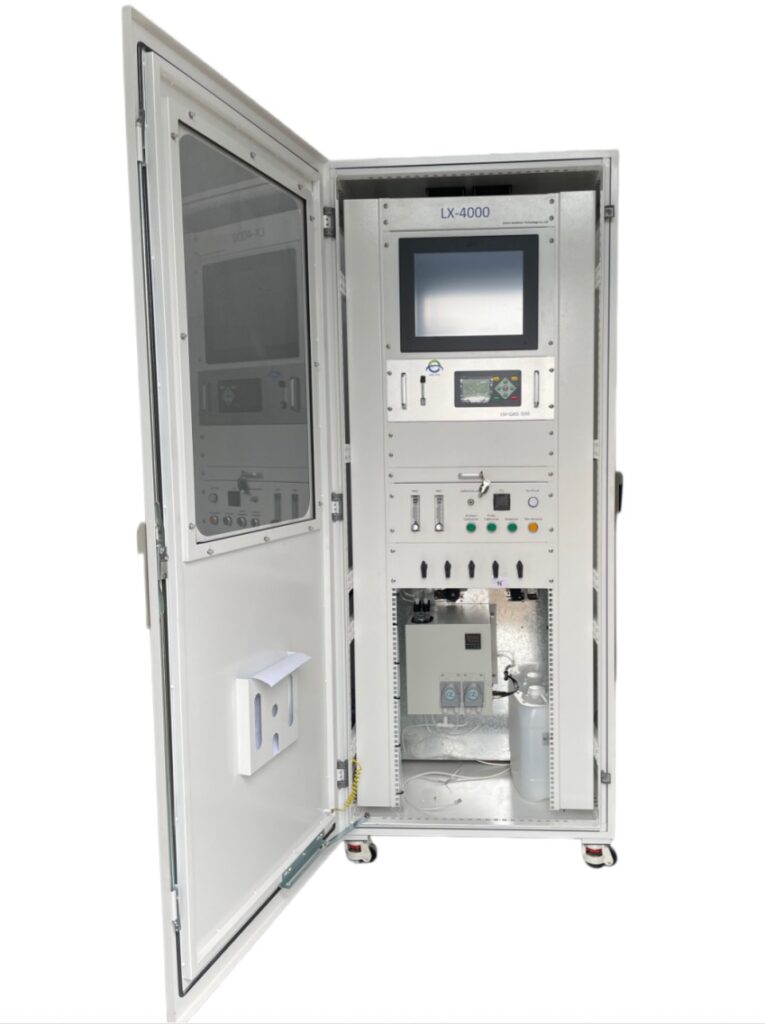
In a typical extractive CEMS setup, a probe collects gas from a stack or duct. The sample then travels through a heated line to prevent condensation. After filtration and conditioning, the gas enters the UV-DOAS gas analyzer cell. The gas analyzer measures the target components, and the system sends the results to a data acquisition and handling system for reporting and compliance management.
A well-matched system turns gas monitoring from a reporting task into a useful operational tool.
Conclusion
UV-DOAS gas analyzer gives industrial operators a clear way to measure several important UV-active gases with one analytical method. Its spectral approach supports selective measurement of SO₂, NO, NO₂, NH₃, O₃, and other relevant gases in flue gas and process streams.
When configured correctly, it can strengthen CEMS performance, support combustion optimization, identify ammonia slip, and improve emissions visibility. The key is to match the analyzer and sampling design to the real process conditions.