



How to prove the nitrogen-saving benefits of legume-based crop rotations? Without accurate field gas measurements, valuable greenhouse gas reductions and soil health improvements often remain invisible.
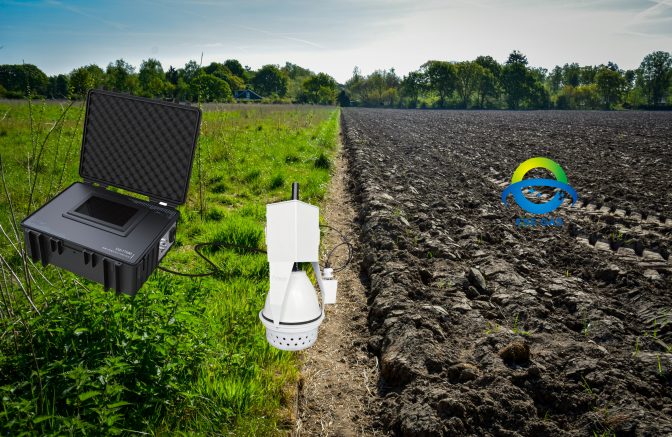
A Portable FTIR Gas Analyzer helps quantify nitrogen-use efficiency by simultaneously measuring N₂O, CO₂, CH₄, NH₃, and other soil gases in real time. This enables researchers and farmers to evaluate crop rotations, reduce fertilizer dependence, and verify greenhouse gas mitigation benefits with scientific confidence.
As agriculture moves toward climate-smart production, measuring what happens below the soil surface becomes just as important as monitoring crop yields. Let’s explore how a portable FTIR gas analyzer provides the data needed to optimize nitrogen-efficient crop cultivation.
Why Is Nitrogen Efficiency Becoming a Critical Challenge in Modern Agriculture?
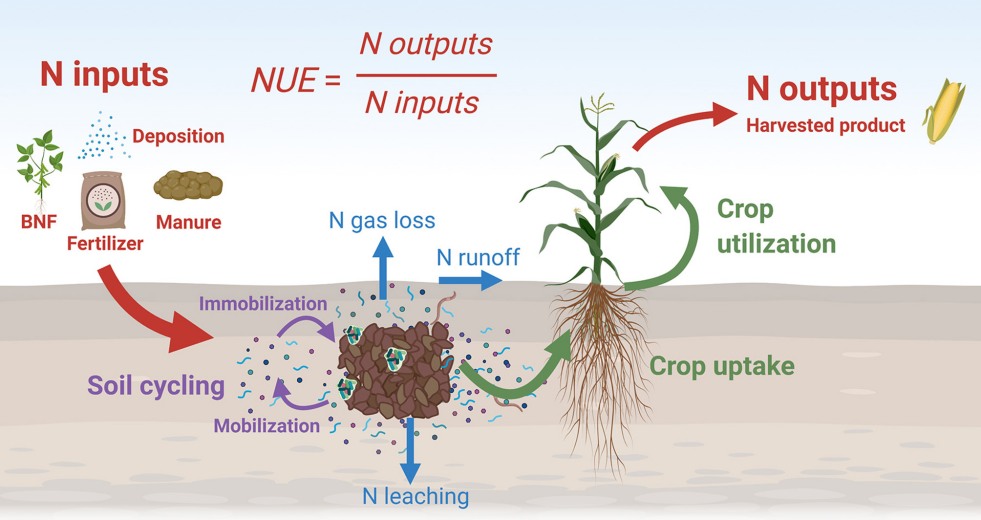
Nitrogen fertilizer remains one of the largest input costs in crop production. While synthetic nitrogen significantly boosts yields, excessive application often results in higher production costs, increased N₂O emissions, soil degradation, nutrient losses through leaching and volatilization, and reduced sustainability performance.
Nitrous oxide (N₂O) is particularly concerning because it has a much higher global warming potential than carbon dioxide. Consequently, governments, researchers, and agricultural organizations are seeking practical ways to reduce fertilizer dependency without sacrificing productivity.
One promising solution is increasing the proportion of nitrogen-fixing legumes such as peas and faba beans within crop rotations. For example, climate-smart farming projects have explored increasing legume participation from approximately 5% to 20% of crop rotations. By replacing a portion of imported soybean meal and utilizing biological nitrogen fixation, these systems can significantly reduce agricultural carbon emissions while improving farm profitability.
However, proving these benefits requires accurate field measurements rather than theoretical estimates.
How Does a Portable FTIR Gas Analyzer Measure the Real Impact of Nitrogen-Efficient Cropping Systems?
Traditional soil sampling provides only a partial picture of nitrogen dynamics. In contrast, a portable FTIR gas analyzer continuously measures multiple greenhouse gases directly in the field. This function allows researchers to evaluate the complete environmental performance of different cropping strategies.
Unlike single-gas instruments, FTIR spectroscopy captures multiple gas components during a single measurement cycle, greatly improving efficiency and data consistency. FTIR analyzers are widely recognized for multi-gas monitoring with high sensitivity and low detection limits.
As a result, researchers can better understand how different crop rotations influence nitrogen cycling, greenhouse gas emissions, soil biological activity, carbon sequestration potential, and fertilizer utilization efficiency.
How Did the Portable FTIR Gas Analyzer Support Climate-Smart Legume Research?
To evaluate the environmental benefits of nitrogen-efficient cropping systems, researchers can deploy theportable soil respiration measurement system across multiple agricultural trial sites. The portable FTIR gas analyzer is a part of the system.
The project focused on spring pea monoculture, spring oat monoculture, spring pea–oat intercropping, traditional faba bean systems, and winter wheat control plots. The objective was not only to compare crop performance but also to investigate how legumes influence nitrogen availability for subsequent winter wheat crops.
Using the Portable FTIR Gas Analyzer, researchers were able to simultaneously monitor greenhouse gas emissions across multiple field locations and soil conditions. This provided direct evidence of how legume-based rotations affect N₂O emissions and overall environmental performance.
More importantly, the measurements allowed researchers to quantify actual emission reductions rather than relying on generalized emission factors.
Why Is Multi-Site Monitoring Using a Portable FTIR Gas Analyzer Essential for Nitrogen-Efficient Crop Evaluation?
Agricultural emissions vary significantly depending on soil type, temperature, moisture conditions, crop variety, and management practices. Therefore, data from a single experimental plot rarely represents regional agricultural conditions.
The portable design of the FTIR gas analyzer allowed researchers to conduct measurements across cooperating farms, expanding both geographic coverage and soil diversity.
Over two growing seasons, field campaigns evaluated winter faba beans, spring faba beans, winter wheat–faba bean intercrops, and conventional winter wheat systems. This broader dataset helped researchers build a more complete understanding of how legumes influence soil health, nitrogen supply, crop productivity, and greenhouse gas emissions.
Because the portable FTIR gas analyzer can be transported directly to field locations, measurements remain representative of real farming conditions rather than controlled laboratory environments. Portable Soil Respiration Measurement Systems are increasingly used for soil flux studies because they enable direct field observations with high sensitivity.
What Role Does a Portable FTIR Gas Analyzer Play in the Portable System?
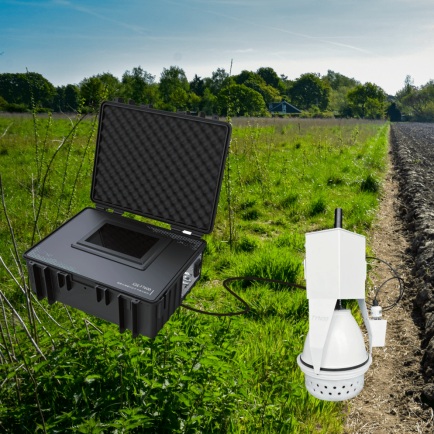
The Portable Soil Respiration Measurement System combines portable FTIR gas analyzer, automated soil flux chamber, real-time flux calculation software, and field-ready portable platform. The automated chamber captures gases emitted from the soil surface. The FTIR gas analyzer then measures concentration changes over time, allowing the software to calculate greenhouse gas fluxes automatically.
Moreover, the portable FTIR gas analyzer simultaneously measures N₂O, CO₂, CH₄, NH₃, H₂O, and CO. Additional gas species can be added depending on project requirements. FTIR technology supports simultaneous multi-component analysis while maintaining high measurement accuracy.
What Is the Working Principle of a Portable FTIR Gas Analyzer?
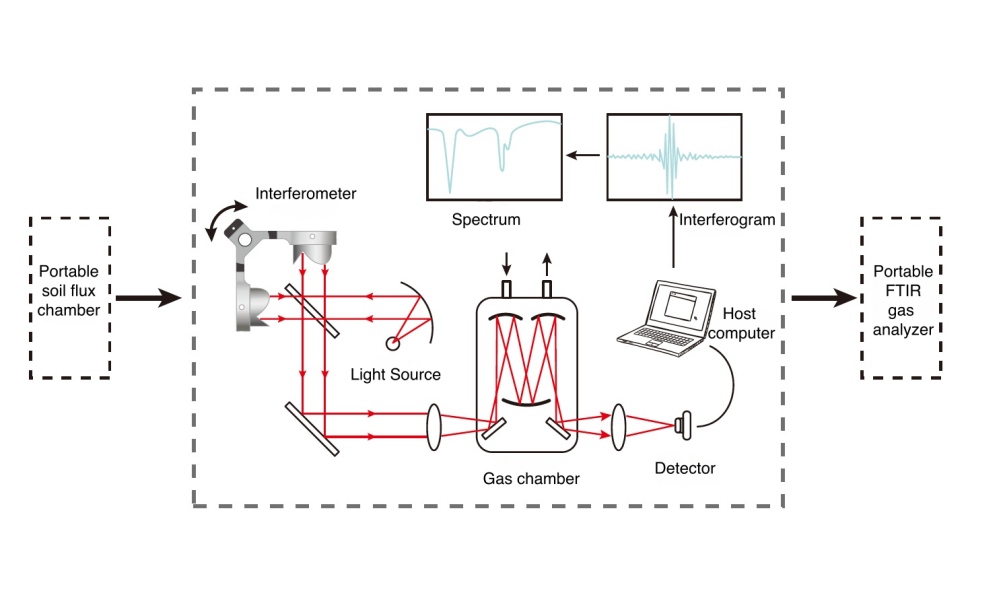
A Portable FTIR Gas Analyzer operates based on Fourier Transform Infrared (FTIR) spectroscopy. It combines a high-stability infrared light source, a precision optical measurement platform, an advanced Michelson interferometer, modulation technology, and computer-based spectral analysis to achieve accurate multi-gas measurement.
During operation, infrared light passes through the Michelson interferometer, where it is split and recombined to generate an interference signal (interferogram). The gas sample absorbs specific infrared wavelengths according to its molecular structure, creating a unique absorption pattern. The system then applies a Fourier Transform to convert the interferogram into an infrared spectrum. By comparing this spectrum with reference databases, the analyzer simultaneously identifies and quantifies multiple gas components.
This technology enables rapid, high-precision measurement of gases such as N₂O, CO₂, CH₄, NH₃, CO, and H₂O, making portable FTIR gas analyzers ideal for greenhouse gas monitoring, soil respiration studies, environmental research, and agricultural emission assessments.
What Advantages Does the Portable FTIR Gas Analyzer Offer?
The portable FTIR gas analyzer is specifically designed for high-precision soil greenhouse gas monitoring in agricultural and environmental applications. Its self-developed interferometer and fully localized core technology ensure long-term reliability, easier maintenance, and lower operating costs.
Key advantages include:
- High Accuracy and Fast Response – Delivers excellent measurement precision, low drift, and rapid response for reliable field data.
- Advanced Chemometric Algorithms – Effectively eliminate cross-interference from H₂O and CO₂, ensuring accurate multi-gas analysis.
- Built-in Long-Path White Cell – Provides high sensitivity and ppb-level detection capability, meeting the requirements of soil greenhouse gas flux studies.
- Portable and Field-Ready Design – Lightweight construction, simple operation, and short warm-up time allow efficient measurements across multiple sites.
- Modular Architecture – Simplifies maintenance and enables convenient system upgrades.
- Optional High-Precision Gas Multiplexer – Supports faster, more efficient monitoring of multiple sampling points.
- Comprehensive Soil Gas Analysis – Simultaneously measures key soil gases, including N₂O, CO₂, CH₄, NH₃, CO, and H₂O, providing a complete understanding of soil respiration and nitrogen cycling.
These features make the FTIR gas analyzer an ideal solution for researchers and agronomists seeking accurate, real-time greenhouse gas measurements across farmlands, wetlands, forests, and other ecosystems.
Conclusion
The future of sustainable agriculture depends on accurately measuring the environmental outcomes of farming practices. A Portable FTIR Gas Analyzer transforms invisible soil processes into actionable data.
By simultaneously monitoring greenhouse gas emissions and nitrogen-related soil dynamics, it helps researchers, agronomists, and farmers optimize crop rotations, reduce fertilizer dependency, improve nitrogen-use efficiency, and validate carbon reduction strategies.
For organizations seeking scientifically robust greenhouse gas monitoring, the ESEGAS provides a powerful solution for quantifying the soil health and environmental benefits of climate-smart legume cultivation while supporting long-term agricultural sustainability.