



A TDL gas module uses laser absorption to detect ethylene with high precision. It delivers real-time, interference-free measurement at ppm or ppb levels. Compared with traditional sensors, it offers faster response, higher selectivity, and lower maintenance, making it ideal for industrial process control, safety monitoring, and fruit ripening applications.
What You Need to Know About TDLAS for Ethylene Detection?
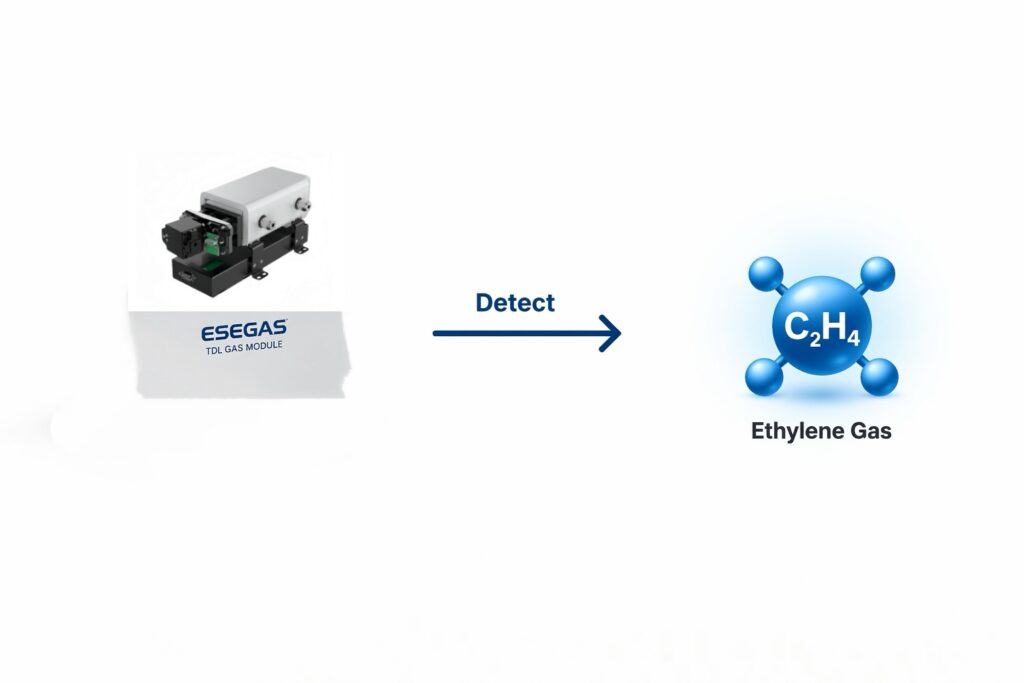
Definition
A TDL gas module applies Tunable Diode Laser Absorption Spectroscopy (TDLAS). It measures gas concentration by targeting a specific absorption wavelength. This enables precise, real-time detection of ethylene even at very low levels.
Types
TDL systems typically include two configurations:
- In-situ TDL: Measures directly in the process stream for instant results
- Extractive TDL: Draws gas into a chamber for controlled analysis
Applications
- Fruit storage and ripening control
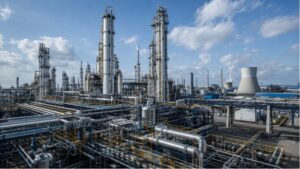
- Petrochemical process optimization
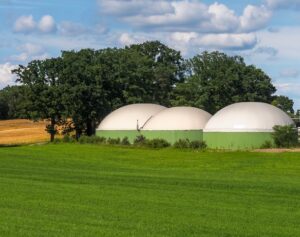
- Biomass and bioethanol production
- Gas leak detection and safety systems
- Environmental and research monitoring
Selection Criteria
- Detection limit (ppm or ppb)
- Response time (real-time vs delayed)
- Installation type (in-situ vs extractive)
- Process conditions (temperature, dust, humidity)
- Integration with PLC/SCADA
What Challenges Make Ethylene Gas Difficult to Detect?
Ethylene may exist in very low concentrations, but it has a powerful impact on many processes, because even small changes in C₂H₄ levels can directly affect product quality, safety, and process efficiency, so industries that rely on ethylene cannot afford inaccurate or delayed measurements.
In fruit storage, a slight increase in ethylene accelerates ripening and shortens shelf life, while in petrochemical processes, uncontrolled ethylene levels can affect reaction performance and product purity, making precise monitoring not just helpful but essential for control.
The challenge is that ethylene is often present at ppm or even lower levels, and it usually exists alongside other hydrocarbons, which makes traditional sensors struggle with sensitivity and interference, so users searching for a better solution are typically trying to solve three problems at once: detect lower concentrations, avoid cross-interference, and respond faster.
What Makes TDL Gas Modules Different from Traditional Ethylene Sensors?
A TDL gas module uses Tunable Diode Laser Absorption Spectroscopy (TDLAS), which measures gas concentration by targeting a specific absorption wavelength of the target gas, allowing the system to identify ethylene based on its unique spectral fingerprint rather than a broad signal.
Unlike conventional technologies that rely on indirect or broad-spectrum detection, TDL locks onto a single absorption line of ethylene, so other gases in the background do not interfere with the measurement, which makes it highly selective even in complex gas mixtures.
At the same time, the laser-based method delivers real-time measurement without waiting for sampling or conditioning, so operators receive immediate feedback and can react quickly to process changes, which is exactly what most industrial users need but often cannot achieve with older technologies.
Why Is TDL Gas Module the Best Choice for Detecting Ethylene Gas?
The biggest advantage of a TDL gas module lies in its ability to detect trace ethylene with high sensitivity, because it can measure concentrations down to ppm or even lower levels, making it suitable for applications where early detection is critical, such as fruit ripening control or leak monitoring.
At the same time, its exceptional selectivity ensures that the measurement focuses only on ethylene, even in environments filled with methane, CO₂, or other hydrocarbons, which eliminates false readings and improves reliability in real industrial conditions.
Response speed is another key advantage, since TDL systems provide near real-time data, allowing operators to adjust processes immediately instead of reacting too late, which is especially important in dynamic systems where gas composition changes quickly.
In addition, many TDL modules support in-situ measurement, meaning they measure directly inside the process without sample extraction, which reduces maintenance, avoids delays, and improves long-term stability, making them more practical for continuous industrial use.
Why Do Users Choose TDL Over Other Ethylene Detection Technologies?
Users choose TDL because it solves the core limitations of traditional sensors. It delivers higher selectivity, faster response, and better long-term stability. This makes it more suitable for trace ethylene detection in real industrial conditions.
To understand the difference clearly, compare the main technologies below:
Technology Comparison: TDL vs Other Ethylene Sensors
| Technology | Detection Principle | Sensitivity | Selectivity | Response Time | Maintenance | Typical Use Case |
| TDL (TDLAS) | Laser targets specific absorption line | ppm to ppb | Very high | Seconds (real-time) | Low | Trace detection, process control |
| NDIR | Broadband IR with filters | ppm to % | Moderate | Seconds to tens of seconds | Medium | General gas monitoring |
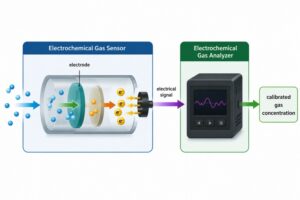
| Electrochemical | Chemical reaction-based | ppm | Low to moderate | Seconds | High (drift, calibration) | Portable detection |
| Gas Chromatography | Separation + lab analysis | ppb | Very high | Minutes | High | Laboratory analysis |
Response speed is another key factor. TDL systems typically respond within seconds, while traditional systems often require longer stabilization or sampling time. Maintenance also plays a major role in technology selection. TDL systems show minimal drift and require less frequent calibration, while electrochemical sensors degrade over time and need regular replacement.
In practical terms, users choose TDL when the process demands fast decisions, trace-level detection, and reliable data. It reduces operational risk and improves control performance. For applications like ethylene monitoring, where concentration is low and interference is high, TDL is often the only technology that meets all requirements at once.
Conclusion
Ethylene control always depends on accurate detection, because without reliable data, even the best control strategy cannot work effectively, so measurement becomes the foundation of the entire process.
TDL gas modules go beyond simple detection by providing fast, selective, and highly sensitive measurement, which allows operators to move from delayed reactions to real-time optimization, improving both efficiency and reliability.
In practical terms, a TDL gas module is not just a sensor, but a precision tool that directly connects ethylene measurement to process control, product quality, and operational performance.
FAQs
1.What is the detection limit of a TDL ethylene analyzer?
Most TDL systems detect ethylene at ppm or even ppb levels, depending on configuration and optical path design.
2.Can TDL measure ethylene in mixed gases?
Yes. TDL targets a specific absorption wavelength, which minimizes interference from other gases.
3.Is TDL suitable for real-time monitoring?
Yes. TDL provides continuous, real-time measurement without sampling delays.
4.What industries use TDL for ethylene detection?
Common industries include food storage, petrochemicals, bioenergy, environmental monitoring, and safety systems.
5.Does TDL require frequent calibration?
No. TDL systems typically show low drift and require less maintenance than traditional sensors.