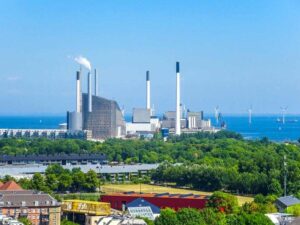




Hydrochloric acid (HCl) often appears in the flue gas of coal-fired power plants because coal contains trace amounts of chlorine. During combustion, chlorine converts into HCl gas, which exits the boiler with other exhaust gases. Left unmonitored, HCl contributes to acid deposition, accelerates equipment corrosion, and can trigger environmental and health violations under tightening emission standards. Continuous HCl monitoring like TDLAS Gas Analyzer helps plant operators reduce corrosive damage, protect workers and meet regulatory limits.
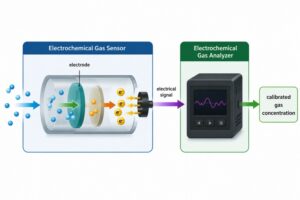
Measuring HCl in boiler flue gas isn’t simple. The exhaust is extremely hot, loaded with particulate matter, and contains a complex mix of gases like CO₂, SO₂, and NOx. These factors can interfere with many traditional sensors, leading to drift, false readings or frequent maintenance. Standard electrochemical sensors and cold-dry extractive systems struggle to deal with heat, dust and acid condensation without complex sample conditioning.
This article explains how TDLAS gas analyzers overcome these challenges to deliver accurate, reliable HCl readings in harsh coal plant environments. Along the way, you’ll see how the technology works in real time, why it outperforms older methods, and how it supports process control, environmental compliance, and plant safety.
Why Does TDLAS Gas Analyzer Monitoring of HCl Matter in Coal Power Generation?
When coal burns, trace chlorine in the fuel converts to hydrochloric acid (HCl) gas and exits via the flue gas stream. HCl is an acid gas that irritates eyes and lungs, damages vegetation, and contributes to acid rain and atmospheric chemical reactions. Its presence also accelerates corrosion in boiler hardware, ductwork, and scrubbers if not controlled. Because of these impacts, global regulators like the U.S. EPA include HCl in broader acid gas and hazardous air pollutant rules tied to coal-fired units. These standards aim to protect both public health and the environment by limiting acid emissions into the air.
Beyond environmental risk, accurate HCl data directly supports pollution control systems in coal plants. Devices such as wet flue gas desulfurization (FGD), selective catalytic reduction (SCR), and electrostatic precipitators (ESP) work together to clean flue gas before release. Each depends on knowing real concentrations of acid gases to perform efficiently and avoid damage. For example, FGD systems neutralize acid gases by reacting them with alkaline sorbents, a process that is more effective when operators can adjust chemistry based on measured HCl loads. Likewise, SCR and ESP performance can degrade if corrosive compounds are mis-characterized or overlooked.
Finally, real-time HCl measurements enable safer, more efficient plant operations. Operators who see accurate, continuous emission data can adjust combustion conditions, fuel blends, or pollution control settings on the fly, rather than relying on slow or intermittent testing. This responsiveness reduces unplanned excursions above compliance limits, lowers corrosion risk, and helps maintain optimized combustion and flue gas cleanup performance across a wide range of loads and fuel conditions.
Ultimately, monitoring HCl with a TDLAS gas analyzer isn’t just regulatory box-checking. It gives plant engineers a clear window into acid gas behavior, which helps protect workers and assets, improve process control, and meet increasingly stringent environmental expectations.
How Does a TDLAS Gas Analyzer Work to Measure HCl in Coal-Fired Power Plants?
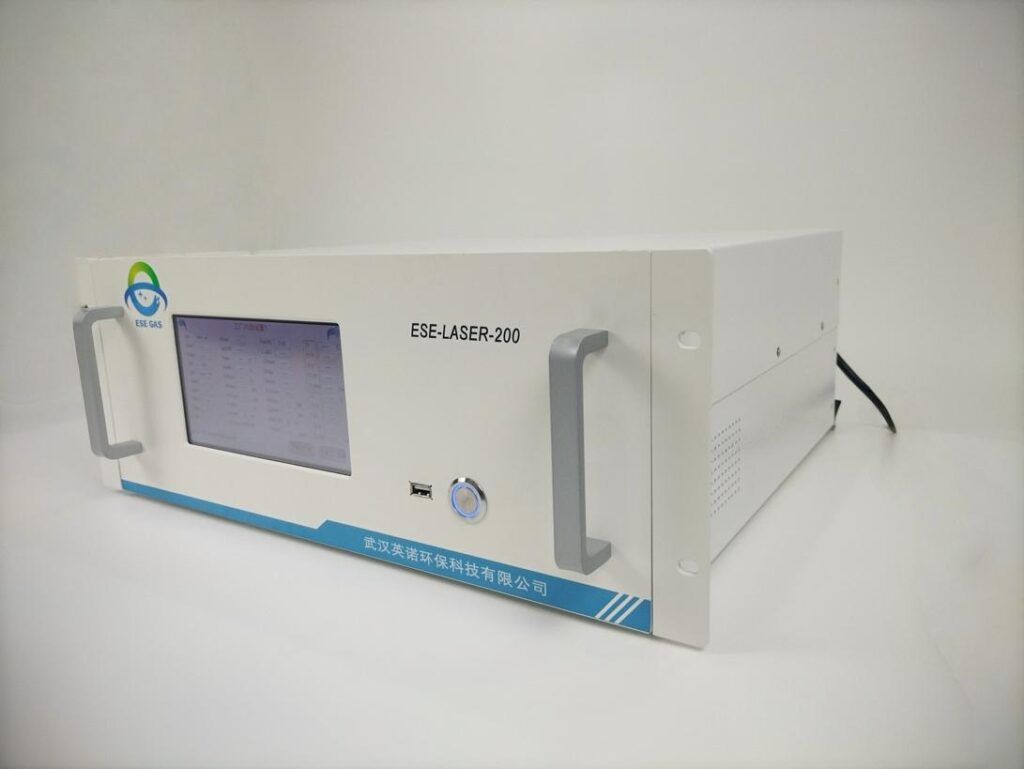
A TDLAS gas analyzer uses laser light to “see” gas molecules. It sends a tunable diode laser through a gas stream at wavelengths that the target gas strongly absorbs. When HCl molecules absorb this light, the analyzer measures the drop in intensity and converts it into a precise concentration reading. This direct optical technique gives reliable results across a wide range — from parts-per-billion up to higher industrial levels.
This direct absorption method stands out because it measures gases without chemical reactions or contact sensors. Unlike older technologies, the laser targets a specific absorption feature of HCl, which helps separate it from other flue gas components like CO₂ or NOx. As a result, the data you get is clear, fast, and specific to the gas you care about.
In a typical setup, the laser, optics, and detector form a precise light path through the stack or sampling cell. The system continuously tracks changes in light absorption as the gas flows by. Because this happens in real time, operators can see gas trends instantly and act quickly when HCl levels change.
Key strengths of TDLAS for HCl monitoring include:
- Laser-level selectivity: The system tunes into the unique spectral fingerprint of HCl, minimizing confusion from other flue gases.
- Wide dynamic range: It captures tiny fluctuations and higher concentrations in one instrument.
- Fast, continuous readings: From control room dashboards to CEMS reports, data updates in real time.
- Stable, low-maintenance performance: With few moving parts and direct optical measurement, uptime stays high.
By turning light absorption into actionable concentration readings, TDLAS analyzers give power plants the clarity and speed needed to manage emissions, protect equipment, and meet strict regulatory expectations.
How Does a TDLAS Gas Analyzer Compare with Other Gas Measurement Technologies?
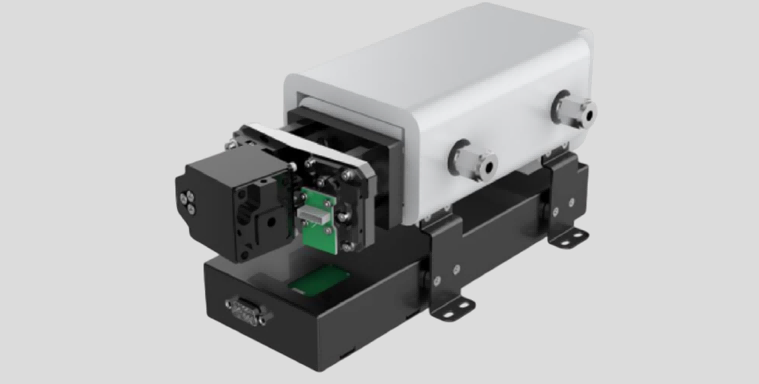
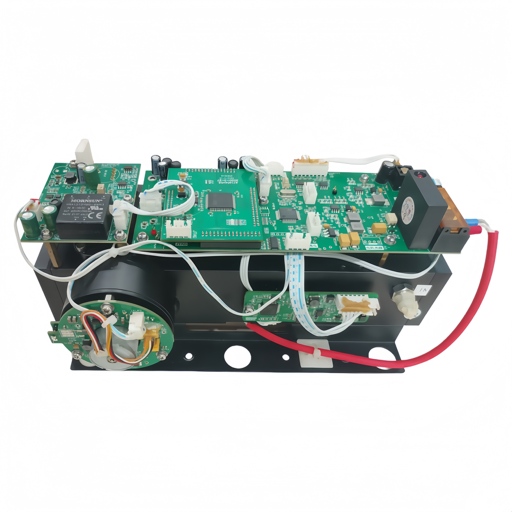
(ESEGAS TDLAS Gas Module & NDIR Gas Sensor)
When choosing a gas analyzer for monitoring HCl in coal-fired power plants, it’s important to understand how TDLAS gas analyzers stack up against other technologies. Different methods offer unique strengths, but TDLAS often delivers clear advantages for fast, reliable, and low-interference measurements in harsh industrial environments.
| Feature / Metric | TDLAS Gas Analyzer | NDIR (Non-Dispersive Infrared) | FTIR (Fourier-Transform Infrared) | CRDS (Cavity Ring-Down Spectroscopy) |
| Detection Principle | Narrow-line laser absorption tuned to specific gas fingerprints | Broadband IR with optical filters | Full infrared spectrum analysis | Laser pulses trapped in optical cavity |
| Selectivity | Very high specificity; laser targets narrow absorption lines, reducing cross-interference | Moderate; spectral overlap can cause interference | Moderate to high; needs complex spectral fitting | Very high; long effective path length increases sensitivity |
| Sensitivity / Detection Limit | ppb-level possible for trace gases, excellent selectivity | ppm-level typical; cross-interference can limit detection | Variable depending on signal processing; can be high for many gases | Extremely sensitive (ppb or lower) |
| Response Time | Fast / real-time monitoring (seconds) | Faster than some methods, but slower than TDLAS | Slower; spectral analysis takes longer | Depends on cavity conditions; often slower setup |
| Cross-Interference | Very low due to wavelength tuning | Higher due to broadband source and filters | Variable; needs deconvolution of spectrum | Very low; optics isolate gas signal well |
| Maintenance Requirements | Low; few moving parts, minimal recalibration | Moderate; optical filters and detectors may require service | Higher; complex optics and mechanical interferometer | High; mirrors and cavity alignment need careful upkeep |
| Robustness in Harsh Conditions | High; optical measurement handles high temperature and dust | Moderate; optical path sensitivity can degrade in dirty gases | Moderate; must protect optical components | Moderate to low; sensitive cavity setup |
| Real-Time / Continuous Output | Yes — continuous monitoring with instant data | Yes, but sometimes slower update | Yes, but slower processing | Yes, but data extraction can add latency |
| Calibration Frequency | Low; stable long-term performance | Medium; periodic recalibration needed | High; spectral fitting requires regular checks | High; cavity condition affects accuracy |
Overall, a TDLAS gas analyzer delivers reliable, real-time HCl measurements with high selectivity and stability even in demanding coal-plant environments. This makes it a strong choice when speed, accuracy, and low maintenance matter for emissions compliance and process control.
What Real-World Benefits Does a TDLAS Gas Analyzer Bring to Coal-Fired Power Plants?

A TDLAS gas analyzer delivers measurable value in the field, far beyond theoretical performance. In coal-fired power plants, this technology not only supports environmental compliance but also helps operators run cleaner, safer, and more cost-efficient plants. Below, we explore three key areas where TDLAS makes a difference.
Emissions Compliance with Regulatory Standards
Meeting local and international emission limits is a core priority for today’s power plants. Environmental agencies worldwide, including the EPA and EU regulators, set strict limits on acid gases like HCl due to their harmful health and environmental effects. Continuous data from a TDLAS gas analyzer helps plants demonstrate compliance with these limits in real time, reducing the risk of violations, fines, or forced shutdowns. The system’s high specificity and real-time output make it easier to report accurate emissions data and adapt quickly to evolving regulatory thresholds.
Improved Flue Gas Treatment Efficiency
Beyond simply reporting emissions, TDLAS data can drive smarter process decisions. Scrubbers, catalysts, and other flue gas cleaning systems perform best when operators know the exact composition of the gas stream. When real-time HCl levels are available, operators can adjust reagent dosing, airflow, and catalyst temperature with confidence. This targeted control reduces waste, extends component life, and improves overall flue gas treatment efficiency. Instead of guessing and reacting late, plants can act early and precisely.
Reduced Maintenance and Unplanned Downtime
Traditional gas sensors often require frequent calibration and suffer from drift when exposed to high temperatures, corrosive acids, and particulate matter. In contrast, TDLAS analyzers rely on optical absorption with minimal contact between sensor and gas, which reduces contamination and prolongs calibration intervals. Because they have fewer moving parts, TDLAS systems also experience lower drift and less wear over time. The result is fewer field calibrations, less maintenance labor, and more uptime for both analyzers and the plant as a whole.
Overall, a TDLAS gas analyzer gives coal power operators actionable insight, which leads to cleaner operation, smarter process control, and more consistent compliance — all with lower life-cycle cost and operational friction than many legacy technologies.
Conclusion
After examining the role of TDLAS gas analyzers for HCl measurement in coal-fired power plants, it’s clear that this technology offers powerful practical benefits. From highly accurate monitoring to strong support for compliance and operational efficiency, TDLAS helps solve real challenges that plants face every day.
First, TDLAS delivers real-time, accurate, and low-maintenance HCl measurements with a robust optical design. By tuning laser light to the unique absorption wavelength of HCl, the system isolates that gas from others and reports its concentration continuously with high precision and minimal drift. This approach reduces the need for frequent calibration and helps keep analyzers running reliably under high temperature and dusty flue gas conditions. Such consistency supports both plant uptime and dependable emissions data.
Beyond measurement quality, TDLAS makes a difference in environmental compliance, operational safety, and process optimization. Live data feeds into control systems, so operators can fine-tune scrubbers, catalysts, and combustion settings. This improves flue gas treatment efficiency while reducing unexpected excursions above regulatory limits. At the same time, continuous monitoring supports emissions reporting, demonstrating compliance with tightening environmental standards and reducing risk during audits.
Ultimately, a TDLAS gas analyzer isn’t just a sensor — it becomes a strategic tool that links precise emissions insight to smarter process control, enhanced safety, and stronger regulatory performance. By integrating measurement with real-world plant needs, this technology helps operators navigate the evolving demands of clean power generation and sustainable operations.
Frequently Asked Questions (FAQ)
1. What is a TDLAS gas analyzer and why is it used for HCl measurement?
A TDLAS gas analyzer uses tunable diode laser absorption spectroscopy to detect gas concentrations by measuring light absorption at specific wavelengths. This method gives high selectivity and sensitivity for gases like hydrochloric acid (HCl) even in complex flue gas mixtures from coal plants. Compared with traditional methods, it delivers real time and interference resistant measurements that are ideal for emissions monitoring and process control.
2. How does a TDLAS gas analyzer measure HCl in flue gas?
The system scans a narrow laser wavelength that matches the absorption spectrum of HCl molecules. When those molecules absorb the laser light, the analyzer calculates HCl concentration based on the reduction in light intensity. This direct optical approach avoids chemical reactions and gives accurate, fast readings that help operators track emission trends.
3. Can TDLAS gas analyzers work in harsh coal plant environments?
Yes. TDLAS systems are designed to handle high temperature flue gases, particulate matter, and corrosive components typical of coal combustion stacks. With proper sampling or optical setup, they maintain performance without frequent breakdowns or slow response issues.
4. What measurement range can TDLAS gas analyzers achieve for HCl?
TDLAS HCl gas analyzers typically cover ranges like 0 50 ppm, 0 100 ppm, and up to 0 500 ppm, depending on configuration and application needs. They also provide high resolution (e.g., 0.1 ppm) and ±1 % accuracy of full scale readings under stable conditions.
5. Does TDLAS help reduce maintenance and operational costs?
Yes. TDLAS analyzers use non contact optical measurement and have fewer moving parts. This leads to less frequent calibration, reduced drift, and lower field maintenance, which can cut long term operating costs.
6. What output options do TDLAS analyzers support for integration?
Most industrial TDLAS analyzers offer 4 20 mA analog outputs and RS 232 or RS 485 digital interfaces for easy integration with plant control systems and data acquisition platforms.