


Choosing a gas analyzer may look simple at first: select a model, confirm the gas components, and install it at the site. But in real industrial environments, measurement problems often begin after the equipment is delivered. Dust, moisture, high temperature, corrosive gases, unstable flow, wrong calibration, or incorrect operation can all turn a good analyzer into an unreliable data source. When operators do not fully understand the system, small issues may quickly become process risks, compliance concerns, or unexpected downtime. At ESEGAS, we believe reliable gas analysis is not only about supplying equipment—it is about helping users build a complete measurement capability through professional equipment supply and supporting training services.
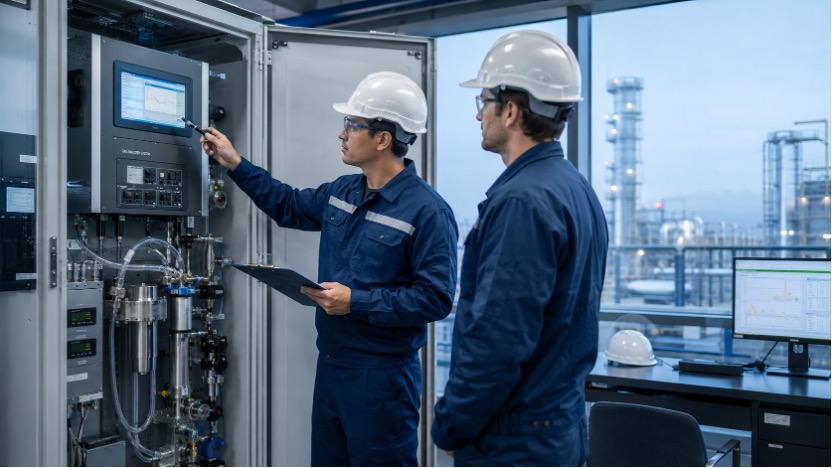
Gas analyzer equipment supply and supporting training services improve long-term measurement reliability by ensuring correct analyzer selection, proper system configuration, standardized operation, regular calibration, preventive maintenance, and faster troubleshooting. A complete solution from ESEGAS helps industrial users obtain stable gas measurement data, reduce operational errors, extend equipment service life, and support safer, more compliant production.
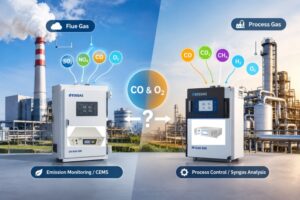
However, every gas analysis project has its own working conditions. A process gas analyzer used in a chemical plant is different from a flue gas analyzer used for emission monitoring. A portable gas analyzer used for field inspection is different from an online gas analyzer system designed for continuous monitoring. This is why users should not only ask, “Which analyzer should I buy?” A better question is, “What complete gas analysis solution do I need, and how will my team operate and maintain it correctly?”
Why Is Equipment Supply Alone Not Enough for Reliable Gas Analysis?
Many measurement failures do not come from the analyzer itself. They come from mismatch: the wrong measuring principle, an unsuitable sampling system, poor gas conditioning, improper installation, or operators who are not trained to recognize early warning signs. When equipment is supplied without enough technical support, users may still face unstable readings, frequent alarms, slow response time, or difficult maintenance.
At ESEGAS, we treat gas analyzer supply as the starting point of a complete service process. A reliable industrial gas analysis project should consider the entire measurement chain, not only the analyzer cabinet.
A complete supply process should include:
| Key Area | Why It Matters |
| Application analysis | Confirms the target gas, process conditions, and measurement purpose |
| Analyzer selection | Matches the right technology with the gas component and concentration range |
| Sampling system design | Prevents blockage, leakage, condensation, and sample loss |
| Gas conditioning | Protects the analyzer from dust, moisture, acid gas, or high temperature |
| Calibration planning | Keeps measurement accuracy traceable and stable |
| Operator training | Helps users operate, inspect, maintain, and troubleshoot the system correctly |
For example, if the sample gas contains high moisture, a poorly designed sampling line may cause condensation before the gas reaches the analyzer. If the gas contains dust or tar, filters and gas conditioning components must be selected carefully. If the user does not understand calibration frequency or zero/span gas operation, the system may gradually drift without being noticed. These issues show why equipment supply and training must work together.
What Should Be Included in a Professional Gas Analyzer Equipment Supply Solution?
Buying a gas analyzer without a clear technical plan can create long-term uncertainty. The instrument may be technically advanced, but if it does not match the site conditions, users may still struggle with unstable data or unnecessary maintenance. A professional supply solution should begin before manufacturing and continue through delivery, commissioning, and after-sales support.
At ESEGAS, we focus on building gas analyzer systems around real industrial applications. This means we evaluate what the user needs to measure, where the analyzer will be installed, and how the data will be used.
A professional gas analyzer equipment supply solution usually includes:
- Application requirement confirmation
We first clarify the application, such as emission monitoring, process gas control, combustion optimization, syngas analysis, greenhouse gas monitoring, or safety monitoring. - Target gas and range selection
Different gases require different measurement strategies. CO, CO₂, CH₄, O₂, SO₂, NOx, NH₃, HCl, HF, H₂S, VOCs, and other gas components may require different sensors or optical technologies. - Analyzer technology selection
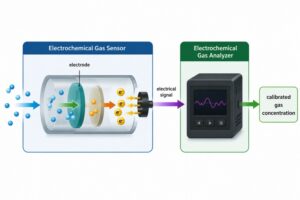
Depending on the application, ESEGAS may recommend technologies such as NDIR, UV-DOAS, TDLAS, FTIR, zirconia oxygen measurement, or electrochemical detection. - Sampling and gas conditioning system design
The sampling system is critical for measurement reliability. Heated sampling probes, filters, coolers, pumps, heated lines, valves, and condensate removal components may be needed depending on the gas condition. - System integration
For online gas analyzer systems, users may need signal output, alarm configuration, PLC/DCS communication, data transmission, cabinet integration, and remote monitoring support. - Factory testing and delivery documentation
Before delivery, system testing and clear documentation help users understand installation, wiring, operation, calibration, and maintenance requirements.
A gas analyzer is not an isolated device. It is part of a larger industrial measurement system. When each part is designed correctly, users receive not just a product, but a stable and practical gas analysis solution.
How Does Supporting Training Help Operators Use Gas Analyzers Correctly?
Even a well-designed gas analyzer system can perform poorly if operators are not trained. In many plants, measurement problems happen because users know how to turn on the equipment, but do not know how to judge whether the data is healthy. Without training, an operator may ignore flow problems, use incorrect calibration gas, overlook filter blockage, or misinterpret alarms.
Our supporting training service is designed to help users move from basic operation to confident system management. We want operators to understand not only “what button to press,” but also “why the system behaves this way.”
Training helps users in several important ways:
- Standardized startup and shutdown
Operators learn the correct sequence to start and stop the analyzer, sampling system, pump, heating components, and gas conditioning devices. - Correct calibration operation
Calibration is essential for measurement reliability. Training helps users understand zero calibration, span calibration, calibration gas selection, pressure control, and calibration records. - Routine inspection habits
Operators learn how to check sample flow, pressure, temperature, filter condition, condensate discharge, alarm status, and signal output. - Alarm understanding and response
Instead of simply resetting alarms, trained operators can identify whether an alarm is caused by low flow, high temperature, gas path blockage, sensor drift, or communication failure. - Basic troubleshooting ability
With training, users can solve common issues faster and reduce unnecessary downtime.
Good training reduces dependence on emergency support. It helps the user’s own team build internal maintenance capability, which is especially important for continuous monitoring systems and critical process gas analysis applications.
What Training Topics Should Be Covered After Gas Analyzer Installation?
Installation is not the end of a gas analyzer project. It is the point where the user’s team begins daily operation. If the training is too simple, the system may work well during commissioning but become unstable later because the operators do not know how to maintain it properly.
At ESEGAS, we recommend that training should cover both analyzer operation and the full sampling system. This is because many measurement issues are related to sample transport and conditioning before the gas reaches the analyzer.
| Training Module | Main Purpose |
| Gas analyzer principle | Helps operators understand the measurement logic and limitations |
| System structure | Explains analyzer, sampling probe, filters, pump, cooler, valves, and pipelines |
| Startup and shutdown | Prevents damage caused by incorrect operation sequence |
| Calibration procedure | Maintains accuracy, stability, and traceability |
| Sampling system inspection | Avoids blockage, leakage, condensation, and flow instability |
| Preventive maintenance | Reduces unexpected downtime and extends service life |
| Alarm and fault diagnosis | Helps users respond quickly to abnormal conditions |
| Safety operation | Protects personnel, equipment, and process safety |
| Data reading and reporting | Supports compliance, process control, and production decisions |
A practical training session should also include real operating scenarios. For example, what should an operator do if the sample flow suddenly drops? How should the team respond if the oxygen reading drifts? What does it mean if the cooler temperature is abnormal? These practical questions help users connect training content with daily site problems.
How Can ESEGAS Support Different Industrial Gas Analysis Applications?
Different industries face different gas analysis challenges. A cement plant may care about flue gas emission monitoring and combustion efficiency. A chemical plant may need process gas analyzers for safety and process control. A biomass gasification project may require syngas analysis. A power plant may need flue gas analyzers to monitor O₂, CO, SO₂, NOx, and CO₂. If one solution is used for every application, measurement reliability will suffer.
ESEGAS supports users by matching gas analyzer equipment and training services with the real application environment. Our product coverage includes flue gas analyzers, emissions gas analyzers, syngas analyzers, process gas analyzers, NDIR gas analyzers, FTIR gas analyzers, TDLAS gas analysis systems, oxygen analyzers, portable gas analyzers, and related gas conditioning components.(Gas Analyzer Manufacturers)
Common application areas include:
- Emission monitoring
For environmental compliance, stable measurement data is essential. Users need reliable sampling, gas conditioning, calibration, and data output. - Process gas analysis
In chemical, petrochemical, metallurgical, and manufacturing processes, gas composition can directly affect safety, product quality, and process efficiency. - Combustion control
Monitoring O₂, CO, CO₂, and other gases helps users optimize combustion, reduce fuel waste, and improve operational safety. - Syngas and biogas analysis
Gas composition monitoring supports energy conversion efficiency, process adjustment, and equipment protection. - Safety monitoring
Toxic, flammable, or oxygen-deficient environments require accurate and timely gas detection to protect workers and assets.
For each application, training content should also be adjusted. A CEMS operator may need stronger knowledge of compliance reporting and calibration records, while a process gas analyzer user may focus more on response time, gas path stability, and alarm handling.
What Are the Long-Term Benefits of Combining Equipment Supply with Training?
When users only purchase equipment, they may solve an immediate measurement need. But when they combine equipment supply with supporting training, they build long-term measurement reliability. This difference becomes clear after months or years of operation.
The main long-term benefits include:
- More stable measurement data
Correct operation and regular maintenance reduce drift, abnormal readings, and avoidable measurement errors. - Lower maintenance cost
Operators who understand the system can identify small issues before they become serious failures. - Shorter troubleshooting time
A trained team can quickly check sample flow, filter condition, calibration status, gas path leakage, and alarm information. - Longer equipment service life
Preventive maintenance helps protect sensors, optical components, pumps, valves, and gas conditioning units. - Improved safety
Reliable gas analysis supports early warning, process control, and safer decision-making. - Better compliance support
For emission monitoring and environmental applications, stable data and proper calibration records help users meet regulatory expectations. - Stronger internal operation capability
Training allows the user’s team to manage daily operation with greater confidence.
In other words, training turns equipment value into operational value. It helps users get the performance they expected when they first invested in the gas analyzer system.
How Does ESEGAS Deliver a More Complete Gas Analyzer Service Experience?
A gas analyzer project should not feel like a one-time transaction. Industrial users need a partner who understands measurement conditions, system design, installation challenges, operator training, and long-term service support. Without this support, users may spend more time solving avoidable problems than using the data to improve their process.
ESEGAS aims to provide a complete service experience from technical communication to after-sales support. Our service process can include:
- Pre-sales technical consultation
We communicate with users to understand the application, gas components, concentration range, pressure, temperature, moisture, dust, and installation environment. - Solution design and equipment selection
Based on the working conditions, we help select the analyzer type, sampling system, gas conditioning method, and integration configuration. - Equipment supply and system integration
We provide gas analyzer equipment and related system components according to the project requirements. - Installation guidance and commissioning support
Correct installation and commissioning help ensure the analyzer operates under suitable conditions from the beginning. - Operation and maintenance training
We train operators on system structure, daily operation, calibration, maintenance, alarm response, and troubleshooting. - Long-term technical support
After delivery, we continue to support users with technical guidance, maintenance suggestions, and solution optimization when needed.
This complete approach helps customers reduce risk throughout the equipment life cycle. It also reflects how we understand our role: ESEGAS is not only a gas analyzer supplier, but also a gas analysis solution partner for industrial users.
Conclusion
Long-term measurement reliability does not depend on the analyzer alone. It depends on correct equipment selection, professional sampling system design, proper installation, standardized calibration, preventive maintenance, and well-trained operators. For industrial users, combining gas analyzer equipment supply with supporting training services is one of the most effective ways to reduce measurement errors, improve safety, protect equipment, and support compliance.
At ESEGAS, we provide gas analyzer solutions with a practical service mindset. From application analysis and equipment supply to commissioning support and operator training, we help users build gas analysis systems that are not only accurate on the first day, but reliable throughout long-term operation.