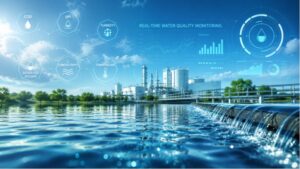




Regulations don’t get stricter because paperwork is fun—they tighten because real-world emissions change fast, and “occasional checks” miss too much. When flue gas composition shifts with fuel quality, load, or process upsets, plants can end up with gaps, questionable readings, or results that can’t stand up to audits. That uncertainty creates the worst kind of cost: unplanned troubleshooting, retesting, and compliance risk. At ESEGAS, we tackle the problem from the system level—pairing stable gas measurement with the right online integration and sample conditioning so your emissions numbers remain consistent, defensible, and useful for decisions, not just reporting.
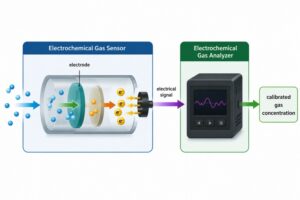
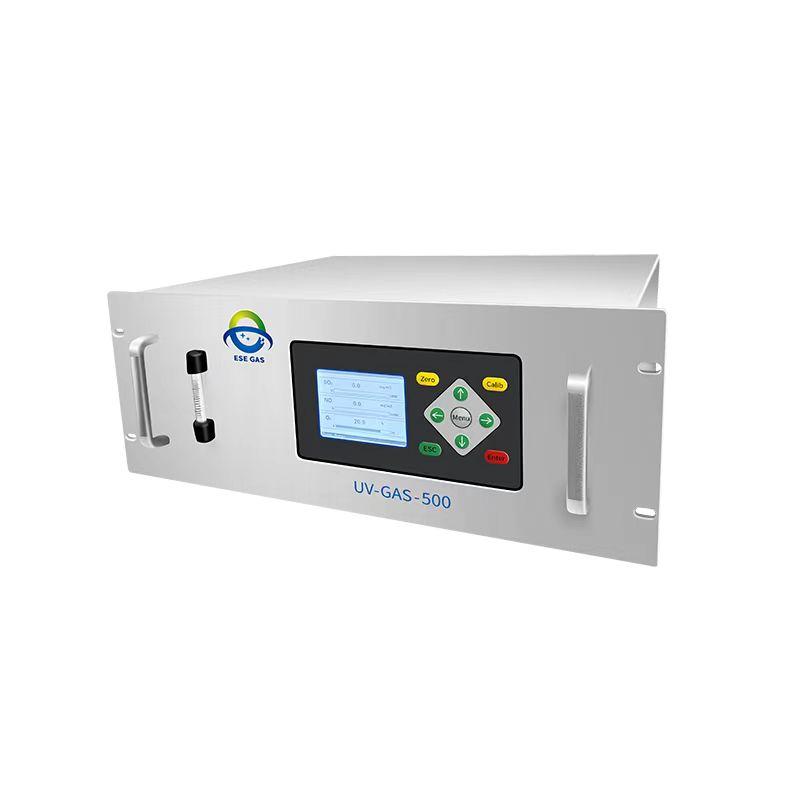
An exhaust gas analyser is an instrument that measures pollutant gas concentrations in exhaust or flue gas—commonly SO₂, NO, and NO₂—to support continuous emissions monitoring, process optimization, and environmental compliance. In industrial stacks, we integrate analysers into online systems (CEMS) with sensors, alarms, and data logging so measurements stay accurate and consistent over time.

Knowing the definition is only the starting point. What matters next is choosing what to measure, how to keep the sample representative, and how to turn readings into reliable compliance-grade records. Below, we share how we think about real deployments—using our ESEGAS approach and UV-based emissions monitoring products as a practical reference point.
Which gases matter most in industrial emissions—and why do we prioritize them?
In industrial emissions monitoring, the biggest mistake we see isn’t choosing the “wrong brand”—it’s choosing the wrong measurement priorities. Plants often start with a compliance limit and work backward, but in real operations, emissions are the outcome of combustion, process chemistry, and pollution control performance. If you only measure what the regulator asks for today—without considering what helps you control emissions tomorrow—you end up reacting to alarms instead of preventing them.

At ESEGAS, we prioritize gases that do three jobs at once:
- They are commonly regulated,
- They correlate strongly with process and control performance, and
- They can be measured reliably online when the system is engineered correctly.
SO₂ (Sulfur Dioxide)
SO₂ is often a cornerstone pollutant because it ties directly to fuel sulfur content and the efficiency of desulfurization downstream. In many plants, SO₂ is also the “fast feedback” signal that tells you whether your upstream fuel changes or your scrubber performance is drifting. If your SO₂ trend suddenly rises, you’re not just looking at a compliance number—you may be looking at a purchasing issue, a control issue, or a maintenance issue.
NO and NO₂ (Nitrogen Oxides)
NO and NO₂ matter because NOx is affected by both combustion conditions (temperature, oxygen, mixing) and NOx control technologies. Monitoring NO and NO₂ with enough stability helps you understand whether your changes in burner tuning, load, or control settings are working—or simply shifting emissions between components. From a practical perspective, separating NO and NO₂ can also matter because it improves insight into formation and conversion behavior inside the process and across treatment steps.
Why we focus on these in online monitoring
SO₂, NO, and NO₂ are the kind of pollutants that benefit most from continuous monitoring, because they can move quickly with operating changes. When we design an emissions system around an exhaust gas analyser that measures these gases and supports online integration, the result isn’t just “more data.” It’s better control, faster troubleshooting, and fewer surprises during audits.
Why does “online integration (CEMS)” matter more than a standalone instrument?
A single instrument sitting on a bench can measure a sample—sometimes very accurately. But industrial stacks don’t behave like labs. Dust loads fluctuate, humidity varies, temperatures swing, and process upsets happen at the worst possible moment. In that environment, a standalone reading becomes a fragile thing: it might be correct now, but not stable enough to support compliance reporting or operational decisions hour after hour.
That’s why we talk about systems, not just instruments. A well-designed online monitoring approach—often aligned with CEMS thinking—is how you convert “a measurement” into “evidence.”
Here’s what online integration changes in practical terms:
- Continuity: You see trends and events, not isolated points. That means you can identify drift, step changes, and recurring patterns that would never show up in spot testing.
- Traceability: Online systems are built around data handling: timestamps, records, alarms, and outputs suitable for compliance workflows.
- Operational response: If something goes wrong—sampling line issues, dust spikes, unstable conditions—you can detect it early and respond before data integrity collapses.
- Decision-grade information: When a plant manager asks, “Is this a real emission spike or a measurement artifact?” the answer depends on system design.
At ESEGAS, we design the exhaust gas analyser to fit into an online monitoring architecture with the supporting measurement and data functions that make emissions readings credible under real plant conditions.
What components should sit around the analyser to keep emissions data credible?
When data quality falls apart, the analyser is often blamed first—but the root cause is frequently outside the analyser. The sample may not be representative, the line may be contaminated, dust may be interfering, or operating conditions may not be tracked. That’s why we treat the analyser as the “core,” but never the “only.”
In a robust industrial setup, we commonly build around these supporting blocks:
1) Process condition sensing
Pressure and temperature signals help you interpret measurement behavior and catch conditions that can impact sample transport and stability. When you know the gas conditions at key points, you can distinguish true process changes from sampling artifacts.
2) Dust monitoring and alarms
Dust isn’t just a maintenance nuisance—it can cause bias, clogging, and stability issues. Dust alarm logic is a practical way to protect uptime and maintain data validity by prompting intervention before measurement quality collapses.
3) Data logging and outputs
Industrial emissions programs live and die by records. A system that logs data consistently—and supports the outputs your site needs—turns an instrument into an operational tool. This is also where alarms, events, and maintenance notes can be tied to the same timeline as measurement trends, making audits and troubleshooting dramatically easier.
4) Maintenance-friendly architecture
Even if you have a strong measurement method, downtime kills value. We aim for a system layout that supports accessible service points and predictable consumables or maintenance actions—so you can keep the measurement stable without making it a full-time job.
In short: a credible exhaust gas analyser deployment is an ecosystem. The instrument matters, but so do the guardrails that keep it operating reliably.
Why does sample conditioning decide whether your measurement is accurate?
If we had to pick one area that separates “great performance on paper” from “great performance in the field,” it would be sample conditioning. Industrial flue gas is rarely clean, dry, and stable. It’s often hot, wet, dusty, and chemically reactive. Without the right conditioning strategy, you can get drift, slow response, or repeated failures—none of which are acceptable when emissions reporting is on the line.
Here’s what sample conditioning is really trying to solve:
- Representativeness: The sample must reflect what’s happening in the stack, not what’s happening inside a wet line or a dirty filter.
- Stability: Moisture and particulates can cause rapid changes in measurement behavior, especially when the process shifts.
- Protection: Conditioning protects the analyser and ensures the system operates consistently, reducing failures and maintenance frequency.
- Response time: Even “accurate” data isn’t useful if it arrives too late to diagnose events.
In our ESEGAS deployments, we often discuss conditioning in terms of approach—commonly described as hot wet or cold dry strategies—because each has tradeoffs depending on your stack conditions, measurement goals, and maintenance expectations. The right choice is application-dependent, but our guiding principle stays the same: conditioning must support long-term stability and credible data.
This is exactly why we don’t treat an exhaust gas analyser as a plug-and-play box. The analyser and conditioning strategy must be engineered together.
Why do we use UV-based measurement for SO₂/NO/NO₂ in emissions monitoring?
Plants want three things at the same time: accuracy, stability, and low operational burden. In reality, many measurement headaches come from complexity—extra conversion steps, excessive sensitivity to field conditions, or maintenance-heavy configurations. Our goal is to keep the measurement approach robust while still meeting the performance demands of industrial emissions monitoring.
UV-based measurement approaches are widely used for gases like SO₂ and NOx because they can be effective for continuous monitoring when paired with the right system design and sample handling. In our product direction, we emphasize the value of measuring core pollutants such as SO₂, NO, and NO₂ with a configuration suited for online monitoring needs.
A key operational value we focus on is reducing “hidden uncertainty.” If you can measure what you need directly and keep the measurement stable over time, you reduce the need for frequent interventions and avoid chasing false signals. That’s not just convenience—it’s how plants maintain consistent reporting and avoid wasted troubleshooting hours.
When we talk about an exhaust gas analyser in an industrial context, we’re always thinking about the full measurement chain: stack → sampling → conditioning → analyser → data output. UV-based approaches can be very effective within that chain when engineered responsibly.
How do we decide between single-gas and multi-gas configurations?
A common planning question is whether to measure one gas “really well” or measure several gases “well enough.” The wrong decision either limits insight (too narrow) or increases complexity (too broad). At ESEGAS, we make this decision based on what you need the measurement to accomplish—not just what you want to display on a screen.
When single-gas focus makes sense
- You have one regulated pollutant that drives compliance risk.
- You have stable operations and want a dedicated signal for control verification.
- You want to minimize complexity and standardize maintenance.
When multi-gas monitoring makes sense
- You need stronger context for diagnosing changes (for example, separating combustion shifts from treatment performance shifts).
- You want to validate control actions with more than one indicator.
- You want to reduce integration complexity by measuring multiple targets in a coordinated system design.
In practice, many industrial sites benefit from a core set of gases—often SO₂ and NOx components—and then decide whether additional channels are justified by the operational value they provide. The right configuration is the one that produces decision-grade data without creating an unmanageable maintenance burden.
What selection criteria do we recommend for an industrial exhaust gas analyser?
Buying on “spec sheet bragging rights” is a trap. Industrial emissions monitoring is about performance over time, not performance once. We recommend evaluating a system using criteria that reflect real operations:
- Measurement range suitability: Does it match your expected concentrations under normal, high-load, and upset conditions? Are you planning for future tightening of limits?
- Stability and drift control: How well does the measurement remain consistent across time and operating variation?
- Repeatability and linearity: Can you trust the trend behavior enough to act on it?
- Response behavior: How quickly does the system respond to real changes (and not just to lab test inputs)?
- System compatibility: Can it be integrated with sensors, alarms, and data logging in the way your plant needs?
- Maintainability: Does the system architecture support predictable service routines, not emergency repairs?
When we position an ESEGAS solution, we don’t separate the analyser from the conditioning and integration. We design the complete chain so that the measurement you see is the measurement you can defend.
Where do industrial sites use an exhaust gas analyser most—and what value do they expect?
Industrial emissions monitoring is not one industry—it’s many, and each has different drivers. Still, the common thread is this: exhaust gas is a living signal of process behavior.
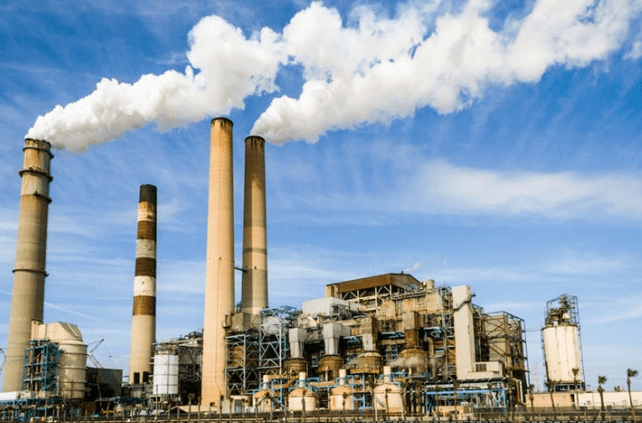
Typical high-value application areas include:
- Power generation and industrial boilers: Where load swings and fuel variation can drive rapid emissions changes.
- Cement and minerals processing: Where process chemistry and dust conditions demand robust monitoring strategies.
- Metals and heavy industry: Where harsh environments require stability, protection, and clear maintenance planning.
- Waste-to-energy and incineration: Where feed variability can create unpredictable emissions behavior that must be captured reliably.
Across these applications, the value expectations tend to align:
- Reduce compliance risk by producing stable, traceable data
- Improve control by linking emissions trends to process conditions
- Reduce downtime and troubleshooting by detecting issues early
- Create a clear record that supports audits and internal reporting
A well-engineered exhaust gas analyser deployment becomes part of plant management—not just an environmental checkbox.
Conclusion
An exhaust gas analyser is only as valuable as the system around it. If the sample isn’t representative, if dust and moisture aren’t controlled, or if data handling isn’t designed for continuity and traceability, the measurement becomes a liability instead of an asset. At ESEGAS, we focus on the pollutants that matter most—especially SO₂, NO, and NO₂—and we design for real industrial operation by aligning analyser capability with online integration and proper sample conditioning. The result is emissions data you can trust day after day, use for decisions, and stand behind when compliance pressure rises.