



In practice, many emission issues start at the sampling point. If the gas sampling probe sits in the wrong place or angle, even the best analyzer delivers misleading results. That risk quickly turns into failed audits, penalties, or lost production time. Therefore, installation quality matters as much as analyzer accuracy.
In a Continuous Emission Monitoring System, the gas sampling probe is the system’s “sense organ.” It extracts a representative flue gas sample from the stack and feeds it to downstream analyzers. When installed correctly, it supports stable measurements, credible reporting, and informed process control decisions. When installed poorly, it amplifies drift, condensation, and blockage.
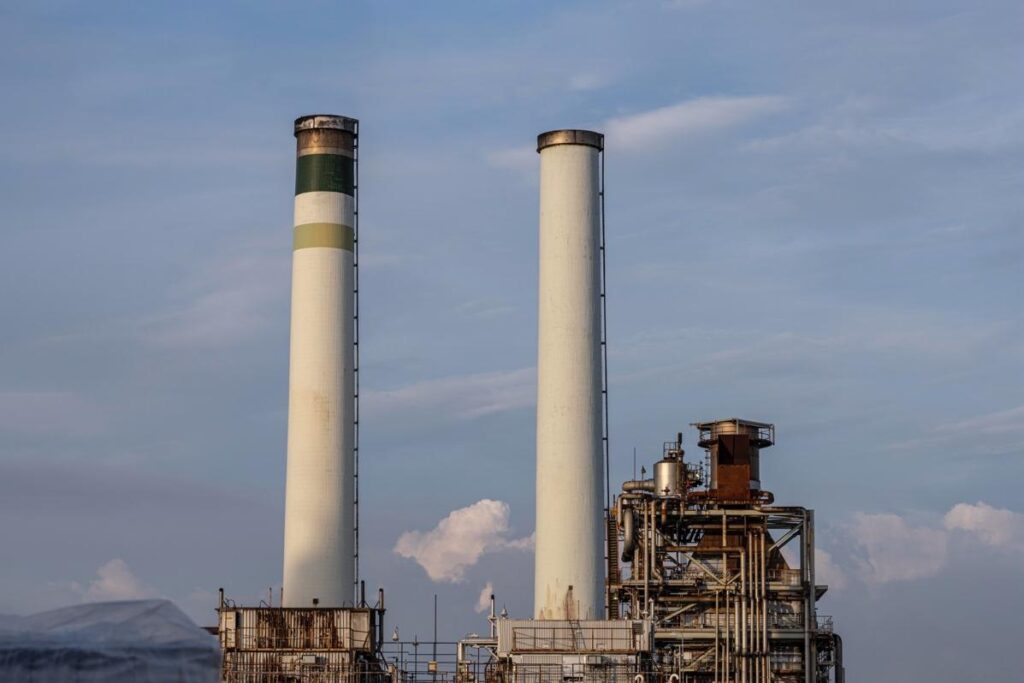
Steel mill stacks make this task harder. High temperatures, heavy moisture, corrosive gases, and dust loading push sampling hardware to its limits. Typical monitored components include:
- SO₂ and NOx for emission compliance
- O₂ for combustion control
- Particulates that threaten probe integrity
Getting the probe right is the first step toward trustworthy CEMS performance.
What Are the Core Gas Sampling Probe and Key CEMS System Fundamentals?
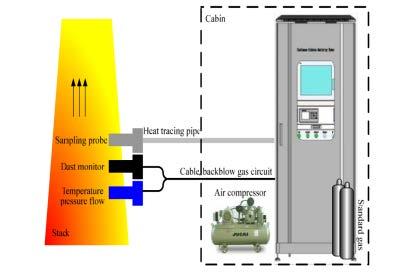
In a steel mill Continuous Emission Monitoring System, the starts the entire measurement chain. It draws flue gas from the stack into the sampling system and sets the stage for all downstream analysis. If the probe fails to extract a, the data from analyzers won’t reflect the true emissions, regardless of analyzer quality. In other words, sampling integrity underpins every valid measurement in a CEMS. A typical CEMS consists of several core elements: Heated gas sampling probe and sample line, Sample conditioning (filters, heaters), Pump and analyzers, Data acquisition system (DAHS) that logs and reports results.
For effective sampling, three practical requirements matter most. First, the sample must be representative — avoid turbulence and gas stratification in the stack flow so the extracted gas reflects the true average composition. Second, the sample temperature must stay above the dew point from probe through analyzers to prevent condensation that can skew results and damage components. Third, the installation must allow easy access for maintenance and calibration so technicians can service the probe and verify system performance without disrupting operations.
Where Should the Gas Sampling Probe Be Placed on a Steel Mill Chimney for Best Results?
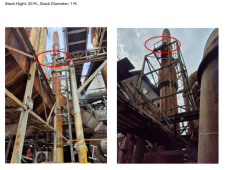
Selecting the right gas sampling probe location on a steel mill stack matters far more than it seems. First, regulators and standards require that the sampling point sits in a section of stack where the gas is well mixed and free from disturbances such as elbows, fans, or turbulence created by control devices. This ensures the sample truly reflects the overall emission profile.
Industry practice typically positions the probe:
- Downstream from disturbances — at least 2–8 equivalent duct diameters from the nearest elbow or control device.
- Upstream from the outlet or final exhaust opening — at least 0.5–2 diameters.
This spacing helps the flow stabilize and improves representativeness.
From a technical standpoint, turbulent gas near bends can vary widely in velocity and composition, distorting the sample your analyzers receive. When you place the probe in a straight, vertical stack section with uniform velocity profiles, the gas is better mixed and less stratified, leading to more precise measurements.
Good probe placement combines flow physics with practical accessibility, striking a balance that supports accurate CEMS performance and smoother regulatory compliance.
How Should the Gas Sampling Probe’s Chimney Port Be Prepared on a Steel Mill Stack?
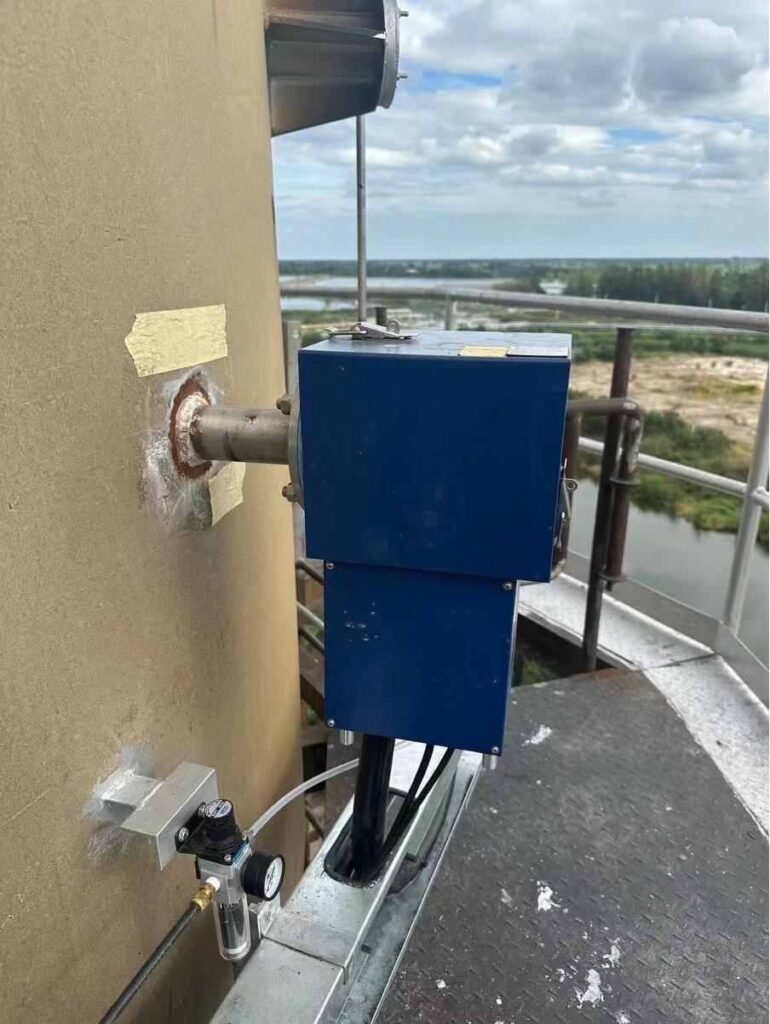
Before you install the gas sampling probe itself, you must prepare the chimney and stack sampling port correctly. This step sets the foundation for accurate data capture, safe access, and long-term serviceability.
Structural Requirements for the Sampling Port
First, cut and drill the stack wall where the probe will enter. Then weld a sample port sleeve and flange onto the stack. This flange becomes the mount point for the probe and must be square and flush with the stack surface. Importantly, the port must not protrude into the gas flow, which can disturb flow patterns and skew readings. Ideally, the port socket sits flush or with minimal extension so it does not create eddies or dead zones in the stack flow.
Next, ensure the port size and orientation match your sampling hardware. For vertical stacks, orient the port so the probe can enter straight and reach the intended sampling plane without obstruction. If probes are inserted at slight angles (as engineering drawings may specify), ensure they still avoid flow disturbances.
Safety, Accessibility, and Platform Considerations
Safety and accessibility dictate how you prepare the area around the sampling port. A solid work platform with guardrails, toe boards, and proper load-bearing capacity lets technicians reach the port comfortably. Platforms should offer at least 45 cm of clearance around ports so workers can maneuver sampling tools safely.
Install fixed access such as ladders or stairs with fall-protection systems. Ensure enough room for maintenance tasks like probe insertion, removal, and calibration checks without awkward or unsafe movements. Permanent platforms that meet industry safety standards make routine work easier and reduce downtime.
Proper preparation of the chimney port and surrounding area not only ensures structural integrity and safety, but also enhances your CEMS’s long-term reliability and compliance readiness.
How Do You Install a Gas Sampling Probe Step-by-Step on a Steel Mill Chimney?
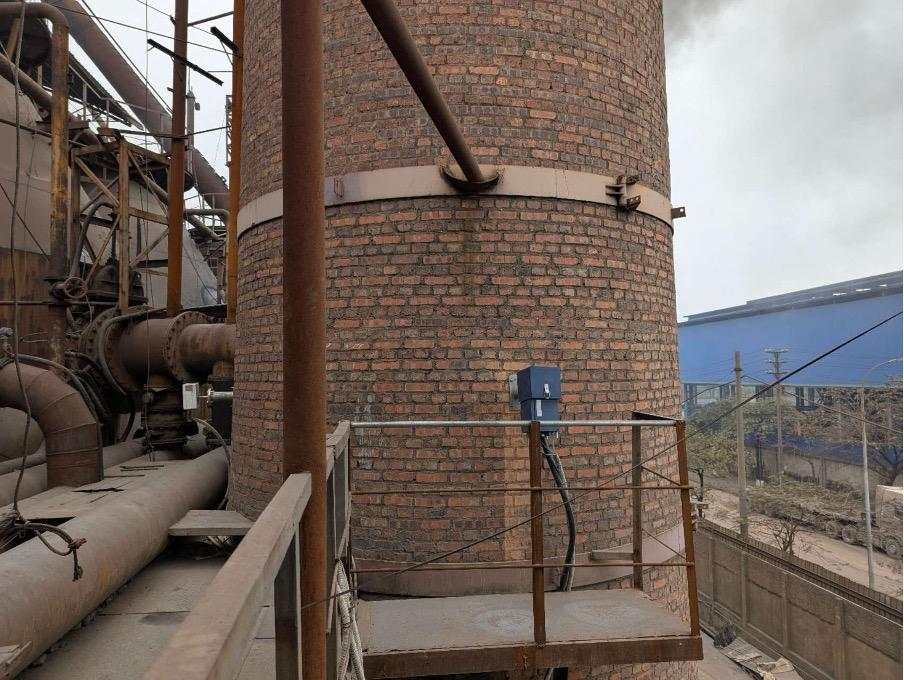
Installing a gas sampling probe correctly is a hands-on process that directly affects your CEMS data quality and operational reliability. Below we break this into clear, practical steps you can follow on site.
Probe Orientation and Mounting
First, insert the sampling probe into the prepared stack port at a slight downward slope toward the stack interior. This slope helps condensate drain back into the stack and avoids water pooling inside the sample path. A probe that sits level or upward often traps moisture, leading to blockages and distorted measurements. After positioning, secure the probe through the flange using quality gasketing and corrosion-resistant fasteners to ensure a tight seal in the harsh steel mill exhaust environment. Proper mechanical connections prevent both gas leaks and vibration-induced looseness over time.
Heated Sampling Line Routing
Next, route your heated sampling line from the probe to your analytical shelter. Always maintain a consistent downward slope so that any condensate flows toward the stack end rather than forming low spots or pockets along the path. Avoid U-bends or sags, as these create areas where moisture can accumulate, which often leads to measurement drift and maintenance headaches. Ensure your line heating keeps the gas above its dew point throughout the entire run. Typically, heated lines in extractive CEMS systems are held at temperatures well above dew point (often 120 °C–180 °C or higher) to prevent condensation and maintain sample integrity.
By following these steps with attention to slope, heating, and secure mounting, you set the stage for stable and reliable emissions data from your CEMS installation.
Conclusion
Proper installation of your gas sampling probe is not just a technical step — it directly shapes the quality and credibility of your CEMS results. Continuous Emission Monitoring Systems provide real-time emissions data used to demonstrate compliance with strict environmental regulations and reporting obligations. Accurate pollutant concentrations (e.g., SO₂, NOₓ, O₂, CO) depend on representative sampling at the stack before analysis and reporting. Reliable sampling helps you meet performance standards and avoid penalties.
When the sampling probe sits correctly and securely, your system captures a true cross-section of flue gas. This prevents skewed readings caused by flow disturbances, moisture condensation, or sampling bias. As a result, your CEMS can generate reliable hourly and daily records that stand up to audits and environmental reporting requests.
Check your current gas sampling probe setup against the steps above, and if you need tailored support, reach out to your technical team or a CEMS specialist today.
FAQ: Gas Sampling Probe Installation in a Steel Mill CEMS System
1. What is a gas sampling probe in a CEMS and why is it important?
A gas sampling probe extracts a representative flue gas sample from a chimney or stack for analysis. It begins the measurement chain in a Continuous Emission Monitoring System (CEMS), so its correct installation ensures the accuracy of pollutant data used for compliance and process control. Poor placement distorts results and raises the risk of non-compliance penalties.
2. Where should I install a gas sampling probe on a steel mill chimney?
Place the gas sampling probe in a section of the stack with well-mixed flow and minimal disturbances. Industry practice recommends keeping the probe at least two equivalent duct diameters downstream of elbows, fans, or other disruptions to achieve laminar and representative sampling.
3. Why must the gas sampling probe be in well-mixed flow?
Gases near bends, elbows, or turbulence zones can vary widely in velocity and composition. Installing the gas sampling probe in well-mixed, stable flow ensures the sample reflects the true stack emissions, improving measurement precision and reducing variance in regulatory reporting.
4. How does stack access affect gas sampling probe installation?
Sampling probes must be accessible for routine maintenance and calibration. Regulations recommend safe platforms, ladders, and clear space around the sampling point so technicians can work without hazards.
5. Can the gas sampling probe port interfere with flow?
Yes. Sampling ports must not protrude into the flow, as this can create eddies or local disturbances that affect representativeness. Proper design keeps the port flush or minimally intrusive.
6. What standards guide gas sampling probe placement?
Standards such as EN 15259 (used in Europe) specify criteria for representative sampling locations, including safe access and non-stratified flow conditions. These help determine suitable positioning before installation.
7. How does gas sampling probe installation affect regulatory compliance?
Accurate probe installation supports reliable CEMS measurements, which feed into emissions reports and audits. Incorrect installations risk poor data quality, failed audits, and potential fines, so positioning and setup must follow technical guidelines.